













Popular
What motivates Eva Perón to pursue a career in acting and politics?
How does Eva's relationship with Juan Perón evolve throughout the film?
What role does the character Che play in the narrative of Evita?
How does Eva's background influence her actions as First Lady of Argentina?
What are the key moments that showcase Eva's rise to power in Argentine society?
Should I watch it?
Ask Your Own Question

What is the plot?
Sorry, we aren't able to watch and write up a full detailed plot yet. Check back in a few days.



What is the ending?
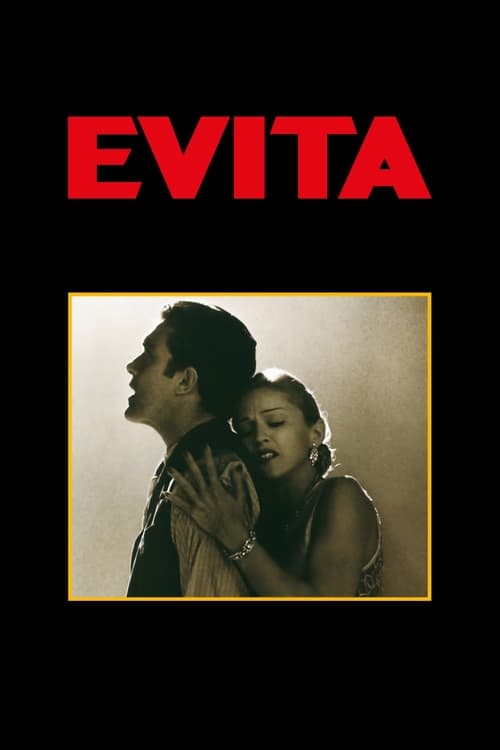
In the ending of the movie "Evita," Eva Perón, after a long battle with cancer, succumbs to her illness. Her death is met with a profound outpouring of grief from the people of Argentina. The film concludes with her legacy being celebrated, as her life and impact on the nation are remembered, while her husband, Juan Perón, is left to navigate the political landscape without her.
As the final act of "Evita" unfolds, we find ourselves in a somber yet powerful atmosphere. The scene opens with Eva Perón, now gravely ill, lying in a hospital bed. The once vibrant and commanding figure is frail, her health deteriorating rapidly due to cancer. The camera captures her pale face, the shadows under her eyes, and the way her body is barely able to support her. She is surrounded by her loyal supporters, who are visibly distressed, reflecting the deep connection she has forged with the people of Argentina.
In a poignant moment, Eva reflects on her life, her rise from humble beginnings to becoming the First Lady of Argentina. She recalls her dreams and aspirations, her desire to help the poor, and the love she has for her country. The emotional weight of her journey is palpable, as she grapples with the reality of her impending death. The music swells, and the audience can feel the intensity of her internal struggle--her fear of being forgotten and her longing to leave a lasting impact.
As the scene transitions, we see Juan Perón, her husband, who is now faced with the prospect of losing not only his wife but also the political strength that her presence provided. He stands by her side, a mixture of sorrow and determination etched on his face. The couple shares a tender moment, where Eva reassures him of her love and the importance of continuing their work for the people. This scene highlights their deep bond, as well as the political partnership that defined their lives.
The film then shifts to the streets of Buenos Aires, where the news of Eva's death spreads like wildfire. The citizens, who once adored her, are seen mourning in mass gatherings. The visuals are striking--people weeping, holding candles, and chanting her name. The camera captures the raw emotion of the crowd, showcasing the profound impact Eva had on the lives of ordinary Argentinians. This moment serves as a testament to her legacy, illustrating how she became a symbol of hope and change for the disenfranchised.
In the final scenes, we witness Eva's funeral, a grand yet somber affair. The procession is filled with thousands of mourners, all paying their respects to the woman who fought for their rights. The imagery is powerful, with the casket draped in the Argentine flag, surrounded by flowers and the grieving masses. Juan Perón stands at the forefront, visibly shaken yet resolute, as he acknowledges the love and loyalty of the people towards Eva.
As the film draws to a close, we see a montage of Eva's life--her speeches, her charitable work, and her unwavering spirit. The final shot lingers on her face, a blend of strength and vulnerability, as the screen fades to black. The audience is left with a sense of her enduring legacy, the impact of her life on the nation, and the void her absence creates in both Juan Perón's life and the political landscape of Argentina.
In summary, the ending of "Evita" encapsulates the themes of love, loss, and legacy. Eva Perón's death marks the end of an era, leaving Juan Perón to navigate the complexities of leadership alone, while the people of Argentina mourn the loss of a beloved figure who championed their cause.
Is there a post-credit scene?
The movie "Evita," produced in 1996, does not have a post-credit scene. The film concludes with the final moments of Eva Perón's life, showcasing her funeral and the impact of her death on the people of Argentina. The credits roll after this poignant ending, and there are no additional scenes or content following the credits. The film leaves viewers with a sense of reflection on Eva's legacy and the emotional weight of her story.
What motivates Eva Perón to pursue a career in acting and politics?
Eva Perón, portrayed by Madonna, is driven by a deep desire for recognition and power stemming from her impoverished childhood. Her ambition is ignited when she meets tango singer Agustín Magaldi, who introduces her to the world of entertainment. This experience fuels her aspirations, leading her to seek a more significant role in society, ultimately culminating in her political involvement.
How does Eva's relationship with Juan Perón evolve throughout the film?
Eva's relationship with Juan Perón, played by Antonio Banderas, begins as a passionate romance, marked by mutual ambition. As they rise to power together, Eva becomes increasingly influential, often overshadowing Juan's political maneuvers. Their dynamic shifts from romantic partners to political allies, with Eva's desire for social change driving her actions, while Juan's political ambitions sometimes conflict with her ideals.
What role does the character Che play in the narrative of Evita?
Che, portrayed by Antonio Banderas, serves as both a narrator and a critical observer of Eva's life and political ascent. He represents the voice of the people, often questioning Eva's motives and the authenticity of her actions. Che's presence adds a layer of complexity to the story, as he highlights the disparity between Eva's glamorous public persona and the struggles of the Argentine populace.
How does Eva's background influence her actions as First Lady of Argentina?
Eva's humble beginnings in rural Argentina profoundly shape her empathy for the poor and her commitment to social welfare. Her experiences with poverty drive her to advocate for labor rights and women's suffrage, as she seeks to uplift the marginalized. This background fuels her passion and determination to create a legacy that contrasts sharply with her earlier life, making her a symbol of hope for many.
What are the key moments that showcase Eva's rise to power in Argentine society?
Key moments in Eva's rise include her initial meeting with Juan Perón during a charity event, where their chemistry sparks a powerful partnership. Her passionate speeches and public appearances galvanize support among the working class, particularly during the labor strikes. Additionally, her establishment of the Eva Perón Foundation highlights her commitment to social issues, solidifying her status as a beloved figure in Argentine politics.
Is this family friendly?
The movie "Evita," produced in 1996, contains several elements that may be considered objectionable or upsetting for children or sensitive viewers. Here are some aspects to be aware of:
-
Political Themes: The film delves into complex political issues, including class struggle and corruption, which may be difficult for younger audiences to fully understand.
-
Death and Mourning: There are scenes that depict death and the mourning process, particularly surrounding the character of Eva Perón, which may evoke strong emotions.
-
Social Inequality: The portrayal of poverty and social injustice is prominent, showcasing the struggles of the lower class, which can be heavy and distressing.
-
Romantic Relationships: The film includes romantic entanglements that may not be suitable for younger viewers, including themes of manipulation and ambition.
-
Mature Language and Themes: Some songs and dialogue contain mature language and themes that may not be appropriate for all audiences.
-
Visual Imagery: There are scenes depicting political unrest and protests, which may be intense or unsettling for some viewers.
These elements contribute to a narrative that, while powerful and artistically significant, may not be suitable for all children or sensitive individuals.









