
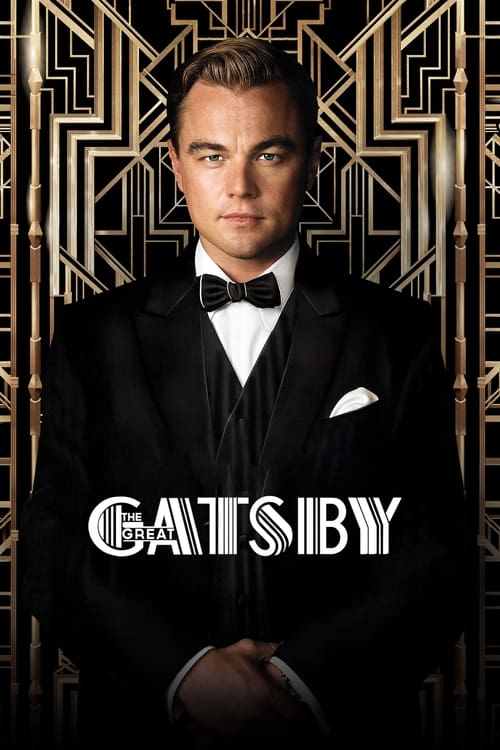











































Popular
What motivates Jay Gatsby to throw extravagant parties?
What is the significance of the green light at the end of Daisy's dock?
How does Daisy Buchanan feel about her life and her marriage to Tom?
How does Tom Buchanan react to Gatsby's relationship with Daisy?
What role does Nick Carraway play in the story, and how does he perceive Gatsby?
Should I watch it?
Ask Your Own Question

What is the plot?
Sorry, we aren't able to watch and write up a full detailed plot yet. Check back in a few days.
More Movies Like This
Browse All Movies →



What is the ending?
In the ending of The Great Gatsby (2013), Jay Gatsby is killed by George Wilson, who believes Gatsby was driving the car that killed his wife, Myrtle. After Gatsby's death, Nick Carraway, the narrator, is left to arrange his funeral, which is attended by very few people. Daisy Buchanan and her husband, Tom, leave town without acknowledging Gatsby's death. Nick reflects on the emptiness of the American Dream and the moral decay of society. He ultimately decides to return to the Midwest, disillusioned by the events he has witnessed.
As the film approaches its conclusion, the tension escalates dramatically. The scene opens in the lavish mansion of Jay Gatsby, where the atmosphere is thick with anticipation and unease. Nick Carraway, the narrator, is caught in a web of emotions, feeling the weight of the events that have transpired. He is aware that the love between Gatsby and Daisy is fraught with complications, and the impending confrontation looms over them like a dark cloud.
In a pivotal scene, Gatsby and Tom Buchanan face off in a tense confrontation at the Plaza Hotel. The air is charged with hostility as Tom accuses Gatsby of being a fraud and a criminal. Gatsby, desperate to prove his love for Daisy, implores her to say she never loved Tom. Daisy, torn between her past and her present, struggles to articulate her feelings, revealing the deep-seated conflict within her. The tension reaches a boiling point, and Tom's dominance is palpable as he asserts his control over the situation.
After the confrontation, the narrative shifts to a tragic turn of events. Daisy, driving Gatsby's car, accidentally hits Myrtle Wilson, Tom's mistress, who runs into the road. The scene is chaotic, filled with panic and confusion. Gatsby, who is deeply in love with Daisy, takes the blame for the accident, believing it will protect her. This act of devotion highlights Gatsby's unwavering love and the lengths he is willing to go for Daisy.
In the aftermath, George Wilson, Myrtle's husband, is consumed by grief and rage. He mistakenly believes that Gatsby was driving the car that killed Myrtle. In a heart-wrenching scene, George tracks down Gatsby at his mansion. The opulence of Gatsby's home contrasts sharply with the tragedy unfolding. In a moment of shocking violence, George shoots Gatsby while he is lounging in his pool, believing he is the source of his pain. The camera captures Gatsby's lifeless body, a stark reminder of the fragility of dreams and the harsh reality of life.
Following Gatsby's death, Nick is left to grapple with the aftermath. He attempts to arrange Gatsby's funeral, but the scene is hauntingly empty. The grand mansion, once filled with laughter and parties, now stands silent, echoing the loneliness of Gatsby's life. Nick reaches out to Daisy and Tom, but they have fled, leaving no trace behind. Their indifference to Gatsby's demise underscores the moral decay of the society they inhabit.
In the final moments, Nick reflects on the American Dream and the disillusionment that has enveloped him. He decides to return to the Midwest, feeling a profound sense of loss and disappointment. The film closes with Nick's poignant narration, emphasizing the futility of chasing dreams that are ultimately unattainable. The fate of each character is sealed: Gatsby, the tragic hero, is dead; Daisy and Tom retreat into their privileged world, unscathed; and Nick, the observer, is left to ponder the emptiness of it all. The story concludes with a haunting reminder of the relentless pursuit of dreams and the inevitable consequences that follow.
Is there a post-credit scene?
The Great Gatsby (2013) does not have a post-credit scene. The film concludes with a poignant moment that encapsulates the themes of hope and the unattainable American Dream. After the climactic events of the story, Nick Carraway reflects on Gatsby's life and the impact of his dreams. The final scenes show Nick returning to the Midwest, contemplating the past and the futility of trying to recapture lost time. The film ends with a powerful voiceover from Nick, emphasizing the enduring nature of dreams and the relentless pursuit of the past, leaving the audience with a sense of melancholy and reflection.
What motivates Jay Gatsby to throw extravagant parties?
Jay Gatsby throws extravagant parties primarily to attract the attention of Daisy Buchanan, the love of his life. He believes that by showcasing his wealth and success, he can win her back after their separation. Gatsby's longing for Daisy is deeply rooted in his past, where he fell in love with her before going to war. His parties are a manifestation of his hope and desire to recreate the past and rekindle their romance.
What is the significance of the green light at the end of Daisy's dock?
The green light at the end of Daisy's dock symbolizes Gatsby's unattainable dream and hope for a future with Daisy. It represents his longing and the idealized vision he has of her. Throughout the film, Gatsby reaches out toward the light, signifying his desire to reclaim the past and the American Dream. The light becomes a poignant reminder of the distance between Gatsby's aspirations and the reality of his situation.
How does Daisy Buchanan feel about her life and her marriage to Tom?
Daisy Buchanan feels trapped in her marriage to Tom Buchanan, who is wealthy but unfaithful and domineering. Despite her glamorous lifestyle, she experiences a profound sense of dissatisfaction and emptiness. Daisy is torn between her love for Gatsby and her social status, which she fears losing. Her internal conflict is evident in her moments of vulnerability, where she expresses a desire for happiness but feels constrained by societal expectations.
How does Tom Buchanan react to Gatsby's relationship with Daisy?
Tom Buchanan reacts with hostility and jealousy to Gatsby's relationship with Daisy. He feels threatened by Gatsby's wealth and the possibility that Daisy might leave him for Gatsby. Tom's reaction escalates into confrontation, where he exposes Gatsby's criminal background and attempts to assert his dominance. His aggressive behavior reveals his insecurities and the lengths he will go to maintain control over Daisy and their marriage.
What role does Nick Carraway play in the story, and how does he perceive Gatsby?
Nick Carraway serves as the narrator and a moral compass in the story. He is both an observer and participant in the events surrounding Gatsby and the Buchanans. Initially, Nick is fascinated by Gatsby's charisma and wealth, but as he learns more about Gatsby's past and the emptiness of the world around him, his perception shifts. Nick becomes increasingly disillusioned with the superficiality of the elite society, ultimately viewing Gatsby as a tragic figure who embodies the American Dream's corruption.
Is this family friendly?
The Great Gatsby (2013) is not considered family-friendly due to several potentially objectionable or upsetting scenes and themes. Here are some aspects that may be concerning for children or sensitive viewers:
-
Alcohol and Parties: The film depicts lavish parties filled with excessive drinking, which may not be suitable for younger audiences. The atmosphere is often chaotic and hedonistic.
-
Violence: There are scenes of violence, including a confrontation that leads to a tragic outcome. The emotional weight of these moments can be intense and distressing.
-
Infidelity and Relationships: The film explores themes of infidelity and complicated romantic relationships, which may be inappropriate for younger viewers. The emotional turmoil surrounding these relationships is significant.
-
Death: The film addresses themes of loss and death, culminating in a tragic event that can be upsetting and emotionally heavy.
-
Social Class and Disillusionment: The portrayal of social class disparities and the disillusionment of the American Dream can be complex and may require a level of maturity to fully understand.
-
Language: There is some strong language throughout the film that may not be suitable for children.
These elements contribute to a mature narrative that may not be appropriate for all audiences, particularly younger viewers.







