



















Popular
What role does the setting play in the unfolding of the plot?
What motivates the main character, Matt, throughout the film?
How does the mysterious caller manipulate Matt during the film?
How does Matt's relationship with his wife, Anna, evolve throughout the film?
What is the significance of the children in Matt's decision-making process?
Should I watch it?
Ask Your Own Question

What is the plot?
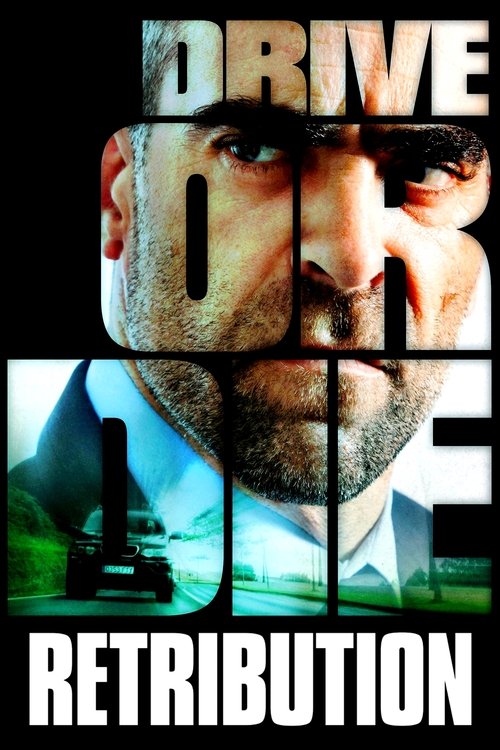
Carlos, a bank executive in A Coruña, begins what looks like an ordinary weekday morning by getting his children, Sara and Marcos, ready for school before heading to work, but the day turns into a tightly wound nightmare the moment he starts the car and answers a call from a phone hidden inside it. The anonymous voice tells him there are bombs under the seats and that if anyone leaves their position, the car will explode; the only way to stop it is to transfer a huge sum of money before the end of the workday. Carlos tries to keep his voice steady as he drives, but the camera language of the film makes the car feel like a sealed coffin on wheels, every glance at the children tightening the suffocating tension.
At first, Carlos tries to handle the threat with quiet control, telling Sara and Marcos only enough to keep them calm while he searches for a way out. Marcos clings to his innocent excitement about a soccer ball signed by a player, desperate to prove to his friends that he is telling the truth, and that small childish object becomes a cruel counterpoint to the terror surrounding him. Carlos calls his wife, Marta, who is not in the car, and tries to pull the family's life together through a series of hurried, impossible instructions. He tells her to go to the bank and move the money the caller demands, and the fact that he is reduced to managing his own rescue through financial transactions immediately reveals how deeply the blackmailer understands his world.
The voice on the phone keeps Carlos moving through the city, forcing him to obey a brutal choreography of deadlines and locations. He learns that the stranger is not bluffing, and as the day unfolds, it becomes clear that the caller is watching, coordinating, and manipulating multiple people at once. The extortion is tied to the bank, not just the family, and Carlos is forced to call his colleague and friend Víctor, who is soon revealed to be trapped in the same web of coercion. Their conversations expose a buried layer of illegal banking activity: this is not a random kidnapping by a madman, but a carefully constructed punishment rooted in fraud, fear, and corruption.
The story grows darker when Carlos runs into Julia, Víctor's wife, in the middle of his frantic route through the city. For a moment, the film opens into a false sense of possible rescue, as though another adult might be able to help untangle the situation, but the caller's violence escalates immediately. Julia's car explodes, killing her, and the blast snaps the entire situation into full horror. The attack proves that the unseen blackmailer is willing to murder innocents simply to keep Carlos obedient. The death is not an accident; it is the clearest declaration yet that the caller has total control over the day's violence.
As Carlos continues scrambling across A Coruña, the police begin to close in, and the emotional pressure increases from every direction. Police chief Espinosa becomes convinced that Carlos is not merely a victim but may somehow be involved in the bombing, turning Carlos's desperate attempts to protect his children into evidence against him. This misunderstanding is one of the film's central traps: the person trying to survive becomes the person everyone else suspects. Marta, meanwhile, realizes that something is terribly wrong when the children do not arrive at school, and her separate search adds a painful domestic counterpoint to the action. The family is being pulled apart in real time, each member isolated by the same invisible hand.
Carlos's path then brings him into contact with Alejandro, the bank's Madrid central-office boss, whose concern is not the lives at stake but the scandal that might follow exposure of the bank's illegal operations. Alejandro's pressure confirms the film's larger institutional betrayal. The bank hierarchy knows more than it admits, and its instinct is to conceal, not to save. The blackmail scheme is revealed as part of a wider network of financial wrongdoing, with Carlos caught in the middle as both participant and victim. The film makes clear that corporate power is treating human life as an acceptable expense.
The tension peaks when Carlos ends up trapped in a public park under the watch of Espinosa and the police, with Belén, the explosives specialist, brought in to neutralize the threat. The park sequence is one of the movie's most intense confrontations because every side misreads the others: the police think they are dealing with a criminal, Carlos is trying to keep his children alive, and the true enemy remains invisible. The bomb squad works against the ticking clock while Carlos tries to stay composed in front of his terrified children. The emotional contrast is sharp and heartbreaking--professional procedure against parental panic, institutional suspicion against family loyalty. It becomes painfully obvious that Carlos cannot win by rational explanation alone.
The film's most devastating turn comes near the end, when the constraints finally break open. The car's deadly setup has been a trap, but the story reveals that not every seat is equally rigged, and that discovery changes the possibility of escape. Sara, who has spent the entire day trapped in fear beside her father, refuses to abandon him even when she is given a chance to get out safely. Her loyalty gives the final stretch of the film its emotional pulse. Carlos, battered by hours of stress and by the cumulative weight of guilt, corruption, and suspicion, is forced to choose between surrendering to the system that has cornered him or tearing through it in one final act of defiance.
At the dock, with the city and the police closing in behind him, Carlos makes the decisive move. Sara is sent away for her own safety, and that goodbye lands with terrible force because it is not a clean separation but a wrenching sacrifice. Carlos then drives the car into the water, using the plunge as his only route out of the blackmailer's control. The scene is both horrifying and liberating: the car disappears beneath the surface, taking the bomb threat, the surveillance, and the suffocating logic of the day down with it. Carlos manages to survive by swimming free, and the rescue that follows is less triumphant than exhausted, as paramedics revive him after the ordeal. The film refuses catharsis; survival is simply the end of immediate terror, not the end of damage.
The final aftermath is bleak and morally pointed. Carlos is later laid off from his bank job, confirming that the institution he served has no real loyalty to him once he becomes inconvenient. The professional world that helped create the disaster quietly discards him. In the closing scene, Carlos is on the phone with a new employee from his former managerial position, discussing a business opportunity, but the conversation turns on the line that breaks the film's emotional silence: when the caller says that family is important in business, Carlos abruptly hangs up. That final gesture is the movie's last revelation. He has survived, but he will not return to the same values that made him vulnerable. The day begins with a father trying to get children to school and ends with a man severing himself from the corporate logic that nearly kills them all, the whole story compressed into one relentless descent from routine to ruin and, finally, to a hard, incomplete form of release.






What is the ending?
In the ending of "Retribution," the protagonist, a man named Matt, discovers the truth behind the deadly game he has been forced to play. After a series of harrowing events, he confronts the mastermind behind the chaos, leading to a tense resolution that reveals the depths of betrayal and the consequences of his choices.
As the film reaches its climax, Matt is faced with a series of life-or-death decisions that test his resolve and morality. Ultimately, he must confront the reality of his situation and the impact of his actions on those he loves. The film concludes with a shocking twist that leaves Matt grappling with the consequences of his past, as well as the fate of his family.
As the final act of "Retribution" unfolds, the tension escalates dramatically. The scene opens with Matt, visibly shaken and desperate, racing against time to save his family. The camera captures his frantic expressions, sweat glistening on his forehead, as he navigates through a series of obstacles set by the unseen antagonist. The stakes are high, and the urgency is palpable.
In a dimly lit room, Matt receives a phone call that reveals the true nature of the game he has been ensnared in. The voice on the other end taunts him, providing cryptic clues that lead him to a series of locations tied to his past. Each location is fraught with danger, and the audience can feel Matt's internal struggle as he grapples with the weight of his decisions. He is not just fighting for his life; he is fighting for the lives of his wife, Anna, and their children.
As he arrives at the first location, a deserted warehouse, the atmosphere is thick with tension. Shadows loom large, and the sound of his footsteps echoes ominously. Here, he encounters a series of traps that test his ingenuity and resolve. The camera captures his determination, but also the fear that flickers in his eyes as he narrowly escapes each peril.
The next scene shifts to Anna, who is being held captive. Her expressions of fear and determination are palpable as she tries to maintain hope for her family's safety. The audience sees her struggle, her hands bound, but her spirit unbroken. She is a mother fighting for her children, and her emotional state is a stark contrast to the chaos unfolding outside.
Back with Matt, he receives another call that reveals the final location: a secluded cabin in the woods. The tension mounts as he races there, the camera following him closely, capturing the urgency of his movements. Upon arrival, he finds himself face-to-face with the antagonist, a figure shrouded in darkness, whose identity is finally revealed. The confrontation is intense, filled with accusations and revelations that shake Matt to his core.
In a climactic showdown, Matt must make a choice that will determine the fate of his family. The scene is charged with emotion as he grapples with the implications of his actions. The antagonist reveals the true motivations behind the game, exposing the layers of betrayal that have led to this moment. The audience can feel the weight of Matt's choices pressing down on him, as he realizes the extent of the consequences.
As the confrontation reaches its peak, Matt's resolve hardens. He fights back, not just for his life, but for the lives of his loved ones. The struggle is brutal, and the camera captures every moment of desperation and determination. In a final act of defiance, Matt overcomes the antagonist, but not without cost. The scene is heavy with the aftermath of violence, and the emotional toll is evident on Matt's face.
In the closing moments, Matt rushes to free Anna and their children. The reunion is bittersweet, filled with relief but also the weight of what they have endured. The camera lingers on their faces, capturing the mixture of joy and trauma. As they escape the cabin, the audience is left with a sense of uncertainty about their future.
The film concludes with a haunting image of Matt standing alone, reflecting on the choices that led him to this point. The final shot lingers on his face, a mixture of relief and sorrow, as he contemplates the cost of retribution. The fate of each character is sealed in this moment: Matt is left to grapple with his past, Anna and the children are safe but forever changed, and the antagonist's fate serves as a grim reminder of the cycle of violence and revenge.
In the end, "Retribution" leaves the audience with lingering questions about morality, the consequences of one's actions, and the heavy burden of guilt that can follow even the most desperate of choices.
Is there a post-credit scene?
The movie "Retribution," produced in 2015, does not have a post-credit scene. The film concludes its narrative without any additional scenes or content after the credits roll. The story wraps up with the resolution of the main plot, focusing on the intense and suspenseful events that unfold throughout the film. As such, viewers are left with the finality of the characters' fates without any further revelations or cliffhangers.
What role does the setting play in the unfolding of the plot?
The film is set primarily in a car, which serves as a claustrophobic and tense environment that heightens the stakes. The confined space amplifies Matt's feelings of entrapment and urgency, as he is unable to escape the situation. The urban landscape outside becomes a backdrop for his frantic attempts to save his family, contrasting the chaos of the outside world with his internal struggle.
What motivates the main character, Matt, throughout the film?
Matt, played by Ethan Hawke, is driven by a desperate need to protect his family. As he finds himself trapped in a high-stakes situation where he must follow the orders of a mysterious caller, his internal conflict intensifies. He grapples with fear for his children's safety and the moral implications of his actions, which leads to a deep emotional turmoil as he tries to navigate the threats against his family.
How does the mysterious caller manipulate Matt during the film?
The mysterious caller, who remains anonymous throughout much of the film, uses psychological tactics to manipulate Matt. By threatening his children and revealing intimate details about his life, the caller creates a sense of paranoia and urgency. This manipulation forces Matt to comply with increasingly dangerous demands, showcasing the caller's control over the situation and Matt's growing desperation.
How does Matt's relationship with his wife, Anna, evolve throughout the film?
Matt's relationship with Anna, portrayed by Julia Stiles, is strained by the events of the film. Initially, they appear to be a loving couple, but as the crisis unfolds, the stress and fear take a toll on their communication and trust. Matt's secretive actions to protect their children create a rift, leading to moments of tension and emotional confrontation, ultimately testing their bond under extreme pressure.
What is the significance of the children in Matt's decision-making process?
The children are central to Matt's motivations and decisions throughout the film. Their safety is his primary concern, and every choice he makes is influenced by the need to protect them from harm. The emotional weight of being a father drives him to take risks and make morally ambiguous decisions, highlighting the lengths a parent will go to for their children, which adds depth to his character and the overall narrative.
Is this family friendly?
"Retribution," produced in 2015, is not considered family-friendly due to its intense themes and graphic content. Here are some potentially objectionable or upsetting aspects that may affect children or sensitive viewers:
-
Violence: The film contains several scenes of intense violence, including physical confrontations and threats that may be disturbing.
-
Death and Injury: There are moments depicting serious injuries and the aftermath of violent encounters, which can be graphic and unsettling.
-
Psychological Tension: The film explores themes of betrayal and revenge, leading to high-stress situations that may be emotionally taxing for younger viewers.
-
Mature Themes: The narrative delves into darker aspects of human nature, including revenge and moral ambiguity, which may not be suitable for children.
-
Language: There may be strong language used throughout the film that could be inappropriate for younger audiences.
These elements contribute to a tense and often unsettling atmosphere, making it more suitable for mature audiences.









