







Popular
What is the significance of the main character's immortality in Beautiful Vampire?
How does Hae-ryung's relationship with the human character, Jin-seok, develop throughout the film?
What role does the shop play in Hae-ryung's life and the story?
What challenges does Hae-ryung face in maintaining her secret as a vampire?
How does the film portray the theme of beauty in relation to Hae-ryung's character?
Should I watch it?
Ask Your Own Question

What is the plot?
In the quiet, narrow alley of Seoul's Mangwon neighborhood, a modest makeup shop sits tucked away from the bustle of the city. It is early morning in 2018, and the faint light filters through the shop's vintage windows, casting a soft glow on the cluttered yet cozy interior. The walls are lined with old photographs, vintage makeup products, and a calendar whose pages are marked with dates spanning centuries. Ran, a woman who appears serene and composed, opens the door and steps inside. Her eyes, deep and ancient, betray a weariness far beyond her youthful appearance. She carefully arranges her cosmetics, her movements deliberate and precise. In a quiet voice-over, she reflects, "I've lived for 500 years. I've seen empires rise and fall. But here, in this alley, I've found a kind of peace."
Ran is no ordinary woman. Beneath her calm exterior lies a secret: she is a vampire, five centuries old, who has chosen to live quietly among humans. She has mastered the art of blending in, running her makeup shop as a front for her true nature. Unlike the vampires of legend, she avoids the hunt for human blood, instead subsisting on animal blood she carefully stores in a hidden compartment. The mirrors in her shop reflect the duality of her existence--both human and immortal. This sanctuary in Mangwon is her refuge, a place where time seems to stand still, as marked by the well-worn calendar that chronicles her long life.
One afternoon, the peaceful rhythm of Ran's life is disrupted when Lee So-nyeon, the young son of the new landlord, arrives to inspect the property. So-nyeon is strikingly handsome, with an easy charm and a curious gaze that lingers on Ran and her shop. "This place feels different," he says softly, stepping inside. "It's like stepping into another world." His presence stirs something deep within Ran, an instinct she has long suppressed. His scent is familiar, reminiscent of someone from her distant past--Jin Yi, the only person who ever truly loved her for what she is.
As days pass, So-nyeon becomes a regular visitor, drawn not only to the quaint shop but to Ran herself. Their conversations are gentle and tentative, filled with quiet moments of connection. Kang Mool-joo, a middle-aged neighbor and frequent customer, watches with mild suspicion, sensing something unusual about Ran but never pressing too hard. Ok-bun, Ran's elderly neighbor and friend, offers warmth and kindness, bringing food and checking in on her, unaware of the vampire's true nature.
Ran's internal struggle intensifies as her attraction to So-nyeon awakens her dormant vampire instincts. The scent that once belonged to Jin Yi now envelops So-nyeon, stirring a hunger she thought long conquered. She fights to maintain control, aware that giving in could shatter the fragile peace she has built. One evening, as twilight deepens the shadows in her shop, Ran confesses to So-nyeon her secret. Her voice trembles as she reveals, "I'm not like other people. I've lived for centuries because I'm a vampire."
So-nyeon's initial shock is palpable. His eyes widen, and he steps back, struggling to reconcile the woman he has come to care for with the supernatural truth she has shared. Yet, as Ran speaks of her past--the empires she has witnessed, the loves lost and memories etched into time--he begins to understand the loneliness that defines her existence. "I don't want to be afraid of you," he says quietly. "I want to be with you, no matter what you are."
Their bond deepens, but the tension remains. Mool-joo confronts Ran one afternoon, his voice edged with suspicion. "You're not like the rest of us," he says, eyes narrowed. "How is it that you never age? What are you hiding?" Ran deflects, her calm demeanor unshaken, but the confrontation leaves her unsettled. Meanwhile, Ok-bun senses Ran's distress and offers comfort, though Ran keeps her secret guarded.
The film's climax unfolds in the intimate space of Ran's shop and So-nyeon's nearby apartment, where the two face the reality of their situation. Ran's thirst grows stronger, and she battles her vampire instincts with every ounce of willpower. "The more I like you, the harder it is to resist," she admits, her voice thick with emotion. So-nyeon reaches out, taking her hands in his. "Then we face it together," he promises.
No violence erupts; no lives are lost. Instead, the film centers on emotional confrontation and acceptance. Ran chooses to prioritize her humanity and her love for So-nyeon over her predatory nature. The final scenes are tender and hopeful: Ran and So-nyeon stand side by side in the quiet alley, bathed in the soft glow of evening light. The camera lingers on the calendar in Ran's shop, now marked with a new date--a symbol of a fresh chapter in her long life.
As the film closes, Ran's makeup shop feels renewed, filled with new products and a quiet optimism. The once solitary vampire has found companionship and a reason to embrace both her human and supernatural sides. Together, Ran and So-nyeon look toward the future, ready to face whatever challenges it may bring, united by love and acceptance in the heart of Mangwon.




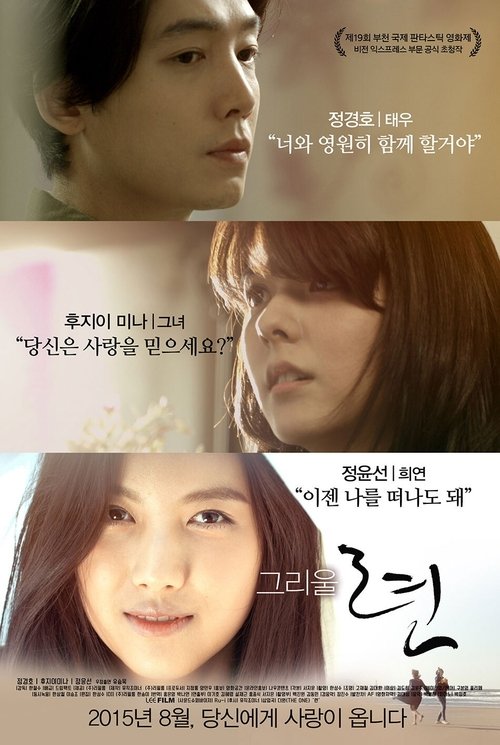
What is the ending?
In the ending of "Beautiful Vampire," the main character, a vampire named Jin-seo, faces a pivotal moment as she confronts her past and the choices she has made. Ultimately, she decides to embrace her humanity and the possibility of love, leading to a significant transformation in her life.
As the story unfolds, Jin-seo, who has lived for centuries in isolation, grapples with her identity and the loneliness that comes with being a vampire. Throughout the film, she has developed a bond with a young man named Seon-woo, who unknowingly becomes a catalyst for her change. In the climax, Jin-seo must confront the consequences of her existence and the impact of her choices on those around her.
In the final scenes, Jin-seo makes a heartfelt decision to protect Seon-woo from the dangers of her world. She ultimately sacrifices her own safety for his well-being, showcasing her growth and newfound understanding of love and connection. The film concludes with Jin-seo embracing her humanity, leaving behind her vampire life, and stepping into a new beginning.
Now, let's delve into the ending in a more detailed narrative fashion:
As the sun begins to set, casting a warm golden hue over the city, Jin-seo stands at the edge of her rooftop, her heart heavy with the weight of her past. The memories of centuries spent in solitude flood her mind, each one a reminder of the loneliness that has defined her existence. She gazes down at the bustling streets below, where life continues without her, and she feels a deep yearning for connection.
In the dim light of her apartment, Seon-woo, the young man who has unknowingly captured her heart, is waiting for her. He is unaware of the true nature of Jin-seo's existence, but he senses a change in her. As she enters, the tension between them is palpable. Jin-seo's internal struggle is evident; she is torn between her vampire instincts and her desire to protect Seon-woo from the darkness that surrounds her.
In a pivotal moment, Jin-seo reveals her true self to Seon-woo, exposing the reality of her vampire nature. The revelation is met with shock and disbelief, but also a flicker of understanding in Seon-woo's eyes. He sees the pain and vulnerability behind her facade, and despite the danger, he chooses to stand by her side. This moment marks a turning point for Jin-seo, as she realizes that she is not alone in her struggle.
However, the peace is short-lived. A rival vampire, seeking to reclaim Jin-seo, threatens Seon-woo's life. In a tense confrontation, Jin-seo must make a choice: to fight for her own survival or to protect the one person who has brought light into her dark existence. The stakes are high, and the emotional turmoil within her reaches a boiling point.
In a climactic showdown, Jin-seo confronts her rival, showcasing her strength and determination. The battle is fierce, but it is not just a physical fight; it is a battle for her soul. As she fights, flashes of her past life flicker before her eyes--moments of love, loss, and regret. Each memory fuels her resolve to break free from the chains of her vampire identity.
In a heart-wrenching moment, Jin-seo makes the ultimate sacrifice. She uses her powers to protect Seon-woo, putting herself in harm's way. The rival vampire is defeated, but at a great cost. Jin-seo is left weakened, her fate hanging in the balance. As she lies on the ground, she looks up at Seon-woo, who rushes to her side, fear and concern etched on his face.
In her final moments, Jin-seo feels a sense of peace wash over her. She has chosen love over loneliness, humanity over immortality. With a soft smile, she whispers her goodbyes, knowing that she has finally found a reason to live beyond her vampire existence. As the sun rises, Jin-seo's fate is left ambiguous, but the transformation within her is clear. She has embraced her humanity, leaving behind the darkness that once consumed her.
Seon-woo, heartbroken yet hopeful, stands alone on the rooftop, looking out at the dawn of a new day. He carries the memory of Jin-seo with him, forever changed by their brief but profound connection. The film closes on a note of bittersweet resolution, highlighting the themes of love, sacrifice, and the quest for identity in a world that often feels isolating.
Is there a post-credit scene?
In the movie "Beautiful Vampire," there is indeed a post-credit scene that adds an intriguing layer to the story. After the main credits roll, the scene opens in a dimly lit café, where the atmosphere is filled with a sense of mystery and anticipation. The camera pans across the room, revealing a few patrons lost in their own worlds, sipping coffee and engaged in quiet conversations.
Suddenly, the focus shifts to a figure sitting alone at a table in the corner. It is the protagonist, a beautiful vampire named Hae-ryung, who has been navigating her complex emotions and the challenges of her immortal life throughout the film. She appears contemplative, her gaze distant as she stares out the window, lost in thought.
As the camera zooms in, we see a flicker of vulnerability in her expression, hinting at her ongoing struggle with loneliness and the desire for connection. Just then, a young man enters the café, and their eyes meet. There is an instant spark of recognition, suggesting a deeper connection that transcends time and circumstance. The young man approaches her table, and a subtle smile breaks across Hae-ryung's face, indicating a glimmer of hope and the possibility of a new beginning.
The scene ends with a lingering shot of their hands almost touching, leaving the audience with a sense of anticipation and curiosity about what this new relationship might mean for Hae-ryung's future. The post-credit scene encapsulates the themes of love, connection, and the eternal search for belonging that permeate the film, inviting viewers to reflect on the complexities of her existence as a beautiful vampire.
What is the significance of the main character's immortality in Beautiful Vampire?
The main character, a beautiful vampire named Hae-ryung, grapples with the loneliness and isolation that comes with her immortality. Her eternal life has led her to live in a secluded shop, where she sells beauty products while avoiding human connections. This immortality serves as both a curse and a source of longing, as she yearns for companionship but fears the consequences of her true nature being discovered.
How does Hae-ryung's relationship with the human character, Jin-seok, develop throughout the film?
Hae-ryung's relationship with Jin-seok begins with curiosity and attraction. As they spend time together, she finds herself drawn to his warmth and kindness, which contrasts sharply with her cold, isolated existence. Their bond deepens as they share personal stories, and Hae-ryung struggles with her desire to protect him from the dangers of her vampire life while also wanting to experience love and connection.
What role does the shop play in Hae-ryung's life and the story?
The shop serves as both a sanctuary and a prison for Hae-ryung. It is where she hides from the world and her vampire identity, yet it also represents her connection to humanity through the beauty products she sells. The shop becomes a backdrop for her interactions with Jin-seok and other characters, highlighting her internal conflict between her vampire nature and her desire for a normal life.
What challenges does Hae-ryung face in maintaining her secret as a vampire?
Hae-ryung faces numerous challenges in keeping her vampire identity hidden, including the risk of exposure to Jin-seok and the threat of other supernatural beings. Her struggle to blend in with humans while managing her vampiric instincts creates tension, especially when her past comes back to haunt her, forcing her to confront the reality of her existence and the potential consequences of revealing her true self.
How does the film portray the theme of beauty in relation to Hae-ryung's character?
The theme of beauty is intricately woven into Hae-ryung's character, as her physical appearance is both a blessing and a curse. While her beauty attracts others, it also isolates her, as people are often more interested in her looks than her true self. The film explores how Hae-ryung's perception of beauty evolves as she learns to value inner connections and emotional depth over superficial attraction.
Is this family friendly?
"Beautiful Vampire," produced in 2018, is a film that blends elements of romance, fantasy, and horror, centering around a vampire who has lived for centuries. While it has a whimsical and visually appealing aesthetic, there are several aspects that may not be suitable for children or sensitive viewers.
-
Vampire Themes: The central premise revolves around a vampire, which includes themes of immortality, loneliness, and the struggle with one's nature. This may be unsettling for younger audiences.
-
Violence and Blood: There are scenes that depict blood and violence, typical of vampire lore. While not excessively graphic, the presence of blood may be disturbing for some viewers.
-
Romantic Elements: The film explores romantic relationships, including themes of desire and longing, which may not be appropriate for younger children.
-
Existential Themes: The protagonist grapples with deep emotional and existential questions about life, love, and death, which may be complex and heavy for younger audiences to understand.
-
Dark Atmosphere: The film has a generally dark and moody atmosphere, which might be unsettling for sensitive viewers, especially during scenes that highlight the vampire's struggles.
Overall, while "Beautiful Vampire" has a charming visual style, its themes and content may not be suitable for all children or sensitive individuals.







