




















Popular
Who is the main character in Eraser: Reborn and what motivates him throughout the film?
What is the significance of the character of the assassin, and how does he impact Mason's journey?
How does Mason's relationship with the character of Sarah evolve throughout the film?
What role does the organization that Mason works for play in the plot, and how does it affect his decisions?
What are the key challenges Mason faces while trying to protect Sarah, and how do they shape his character development?
Should I watch it?
Ask Your Own Question

What is the plot?
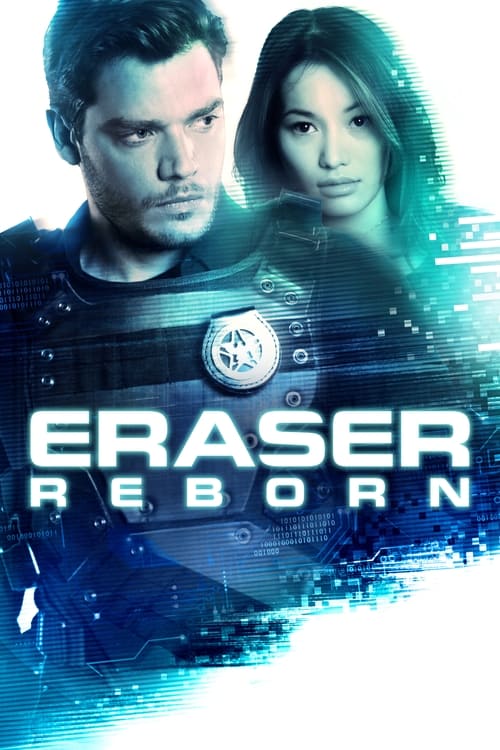
Mason Pollard's world begins in motion, with the U.S. Marshal already doing what he does best: erasing a witness so completely that the person can later reappear under a new life, a new identity, and no usable trace of the old one. In the opening rescue, he saves Sugar Jax, a terrified witness who has been abducted by gangsters for talking, then shoots him with a fake bullet to stage his death and smuggle him out of danger. The scene establishes Mason as a man who works inside a sealed, highly classified system where "erasing" does not mean killing, but engineering disappearance so the people he protects can live long enough to testify.
That first job barely ends before Mason is pulled into a far more dangerous assignment. He is sent to Rina Kimura, the wife of a powerful Los Angeles crime boss and a woman who has agreed to turn state's evidence against her husband and the criminal network he controls. Rina is not simply a frightened witness, though. From the beginning, she carries her own agenda, one built on resentment, survival, and the possibility of taking something for herself before she disappears forever. She is trapped in the role of a mob wife, publicly decorative and privately controlled, and she clearly sees the witness-protection deal as only one possible exit from the life that has been suffocating her.
When Mason meets her, he is immediately wary. Rina is sharp, guarded, and visibly aware that whichever path she chooses will cost her almost everything. The film makes that tension central: Mason is trained to control chaos, but Rina is not a passive asset waiting to be moved. She wants out, but she also wants leverage. The most important thing she steals is her husband's Cold Wallet, the encrypted key to his vast cryptocurrency fortune, which gives her access to money powerful enough to change her future entirely. That theft is more than a plot device; it is the moment she stops being just a witness and becomes a direct threat to the criminal empire around her.
The turning point comes at a party and in the shadows around the crime boss's safe. Rina slips away, breaks into the safe, and takes money and the Cold Wallet, believing she can secure her escape before anyone notices. The situation snaps violently when she confronts her husband during the break-in and a brief, ugly struggle erupts. Rina kills him herself. That death is the story's first major irreversible consequence, because it transforms a covert defection into open war. She is no longer merely testifying against a syndicate boss; she is now the woman who has murdered him and stolen the keys to his fortune.
The murder detonates the rest of the film. The second-in-command and the rest of the Syndicate want revenge immediately, and the hunt begins before Rina can even fully disappear. One account describes a ruthless assassin team led by Marco moving after her, while other summaries emphasize that the criminal organization responds as a coordinated force, with merciless killers sent to retrieve her and recover what she has stolen. The Cold Wallet is the prize that makes the pursuit especially dangerous. It is not just money. It is access, control, and the possibility of exposing the full scale of the organization's cryptocurrency wealth.
Mason is brought in as the last line of defense when an attempt is made on Rina's life. His job is to erase her, which means faking her death, removing her from the criminal ecosystem, and giving her a fresh identity that the Syndicate cannot easily trace. He executes the procedure with professional precision, staging her death and sending her out of Los Angeles and across the world to Cape Town, South Africa. The transition is meant to be the end of one life and the beginning of another, but from the moment the film shifts to Cape Town, the safety of the operation starts to collapse.
Cape Town should be the place where the lie holds. It is where Mason believes Rina can finally vanish into the witness-protection system and wait for the legal process to catch up. Instead, it becomes a trap. Mason thinks his longtime friend, colleague, and mentor Paul Whitlock is joining him there, which briefly gives the mission the feeling of a supported operation rather than a solo rescue. Paul is presented as the person who has taught Mason how to do this work, and the trust between them matters because Mason's entire profession depends on secure chains of information, disciplined procedure, and absolute confidence in who knows what.
That confidence cracks almost immediately. Mason realizes something is wrong, and the film begins to reveal that there has been a breach within his own organization. The Syndicate somehow knows Rina is still alive and where she has been hidden. That leak is the movie's central betrayal, because it means the danger does not come only from criminals outside the system; it also comes from the very people who are supposed to protect witnesses. Mason is forced to question every message, every instruction, and every familiar face.
Paul becomes the focal point of that suspicion. At first he appears to be the ally Mason expects, but the more Mason learns, the clearer it becomes that Paul is tied to the compromise. One review notes that Paul informs Mason that a breach has occurred and that the witnesses need to be moved, which at first sounds like a responsible warning from a superior or mentor. But the story then turns that conversation into a trap: Mason discovers that Paul has not merely failed to stop the leak, he is implicated in it, and he ultimately tells his superiors that Mason has gone rogue. That accusation is devastating because it flips the official machinery of law enforcement against the very man trying to save Rina.
From this point on, Mason and Rina are no longer protector and protected in any simple sense. They become fugitives together, moving through Cape Town with assassins closing in and trust narrowing to almost nothing. The film emphasizes that Mason cannot even be sure whether Rina is hiding a deeper scheme, while Rina is equally skeptical of whether the government program surrounding Mason is any better than the criminal world she has escaped. Their relationship is built on mutual suspicion at first, then forced dependence, then a reluctant kind of trust that only emerges once both understand that they are being hunted from two directions: by the Syndicate and by the compromised system that should have saved them.
The action in Cape Town becomes a sequence of narrow escapes and violent confrontations as the assassins keep closing the gap. The pursuit has the feeling of a tightening net: hotels, hideouts, streets, and transit routes become temporary shelters rather than safe locations, and every pause feels like it could be the one that gets them killed. Mason uses every skill in his trade, not just as a gunman but as a man trained to predict how people track the erased, how killers think, and how to turn the witness-protection playbook back against those who want to destroy it. The film keeps circling back to the irony of his job: he is supposed to make people disappear, but here the danger is that someone else will erase them permanently.
The violence keeps building until the betrayal fully surfaces. Mason's realization that the leak is internal gives the chase a sharper emotional edge, because now every attack is not only about the Syndicate wanting Rina dead, but about someone inside Mason's own world helping them do it. Paul's double-cross reframes the entire mission. What had looked like a standard protection assignment is exposed as a setup, and Mason understands that he and Rina have been delivered into the open so that the criminal network can finish the job. The stakes are no longer just survival. If Mason cannot prove what happened, he will be the one blamed, branded a traitor, and hunted as a criminal.
Rina's own secret motive also comes into sharper focus during the pursuit. She is not merely trying to escape abuse or testify out of conscience. She has been planning to seize control of her future by taking the Cold Wallet and the fortune it unlocks. That revelation adds complexity to her relationship with Mason, because he gradually understands that she has been playing for more than safety from the start. Yet the film does not treat that as a simple betrayal of Mason. Instead, it frames her secret plan as a survival instinct shaped by a life with no real power. In her world, trust has always been expensive, and money is the only thing that can buy distance from the people who own her life.
As the final confrontation approaches, Mason and Rina begin to operate as a team in a way they never could at the start. They are forced to trust one another because there is no one else left who is both available and reliable. Their alliance is not sentimental. It is practical, urgent, and built under fire. The movie's tension comes from that balance: Mason has the technical expertise and the tactical mind, while Rina brings the insider knowledge of the syndicate's greed, habits, and vulnerabilities. Together, they form the one combination the hunters cannot easily predict.
The climactic struggle pits them against Paul Whitlock and the men aligned with him, along with the larger criminal machine that has been driving the pursuit from the beginning. The available summaries do not give a full blow-by-blow account of every exchange in the final firefight, but they are clear about the structural payoff: Mason and Rina turn the tables, survive the assassination effort, and expose the internal betrayal while preventing the Syndicate from completing its larger plan. The confrontation resolves the film's two intertwined mysteries at once: who leaked Rina's survival, and whether Mason can protect her after the system itself has been corrupted.
The ending does not restore innocence. It restores motion. Mason and Rina survive the attack, and the movie closes with the sense that they have escaped immediate annihilation but not the consequences of what has happened. Paul's betrayal has shattered the trust that once defined Mason's professional life, and the witness-protection apparatus is shown to be vulnerable to the same corruption and ambition that drives the Syndicate. In the final phase, the people who were supposed to be erased are the ones who outlast the machinery trying to eliminate them. Rina's willingness to take control of her fate and Mason's refusal to abandon her allow them to push through the betrayal and stay alive long enough to confront what comes next.
By the end, the film leaves Mason and Rina in a hard-won survival state rather than a neatly healed one. The immediate threat is defeated, the traitor is exposed, and the larger criminal plot is interrupted, but the emotional cost remains visible in the way both characters have been forced to reckon with deception, violence, and the collapse of every institution they were supposed to trust. Mason's role as an eraser has been inverted: instead of hiding others from danger, he has had to help himself and Rina survive a world that is trying to wipe them out entirely.









What is the ending?
In the ending of "Eraser: Reborn," the protagonist, Mason Pollard, confronts the main antagonist, who has been manipulating events from the shadows. After a tense showdown, Mason manages to outsmart and defeat the antagonist, ensuring the safety of the people he cares about. The film concludes with Mason embracing his new life, having found a sense of purpose and closure.
As the climax of "Eraser: Reborn" unfolds, the tension reaches its peak in a dimly lit warehouse, where Mason Pollard, played by Dominic Sherwood, prepares for the final confrontation. The air is thick with anticipation, and the shadows cast by flickering lights create an ominous atmosphere. Mason, having been through a harrowing journey filled with betrayal and danger, is fueled by a mix of determination and desperation. He knows that the fate of those he cares about hangs in the balance.
The scene opens with Mason stealthily navigating through the warehouse, his heart pounding as he recalls the events that led him here. He is not just fighting for his own survival; he is also protecting the innocent lives that have been caught in the crossfire of a larger conspiracy. As he moves deeper into the building, he encounters armed guards, and a series of intense action sequences ensue. Mason's training as an eraser--someone who helps people disappear--comes into play as he uses his skills to take down the guards with precision and agility.
Finally, Mason reaches the inner sanctum where the antagonist, a shadowy figure orchestrating the chaos, awaits. The antagonist, revealed to be a powerful and manipulative character, taunts Mason, reminding him of the losses he has suffered and the people he has failed to protect. This moment is pivotal for Mason; he grapples with feelings of guilt and anger, but he also finds clarity in his purpose. He realizes that he must confront not only the antagonist but also his own demons.
The confrontation escalates into a fierce battle, with both characters showcasing their combat skills. Mason, driven by a newfound resolve, fights with a blend of desperation and hope. The choreography of the fight is intense, with each blow exchanged symbolizing Mason's struggle against the darkness that has plagued his life. As the fight reaches its climax, Mason manages to outmaneuver the antagonist, using both wit and strength to gain the upper hand.
In a final, decisive moment, Mason delivers a powerful blow that incapacitates the antagonist. As the dust settles, Mason stands over his defeated foe, breathing heavily, the weight of his journey evident in his expression. He has not only triumphed over the antagonist but has also reclaimed his sense of agency and purpose.
The film concludes with Mason stepping out of the warehouse into the light, a stark contrast to the darkness he has just emerged from. He takes a moment to reflect, the weight of his past still lingering but now accompanied by a sense of hope for the future. The final scenes show him reconnecting with those he cares about, hinting at a new beginning. Mason's journey has transformed him; he is no longer just an eraser but a protector, ready to face whatever challenges lie ahead.
As the credits roll, the fates of the main characters are revealed: Mason has found a new path, leaving behind the shadows of his past. The antagonist, now defeated, serves as a reminder of the dangers that lurk in the world, but Mason's victory signifies resilience and the possibility of redemption. The film closes on a note of empowerment, emphasizing the importance of fighting for what is right and the strength found in overcoming adversity.
Is there a post-credit scene?
In "Eraser: Reborn," there is indeed a post-credit scene that adds an intriguing layer to the film's conclusion. After the main storyline wraps up, the scene opens with a dimly lit room where a figure is seen working on a computer. The atmosphere is tense, filled with the soft hum of machinery and the glow of screens displaying various surveillance feeds.
As the camera zooms in, it becomes clear that the figure is a woman, deeply focused on her task. She types rapidly, her expression a mix of determination and urgency. The audience can sense her connection to the events of the film, hinting at her involvement in the larger conspiracy that has been unfolding.
Suddenly, she receives a notification on her screen, and her eyes widen with realization. The message reveals that a new target has been identified, suggesting that the world of erasure and covert operations is far from over. The scene ends with her smirking slightly, indicating that she is ready to take action, leaving viewers with a sense of anticipation for potential future developments.
This post-credit moment not only serves as a teaser for possible sequels but also reinforces the film's themes of deception and the ongoing battle against corruption, leaving the audience pondering the implications of her next move.
Who is the main character in Eraser: Reborn and what motivates him throughout the film?
The main character in Eraser: Reborn is Mason Pollard, a skilled 'eraser' who specializes in helping people disappear and start anew. His motivation stems from a traumatic past and a desire to protect those who are vulnerable, particularly after he becomes embroiled in a conspiracy that threatens his life and the lives of others.
What is the significance of the character of the assassin, and how does he impact Mason's journey?
The assassin, known as 'The Eraser,' plays a crucial role in Mason's journey as he represents the dark side of the world Mason is trying to escape. The assassin's relentless pursuit of Mason forces him to confront his own past and the moral complexities of his profession, ultimately pushing him to fight back and protect those he cares about.
How does Mason's relationship with the character of Sarah evolve throughout the film?
Mason's relationship with Sarah begins as a professional one, as she is a client seeking to disappear. However, as they face danger together, their bond deepens, revealing layers of trust and emotional connection. Mason's protective instincts towards Sarah highlight his internal struggle between his past life and his desire for redemption.
What role does the organization that Mason works for play in the plot, and how does it affect his decisions?
The organization that Mason works for is a shadowy entity that orchestrates disappearances for clients, often with morally ambiguous motives. As Mason uncovers the organization's true nature and its connection to the conspiracy he finds himself in, he is forced to question his loyalty and ultimately make decisions that prioritize his moral compass over his job.
What are the key challenges Mason faces while trying to protect Sarah, and how do they shape his character development?
Mason faces numerous challenges while trying to protect Sarah, including evading the assassin, navigating the treacherous world of the organization, and confronting his own fears and regrets. These challenges force him to evolve from a solitary figure into a more empathetic and courageous person, ultimately leading him to embrace his role as a protector rather than just an eraser.
Is this family friendly?
"Eraser: Reborn" is not considered family-friendly due to its intense action and mature themes. Here are some potentially objectionable or upsetting aspects that may occur:
-
Violence: The film features numerous scenes of gunfights, hand-to-hand combat, and physical confrontations that can be graphic and intense.
-
Death: Characters face life-threatening situations, and there are depictions of death, which may be distressing for younger viewers.
-
Strong Language: The dialogue includes profanity and harsh language that may not be suitable for children.
-
Themes of Betrayal and Deception: The plot revolves around themes of trust, betrayal, and moral ambiguity, which may be complex and unsettling for sensitive viewers.
-
Emotional Turmoil: Characters experience significant emotional distress, including fear, anger, and desperation, which could be intense for some audiences.
These elements contribute to a mature tone that may not be appropriate for children or those who are sensitive to violence and emotional conflict.








