













Should I watch it?
Ask Your Own Question

What is the plot?
Paris, 1919. Amedeo Modigliani, an Italian Jewish painter who grew up in Livorno, lives in the squalid, crowded quarters of the Montparnasse art world. He moves through the cafés and studios of the city with a deliberate recklessness: tobacco-stained shirts, paint on his fingers, an easy contempt for conventional success. Around him artists gather and argue, and among them Pablo Picasso stands as both friend and rival. Picasso works in a sharp, angular Cubist idiom that draws attentive crowds; Modigliani paints elongated faces and sensual necks that attract a different devotion. Both men scorn the Paris Salon's annual prize as a vulgar contest unfit for true creators, but the competition's reward -- five thousand francs and a guaranteed professional future -- hangs over the city like a provocation.
Modigliani falls in love with Jeanne Hébuterne, a young French Catholic woman whose beauty and quiet reserve draw him away from the chaotic public life he otherwise embraces. They live together in a fragile domesticity: Jeanne pregnant at times with a child they hope to protect, at other moments tenderly washing paint from his hands or mending a shirt torn by his frantic work. Jeanne's family disapprove. Her father, steeped in prejudice, views Modigliani's Jewish background and bohemian lifestyle with contempt. When Jeanne gives birth to a child, her father acts: he sends the infant to a distant convent to be raised by nuns, using his authority and money to physically remove the baby from the couple's care. Modigliani is devastated by this separation; his love for Jeanne deepens into desperation because the child is carried away out of sight. The five thousand franc prize offered by the Salon suddenly assumes a concrete urgency: it can pay to bring the child back, to secure a guardian and home, to wrest the baby from Jeanne's father's control.
Despite his scorn for such contests, Modigliani finds himself in a café one night with friends and rivals, his head thick with drink and drugs. The room fills with the low roar of conversation; the roster for the Salon hangs on a wall. Someone jokes about the prize money. In a rash, intoxicated gesture he signs his name to the competition list, saying he has five thousand francs and could buy everyone a drink. His signature on the roster is a provocation in the way Modigliani intends nothing less than to stake his art against the establishment. Picasso, observing Modigliani's sudden participation and caught by the competitive moment, adds his own name as well. Both men have never before entered the Salon; their sudden enrollment electrifies the circle of artists.
The next morning the competition is set to begin at eight o'clock. Modigliani, later than he planned and still groggy from the previous night, becomes aware that he is running late. He bolts from the café in a hurry, leaving without settling the bill. Two men who had been drinking in the same bar notice him as he stumbles into the street. When they recall his boast that he possesses five thousand francs, they follow him, assuming he is a wealthy mark. They catch up to him in the snow outside the café and accost him. Their attack is physical and vicious: they batter him with fists and boots, hitting his head and ribs until he collapses on the cold pavement. They find no money upon him and, satisfied only with the violence they have inflicted, leave him lying bloody and unconscious in the snow. The assault is brutal enough that Modigliani cannot immediately rise; he lies half dead until his own will forces him to stagger toward the apartment he shares with Jeanne.
He returns to their small room in a state of near collapse, his face a mask of blood and bruises. Jeanne recognizes him immediately and kneels, cupping his head in her hands. She strips off his coat, presses water to a cloth, and washes the blood from his face with a practiced, trembling care. In that intimate moment she tends to his wounds, trying to staunch bleeding beneath the paint-smeared collar and rose-streaked cheek. Modigliani remains lucid enough to murmur about the competition, to insist that the prize money is necessary to bring back their child from the convent. Jeanne resists the idea of summoning professional help; she fears the public scandal and the prying eyes that would come with a hospital. She holds him on the bed and tries to make the room warm against the winter outside.
Word of Modigliani's condition spreads. His fellow painters and friends arrive in a group: concerned, practical-faced men who have known him through hard times and seen him collapse under similar strains. They examine his injuries and, despite Jeanne's protests, decide that he needs immediate medical attention. They lift him with grim efficiency and place him into a carriage bound for the hospital. Jeanne begs them to stay, to let her keep him at home, but they will not relent; they push through the door and carry him away, promising to return with news. In the hospital they set him on a cot under harsh lamps and pull back the blankets. Doctors work quickly: they probe wounds, take note of fever, and diagnose a body that is failing under the combined weight of trauma, drug use, and a long-standing disease. He has been ill with tuberculosis, and the beating has aggravated a condition that already weakens his lungs and immune system.
While Modigliani lies in a hospital bed, drifting in and out of consciousness, the Salon announces its winners. Modigliani's entry -- a portrait of Jeanne in a blue dress he had taken from a shop window for the work -- is judged the best by the committee. The dress itself becomes a concrete detail in how he painted her: he saw it in a storefront, stolen its image and fabric for the canvas, and transposed Jeanne into that garment with a combination of tenderness and audacity. The committee awards his canvas the five thousand franc prize, and the critics and dealers who had once ignored him begin to whisper. Standing in competition across from him, Picasso has entered a Cubist depiction titled Modigliani -- a sharp, fractured portrait designed to assert Picasso's own dominance and to mock those who praise the more lyrical style. The judges, however, give Modigliani the prize; the panel declares the portrait of Jeanne in blue superior to Picasso's cubist study. The announcement reaches friends and the art world: Modigliani has won the Salon and its financial and reputational rewards.
Modigliani, weakened and unaware, does not attend the victory ceremony. He spends his final hours in the hospital. Nurses change his dressings and lower the window shades against the winter glare. Pain racks him; his breathing grows shallow and erratic. At some point in those hours a friend slips him the news that he has won the prize, and he registers the information like a distant, dreamlike fact, unable to savor it. The beating has done more damage than the attackers intended; the combination of injury, his preexisting tuberculosis, and the substance abuse that has eroded his physiologic resilience prove fatal. He dies in the hospital bed, surrounded by the sterile smell of medicines and the discreet murmur of attendants. His friends stand outside the ward and gather the last of his worldly possessions: a palette, a knotted scarf, letters.
Jeanne receives the news in their small apartment. She sits for a long time in stunned silence, clutching a scrap of fabric cut from the blue dress he used as reference. The grief turns inward with a terrible speed; she cannot imagine continuing without him. She steps from the room with the barest announcement: she goes to a window and climbs out of it. Jeanne falls from the apartment window and dies from the impact below. The act is instantaneous and final; no one restrains her in time. In the days that follow, the two funerals become a single event. The city buries them side by side in a cemetery outside Paris. They are interred together beneath a bier of cheap wood, wrapped in linen and covered by simple graveside flowers. With them, in the small space of the same grave, they lay the child Jeanne was carrying -- an unborn baby who dies along with her -- so that Modigliani, Jeanne, and the unborn child share the same earth.
Those who had scoffed at the Salon's prizes now recount the irony of Modigliani's posthumous victory: the five thousand francs, the career the judges sought to secure for him, arrive too late to alter his fate. The two men who assaulted him on the snowy night are never seen to confront the consequence of their violence on the public stage; the physical beating, committed in drunken assumption, set off the chain of events that leads to his death, but legal retribution does not come into the narrative. Picasso remains alive in Paris, his cubist portrait of Modigliani now a private annotation in the story of a rival's short life. Friends disperse with heavy hearts, carrying his sketches and letters, remembering the nights in cafés where Modigliani once laughed and painted with equal abandon.
The final image is the little grave in the cemetery: two fresh mounds of earth side by side under a grey sky, a small wooden cross bearing Amedeo Modigliani's name, and Jeanne Hébuterne's alongside. The smear of paint on a sleeve, the blue of a dress tacked by a fond hand to the coffin's edge, the whisper of those who loved them moving away from the graveside -- these are the last concrete details. The Salon's prize certificate and the five thousand francs will later circulate among friends and sellers, tangling Modigliani's posthumous recognition with the financial realities his death falsified, but in that last scene the record is simple and unadorned: Modigliani dies in a hospital from injuries and illness after being beaten in the snow; Jeanne throws herself from a window and dies; both are buried together, and the unborn child is laid with them in the grave. The portrait of Jeanne in the blue dress, the work that wins the competition, survives as the painting that sealed his belated acclaim, while Picasso's Cubist Modigliani remains a contemporaneous counterpoint in a life that ends before he can enjoy the prize he had scorned and then, in a rash hour, sought.



What is the ending?
Modi, exhausted and broken after his hallucinatory night and confrontation with the American collector Maurice Gangnat, stumbles away from the chaos of Paris, his pleas to abandon his art career rejected by friends, leaving his fate unresolved over those three mad days.
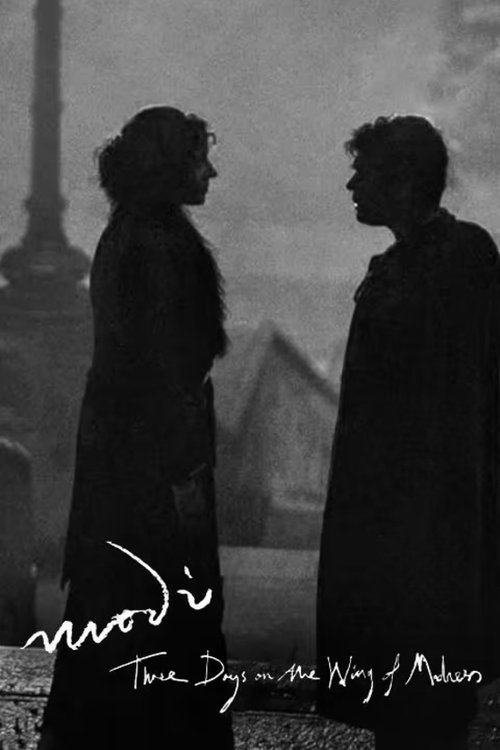
Now, let me take you through the ending of Modi, Three Days on the Wing of Madness, scene by scene, as the whirlwind of those seventy-two hours in 1916 war-torn Paris draws to its fevered close. Picture the streets still echoing with distant bombs, the air thick with smoke and the artist's own bloody coughs, as Modi's mind fractures under tuberculosis, hashish, alcohol, and relentless self-doubt.
The chaos builds through the night after Modi flees the police following his brawl at the Dôme cafe, where he crashes through a stained-glass window, cutting his hand, pursued in Keystone Cops-style farce with color and black-and-white cuts flashing like silent film reels. He shambles with his entourage--fellow artists Maurice Utrillo, the mentally fragile painter who trails him devotedly, and Chaïm Soutine, the hygienically challenged Belarusian artist with his thick accent--plus his English poet-critic lover Beatrice Hastings, who worships his diva outbursts. They dismiss his desperate wish to quit painting and flee Paris, thronging him adoringly amid sex, hashish, and poetry sessions, as he picks fights and spits blood repeatedly.
Modi seeks counsel from his endlessly patient Polish art dealer and friend Léopold Zborowski in a dim, smoke-filled room. Zborowski listens to Modi's ravings about ending it all, his face etched with concern, but offers no easy escape, urging him to persist amid the encroaching Great War slaughter.
Then comes the night of hallucinations: sinister crow-faced plague doctors materialize in Modi's visions, portents of his own looming death, stalking him through Paris shadows as bombs rumble closer. He coughs up more blood, his body frail, his genius declarations turning paranoid, descending into stark ravings.
Dawn breaks into the crescendo: Modi faces American collector Maurice Gangnat in an electric, overwrought confrontation. Gangnat, a figure of potential salvation, calls bullshit directly to Modi's face after hours of built-up tension--Modi's paintings lack life, he declares, shattering the artist's delusions of unchallenged genius. The catharsis hits palpably; Modi, sociopathic yet charismatic, stands exposed, no longer stomping demands on others.
In the final scene, perfectly timed and admirably judged, Modi stumbles away alone from this pivotal encounter, the adoring entourage scattered, his hand still bleeding from the cafe fight, hallucinations fading but chaos unresolved. He does not quit or flee Paris; the three days end with him shambling onward, coughing into the war-torn streets.
Here is the fate of each main character at the story's close: Amedeo Modigliani (Modi) survives the seventy-two hours unbroken in career but deepened in paranoia and illness, shambling into uncertainty without resolution. Maurice Utrillo remains by his side until dismissed, fragile and loyal. Chaïm Soutine sticks with the group through the madness, unfunny and unkempt. Beatrice Hastings worships on, approving his bastard nature. Léopold Zborowski endures patiently, offering no salvation. Maurice Gangnat departs after his cutting judgment, his power to change Modi's life invoked but unfulfilled in these days.
Is there a post-credit scene?
Based on the available search results provided, there is no information about a post-credit scene in Modi, Three Days on the Wing of Madness. The search results contain plot summaries, production details, and reviews of the film, but none of them mention or describe any post-credit scene.
To provide you with an accurate answer about whether this film includes a post-credit scene and what it contains, I would need access to sources that specifically address this aspect of the movie. If you're looking for this information, I'd recommend checking detailed film databases, fan discussions, or reviews that specifically cover the complete viewing experience including credits.
Is this family friendly?
Based on the available search results, I cannot provide a comprehensive assessment of whether Modi: Three Days on the Wing of Madness is family-friendly or identify specific objectionable content for children.
The search results contain limited content guidance information. Common Sense Media gave the film a 3/5 rating, which typically suggests some content concerns, but the specific details about what makes it unsuitable for younger viewers are not included in these search results.
To get accurate information about potentially objectionable scenes, content warnings, and age-appropriateness, I recommend:
- Visiting Common Sense Media directly for detailed parental guidance on language, violence, substance use, and other content concerns
- Checking the film's official rating (likely PG-13 or R in the United States) which provides baseline age guidance
- Reading full reviews that address content suitability
The film is described as a biographical drama about a bohemian artist in WWI Paris dealing with personal turmoil, which suggests mature themes, but without detailed content descriptions in these search results, I cannot responsibly list specific potentially upsetting scenes.









