









Popular
In Unreachable (2025), what exactly happened to Misaki, Yuka, and Sakura in the choir classroom when they were children?
Who is the man in the dark clothes that Misaki sees after Tenma disappears?
What happened to Tenma Sugisaki in Unreachable (2025), and why does Misaki keep looking for him?
Why does Yuka try to contact her mother in Unreachable (2025), and what is the significance of that scene?
What is Sakura's storyline in Unreachable (2025), especially the part about the killer's parole?
Should I watch it?
Ask Your Own Question

What is the plot?
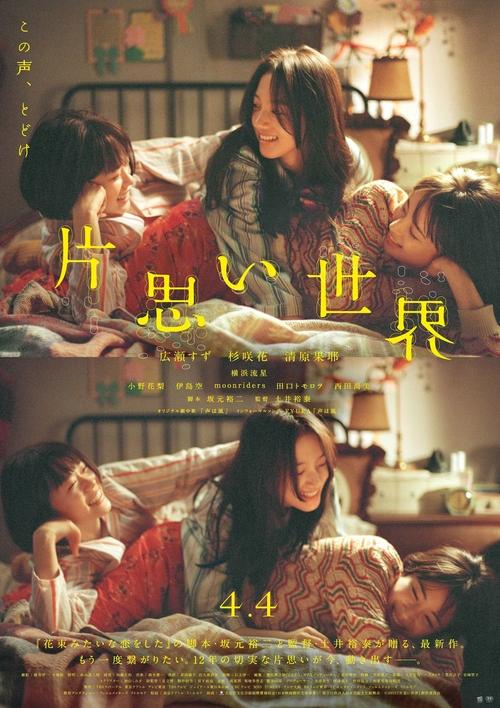
Unreachable opens in a place that already feels half-memory, half-dream: a primary-school choir room where little Misaki Sagara sits with her musical script and looks toward Tenma Sugisaki, the boy she loves, as he practices piano behind her. In the ordinary hush of children rehearsing, something slips out of place. Tenma vanishes from sight, Misaki turns and searches the corridors in rising panic, and instead of finding him she encounters a dark-clad man in the school hallways. At almost the same moment, Yuka Kataishi enters for choir practice and tries to call her mother, only to discover that she cannot get through. The scene does not linger on explanation; it lets dread gather in fragments, and within the film's opening moments the truth is already moving toward the viewer from behind the curtain: the three girls are about to become victims of a knife attack in their choir classroom, and the story they will inhabit from this point onward is the story of the dead continuing to live together.
That childhood horror is the root of everything that follows. Misaki, Yuka, and Sakura Azumi are not simply classmates or former choir members; they are children who are killed by an older man armed with a knife when they are still around six years old, and the film makes clear very early that they do not survive into the adult world in the normal sense. What makes Unreachable unusual is that it does not build this revelation as a detective mystery. Instead, it treats the deaths as a wound that has already happened, then follows the emotional afterlife of three girls who remain bound together beyond death. The violence of the past is always present, but it is filtered through routine, affection, and the strange softness of a world where the dead can keep house together, measure their heights on a wooden post, and share a life that feels ordinary only because they have created it for themselves.
Twelve years later, Misaki, Yuka, and Sakura live together in a rambling old house in Tokyo, a place described as grand, treasure-filled, and dreamlike, as if it has been built out of childhood imagination rather than adult money. They sleep in the same room, brush their teeth together in front of the mirror, cook and clean side by side, celebrate birthdays, and move through the days like sisters who have been together so long that their bond feels older than blood. Misaki is now an office worker, Sakura works at an aquarium, and Yuka is still a student of some kind; they go to work and classes, watch movies, and wear fashionable clothes, and yet the world around them behaves as if they are not quite there. That is the central supernatural revelation: they are ghosts, visible only to one another, and the human world does not see, hear, or meaningfully acknowledge them. Their calm domesticity is therefore an illusion of stability laid over permanent loss.
The house itself becomes a kind of emotional shelter and an act of reconstruction. The sources describe it as an abandoned home that the girls rebuild in their minds, filling it with the objects and comforts a child would want, as if they are still trying to make a family out of the wreckage left by their murder. The atmosphere is gentle, but the sweetness has tension inside it, because every routine in the house is a refusal to disappear completely. Their laughter, their shared chores, and their almost childlike habits are not signs that the past has healed; they are signs that the past has never finished happening.
Misaki's thread begins to stir when she is forced by Sakura to follow a handsome man she is interested in and suddenly hears a woman call him "Tenma," confirming that the boy she loved in childhood is alive and has returned to the edges of her world. Another account describes the same emotional jolt more simply: Misaki sees Tenma Sugisaki again on a bus. Either way, the effect is the same. The sight of Tenma tears open the sealed chamber of her childhood attachment, and all the feeling she has been carrying for years comes rushing back. He is the boy who was practicing piano in the choir room before the tragedy, the one whose disappearance in that first scene seems to connect love and loss in a single movement. Misaki's longing is not presented as melodrama; it is painfully restrained. She does not want to claim him or even interrupt his life. What she wants is simpler and more heartbreaking: she wants to tell him that it is okay, that what happened to him after the attack does not need to define him forever, and that the affection she held for him has survived even if the world did not.
The piano matters because it binds together the film's emotional past and present. In childhood, Tenma is the boy behind the music, the one whose presence gives the choir room its fragile human warmth. After the attack, the music becomes connected to trauma and silence, and Misaki's later sight of him brings back not only her crush but the entire sensation of that interrupted moment. The film does not need to spell out every sentence she would say to him; her face, her stillness, and her urgency tell the audience enough. When she sees him again as an adult, the encounter is not a romance so much as a collision between memory and survival.
Yuka's arc moves in a different emotional direction, though it is no less painful. At the start, she cannot reach her mother by phone, and later, while walking on a university campus, she glimpses a woman who stares back at her and makes her instinctively murmur, "mother." That one word is enough to launch her into the film's most devastating form of grief: the pain of realizing that someone you loved continues living without you. Yuka's mother now works at a nearby flower shop, and the search to reconnect with her becomes an attempt to cross a distance that death has made absolute. The mother has not vanished; she has simply gone on. She has a new partner and a new child, and this creates the wound that Yuka cannot easily name. The new child is the same age Yuka was when she died, which means the mother has not just moved forward; she has rebuilt the very shape of family around the absence left by Yuka's death.
Yuka's arc is the one that eventually gives the film its most explicit speculative dimension. She develops a theory about the girls' existence, imagining that they are present in physical space through sub-atomic particles and slightly out-of-sync layers of reality. This idea becomes more than a bit of ghostly pseudoscience; it is the engine of the narrative's next movement. The trio test whether they can be detected by an experimental device and whether they might, in some impossible way, return to the layer of the living. In the emotional logic of the film, this is not really about physics. It is about whether love, memory, and grief can force a boundary to open. Yuka's longing for her mother is sharpened by the knowledge that their relationship has been severed not by choice but by death, and the experiment becomes her way of asking whether the world can still register her existence at all.
Sakura's story sharpens the film's anger. She learns that the perpetrator of the choir-club murder case has been released and intends to publish memoirs. Another source identifies him as Kuu Izima and notes that his parole brings the crime back into public circulation. Sakura's reaction is immediate and visceral because the release of the killer is not just an abstract injustice; it is the return of a man whose violence defined the terms of her existence. The memoirs are especially cruel. They mean that he is not merely free; he is about to narrate himself, to transform the horror he caused into a story he can shape and sell. For Sakura, that is intolerable. The film uses this thread to confront the audience with a central moral ugliness: the man who stole the girls' lives is not hidden away in the past. He re-enters the present with a platform.
The adult lives of the three women continue to unfold in parallel, and the film repeatedly returns to the contrast between their serene routine and the fact that they are unseen by everyone else. When they move through the city in coordinated outfits, they are treated as if they barely exist. The effect is unsettling and melancholic. They are beautiful, young, and apparently ordinary, but all of that vitality is trapped inside a state no one else can register. The film uses this invisibility to externalize grief: the dead do not belong fully to the living, and yet they remain attached to the world through the people and places they love.
The story's tension builds as these three emotional threads converge. Misaki is shaken by the sight of Tenma, the surviving fragment of her childhood attachment. Yuka is drawn toward her mother, who has built a new life around a family that excludes her. Sakura is forced to face the man who killed them and the prospect of his public self-justification through memoir. Each of these confrontations is private, but together they form the architecture of the climax. What the film gradually makes clear is that the girls are not trying to solve a mystery in the usual sense; they are trying to decide what it means to remain attached to the world after the world has already cut them away.
The revelation that the trio are ghosts is not the ending twist of a conventional thriller. It is the premise the film has been quietly living with from the start, and the real revelations are emotional ones. Misaki learns that love can survive longer than a body. Yuka learns that her mother's love was real, but not immutable, and that being dead means watching someone else inherit the life that might have been hers. Sakura learns that violence does not remain frozen in the past; it keeps speaking if society lets it. Each discovery is devastating in a different way, and the film refuses to flatten them into one single moral.
The confrontation with the killer is the sharpest of the unresolved pressures in the story. The sources make clear that Sakura's response to his release is a major narrative thread, and that the man's return through memoirs becomes one of the central catalysts for the later events. They do not provide a fully detailed scene-by-scene account of the encounter, but the emotional meaning is unmistakable: Sakura has to face the fact that the man who killed her is not only alive but capable of telling his own story to the world. In that sense, his release is another kind of violence. It is the reopening of the wound before it has had any chance to close.
Misaki's confrontation is quieter but no less painful. Seeing Tenma again on the bus or through the woman's call of his name does not produce a romantic reunion; instead, it underlines the cruelty of separation. He is alive in the world of the living, while she exists in a layer he cannot enter. Her desire is to comfort him, to say "it's okay," and that single impulse carries all the longing of a love that never got to become a life. The film stages this as a look, a pause, and the unbearable knowledge that a person can be close enough to see and still completely unreachable.
Yuka's confrontation is with the living mother who has moved on. The flower shop, the campus sighting, the unanswered phone call, and the glimpse of the new family all converge into the same unbearable realization: the dead can be loved, but they cannot be kept. Yuka's mother has continued, perhaps out of necessity, perhaps out of survival, but the result is that Yuka must watch from beyond the threshold as her place in the family has been occupied by someone who never knew her. That is why the new child's age matters so much. It is not just a detail; it is an emotional equation. The mother is living the version of life that death denied Yuka.
The climax is therefore built less on action than on recognition. The three women are pushed toward the limits of their condition, and Yuka's speculative theory about the layers of reality becomes the closest thing the film has to a plan for transcendence. The device test is the narrative hinge that suggests they might be detectable, might be measurable, might even cross back over into the living layer. The sources do not give the exact technical outcome in precise scene-by-scene terms, but they do make clear that this attempt sets a chain of events in motion. In dramatic terms, the experiment is the moment when hope takes form. It is not enough to love the living from afar anymore. The girls want to know whether they can matter physically, whether they can be seen by the world that took them.
What the ending ultimately emphasizes is not a neat escape from death but the emotional consequences of finally facing what their lives have become. The final movement of the film gathers Misaki's love, Yuka's longing, and Sakura's rage into the same current. The girls understand, in different ways, that their bonds to the living cannot be restored to what they might have been. Tenma cannot return the childhood that was interrupted. Yuka's mother cannot recover the daughter who died at six. Sakura cannot erase the fact that the murderer now walks through public life under the protection of time and bureaucracy. The film's power lies in making these losses coexist without resolving them into one simple message.
Because the available sources do not provide a fully scene-by-scene account of the last sequence, the exact final image cannot be stated with absolute certainty. What is clear is that the story ends by keeping its emotional center on the three women's shared existence and the unbearable truth that they are both together and unreachable. They remain bound in their old house, in their ghostly sisterhood, in the fragile routines they have built to survive being dead. The ending does not transform them into ordinary living people, and it does not erase the violence that created them. Instead, it leaves them suspended between memory and release, with the pain of their unfinished attachments still active in the air around them, as if the whole film has been asking whether love can survive a world that never learned how to keep it.
More Movies Like This
Browse All Movies →



What is the ending?
Here is the ending in short form:
The three women are revealed to be dead girls who have been living on together as ghosts, unable to be seen or heard by the living. In the end, each of them is forced to face the person or memory they had been searching for: Misaki reaches the boy she loved, Yuka confronts the truth of her mother's life without her, and Sakura faces the man tied to the crime that took their lives. The story closes on the pain of their separation from the world they once knew and the fact that their bond is the only home they still have.
Expanded ending, scene by scene:
At the start of the film's backstory, the three girls are still children in choir practice. Misaki is looking for the piano-playing boy she likes, Yuka is unable to reach her mother by phone, and the atmosphere breaks when a violent event in the school leaves the girls dead.
Years later, the film shows Misaki, Yuka, and Sakura living together in an old house in Tokyo, moving through daily routines as if they were ordinary young women. They cook, clean, share meals, and sleep in the same room, but the world around them does not properly acknowledge them.
The ending begins to gather force when each girl is pulled back toward the life she lost. Misaki sees the boy from her childhood again and realizes he has grown into the man she once searched for. Yuka sees her mother's life continuing without her, including the mother's new family situation, and this confrontation forces the loss into full view. Sakura learns that the man connected to the attack has been released, and that knowledge directs her toward the violence that shaped all three of their deaths.
In the final movement, the film brings the three strands together around the fact that they cannot truly return to the living world. Their scenes do not resolve into reunion in any lasting physical sense; instead, the ending confirms the condition they have been living under all along: they exist beside the world, but cannot fully enter it.
Misaki's fate is that she remains bound to the memory of the boy she loved, with no living relationship restored.
Yuka's fate is that she sees her mother continuing on without her and is left with the painful knowledge of that separation.
Sakura's fate is that she is brought face-to-face with the crime that killed them, but not into any normal recovery or return.
The three of them end the story still together, still connected to one another, and still unreachable from the lives they once had.
Is there a post-credit scene?
I could not verify any post-credit scene for Unreachable (2025) from the available results. The sources I found describe the film's premise and tone, but none clearly report an extra scene after the credits.
If you want the most cautious answer: there is no reliable evidence here of a post-credit scene, and I can't confirm one from the provided material.
In Unreachable (2025), what exactly happened to Misaki, Yuka, and Sakura in the choir classroom when they were children?
The three girls were killed in the choir room by a man who entered during practice, and the film gradually reveals that this childhood attack is the traumatic event that shapes their adult existence. Reviewers describe the opening as beginning with Misaki searching for Tenma in the choir room before the story reveals the tragedy behind the girls' shared fate.
Who is the man in the dark clothes that Misaki sees after Tenma disappears?
The early review description identifies a dark-clad man as the only other figure Misaki encounters while searching the corridors after Tenma vanishes, but the reviews do not clearly identify him by name in that moment. Later coverage explains that the central childhood trauma involves a man who attacked the choir members, so the dark-clad figure is linked to that violent event.
What happened to Tenma Sugisaki in Unreachable (2025), and why does Misaki keep looking for him?
Tenma is the boy Misaki loved as a child, and the narrative begins with his disappearance from the choir room while he was practicing the piano. Reviewers say Misaki's search for him is tied to her unrequited love and later guilt, with the adult Misaki wanting to see him again so she can tell him it is okay after the trauma that caused him to stop playing.
Why does Yuka try to contact her mother in Unreachable (2025), and what is the significance of that scene?
Yuka cannot get her mother on the phone when she first enters the choir-practice room, and later reviews explain that Yuka keeps visiting her mother in hopes of moving forward after her daughter's death. The scene underscores that Yuka's story is driven by grief and the lingering need to reconnect with a living parent figure who has been left behind in the real world.
What is Sakura's storyline in Unreachable (2025), especially the part about the killer's parole?
Sakura learns from a gossip magazine that the person connected to their childhood trauma has been released on parole, and she tries to confront or meet that person. Reviews identify this as one of the film's main character-specific threads, centered on Sakura's need to face the man tied to the violent event that changed her life.
Is this family friendly?
Not really family-friendly for younger children, because the film's core premise involves three young girls being murdered with a knife and then living on as ghosts; that backstory is central to the movie, even though the tone is more melancholy than graphic.
Potentially upsetting elements for children or sensitive viewers include:
- Off-screen childhood murder: the girls are revealed early to have been killed in a violent attack at their school/choir room.
- Knife violence: the attack is described as involving an older man with a knife, though the results appear to be more implied than explicitly shown.
- Death and grief themes: the story is built around loss, separation, and the sadness of being unable to fully connect with the living.
- Ghost/supernatural material: the main characters are spirits, which may be unsettling for some children even without horror-style scares.
- Mild frightening scenes: IMDb's parental guide lists the film as having mild violence/gore and mild frightening/intense scenes.
What is not reported in the available sources: - Sex/nudity: none reported. - Profanity: none reported. - Alcohol/drugs/smoking: none reported.
So, if you're asking for a quick family suitability check: it may be okay for older, sensitive teens who can handle sad supernatural themes, but it is probably not ideal for younger children because of the murder-and-ghost premise and the emotional heaviness.









