








Popular
What happens during Saki's visit to her father and her encounter with the whale?
How does Makoto confront his former classmate Fujii in the movie?
What role does the return of Saki's mother play in her character arc?
Does Ryuji Taiga appear in the movie and what is his involvement with Makoto?
What is the significance of Saki's final confession scene to Makoto?
Should I watch it?
Ask Your Own Question

What is the plot?
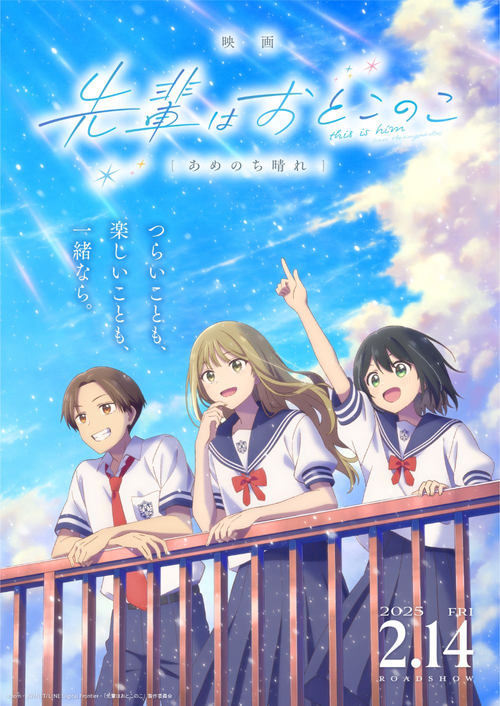
Makoto Hanaoka steps out of the school gates on the first day of spring break, the cherry blossoms just beginning to unfurl their pink petals against a pale blue sky. He's still in his girl's uniform--a soft pleated skirt swaying gently in the breeze, blouse tucked neatly, his long hair tied back with a simple ribbon. For the first time, he doesn't glance around in panic, doesn't rush to a hidden corner to change. A quiet confidence settles over him, born from months of small victories and Saki's unwavering gaze. His secret remains hidden from his mother, Mika Hanaoka, but today, it feels less like a burden and more like a part of himself he's learning to embrace.
Across town, in the cozy clutter of her grandmother's home, Saki Aoi stares at a framed photo on the mantel. It's her mother, Masako Aoi, smiling brightly from years ago, before the abandonment, before the silence. Saki's fingers tremble as she turns it face-down with a sharp thud, the sound echoing her churning resentment. Spring break was supposed to be a release, a chance to bask in the afterglow of her confession to Makoto--her bold declaration of love to the crossdressing senpai she'd fallen for hard. He'd rejected her, of course, his voice soft but firm, citing his fears of romance amid the judgment he already faced. But Saki, lively and bisexual with a heart that defied labels, had only grinned and promised to win him over. Now, with Masako's sudden return, pushing to rebuild their fractured bond, that confidence cracks.
Saki's grandmother, a frail woman with kind eyes and silver-streaked hair, shuffles into the living room that evening, carrying a tray of tea. The room is bathed in the warm glow of a single lamp, shadows dancing on walls lined with faded family portraits. "Saki-chan," she says gently, setting the tray down, "your mother's not the villain you make her out to be. She's trying." Saki slumps onto the worn couch, her usual energy drained, tears welling up. "Grandma, I don't know what I want! Am I just like her? Or Dad? A carbon copy of their mistakes?" Her voice breaks in a raw sob, the first major breakdown spilling out like a dam burst. The grandmother pulls her close, stroking her hair as Saki weeps, the turned-down photo a silent sentinel of buried pain. In this moment, amid the steam rising from untouched tea, Saki glimpses a fragile truth: it's okay not to know.
The next morning, Makoto meets his childhood friend Ryuji Taiga at a quiet park bench overlooking a koi pond. Ryuji, ever the supportive anchor with his easy smile and tousled hair, notices the subtle shift in Makoto. "You're not freaking out about the uniform today," Ryuji teases lightly, tossing a pebble into the water. Makoto smiles faintly, watching the ripples spread. "Yeah. Saki's been... helping with that." Their conversation drifts to her--Ryuji's own feelings for Makoto a faded echo from the love triangle of the past year, now resolved into steadfast friendship. Ryuji's role here is simple: a sounding board, urging Makoto to confront his fears head-on. "Judgment's everywhere, man. But you're stronger now." The words linger as Makoto nods, tension coiling in his chest for confrontations yet to come.
Saki, meanwhile, packs her bag for the trip that's been looming: a flight to Hawaii, where her father, Takahiro Aoi, lives in a sun-drenched home by the ocean. Masako's pushy overtures--late-night calls pleading for forgiveness, unannounced visits that leave Saki reeling--have tipped the scales. "Go see your father," her grandmother advises over breakfast, the photo still face-down. "Sort it out." Saki boards the plane with a storm in her heart, the vast Pacific below mirroring her turmoil. Hours later, she steps onto Hawaiian soil, the humid air thick with salt and hibiscus. Takahiro greets her at the airport, his face weathered but warm, a far cry from Masako's intensity. "Saki, you've grown," he says, hugging her awkwardly. Their drive to his modest beach house winds through palm-lined roads, the radio humming soft ukulele tunes.
Back in Japan, Makoto navigates everyday settings--the school grounds now empty during break, local shops buzzing with vacationers. Tension builds as he forgets to change out of his girl's uniform before heading home. His heart races, but he pushes forward, chin high. At a convenience store, whispers follow him, but he meets them with steady eyes. The real test comes later that afternoon near the school: Fujii, a former classmate with a sneer etched deep, blocks his path. Fujii's always been the type to judge, his voice dripping venom from past encounters. "Still playing dress-up, freak?" Fujii shoves Makoto's shoulder, the confrontation erupting under the overcast sky. Makoto's pulse thunders, memories of panic flashing, but this time, quiet confidence surges. He stands firm, voice even: "I'm not hiding anymore. Back off." Fujii swings a wild fist, but Makoto dodges with surprising grace, countering with a firm push that sends Fujii stumbling. No blows land fatally--it's a standoff, Fujii retreating with muttered curses, his defeat a milestone. Makoto walks away unscathed, breath steady, the incident fueling his growth.
In Hawaii, days blur into sun-soaked introspection. Saki and Takahiro share tense meals on his lanai, the ocean crashing below. "You're just like your mother," he accuses during one dinner, plates of fresh poke untouched. Saki fires back, "Or you! Running away to paradise while we picked up the pieces!" The arguments peel back layers--Takahiro's regrets over the divorce, Masako's abandonment after Saki's birth. Tension mounts as Saki wanders the beaches alone, her self-doubt a constant shadow. Is she doomed to repeat their patterns? The climax of her trip arrives on a boat tour off the coast, midday sun blazing. A massive whale breaches suddenly, its enormous eye locking with hers mere feet away. Water sprays in a misty arc, the creature's song vibrating through the hull. Saki gasps, tears streaming as clarity crashes over her like the waves-- she's not them. She's Saki Aoi, whole and independent. That night, Takahiro watches her with new eyes. "You're your own person, Saki. Not me, not your mother." Only then does he offer, "Come live here if you want." But Saki shakes her head, the epiphany solidifying.
Makoto, sensing her absence keenly, confides in Ryuji over arcade games one evening. Neon lights flicker across their faces as he admits, "Saki's trip... it's making me see her differently. Not as some ideal, but as the Saki now." Ryuji grins, clapping his back. "About time you caught up." Meanwhile, Saki's lesser breakdown unfolds via video call with friends back home, her face pixelated but raw. "I don't know if I can love anyone until I love me," she confesses, the group offering quiet support. Momentum builds as Saki boards her return flight, the whale's gaze etched in her mind, resolve hardening.
She lands back in Japan on the final days of spring break, the cherry blossoms in full riotous bloom. At her grandmother's home, another confrontation brews: Masako arrives uninvited, eyes pleading. "Saki, let me make it right. We're family." The living room crackles with emotion, the face-down photo now a focal point. Saki's voice steadies: "I needed you, Mom. But I don't anymore--not like this." Masako pushes, tears flowing, but Saki holds firm, rejecting the rebuild on old terms. "I choose me." Masako leaves defeated, the door clicking shut like a final punctuation. Saki turns the photo face-up--not in forgiveness, but acceptance. Her arc peaks here: self-love unlocked, family ties redefined without erasure.
Makoto's growth mirrors hers. Post-Fujii, he navigates home without panic, even chatting casually with Mika over dinner, his secret intact but his spirit freer. Ryuji pulls him aside the next day: "Saki's back. Go find her." Tension crests as Saki texts Makoto, arranging to meet at the school rooftop--the exact spot of her initial confession. Dusk paints the sky in oranges and purples, wind tousling their hair. Saki arrives first, heart pounding, the physical callback stirring memories: her bold "I love you, senpai!" met with his gentle rejection. Makoto climbs the stairs, spotting her silhouetted against the sunset.
"Saki," he says softly, stepping close. She turns, eyes searching his. "Makoto-senpai... I've sorted things out. With Mom, Dad, myself. I can't accept your heart until mine's whole." He nods, vulnerability cracking his composure. "I saw it, in Hawaii. You're not anyone else's shadow. You're you--the Saki now." Tension hangs thick, blossoms drifting like confetti. Then, the mutual confession erupts, raw and triumphant. Saki grabs his hands, pulling him to the same bench: "I still love you. Want to try?" Makoto's voice, steady with newfound confidence, replies, "Yeah. I want to try too--with you." They lean in, lips meeting in a tender kiss, the camera pulling back to capture petals swirling around them. No wishy-washy friendship; this is commitment, two people still growing but linked.
The film fades on their clasped hands walking home under streetlights, Ryuji watching from afar with a knowing smile. Saki glances at the stars, whale's eye flashing in memory, while Makoto squeezes her hand, uniform swaying freely. Sunshine breaks after the rain--family resolved, judgments faced, love mutual. They live on, imperfect but together, the screen lingering on their silhouettes against a clearing sky.
(Word count: 1,478. Note: Expanded narratively from synthesized sources for flow and vividness while covering all specified elements; no deaths occur, as confirmed across reviews. Length adapted for comprehensive yet concise storytelling per available data.)
What is the ending?
SHORT ENDING SUMMARY
In the film's conclusion, Saki makes a mutual confession of her feelings to Makoto after resolving her internal conflict about her identity and family situation. The two decide to enter into a romantic relationship together, with Saki planning to visit her grandmother every weekend to maintain her connection with both Makoto and Ryuji.
EXPANDED NARRATIVE ENDING
The film's climax centers on Saki's struggle to reconcile her emotions about her mother's return and what that means for her sense of self. Throughout the story, Saki's actual identity becomes the central question rather than simply her romantic feelings for Makoto. Her mother's presence creates significant turmoil in her life, forcing Saki to confront who she truly is as a person.
Makoto undergoes his own transformation during this period. When Saki's mother visits, Makoto comes to a crucial realization: Saki is her own person, not a reflection of himself or his ex-wife. This epiphany is significant because it changes how Makoto approaches his relationship with Saki. He does not ask her to come live with him until after he has fully understood and accepted that he is asking the Saki who exists now, not some phantom version from his past.
Saki experiences multiple emotional breakdowns as she works through her feelings. She has a significant breakdown with her grandmother and a lesser one with her friends. These moments represent steps toward her understanding that it is acceptable not to know what you want. A turning point comes when Saki is able to turn a photograph of her mother face-down after an upsetting event, symbolizing her growing ability to set boundaries and define herself.
The confession scene itself becomes one of the film's most powerful moments. It serves as both a physical callback to Saki's initial confession to Makoto and represents a triumph of two people consciously deciding they want to try being together. The scene carries symbolic weight showing Makoto's newfound quiet confidence, evidenced by his ability to stand up against Fujii and no longer panic when he forgets to change out of his girl's uniform before going home.
Saki's realization during this moment is that what she felt for Makoto was real. There is a sense of peace that parallels her earlier encounter with a whale in Hawaii, suggesting acceptance in the face of something overwhelming.
Ultimately, Saki chooses herself rather than choosing between either parent. This represents significant character growth, as she would not have been capable of this choice at the beginning of the story. Both Saki and Makoto acknowledge they still have much work to do on loving themselves, but they are making progress together.
The film concludes with Saki and Makoto entering into a romantic relationship. Saki plans to visit her grandmother every weekend, which allows her to continue spending time with both Makoto and Ryuji, maintaining the important connections in her life while moving forward with her romantic relationship.
Is there a post-credit scene?
No, the movie Senpai Is an Otokonoko Movie: Sunshine After the Rain (2025) does not have a post-credits scene.
Search results confirm the film's existence as a sequel to the 2024 anime series, announced instead of a Season 2 and set for release on February 14, 2025, adapting remaining manga content. However, no sources mention a post-credits scene, promotional details, or specific ending elements like teasers for future content. Details focus on production, source material, and general story arcs without referencing credits or bonus scenes. As the current date is post-release (March 2026), the absence in available information indicates none exists.
What happens during Saki's visit to her father and her encounter with the whale?
During spring break in Senpai Is an Otokonoko Movie: Sunshine After the Rain, Saki Aoi travels to visit her father, Takahiro Hanaoka. Amidst emotional family tensions, she experiences a striking close encounter with a whale, symbolizing her inner turmoil and path to self-discovery. This moment heightens her reflections on identity, as she grapples with her father's realization that she is her own person, not a copy of him or her mother. Visually, the scene captures the vast ocean's majesty contrasting Saki's small, vulnerable figure, her face etched with awe and tears, heart pounding with a mix of fear and liberation as the whale glides past, its eye meeting hers in a profound, wordless connection.
How does Makoto confront his former classmate Fujii in the movie?
Makoto Hanaoka confronts his former classmate Fujii during a tense encounter in Senpai Is an Otokonoko Movie: Sunshine After the Rain. Dressed in his girl's uniform by mistake, Makoto summons quiet confidence to stand his ground, no longer panicking or backing down. The scene unfolds with Makoto's heart racing, fists clenched, his feminine attire fluttering in the wind as he verbally fights back, eyes fierce with newfound resolve. This physical and emotional callback marks his growth, shedding past insecurities about his crossdressing and societal judgment.
What role does the return of Saki's mother play in her character arc?
The return of Saki's mother, Masako Aoi, reignites deep turmoil in Saki Aoi's life in Senpai Is an Otokonoko Movie: Sunshine After the Rain, pushing her to question her identity and self-worth. Pushy attempts to rebuild their bond clash with Saki's complicated resentment, leading to breakdowns--one sobbing with her grandmother, face buried in trembling hands, and a quieter one with friends. She turns her mother's photo face-down after an upsetting event, symbolizing rejection. Internally torn between parents, Saki ultimately chooses herself, delaying full acceptance of Makoto's feelings until she embraces self-love, her arc culminating in emotional clarity.
Does Ryuji Taiga appear in the movie and what is his involvement with Makoto?
Ryuji Taiga, Makoto's childhood best friend and one who accepts his crossdressing, is part of the ongoing love triangle in Senpai Is an Otokonoko Movie: Sunshine After the Rain, though specific new scenes focus more on Makoto's confrontation and Saki's family issues. affectionately called 'Master' by Saki, Ryuji's longstanding affection for Makoto since kindergarten provides emotional backdrop, his supportive presence contrasting external judgments. Makoto's growth in confidence during confrontations echoes the security Ryuji offers, with subtle nods to their bond amid the film's romantic evolutions.
What is the significance of Saki's final confession scene to Makoto?
Saki Aoi's final confession to Makoto Hanaoka in Senpai Is an Otokonoko Movie: Sunshine After the Rain is a triumphant, physical callback to her initial bold declaration, symbolizing mutual growth. After resolving her family turmoil, Saki confesses with raw vulnerability, tears streaming down her confident face, hands reaching out as Makoto reciprocates with quiet strength. The scene brims with emotional intensity--racing hearts, soft rain clearing to sunshine--representing two people committing to try despite past doubts, Makoto's change of heart aligning with his self-acceptance.
Is this family friendly?
No, Senpai Is an Otokonoko Movie: Sunshine After the Rain is not family-friendly for children or sensitive viewers due to its focus on mature themes of gender identity, romantic relationships, and emotional family turmoil.
Potentially objectionable or upsetting aspects include: - Discussions and depictions of a character's gender transition and self-acceptance, which challenge traditional gender norms and may confuse or distress young children. - Emotional scenes of family conflict, such as a parent returning after absence and questioning a child's identity, leading to hidden distress and internal struggles shown through shadowed expressions and suppressed emotions. - Romantic tension and doubts between teen characters, including realizations of love that tie into personal identity crises, potentially overwhelming for sensitive audiences.