





















Popular
What happens during the famous apple-shooting scene with William Tell and his son?
Who is Baumgarten and why does William Tell help him?
What role does Bertha play in the story and how does she interact with Tell?
How does William Tell escape during the storm on the lake?
What happens in the final battle at Altdorf involving Tell, Gessler, and the resistance?
Should I watch it?
Ask Your Own Question

What is the plot?
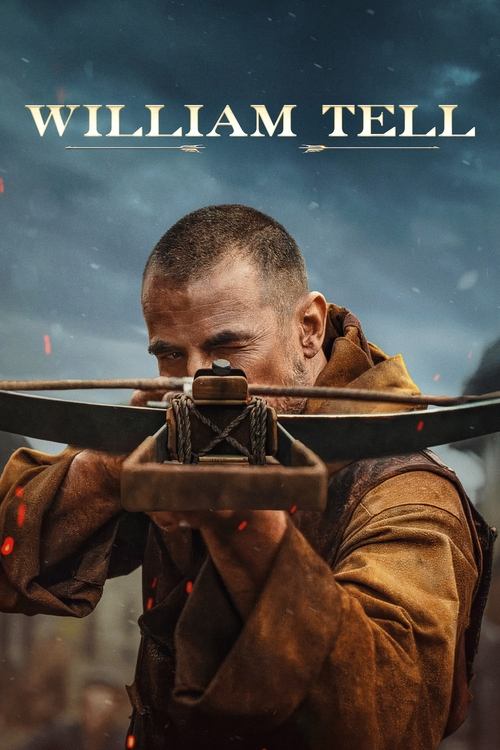
In 1307 the alpine valleys of what will become Switzerland lie under the heavy hand of the Habsburgs. Austrian garrisons man roadways and mountain passes, tax collectors ride through villages collecting levies, and the local population endures random brutality. In the townships and farms, resentments grow. Among the region's mixed loyalties, Rudenz of Attinghausen stands tied to the Austrian court by obligation and by a complicated affection for Bertha, the niece of Duke and King Albert; Bertha herself is of Swiss blood and grows increasingly frustrated at seeing her family's influence used to keep her countrymen in subjection.
The flashpoint arrives in Unterwalden when a brutal bailiff nicknamed the "Wolfshot" appears at the farmhouse of Konrad Baumgarten. The Wolfshot rapes and murders Baumgarten's wife in front of the household, an act that shatters whatever tolerance the farmers had for occupation. Enraged, Baumgarten murders the Wolfshot with a knife, receiving a stab wound in the struggle, and becomes a wanted man. As soldiers scour the countryside, Baumgarten flees across a storm-tossed lake. William Tell, a battle-worn huntsman and veteran of the Crusades now tending his land in Uri, takes Baumgarten across the waves to safety; Tell ferries him under whipping rain and pounding wind, acting from a mixture of obligation and the hardened mercy earned in conflict.
Pursuit intensifies as King Albert appoints Albrecht Gessler, a calculating Habsburg bailiff, to restore order. Gessler installs men like the enforcer Stussi to extract compliance, and his methods aim as much at humiliation as at taxation. While soldiers search houses for Baumgarten, Tell and his wounded passenger find shelter with Werner Stauffacher and his wife Gertrude. The Stauffacher homestead hides Baumgarten in plain sight; Gessler and Stussi pass through and do not detect him, though Gessler grows suspicious. Gertrude presses Tell to take a more active role in organizing resistance, but he resists, scarred by past wars and cautious about plunging his family into danger.
Tell, Baumgarten, and Stauffacher set out to contact Walter Fürst in Altdorf to urge the cantons toward unity. On the road they encounter a village under plunder by Austrian soldiers. The three intervene; in the ensuing skirmish they help Arnold von Melchtal kill several of the attackers and find Melchtal's father mortally wounded. Melchtal ends his father's suffering with a deliberate blow, and the four men--Tell, Baumgarten, Stauffacher, and Melchtal--press on to Altdorf that night. They find the town occupied by Austrians and its people forced into humiliating statements of allegiance. That humiliation becomes literal when Stussi has a post erected in the marketplace with a helmet placed on top. A proclamation orders every passerby to bow before the helmet; Gessler intends the ritual as a public test of obedience.
Tell returns to Uri, to his small homestead and his wife, and he recalls his violent past in the Crusades: he once kills his own commanding officer to save his wife from execution, an action that shaped his present reluctance. Meanwhile, at the Habsburg castle, King Albert tasks Gessler with keeping the region in line. Albert encourages the match between Rudenz and Bertha for political advantage; he wants Rudenz's loyalty secured through family ties. Bertha resents this manipulation and urges Rudenz in private to choose his people above his affection for her; Rudenz wavers between devotion to the Austrian court and a growing obligation to his fellow Swiss.
On the morning that Tell brings his small son Walter into Altdorf, he refuses, as do others, to bow to the helmet. Stussi seizes the refusal as an occasion to make an example. Gessler arrives with his garrison, Rudenz among the guards, and, for his cruel amusement, commands that Tell demonstrate his skill by shooting an apple off his son's head in exchange for his freedom. The crowd protests; Rudenz speaks against the decree. Baumgarten offers himself in Tell's place to secure Tell's release, sacrificing his freedom. When the boy stands, Tell accepts the test and splits the apple with a single crossbow bolt; he reveals afterward that, had the shot struck his son, he would have killed Gessler. Gessler, incensed by the confession and unwilling to accept a threat left unchecked, executes Baumgarten at the post, killing him to underscore his authority, and places Tell under arrest.
Gessler puts Tell aboard a boat bound across the same lake he once used to ferry Baumgarten, fastening him to the mast so that he cannot escape. He confines Bertha in the hull as well, after the bailiff attempts to force himself on her; she resists and tries to stab him but is overwhelmed and taken captive. A violent storm lashes the lake as the boat crosses. High winds drive the vessel toward the shore and ground it; Bertha breaks free in the chaos, frees Tell from his bindings, and together they overpower and kill several soldiers who try to recapture them. They flee into the surrounding forests, taking refuge with local huntsmen who warn them that Gessler will soon ride to Küssnacht.
Gessler, furious at the loss of his prisoners, tasks Stussi with command of Castle Sarnen and gives him a chance to redeem his earlier failure; Stussi must hold the castle while Gessler goes to Küssnacht. Bertha and Tell split paths momentarily--Bertha decides to ride into the Austrian heart to confront King Albert and try to dissuade him from supporting Gessler, while Tell rejoins the growing resistance. In the mountains Tell sets ambushes. He takes shots at Gessler's caravan as it moves through a narrow ravine on the road to Küssnacht, killing several of Gessler's men and wounding Gessler. In that firefight, Tell receives an arrow wound in his arm and is forced to withdraw. Before she leaves to see Albert, Bertha urges Tell to temper his thirst for revenge with caution and strategy.
The Swiss resistance consolidates. In a hidden cave near the Rhone uplands above the lake, leaders from Unterwalden, Schwyz, and Uri--led by Tell, Walter Fürst, Werner Stauffacher, Arnold von Melchtal, and others--gather. They take an oath to stand together and plan coordinated action; their decision to unify binds them into a single strategic aim to liberate their people. The group trains, prepares supplies, and studies the layout of Altdorf and its defenses. At the same time, news of a betrayed assault reaches them: one of the Swiss attacks on Sarnen had been disclosed to the Austrians, allowing Stussi's forces to ambush the rebels. In that ambush Stussi's troops kill Gertrude Stauffacher; she dies in the chaos, felled by the Austrian attack while defending her household. The loss hardens Tell; the resistance places him at the head of their force.
Bertha penetrates the Habsburg castle at Castle Habsburg in the Aargau in a direct confrontation with King Albert. She stands before him and denounces his rule; Albert has her arrested and sentences her to death. Leopold, a cousin sympathetic to the Swiss cause, intervenes and releases her from custody. In Albert's bedchamber Bertha takes the opportunity: she assassinates the king, plunging a blade into him as he sleeps and killing him. The news of Albert's death will soon ripple through the lines of his army.
Back in Altdorf, Tell positions himself as a visible threat to draw Gessler's attention and hold the bailiff's forces in check. While Gessler faces Tell at the gate, Swiss fighters use a pre-dug tunnel to infiltrate the town before dawn. A contingent of rebels emerges within the walls and swings open the city gates at sunrise. Fighting erupts street by street. In the close combat Gessler personally kills Rudenz in the melee, striking him down in the struggle, and he also kills Werner Stauffacher amid the hand-to-hand fighting that spreads through the market and narrow lanes. Austrian soldiers take hostages, capturing Walter, Tell's son, and using him to try to force Tell's surrender. As the battle continues, Austrian banners still wave on the hills; the rest of Albert's army appears above Altdorf, watching.
When Albert's commanders learn that their king has been murdered, they falter and withdraw their forces from the hillside. The retreat removes the external support for Gessler's garrison, and one by one Gessler's soldiers lay down arms. Stussi abandons Gessler and flees the field as the tide turns. Amid the surrender chaos Walter frees himself; he breaks from his captors, fights through the square, and is reunited with his father. Tell finds Gessler surrounded and prepares to execute him for his crimes. At that moment, Walter insists that Tell not kill the bailiff. He pleads for restraint, and Tell lowers his weapon. Tell spares Gessler, walking away rather than delivering vengeance at point-blank range, leaving Gessler alive among the captured soldiers.
Several days later Tell attempts to return to his private life in Uri. He walks wearily toward his homestead with wounds still evident, seeking to resume ordinary routines with his family. Bertha appears and reunites with him. She tells Tell that Albert's daughter, Agnes, has sworn to avenge her father's death and to pursue the Swiss. Agnes vows vengeance against those responsible for the killing, including Bertha and Tell, and therefore the conflict will persist beyond the present victory. The film closes on Tell and Bertha standing together on the road outside his home as the valleys remain tense; the Swiss have won a crucial set of battles and secured a pledge of unity among the cantons at Rütli, but enemies remain and retribution looms from the House of Habsburg through Agnes. The last images linger on the men and women who took up arms, the bodies left by the fights--the slain Wolfshot, Baumgarten buried after Gessler executes him, Gertrude Stauffacher martyred in the ambush, Rudenz and Werner Stauffacher felled by Gessler, and King Albert murdered in his bed by Bertha--and on a people bound together by oath amid the knowledge that further bloodshed will follow.




What is the ending?
In the climactic battle at Altdorf, William Tell leads the Swiss resistance to storm the town, defeating the Austrian forces led by Gessler, who is ultimately killed, securing Swiss independence as Tell reunites with his surviving family.
Now, picture the final act unfolding in the shadowed streets and walls of Altdorf at dawn, the air thick with mist and the clamor of war. Tell stands resolute at the town gates, his bow drawn taut, shouting a direct challenge to Gessler atop the battlements, his voice echoing off the stone to pull every Austrian eye toward him and away from the hidden flanks. His arm bears the fresh wound from earlier skirmishes, blood seeping through his bandages, but his stance is unyielding, eyes locked on his foe.
Below ground, in the suffocating darkness of a secret tunnel carved through earth and rock, a band of resistance fighters--faces grim with soot and determination--crawl forward single file, torches flickering against damp walls, their breaths ragged as they push aside the final barrier of loose stones and timber.
They emerge into the town just as the first light breaks, bursting through a concealed grate in an alleyway, swords and axes at the ready. Without pause, they charge the nearest guards, steel clashing in sudden frenzy--blades hacking through armor, men grunting and falling in sprays of blood onto the cobblestones slick with dew.
The fighters reach the massive city gates, heaving against the iron bars from inside while Tell's main force outside rams them with a felled tree trunk, the wood splintering against metal until the gates groan open wide. Tell's men pour in like a flood, a roaring wave of Swiss peasants and warriors clad in rough leathers and chainmail, wielding pikes, scythes, and bows, overwhelming the disoriented Austrians in house-to-house savagery.
Amid the chaos in the central square, Gessler fights like a cornered beast, his fine armor dented and splashed red. He drives his sword through Rudenz's chest in a brutal thrust--Rudenz, the conflicted Austrian noble, gasping as he crumples lifeless to the ground, his eyes wide in final betrayal. Gessler then spins and slashes Werner Stauffacher across the throat--Werner, the steadfast Crusader comrade, clutching the gushing wound as he collapses amid the trampled market stalls, his body twitching once before stilling.
Gessler seizes Tell's son Walter in the melee, dragging the boy by the collar to the town hall steps, sword pressed to the child's neck. He bellows for surrender, holding Walter and a cluster of terrified townspeople hostage, their hands bound, faces pale as Gessler's guards form a ragged circle around them, crossbows leveled at the advancing Swiss.
Tell advances alone through the fray, stepping over fallen bodies, his crossbow reloaded. The two lock eyes across the bloodied square--Gessler sneering, Walter trembling. Tell looses an arrow with deadly precision, piercing Gessler's heart through a gap in his armor. Gessler staggers, sword dropping, blood bubbling from his lips as he releases Walter and slumps backward down the steps, dead before he hits the stone.
The remaining Austrian guards falter and flee or yield, dropping weapons as the Swiss cheer. Tell rushes to Walter, pulling his son into a fierce embrace, both alive and whole amid the settling dust.
Bertha, the headstrong Austrian princess who had broken free earlier and aided the resistance, stands nearby, her gown torn and hands bloodied from the fight; she survives, nodding to Tell with quiet resolve before turning to rally the healers for the wounded.
Tell's wife Suna emerges from the edges of the crowd, having sheltered through the storm and battles, rushing to embrace Tell and Walter, her face streaked with tears and dirt, the family reunited unbroken.
Baumgarten, the farmer who sparked it all by slaying the tax collector, fights on in the streets and survives the assault, clasping Tell's forearm in victory.
King Albert, distant in his orders, remains offscreen, his influence waning as Swiss banners rise over Altdorf. The main participants--Tell, Walter, Suna, Bertha, and Baumgarten--stand victorious, the Austrians routed, Gessler slain, Rudenz and Stauffacher fallen, the town gates flung wide to a new dawn of independence.
Is there a post-credit scene?
Based on the search results, there is conflicting information about post-credits scenes in William Tell (2025).
One source states that "There are no mid- or post-credits scenes" in the film. However, another source from Roger Ebert's review mentions "There's even a post-credits scene introducing the next royal villain for Tell to resist," describing it in the context of the film's Marvel-like structure. A third source also references that the film "teases a MCU-like post-credits scene".
The most direct and explicit statement comes from the DVD Fever review, which clearly states twice that there are no mid- or post-credits scenes. This creates a contradiction with the other sources that reference a post-credits scene. Given this discrepancy, it's unclear whether a post-credits scene actually exists in the final theatrical release of the film.
What happens during the famous apple-shooting scene with William Tell and his son?
In the film's iconic opening sequence, William Tell (Claes Bang), a skilled huntsman and former Crusader, stands in the village square surrounded by villagers, soldiers, his wife Suna (Golshifteh Farahani), and his son Walter (Tobias Jowett). The cruel Austrian Viceroy Gessler (Connor Swindells) orders Tell to shoot an apple balanced precariously on Walter's head as punishment for refusing to bow to a soldier's helmet on a post, symbolizing Austrian authority. Tell's hands are bound initially, heightening the tension as the crowd watches in horrified silence, his face etched with steely determination masking deep paternal fear. With precise aim from his crossbow, he splits the apple cleanly without harming Walter, his breath steady despite the emotional turmoil of endangering his boy's life for defiance. Gessler, suspicious, demands a second arrow's purpose; Tell confesses it was for Gessler himself if the first missed, leading to his immediate arrest amid the outraged villagers' uproar.
Who is Baumgarten and why does William Tell help him?
Baumgarten (Sam Keeley) is a desperate Swiss farmer whose wife (Neva Leoni) is brutally raped and murdered by the sadistic Austrian tax collector Wolfshot (Billy Postlethwaite), an act of depravity that ignites Baumgarten's vengeful fury. In a raw, blood-soaked revenge scene in a bathtub, Baumgarten stabs Wolfshot to death, committing treason against the Austrian crown. Fleeing execution at a storm-swept lake's edge, he begs the reluctant huntsman William Tell for aid. Tell, scarred by Crusades horrors and valuing family above all, wrestles with moral conflict--risking his own wife Suna and son Walter's safety--but his innate sense of justice compels him to ferry Baumgarten across the treacherous lake to safety, unknowingly stepping onto the path of rebellion as they encounter fellow resistors.
What role does Bertha play in the story and how does she interact with Tell?
Bertha (Ellie Bamber), the independent and headstrong Austrian princess, embodies internal conflict within the occupiers, yearning to aid the Swiss against her own kind. During the chaotic storm on the lake where Tell is bound to the ship's mast en route to prison, Bertha is locked in the hold; seizing the tempest's fury with lightning cracking overhead and waves crashing violently, she breaks free, her gown torn and face fierce with resolve. She liberates Tell, aiding him in a brutal fight where they dispatch soldiers amid splintering wood and howling winds, her hands bloodied as she hands him a blade. They flee into misty woods, where huntsmen reveal Gessler's path to Küssnacht; later, before parting to dissuade King Albert from aiding Gessler, Bertha urges Tell toward cautious strategy over blind revenge, her eyes pleading with conflicted loyalty, highlighting her evolution from noble captive to reluctant ally.
How does William Tell escape during the storm on the lake?
After successfully shooting the apple but confessing his backup arrow's lethal intent, Tell is seized and transported across the stormy lake--ironically the same one he crossed with Baumgarten--bound tightly to the ship's mast, ropes biting into his wrists as rain lashes his face and thunder booms. Bertha, imprisoned below decks, exploits the vessel's grounding on the shore amid the gale's chaos; with splintered timbers and panicked soldiers slipping on decks, she shatters her chains using a loose plank, her breaths ragged with adrenaline. Bursting topside, she cuts Tell free, and together they unleash mayhem--Tell snapping necks with raw power honed from Crusades, Bertha stabbing with desperate ferocity--killing guards in a frenzy of sprays and guttural cries before vanishing into the enveloping dark woods, hearts pounding with fragile freedom.
What happens in the final battle at Altdorf involving Tell, Gessler, and the resistance?
Tell, now leading the resistance encamped near Altdorf with an arrow wound throbbing in his arm, orchestrates a daring assault. He boldly challenges Gessler at the town gates, his voice booming defiance to distract the tyrant amid torchlit tension and clashing steel echoes. Resistance fighters, including allies like Werner Stauffacher, infiltrate via a secret tunnel under cover of night, their faces grim with purpose as they pry open the city gates at dawn. Tell's forces storm in a whirlwind of chaos--swords hacking limbs in gory arcs, scythes whirling, blood geysers erupting--while Gessler slays Rudenz and Stauffacher in ferocious duels, his eyes wild with tyrannical rage. Capturing young Walter and holding townsfolk hostage, Gessler forces a climactic standoff, intertwining personal vendettas with the broader rebellion's fury for Swiss independence.
Is this family friendly?
William Tell (2025) is not family friendly and is rated R, requiring parental accompaniment for viewers under 17.
The film contains the following potentially objectionable content:
- Graphic violence: Strong and bloody violence throughout, including frequent stabbings and arrow wounds with realistic depictions of medieval warfare and gory battle scenes
- Sexual violence: References to rape as a plot element
- Intense warfare: Brutal battle sequences that may be disturbing, particularly for younger viewers
- Brief nudity: Some nude scenes
- Emotional intensity: Heavy, emotionally charged subject matter dealing with oppression and war
The film is best suited for adults and mature older teens (16-17) with parental guidance who can handle graphic violence and serious historical themes. It is explicitly not recommended for ages 13-15 due to the graphic nature of the content. Parents sensitive to depictions of violence, warfare, or sexual assault should be aware before viewing.








