











Should I watch it?
Ask Your Own Question

What is the plot?
Sorry, we aren't able to watch and write up a full detailed plot yet. Check back in a few days.



What is the ending?
Short, Simple Narrative of the Ending
On the opening night of Oklahoma!, Lorenz Hart, struggling with alcoholism and depression, slips away from the theater to a bar in the New York Theater District. He drinks, reflects on his failed partnership with Richard Rodgers, and encounters several friends and acquaintances. Rodgers eventually arrives, and the two share a tense, emotional conversation on a staircase, where Rodgers expresses both gratitude and frustration toward Hart. Hart, unable to join the celebratory party upstairs, remains at the bar, isolated and self-destructive. The film ends with Hart alone, facing the reality that his former partner has moved on to greater success, while he is left behind, his personal and professional life unraveling.
Expanded, Chronological, Scene-by-Scene Narrative of the Ending
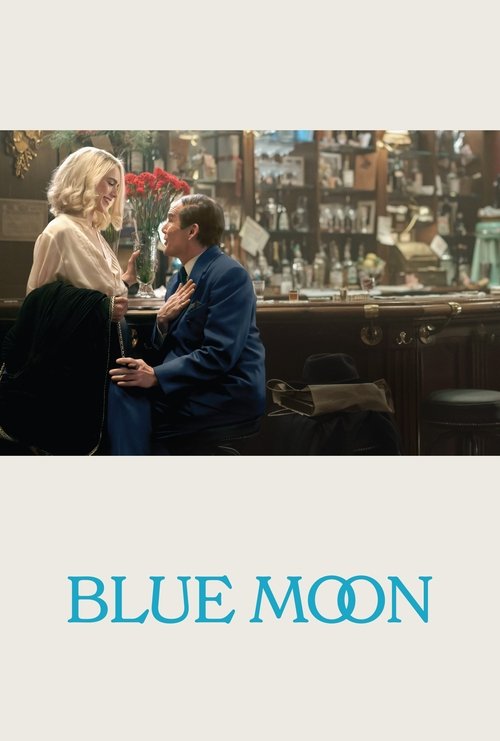
The final act of Blue Moon unfolds almost entirely within the dimly lit interior of Sardi's, a restaurant and bar in the heart of New York's Theater District, on the evening of March 31, 1943--the opening night of Rodgers and Hammerstein's Oklahoma! Lorenz Hart, played by Ethan Hawke, has quietly left the theater, unable to bear the spectacle of his former collaborator Richard Rodgers' new triumph. Hart's mood is a volatile mix of bitterness, self-pity, and wry humor. He orders a drink, defying the barman's reluctance to serve him more alcohol. The camera lingers on Hart's face, his eyes darting between the bar's patrons and the door, as if expecting--or dreading--someone's arrival.
As the night progresses, Hart is visited by a series of acquaintances. Margaret Qualley's Elizabeth Weiland offers a sympathetic ear, but Hart deflects her concern with sharp wit. Bobby Cannavale's Eddie, a fellow habitué of the theater world, shares a drink and some commiseration, but their conversation circles back to Hart's estrangement from Rodgers. Patrick Kennedy's E.B. White makes a brief appearance, adding to the sense of a New York artistic community that both embraces and isolates Hart. Throughout these encounters, Hart's demeanor shifts between charm and self-loathing, his laughter often giving way to sudden, quiet despair.
The emotional core of the ending arrives when Richard Rodgers, played by Andrew Scott, enters the bar. Rodgers has come from the triumphant premiere, his face a mask of conflicted emotions--pride in his new success, but also a palpable unease at seeing his former partner in such a state. The two men retreat to a secluded staircase landing, the noise of the bar fading into the background. The scene is charged with unspoken history: Rodgers expresses genuine gratitude for Hart's contributions to their partnership, but also frustration at Hart's self-destructive behavior, which ultimately drove them apart. Hart, for his part, cannot hide his jealousy and hurt, mocking the populism of Oklahoma! even as he betrays a longing for the creative connection he once shared with Rodgers.
Their exchange is a dance of regret and resignation. Rodgers, though sympathetic, is resolute in his decision to move forward with Hammerstein. He encourages Hart to take care of himself, but it is clear he has little hope that Hart will change. Hart, meanwhile, is too proud to ask for help, too wounded to admit his need for Rodgers' approval. The conversation ends with Rodgers ascending the stairs to join the celebratory party upstairs--a world Hart can no longer access. Hart watches him go, then returns to the bar, ordering another drink.
The film's final moments focus on Hart alone at the bar, the sounds of laughter and music from the party above drifting down. The camera holds on his face as he sips his drink, his expression a mixture of defiance and defeat. The bartender, sensing the depth of Hart's isolation, says nothing. The night wears on, the bar empties, and Hart remains, a figure both brilliant and broken, unable to escape the consequences of his choices.
Fate of the Main Characters at the End
- Lorenz Hart: He is left alone at the bar, drinking heavily, emotionally isolated, and unable to reconcile with Rodgers or join the celebration of Oklahoma!'s success. The film implies, through historical context, that Hart's decline will continue, and he will die less than a year later, drunk and alone.
- Richard Rodgers: He leaves Hart to rejoin the party upstairs, symbolically and literally moving on to a new chapter in his career and life. His fate, as depicted in the film, is one of continued success and artistic reinvention.
- Elizabeth Weiland, Eddie, E.B. White, and others: These supporting characters come and go throughout the night, offering moments of connection or confrontation, but none alter Hart's trajectory. They return to their own lives, leaving Hart to face his demons alone.
Key Points the Movie Highlights in the Ending
The ending of Blue Moon is a portrait of artistic genius shadowed by personal tragedy. It meticulously depicts the final hours of a partnership that shaped American musical theater, focusing on the emotional cost of creative divergence. The film does not offer redemption or resolution for Hart; instead, it presents a clear-eyed view of a man whose talent is inseparable from his self-destructive tendencies. The staircase scene between Hart and Rodgers is the emotional climax, laying bare the complexities of collaboration, gratitude, resentment, and the painful process of moving on. The film's closing image--Hart alone at the bar, the world celebrating without him--underscores the loneliness of the artist who cannot adapt to change, and the inevitability of being left behind when the creative tide turns.
Who dies?
As of my last update in October 2023, there is no detailed information available regarding the plot or character fates in the movie titled "Blue Moon," produced in 2025. Therefore, I cannot provide specifics about character deaths or the circumstances surrounding them. For accurate and detailed information, I recommend checking official movie sources or reviews once the film is released.
Is there a post-credit scene?
There is no information available about a post-credit scene in the 2025 movie "Blue Moon," which is a biopic about Lorenz Hart. The film focuses on Hart's struggles with alcoholism and mental health during the opening night of "Oklahoma!" and does not mention any post-credit scenes. The available details about the movie do not include any information about additional scenes after the credits.
Is this family friendly?
The movie "Blue Moon" produced in 2025 is not family-friendly due to several mature themes and content. Here are some aspects that might be objectionable or upsetting for children or sensitive viewers:
-
Language and Sexual References: The film contains strong language and sexual references, which are central to its R rating. While the profanity is not excessively pervasive, it includes moderate use of strong words. Sexual humor and detailed descriptions of sexual activity are also present, though not explicit.
-
Substance Abuse: The movie portrays alcoholism realistically, with the main character frequently shown drinking heavily and experiencing drunken stupors. This depiction is intense and not glamorized, which could be distressing for some viewers.
-
Emotional Distress: The film explores themes of depression, heartbreak, and emotional turmoil, creating a heavy and sorrowful atmosphere. Scenes of emotional distress are vivid and may be overwhelming for sensitive viewers.
-
Mature Themes: The storyline involves complex adult relationships and themes of self-destruction, which are not suitable for younger audiences. While there is no graphic violence, the emotional intensity of the scenes could be unsettling.








