
















Popular
Why does Tommy Ward have to go on the run after the opening job mistake?
Who is Benson, and why does he make Tommy look after Julian?
Who is Julian, and what is his relationship with Benson?
Why does Tommy bring Julian along on the hit assignment?
Who is Freddy Darby, and how does he affect Tommy’s story?
Should I watch it?
Ask Your Own Question

What is the plot?
Tommy Ward opens the film in London under the glare of neon and bass, moving through a costume-packed nightclub where every face is hidden behind an animal mask. He is a professional killer, but the job is already compromised before the first shot is fired because Tommy's eyesight is failing and he refuses to deal with it. He is supposed to identify a target wearing a horse mask, yet in the blur and strobe of the club he mistakes a donkey mask for the right man and kills him instead, a fatal mistake that instantly turns a routine hit into a disaster.
The man Tommy kills is not just random collateral; he is a relative of Freddy Darby, a powerful London crime boss whose family loyalty runs deeper than business. That single error ignites the whole film's conflict, because Freddy Darby takes the death personally and begins hunting Tommy down for revenge. Tommy's botched hit also leaves him with no safe place left in the UK, so he runs, abandoning London and disappearing across the Atlantic to Los Angeles.
Tommy lands in LA battered, disgraced, and still thinking about home. He is separated from his young son in London, and that absence weighs on him as much as the danger behind him. A year passes in this new life, and Tommy ends up working for a different crime boss, Benson, a low-rent, caustic, controlling man who treats everyone around him like a tool. Benson is the kind of boss who disguises coercion as a bargain, and what he wants most is not just criminal labor but control over his own family. His son, Julian, is awkward, soft, and more interested in cosplay, LARPing, and video games than in violence or power.
Benson sees Julian's gentleness as humiliation. He wants Tommy to turn the boy into what Benson imagines a man should be, and he uses Tommy's desperation to get home as leverage. Tommy wants safe passage back to London so he can see his son again, and Benson offers that chance on one condition: Tommy must take Julian with him on his next job and teach him how to survive in the criminal world. The deal is transactional on paper, but emotionally it becomes the center of the story. Tommy is a broken father looking for a way home, and Julian is a neglected son being forced into a violent identity he does not want.
Their first real dynamic is defined by irritation and contrast. Tommy is gruff, cynical, and world-weary, the sort of man who has seen too much and learned to survive by making everything a joke. Julian is nervous, inexperienced, and visibly out of place in a world of guns and threats. Benson practically sneers at him, expecting Tommy to strip away the boy's softness and replace it with aggression. The movie keeps returning to the irony of this arrangement: the hitman who has failed at family is now being asked to manufacture masculinity in someone else's son while quietly trying to repair his own relationship with his child back in London.
The assignment Benson gives Tommy is not a simple drive-by or one clean execution. He sends Tommy and Julian after a notorious assassin, Alistair McRory, whose name carries weight in the criminal underworld. Alistair is described as infamous and dangerous, and one review notes that he has undergone a kind of spiritual awakening that may have pushed him toward revealing secrets about his previous crimes. That detail adds an edge of urgency to the job: Alistair is not only a killer to be eliminated, but also a loose end who may know too much. Benson's order is pragmatic and ruthless, but it also deepens the paranoia around the entire mission, because whoever gets to Alistair first may gain leverage over everyone else.
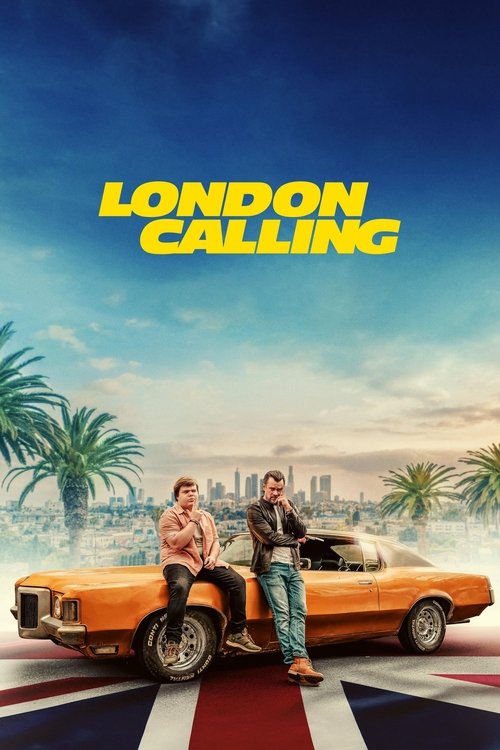
Tommy and Julian head out together, and the road-movie structure takes over as they move through the criminal landscape of Los Angeles. They travel in a vintage car, bouncing from one dangerous encounter to another while the city swallows them in sun, noise, and threat. Julian is not useless; in fact, he learns quickly when panic gives way to necessity. The awkward boy Benson mocked begins to show resourcefulness, and Tommy discovers that beneath the cosplay and uncertainty is someone capable of paying attention, improvising, and surviving. Their forced proximity slowly changes the tone of the journey from contempt to reluctant mentoring, then to something much closer to a surrogate father-son bond.
The film's tension escalates as the pair work through the mission and collide with the criminal chaos surrounding it. Along the way they face violent resistance from local underworld figures, including drug dealers and other men who would happily kill them both for the wrong move or the wrong word. The action is staged as a chain reaction of mistakes, arguments, and gunfire, with every setback making Tommy's original problem worse rather than better. He wants a clean path back to London, but every step in LA seems to drag him deeper into a mess of loyalty, identity, and revenge.
Meanwhile, Freddy Darby is closing in from the other side of the Atlantic. He has been tipped off to Tommy's location and comes to Los Angeles intent on exacting revenge for the relative Tommy killed in London. This turns the story from a job-gone-wrong comedy-thriller into a full-blown manhunt. Tommy is no longer just trying to finish a contract; he is trying to survive long enough to reclaim his life. The pressure grows because Darby's presence means Tommy's past has physically entered the same city as his present, and there is no more room for evasions or excuses.
What makes the film work as a character piece is that Tommy and Julian are both trapped by fathers who want them to be something they are not. Benson wants Julian to become hard, fearless, and useful in a criminal sense, while Tommy wants nothing more than to return to his own son and undo the damage of his absence. The parallel is obvious, but the movie uses it well: the man hired to teach toughness is himself emotionally fragile, and the boy being pushed into violence turns out to be the one person willing to trust him. As they move through the assignment, each begins to see the other less as a burden and more as a mirror of what family pressure can do.
The confrontations become more direct and more dangerous as the night wears on. Tommy and Julian are pulled deeper into the final stages of the hit, and the chaos around Alistair McRory grows into something bigger than a simple target elimination. The reviews describe gunfights, car chases, and explosions, with the ride-along spiraling into "utter mayhem" and forcing the pair to keep surviving rather than simply completing a contract. Alistair's significance as both assassin and potential truth-teller gives the pursuit additional bite, because his death would erase the secrets Benson and others may want hidden.
Then the story tightens into its final collision. Freddy Darby and Tommy finally meet face to face, and that encounter becomes the emotional and violent climax of the film. Darby has come not just to punish Tommy, but to settle the London blood debt that started everything. Tommy, for his part, is no longer the same man who botched the nightclub hit; he has spent the film being forced to protect Julian, improvise under fire, and confront what kind of father he actually is. The showdown carries that weight. It is not merely about revenge between criminals. It is about whether Tommy can survive the consequences of one bad shot and still get back to his son.
The available sources do not provide a full shot-by-shot account of the final clash, so the precise mechanics of every fatal blow are not fully specified in the material at hand. What is clear is that the climax resolves the central pressure points of the story: Tommy, Julian, and the others are pushed into direct confrontation with the violence that has been building since the London nightclub job, and the night ends with survival as the crucial question. The mission against Alistair McRory, the revenge hunt by Freddy Darby, and Benson's manipulative father-son agenda all converge in the same final stretch.
The film's emotional resolution rests on the bond that forms between Tommy and Julian. Julian begins as Benson's awkward disappointment, but by the end he has proven that he can adapt, think, and act under pressure. Tommy, meanwhile, is forced to confront his own failure as a father and the emptiness of treating family as something that can be fixed later. Their connection becomes the story's most human element: the killer who cannot see clearly learns to understand someone else's pain, and the boy who never fit the role assigned to him finds a model of care in the least expected place.
As for the deaths, the only one explicitly identified in the sources is the opening mistake in London: Tommy kills the donkey-masked relative of Freddy Darby instead of the intended horse-masked target. The reviews confirm that this death is the origin of the revenge plot and the reason Tommy flees the UK. The later sources describe violent confrontations, but they do not fully enumerate every person who dies in the climax or specify each killer with certainty, so any more detailed death count would go beyond what the available material supports.
By the end, the story leaves Tommy standing at the edge of a possible second chance. He has not escaped the consequences of his past cleanly, but he has turned his exile into something resembling redemption by protecting Julian and proving that he is capable of more than botching a hit and running. Julian, once mocked as a "stupid loser," emerges as a survivor rather than a punchline. Benson's control over both his son and Tommy is challenged by the chaos of the mission, and Freddy Darby's revenge quest is absorbed into the larger violence of the night. The final mood is one of exhausted survival: a father trying to get home, a son trying to earn approval, and a hitman learning that the road back to family runs straight through the wreckage he has made.






What is the ending?
At the end of London Calling (2025), Tommy Ward and Julian survive a chaotic night of hits and confrontations, ultimately overcoming the threats from Freddy Darby's crime syndicate. Tommy secures safe passage back to London, fulfilling his goal to reunite with his son, while Julian gains his father Benson's reluctant approval, having grown through the ordeal.
The ending unfolds as follows:
Tommy Ward, the London-based hitman on the run after mistakenly killing a relative of crime lord Freddy Darby, is in Los Angeles working under Benson, a local crime boss. Benson demands Tommy take his socially awkward son Julian on a hit to toughen him up. The final act begins with Tommy and Julian embarking on their last contract: eliminating a dangerous assassin who has gone rogue.
The scene opens with Tommy and Julian preparing for the hit, tension palpable as Julian struggles with the violent world he's been thrust into. They infiltrate the assassin's heavily guarded location, engaging in a series of intense, practical-action sequences involving shootouts and hand-to-hand combat. Tommy's experience contrasts with Julian's inexperience, but Julian gradually adapts, showing unexpected courage.
As they complete the hit, news arrives that Freddy Darby and his men have tracked Tommy to Los Angeles, intent on revenge. A climactic confrontation ensues in a sun-drenched urban setting, where Tommy and Julian must fight off Darby's goons. The fight is brutal and chaotic, with explosions and close calls, but Tommy's skill and Julian's newfound resolve help them survive.
In the aftermath, Tommy negotiates with Benson to secure safe passage back to London. Benson, witnessing Julian's growth and the bond formed between the two, gives his reluctant approval of Julian's transformation. Tommy, emotionally worn but determined, prepares to return home to his own son, finally able to reunite after a year on the run.
The film closes with Tommy and Julian parting ways, their relationship changed by the night's events. Tommy boards a plane back to London, hopeful for reconciliation with his son, while Julian remains in Los Angeles, having earned his father's respect and a new sense of self.
Thus, the fates of the main characters at the end are: Tommy achieves his goal of returning to his son; Julian matures and gains his father Benson's approval; Benson remains in Los Angeles, having reluctantly accepted his son's growth; and Freddy Darby's immediate threat is neutralized, at least for the time being.
Who dies?
Yes, characters do die in the 2025 film London Calling. The key death is that of a distant relative of London's biggest crime lord, Freddy Darby. This death occurs early in the film when the protagonist, hitman Tommy Ward, mistakenly kills this relative during a job at a London nightclub. The victim is wearing a donkey mask, and Tommy's error is due to a refusal to get an optometry appointment, leading to a fatal case of mistaken identity. This killing sets off the main conflict, forcing Tommy to flee London and go on the run.
The relative killed is not a close family member but is connected to Freddy Darby's wife's family, which becomes a running joke about the degrees of separation. Freddy Darby, played by Aidan Gillen, is the crime boss who seeks revenge for this death and eventually tracks Tommy to Los Angeles.
Beyond this initial killing, the film involves further violent encounters and hits, including a lethal assassin who has gone off the deep end and his brother, but the sources do not specify additional named character deaths or detailed circumstances beyond the initial killing that drives the plot.
In summary:
- Victim: A distant relative of Freddy Darby (crime lord)
- Who killed: Tommy Ward (hitman protagonist)
- When: Early in the film, during a nightclub hit in London
- How: Mistaken identity during an assassination attempt (animal masks involved)
- Why: Tommy's refusal to get an eye exam led to the mistake
- Consequence: Tommy must flee London and evade Freddy Darby's revenge.
No other specific character deaths with detailed circumstances are documented in the available sources.
Is there a post-credit scene?
There is no specific information available about a post-credits scene in the 2025 movie "London Calling." The film, starring Josh Duhamel and Jeremy Ray Taylor, follows a hitman who must take his crime boss's son on a mission to teach him how to become a man. While reviews highlight the buddy comedy elements and action sequences, none of the available sources mention a post-credits scene. The movie's focus is on the developing relationship between the two main characters and the action-packed plot, but it does not include any noted post-credits content.
Why does Tommy Ward have to go on the run after the opening job mistake?
Tommy Ward accidentally kills the relative of London crime boss Freddy Darby during a failed hit, and that mistake makes him a target for revenge, forcing him to flee the UK and hide in Los Angeles.
Who is Benson, and why does he make Tommy look after Julian?
Benson is Tommy's new crime-boss employer in Los Angeles, and he uses Tommy's need for safe passage home as leverage: Tommy must teach Benson's socially awkward son Julian how to toughen up and become a man.
Who is Julian, and what is his relationship with Benson?
Julian is Benson's teenage son, and their relationship is strained because Benson sees him as socially awkward and not masculine enough, while Julian is more interested in LARPing and validation than in his father's criminal world.
Why does Tommy bring Julian along on the hit assignment?
Tommy is forced to drag Julian along on his newest contract killing as part of Benson's deal, turning the job into a mentorship and survival test rather than a normal assassination.
Who is Freddy Darby, and how does he affect Tommy’s story?
Freddy Darby is London's biggest crime boss, and Tommy's accidental killing of one of Freddy's relatives sets the whole chase in motion by putting Tommy in Freddy's crosshairs and motivating Tommy's desperate attempt to get back to his son.
Is this family friendly?
No--London Calling (2025) is not family friendly for children, and it is generally not recommended for younger teens because it is rated R for strong/bloody violence, language throughout, drug use, and some sexual content.
Potentially objectionable or upsetting elements include: - Frequent strong profanity and crude language. - Violence with blood and injury detail, including repeated fights and killings. - Graphic or disturbing images/sounds related to the violence. - Drug-related material, including drug use or dealing. - Sexual content, including suggestive material and at least one brief non-explicit scene involving porn/partial nudity, according to parent-guide sources. - Horror/scary intensity or tense crime-action elements that may bother sensitive viewers.
If you want, I can also give you a very short age-by-age recommendation for under 10, 10–13, and 14+ based on the available parent guides.








