




























Popular
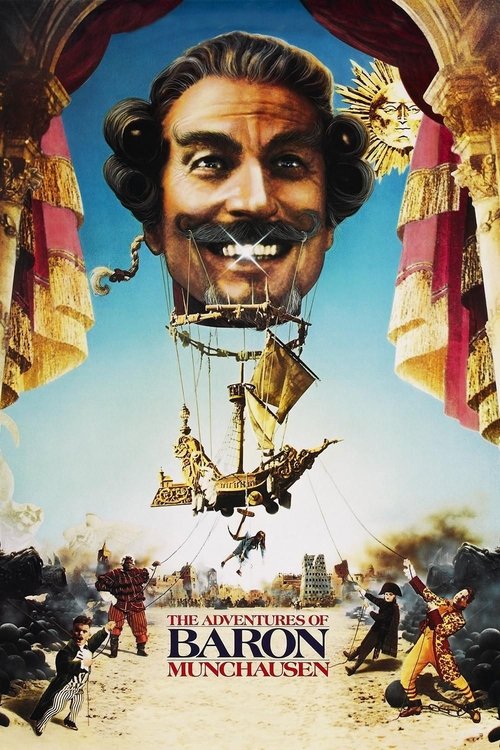
What fantastical adventures does Baron Munchausen embark on during the film?
How does Baron Munchausen meet the characters of the city under siege?
What role does the character Sally play in Baron Munchausen's adventures?
What is the significance of the character of the Sultan in the story?
How does Baron Munchausen's character reflect the theme of storytelling in the film?
Should I watch it?
Ask Your Own Question

What is the plot?
Sorry, we aren't able to watch and write up a full detailed plot yet. Check back in a few days.






What is the ending?
In the ending of "The Adventures of Baron Munchausen," Baron Munchausen and his friends confront the Sultan's forces, using the power of imagination to defeat them. The Baron ultimately saves the city and the people, but he must leave as the city returns to its mundane reality. The film concludes with the citizens inspired by the Baron's tales, embracing the power of imagination.
Now, let's delve into the ending in a more detailed narrative fashion.
As the climax of the story unfolds, Baron Munchausen, played by John Neville, finds himself in a grand confrontation against the Sultan's forces. The city, under siege, is filled with despair, but the Baron, along with his loyal companions--Sally, the young girl who believes in his stories, and the eccentric characters he has met along his journey--decides to take action.
In a spectacular display of imagination and creativity, the Baron conjures up a series of fantastical events. He first calls upon the power of the moon, which he had previously visited, to help him. The moon, personified as a beautiful woman, descends to assist him. The Baron and his friends ride on the moon's light, soaring above the battlefield, where they witness the Sultan's army preparing for an assault.
The Baron's companions, including the giant and the warrior, each contribute their unique abilities to the fight. The giant uses his immense size to intimidate the enemy, while the warrior showcases his combat skills. Together, they create a spectacle that captivates the citizens of the city, who begin to rally behind the Baron and his friends.
As the battle rages on, the Baron's tales come to life. He uses his wit and charm to outsmart the Sultan's forces, turning their own weapons against them. The Sultan, portrayed as a tyrant, becomes increasingly frustrated as his plans unravel. The citizens, inspired by the Baron's bravery and the magic of imagination, join the fight, transforming from passive observers into active participants.
In a pivotal moment, the Baron confronts the Sultan directly. The Sultan, realizing he is losing control, attempts to suppress the power of imagination that the Baron represents. However, the Baron's belief in the extraordinary prevails. With a final flourish, he leads a charge that overwhelms the Sultan's forces, showcasing the triumph of creativity and belief over oppression and despair.
As the dust settles, the city is liberated. The citizens, once fearful and downtrodden, now stand united, filled with hope and a renewed sense of wonder. They celebrate their victory, but the Baron knows that his time in the city is coming to an end. He understands that while he has inspired them, he cannot remain in a world that has returned to the mundane.
In a bittersweet farewell, the Baron bids adieu to Sally and his companions. He expresses his gratitude for their belief in him and the adventures they shared. Sally, with tears in her eyes, promises to keep the spirit of imagination alive, vowing to tell the stories of the Baron to future generations. The Baron, with a twinkle in his eye, rides off into the horizon, leaving behind a legacy of wonder.
As the film concludes, the citizens of the city, now emboldened by their experiences, embrace the power of imagination. They gather together, sharing stories and dreams, ensuring that the spirit of the Baron Munchausen lives on in their hearts. The final scene captures the essence of the film: a celebration of creativity, the importance of belief, and the idea that even in the face of adversity, imagination can lead to extraordinary outcomes.
In summary, the fates of the main characters are as follows: Baron Munchausen departs to continue his adventures, Sally becomes a storyteller, and the citizens of the city are transformed, united in their newfound belief in the extraordinary. The Sultan, defeated and humiliated, is left to ponder the power he underestimated. The film closes on a note of hope, emphasizing the enduring impact of imagination and storytelling.
Is there a post-credit scene?
The Adventures of Baron Munchausen, produced in 1988, does not have a post-credit scene. The film concludes with the resolution of its narrative, focusing on the themes of imagination, storytelling, and the power of belief. After the climactic events where Baron Munchausen and his companions confront the Turkish army and save the city, the story wraps up without any additional scenes or content after the credits. The film ends on a note that emphasizes the importance of adventure and the spirit of storytelling, leaving the audience with a sense of wonder rather than a continuation of the plot.
What fantastical adventures does Baron Munchausen embark on during the film?
Baron Munchausen embarks on several fantastical adventures throughout the film, including a journey to the moon where he meets a giant, a battle with a fearsome sea monster, and a daring rescue of a princess from the clutches of the Sultan. Each adventure showcases his larger-than-life storytelling and imagination.
How does Baron Munchausen meet the characters of the city under siege?
Baron Munchausen meets the characters of the city under siege when he arrives to help the citizens who are being attacked by the Turkish army. He encounters a group of citizens, including a young boy named Henry, who believe in his legendary tales and seek his help to save their city.
What role does the character Sally play in Baron Munchausen's adventures?
Sally is a key character who represents the spirit of adventure and belief in the impossible. She is a young girl who becomes enamored with Baron Munchausen's stories and ultimately joins him on his quest to save the city, embodying the innocence and courage needed to face the challenges ahead.
What is the significance of the character of the Sultan in the story?
The Sultan serves as the primary antagonist in the film, representing tyranny and oppression. His desire to capture the princess and his relentless pursuit of power create a sense of urgency in Baron Munchausen's adventures, driving the plot forward as the Baron must outwit him to save the day.
How does Baron Munchausen's character reflect the theme of storytelling in the film?
Baron Munchausen's character is a master storyteller whose exaggerated tales blur the line between reality and fantasy. His adventures are not just about physical feats but also about the power of imagination and belief. His ability to inspire others through his stories is central to the film, as it encourages the citizens to believe in hope and possibility.
Is this family friendly?
The Adventures of Baron Munchausen, produced in 1988, is a fantastical film that blends whimsy with darker themes. While it is visually stunning and imaginative, there are several aspects that may be considered objectionable or upsetting for children or sensitive viewers:
-
Violence and War Imagery: The film features scenes of war, including cannon fire and soldiers in battle, which may be intense for younger audiences.
-
Dark Themes: The overarching theme of oppression and the threat of a tyrannical ruler can be unsettling, as it portrays a city under siege and the fear of losing freedom.
-
Mature Concepts: There are references to adult themes, such as the nature of truth versus lies, which may be complex for children to grasp.
-
Surreal and Disturbing Imagery: Some sequences involve surreal and bizarre visuals that could be confusing or frightening, such as the depiction of the underworld and fantastical creatures.
-
Emotional Turmoil: Characters experience fear, despair, and existential dread, which may resonate deeply and evoke strong emotions.
-
Mild Language: There are instances of mild language that may not be suitable for all audiences.
Overall, while the film is rich in imagination and adventure, parents may want to consider these elements when determining its suitability for younger viewers.









