
Popular
What is Winston Smith's role in the Party and how does it affect his character development?
How does Winston's relationship with Julia evolve throughout the film?
What role does O'Brien play in Winston's life and how does it impact the story?
What is the significance of the telescreen in Winston's life?
How does the concept of 'Newspeak' influence the characters and the plot?
Should I watch it?
Ask Your Own Question

What is the plot?
Sorry, we aren't able to watch and write up a full detailed plot yet. Check back in a few days.







What is the ending?
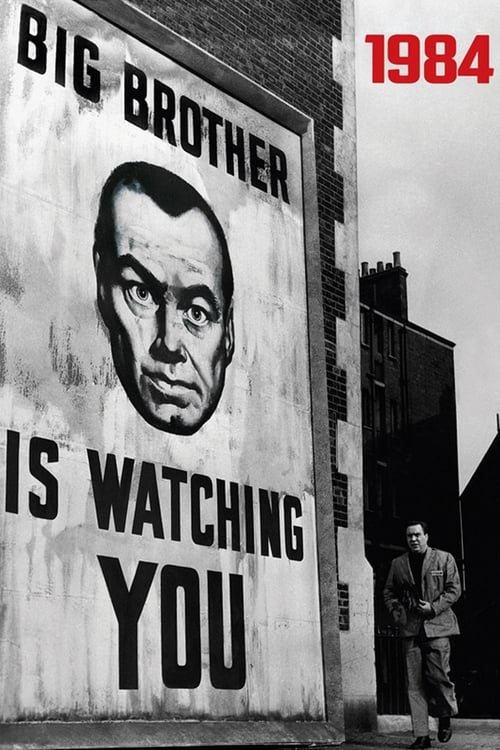
In the ending of the 1956 film "1984," Winston Smith is ultimately broken by the oppressive regime of Big Brother. After enduring intense psychological torture, he betrays his love, Julia, and is reprogrammed to accept the Party's ideology. The film concludes with Winston sitting in a café, devoid of his previous rebellious spirit, as he professes his love for Big Brother.
Now, let's delve into the ending in a more detailed narrative fashion:
As the film approaches its climax, Winston Smith finds himself in the grim confines of the Ministry of Love, where he is subjected to relentless psychological and physical torture. The atmosphere is cold and sterile, filled with the oppressive presence of the Party. Winston's spirit is gradually crushed under the weight of the Party's ideology. He is interrogated by O'Brien, who embodies the Party's ruthless power. O'Brien's voice is calm yet menacing, as he methodically breaks down Winston's resistance, forcing him to confront his deepest fears.
In a pivotal scene, Winston is confronted with a cage filled with rats, a manifestation of his greatest terror. O'Brien uses this fear as a tool of manipulation, threatening to unleash the rats on Winston unless he renounces his love for Julia. In a moment of sheer desperation, Winston betrays Julia, screaming that he would rather have the rats eat her than face his own fear. This act of betrayal marks a significant turning point; it signifies the complete erosion of his individuality and love.
Following this harrowing experience, Winston is released back into society, but he is no longer the man he once was. The once defiant and passionate lover is now a hollow shell, stripped of his rebellious spirit. He wanders through the streets of Airstrip One, the oppressive atmosphere of the Party hanging heavily in the air. The world around him is bleak, filled with propaganda and the ever-watchful eyes of Big Brother.
In a final scene, Winston sits alone in a café, a stark contrast to the passionate discussions he once had about freedom and rebellion. The camera captures his vacant expression as he stares into space, lost in thought. The weight of his betrayal hangs over him, but he has been reprogrammed to accept the Party's doctrine. In a chilling moment, he utters the words, "I love Big Brother," a phrase that signifies his complete submission to the Party. The emotional turmoil that once defined him has been replaced by a disturbing sense of acceptance.
Julia's fate is left ambiguous, but it is implied that she, too, has been broken by the Party. The film does not show her after Winston's betrayal, leaving the audience to ponder the extent of her suffering and the loss of their love.
The ending of "1984" serves as a haunting reminder of the power of totalitarianism and the fragility of human spirit, encapsulating the tragic fate of Winston and Julia as they become mere shadows of their former selves, forever trapped in a world dominated by Big Brother.
Is there a post-credit scene?
The 1956 film "1984," based on George Orwell's novel, does not contain a post-credit scene. The film concludes with a stark and somber ending that encapsulates the oppressive atmosphere of the totalitarian regime depicted throughout the story. The narrative wraps up with Winston Smith's ultimate defeat and submission to the Party, leaving viewers with a haunting sense of despair rather than any additional scenes or resolutions after the credits. The focus remains on the themes of surveillance, control, and the loss of individuality, which are central to the film's message.
What is Winston Smith's role in the Party and how does it affect his character development?
Winston Smith is a low-ranking member of the Party in the totalitarian state of Oceania. He works at the Ministry of Truth, where his job involves altering historical records to fit the Party's ever-changing narrative. This role creates a deep internal conflict within him, as he becomes increasingly aware of the Party's oppressive nature and the lies he is forced to propagate. His growing disillusionment with the Party fuels his desire for truth and rebellion, leading him to seek out forbidden knowledge and ultimately, a connection with others who share his dissent.
How does Winston's relationship with Julia evolve throughout the film?
Winston's relationship with Julia begins as a secretive and rebellious affair, rooted in their mutual disdain for the Party. Initially, Winston is cautious and skeptical of Julia's motivations, but as they share intimate moments in a hidden room, he begins to trust her. Their relationship evolves from mere physical attraction to a deeper emotional bond, as they discuss their dreams of freedom and the futility of the Party's control. However, their love is ultimately doomed by the Party's surveillance and oppressive power, leading to betrayal and despair.
What role does O'Brien play in Winston's life and how does it impact the story?
O'Brien is a high-ranking Party official who initially appears to be an ally to Winston, suggesting that he shares Winston's disdain for the Party. Winston's hope for rebellion is ignited by O'Brien's seemingly sympathetic demeanor, leading him to believe that O'Brien could be a part of a resistance movement. However, O'Brien's true role is that of a manipulator and enforcer of the Party's ideology. His betrayal is a pivotal moment in the story, as he orchestrates Winston's capture and torture, ultimately breaking Winston's spirit and reinforcing the Party's absolute power.
What is the significance of the telescreen in Winston's life?
The telescreen is a constant presence in Winston's life, symbolizing the Party's invasive surveillance and control over individuals. It broadcasts propaganda and monitors citizens' behavior, ensuring that dissent is quashed. For Winston, the telescreen represents the oppressive nature of the regime, as he is acutely aware that his every move is being watched. This creates a sense of paranoia and fear, driving his desire for privacy and rebellion. The telescreen's omnipresence serves as a reminder of the futility of his attempts to resist the Party's authority.
How does the concept of 'Newspeak' influence the characters and the plot?
Newspeak is the official language of Oceania, designed to limit the range of thought and eliminate the possibility of rebellious ideas. It plays a crucial role in the plot as it reflects the Party's control over language and, by extension, reality. Winston's understanding of Newspeak highlights his struggle against the Party's manipulation of truth. As he grapples with the implications of this language, he becomes increasingly aware of how it restricts individual thought and expression. The concept of Newspeak ultimately underscores the theme of oppression, as it illustrates the lengths to which the Party will go to maintain its power.
Is this family friendly?
The 1956 film "1984," based on George Orwell's novel, contains several themes and scenes that may be considered objectionable or upsetting for children or sensitive viewers. Here are some aspects to consider:
-
Totalitarian Regime: The film portrays a dystopian society under a repressive government, which may be unsettling for younger audiences. The atmosphere is dark and oppressive, reflecting the loss of personal freedoms.
-
Surveillance: The constant monitoring of citizens by the Party creates a sense of paranoia and fear, which could be distressing for viewers, especially children who may not fully understand the implications of such control.
-
Psychological Manipulation: The film explores themes of brainwashing and psychological manipulation, showcasing the lengths to which the government will go to maintain power. This can be disturbing as it delves into the loss of individuality and autonomy.
-
Violence and Torture: There are scenes that depict the brutal treatment of dissenters, including physical and psychological torture. These moments, while not excessively graphic, convey a strong sense of suffering and fear.
-
Emotional Turmoil: The protagonist, Winston Smith, experiences deep emotional conflict, despair, and hopelessness throughout the film. His struggles with love, betrayal, and the oppressive regime may resonate as heavy themes for sensitive viewers.
-
Dark Themes: The overall tone of the film is bleak, dealing with themes of despair, hopelessness, and the futility of resistance against an all-powerful state, which may be too intense for younger audiences.
These elements contribute to a film that is more suitable for mature viewers who can engage with its complex themes and emotional weight.