





Popular
What motivates the main character, Sarah, to take drastic actions against the organization?
How does the relationship between Sarah and her partner, Mark, evolve throughout the film?
What role does the antagonist, Dr. Hargrove, play in the story, and what are his motivations?
What pivotal event triggers Sarah's decision to infiltrate the organization?
How does the film depict the consequences of Sarah's actions on her personal life?
Should I watch it?
Ask Your Own Question

What is the plot?
Sorry, we aren't able to watch and write up a full detailed plot yet. Check back in a few days.









What is the ending?
In the ending of "Eradication," the protagonist, a determined scientist named Dr. Sarah Mitchell, confronts the consequences of her research on a deadly virus. After a tense standoff with a government official who seeks to cover up the truth, Sarah manages to expose the truth to the public. The film concludes with her finding a way to distribute a cure, but at a personal cost, as she loses a close ally in the process.
As the film approaches its climax, the tension escalates in a dimly lit government facility where Dr. Sarah Mitchell stands resolute, clutching a flash drive containing crucial evidence of the government's negligence regarding the virus outbreak. The air is thick with anxiety as she faces off against Agent Collins, a cold and calculating government official who has been orchestrating a cover-up to protect the agency's interests.
Scene 1: The Confrontation The room is stark, illuminated only by the flickering fluorescent lights overhead. Sarah's heart races as she confronts Collins, her voice steady but laced with urgency. She demands that he acknowledge the truth about the virus and the potential cure she has developed. Collins, however, remains unyielding, his expression a mask of indifference. He attempts to intimidate her, but Sarah's determination shines through. She knows that the lives of countless people depend on her actions.
Scene 2: The Revelation In a moment of desperation, Sarah reveals the flash drive, threatening to go public with the information if Collins does not cooperate. The tension in the room thickens as Collins weighs his options. The stakes are high, and both characters are acutely aware of the implications of their choices. Sarah's internal struggle is palpable; she is torn between her desire for justice and the fear of the repercussions that could follow.
Scene 3: The Escape As the confrontation reaches a boiling point, alarms suddenly blare throughout the facility. Sarah seizes the opportunity to escape, racing through the sterile hallways, her heart pounding in her chest. She knows that time is running out, and she must get the information to the public before it's too late. The sound of footsteps echoes behind her, and she feels a surge of adrenaline as she navigates the labyrinthine corridors.
Scene 4: The Broadcast In a dramatic turn, Sarah manages to reach a broadcasting station. With the flash drive in hand, she prepares to go live, her hands trembling with a mix of fear and resolve. As she speaks directly to the camera, her voice breaks through the noise of the chaos around her. She lays bare the truth about the virus, the government's role in its spread, and the potential cure she has developed. The weight of her words hangs heavy in the air, and she knows that this moment could change everything.
Scene 5: The Cost However, the victory comes at a steep price. In the midst of her broadcast, Sarah receives a devastating call informing her that her close ally, Dr. James, has been killed in an attempt to silence the truth. The news hits her like a physical blow, and her expression shifts from triumph to heartbreak. Tears well in her eyes as she realizes the personal sacrifices made in the fight for justice.
Scene 6: The Aftermath The film concludes with Sarah standing alone in her lab, surrounded by the remnants of her research. The world outside is buzzing with the fallout from her broadcast, and she knows that the fight is far from over. As she gazes out the window, a sense of resolve washes over her. She has lost much, but she is determined to continue her work, to honor the memory of those who fought alongside her. The screen fades to black, leaving the audience with a lingering sense of hope amidst the tragedy.
In the end, Sarah emerges as a symbol of resilience, embodying the struggle against systemic corruption and the quest for truth. The fate of each character is intertwined with the larger narrative, highlighting the personal costs of standing up for what is right in a world fraught with danger and deceit.
Is there a post-credit scene?
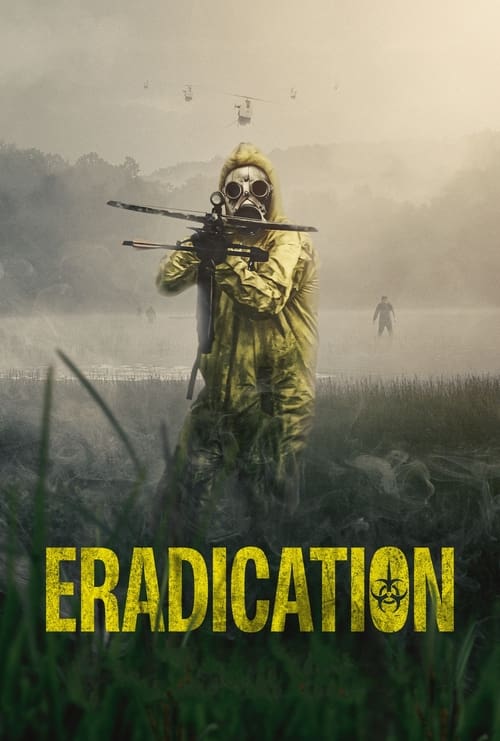
In the movie "Eradication," produced in 2022, there is indeed a post-credit scene that adds an intriguing layer to the film's narrative.
As the credits roll, the screen fades to black before transitioning to a dimly lit laboratory. The atmosphere is tense, filled with the hum of machinery and the faint beeping of monitors. A lone figure, shrouded in a lab coat, is seen working diligently at a workstation cluttered with vials and high-tech equipment. The camera zooms in on a series of screens displaying data and images related to the film's central conflict involving a deadly virus.
The figure, revealed to be Dr. Elena Voss, one of the key scientists from the main storyline, appears visibly exhausted but determined. Her brow is furrowed in concentration as she types rapidly, her fingers flying over the keyboard. The screens flicker, showing alarming statistics about the virus's mutation rates and potential new strains that could emerge.
Suddenly, an alert blares from one of the monitors, causing her to pause. The screen displays a warning: "New Strain Detected – Immediate Action Required." Dr. Voss's expression shifts from fatigue to alarm, her eyes widening as she processes the implications of the data. The weight of her responsibility hangs heavily on her shoulders, and a sense of urgency fills the room.
As she reaches for a nearby phone to make a call, the camera pans to a shadowy figure lurking in the background, partially obscured by the dim light. The figure watches her intently, a sinister smile creeping across their face, hinting at a deeper conspiracy and the potential for further chaos.
The scene ends with a close-up of Dr. Voss's face, a mix of determination and fear, as she realizes that the fight against the virus is far from over. The screen cuts to black, leaving the audience with a chilling sense of anticipation for what might come next. This post-credit scene effectively sets the stage for potential sequels, emphasizing the ongoing battle against the unseen threats that linger in the shadows.
What motivates the main character, Sarah, to take drastic actions against the organization?
Sarah is driven by a deep sense of loss and betrayal after her family is affected by the organization's unethical practices. Her emotional turmoil fuels her determination to expose the truth and seek justice, leading her to make increasingly risky decisions.
How does the relationship between Sarah and her partner, Mark, evolve throughout the film?
Initially, Sarah and Mark share a strong bond built on trust and shared values. However, as the stakes rise and Sarah becomes more consumed by her mission, Mark's concerns about her safety create tension. Their relationship is tested as Sarah's obsession with the organization's downfall leads to conflicts and ultimately a heartbreaking choice.
What role does the antagonist, Dr. Hargrove, play in the story, and what are his motivations?
Dr. Hargrove is portrayed as a charismatic yet morally ambiguous leader of the organization. His motivations stem from a belief that his work, despite its ethical implications, serves a greater good. He sees himself as a visionary, which creates a complex dynamic with Sarah, who views him as a villain.
What pivotal event triggers Sarah's decision to infiltrate the organization?
The pivotal event occurs when Sarah discovers that the organization is responsible for a catastrophic incident that directly impacts her family. This revelation acts as a catalyst, pushing her to take action and ultimately leading her to infiltrate the organization to gather evidence and seek revenge.
How does the film depict the consequences of Sarah's actions on her personal life?
The film poignantly illustrates the fallout of Sarah's choices, showcasing the strain on her relationships, particularly with Mark and her remaining family. As she becomes more embroiled in her mission, her personal life deteriorates, leading to isolation and a sense of moral ambiguity about her quest for justice.
Is this family friendly?
"Eradication," produced in 2022, is not considered family-friendly due to its intense themes and graphic content. The film contains several potentially objectionable or upsetting scenes, including:
-
Violence and Gore: There are scenes depicting graphic violence, including physical confrontations and injuries that may be disturbing to younger viewers or sensitive individuals.
-
Death and Loss: The film explores themes of loss, with characters experiencing the death of loved ones, which can evoke strong emotional responses.
-
Psychological Tension: The narrative includes moments of high psychological tension and fear, which may be unsettling for children or those who are sensitive to suspenseful situations.
-
Mature Themes: The film addresses complex themes such as survival, moral dilemmas, and the impact of trauma, which may not be suitable for younger audiences.
-
Language: There may be instances of strong language that could be inappropriate for children.
Overall, the film's content is geared towards a mature audience, and parental discretion is advised.









