


















Popular
What is the significance of the relationship between Owen and Abby?
How does Abby's true nature as a vampire affect her interactions with others?
What role does the character of the caretaker play in Abby's life?
What is the significance of the recurring theme of bullying in Owen's life?
How does the setting of the film contribute to the overall atmosphere and tone?
Should I watch it?
Ask Your Own Question

What is the plot?
Sorry, we aren't able to watch and write up a full detailed plot yet. Check back in a few days.







What is the ending?
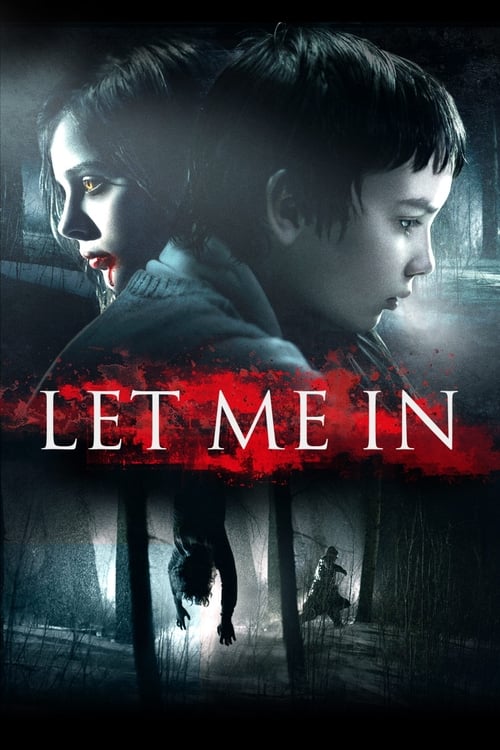
In the ending of "Let Me In," Owen helps Abby escape from the authorities after a violent confrontation. They flee together, and in the final scene, Owen is seen in a train compartment, where Abby, now free, is with him. The film concludes with a sense of ambiguous hope and companionship.
As the film approaches its climax, the tension escalates dramatically. The scene opens with Owen, who has been increasingly drawn into Abby's dark world, grappling with the reality of her vampiric nature. He has witnessed the brutal consequences of her need for blood, and yet, his feelings for her remain strong.
In a pivotal moment, Abby is cornered by a group of men who have been searching for her after a series of mysterious deaths in the town. The atmosphere is thick with dread as she is forced to confront them. The scene is dark and claustrophobic, the flickering lights casting ominous shadows on the walls. Abby, despite her frail appearance, reveals her true power in a shocking display of violence. She attacks the men with a ferocity that is both terrifying and mesmerizing, showcasing her survival instinct. The camera captures the raw emotion on her face--fear, anger, and a desperate need to protect herself and Owen.
Owen, witnessing this brutal act, is initially horrified but quickly realizes that he must act to save Abby. He rushes to her side, and together they make a desperate escape. The urgency of their flight is palpable; the sound of sirens wails in the background, heightening the sense of danger. They navigate through the darkened streets, their breaths visible in the cold air, a stark contrast to the warmth of their bond.
As they reach a secluded area, Owen and Abby share a moment of vulnerability. Owen, now fully aware of the darkness that surrounds Abby, expresses his willingness to accept her for who she is. This moment is tender yet fraught with the weight of their circumstances. Abby, in turn, reveals her deep connection to Owen, a bond that transcends the horror of her existence.
The final scenes unfold in a train compartment, where Owen and Abby find a semblance of safety. The train moves steadily, a symbol of their escape from the chaos that has engulfed their lives. Owen sits quietly, his expression a mix of relief and uncertainty. Abby, now free from the immediate threat, sits beside him, her demeanor calm yet enigmatic. The camera lingers on their faces, capturing the complexity of their relationship--two lonely souls finding solace in each other amidst a world filled with darkness.
As the train continues its journey, the film closes on a note of ambiguous hope. Owen's fate is left open-ended; he has chosen to embrace Abby, accepting the darkness that comes with her. Abby, in turn, has found a companion in Owen, someone who sees beyond her monstrous nature. The final shot leaves the audience with a lingering question about the nature of love and acceptance in a world where innocence is often overshadowed by violence and fear.
Is there a post-credit scene?
In the movie "Let Me In," produced in 2010, there is no post-credit scene. The film concludes with a poignant and haunting final moment that encapsulates the relationship between the two main characters, Abby and Owen. After a series of intense and emotional events, the film ends with Abby escaping in a box, hinting at her continued existence and the cycle of her vampiric life. The absence of a post-credit scene allows the audience to reflect on the themes of loneliness, love, and the darkness that surrounds Abby's character without any additional narrative distractions.
What is the significance of the relationship between Owen and Abby?
The relationship between Owen and Abby is central to the narrative of 'Let Me In.' Owen, a lonely and bullied 12-year-old boy, finds solace in Abby, a mysterious girl who moves in next door. Their bond grows as they share secrets and experiences, with Owen drawn to Abby's enigmatic nature. Abby, who is revealed to be a vampire, represents both a source of comfort and danger for Owen. Their relationship explores themes of love, loneliness, and the desire for connection, as Owen is willing to accept Abby's dark nature in exchange for companionship.
How does Abby's true nature as a vampire affect her interactions with others?
Abby's true nature as a vampire profoundly influences her interactions with others throughout the film. She is initially portrayed as a sweet, innocent girl, but her vampiric instincts lead her to commit violent acts to survive. For instance, she relies on her caretaker, who is revealed to be a serial killer, to procure blood for her. This dynamic creates a sense of dependency and manipulation, as Abby's need for blood drives her to form relationships based on secrecy and fear. Her interactions are marked by a blend of vulnerability and predatory behavior, showcasing the duality of her character.
What role does the character of the caretaker play in Abby's life?
The caretaker, an older man who is revealed to be Abby's guardian, plays a crucial role in her existence as a vampire. He is responsible for providing her with blood, which he obtains through violent means, including murder. His character embodies the moral ambiguity of Abby's world, as he is both a protector and a perpetrator. The caretaker's actions highlight the lengths to which he goes to sustain Abby's life, but they also illustrate the dark consequences of their relationship. His eventual demise at the hands of Abby signifies her growing independence and the shift in their dynamic, as she begins to assert her own agency.
What is the significance of the recurring theme of bullying in Owen's life?
Bullying is a significant theme in Owen's life, shaping his character and motivations throughout 'Let Me In.' He is frequently tormented by his peers, which exacerbates his feelings of isolation and helplessness. This bullying not only drives Owen to seek solace in his friendship with Abby but also influences his emotional state, making him more susceptible to her dark allure. The film portrays his struggle against the bullies as a reflection of his internal conflict, as he grapples with feelings of powerlessness and the desire for revenge. Ultimately, his relationship with Abby empowers him to confront his fears and assert himself, culminating in a transformation that mirrors Abby's own predatory nature.
How does the setting of the film contribute to the overall atmosphere and tone?
The setting of 'Let Me In' plays a vital role in establishing the film's atmosphere and tone. Set in a desolate, snowy town in the early 1980s, the bleak landscape mirrors the emotional isolation experienced by both Owen and Abby. The cold, dark environment enhances the film's sense of foreboding and loneliness, creating a stark contrast to the warmth of their budding friendship. The use of dimly lit interiors and the haunting score further amplify the tension and unease, immersing the audience in a world where innocence is threatened by darkness. This setting not only serves as a backdrop for the characters' struggles but also reinforces the film's exploration of themes such as alienation and the search for connection.
Is this family friendly?
"Let Me In," produced in 2010, is not considered family-friendly due to its dark themes and graphic content. Here are some potentially objectionable or upsetting aspects that may affect children or sensitive viewers:
-
Violence and Gore: The film contains several scenes of intense violence, including graphic depictions of blood and injuries. There are moments where characters are attacked, leading to significant bloodshed.
-
Murder and Death: The narrative involves themes of murder, with characters being killed in brutal ways. The emotional weight of loss and the impact of death are central to the story.
-
Child Abuse: There are elements of bullying and emotional abuse, particularly directed at the young protagonist, which may be distressing for viewers.
-
Isolation and Loneliness: The film explores themes of isolation and the emotional struggles of the main characters, which can be heavy and unsettling.
-
Supernatural Elements: The presence of a vampire character introduces themes of predation and fear, which may be frightening for younger audiences.
-
Dark Atmosphere: The overall tone of the film is bleak and unsettling, with a pervasive sense of dread that may be uncomfortable for sensitive viewers.
These elements contribute to the film's mature rating and make it unsuitable for children or those who are easily disturbed.








