











Popular
What role does the character of Mike play in the story?
What is the significance of the tapes found by Gordon in the asylum?
How does the character of Gordon change throughout the film?
What happens to the character of Phil during the course of the film?
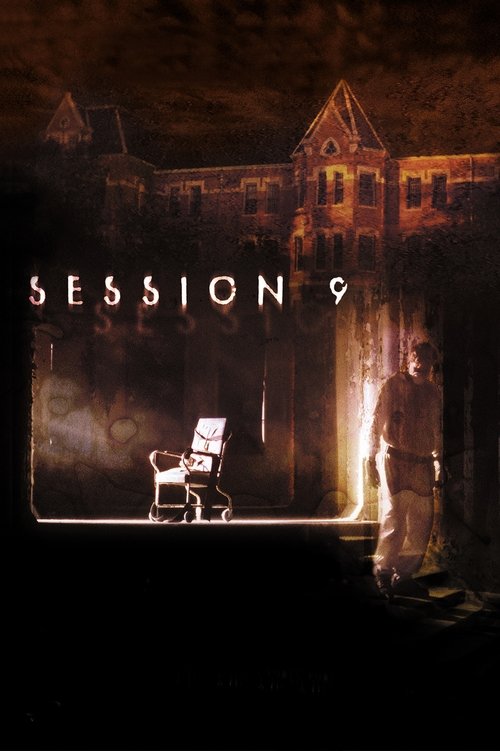
How does the setting of the Danvers State Hospital contribute to the film's atmosphere?
Should I watch it?
Ask Your Own Question

What is the plot?
Sorry, we aren't able to watch and write up a full detailed plot yet. Check back in a few days.









What is the ending?
In the ending of "Session 9," the character Gordon, who has been increasingly affected by the dark history of the abandoned mental asylum, succumbs to his psychological unraveling. After a series of disturbing events, including the disappearance of his crew members, he confronts the entity known as "Mary Hobbes," a patient whose traumatic past haunts the asylum. The film concludes with Gordon's descent into madness, as he is left alone in the asylum, surrounded by the remnants of his crew's fate, ultimately revealing that he has become a part of the very horror that consumed them.
Now, let's delve into the ending in a more detailed narrative fashion:
As the sun begins to set over the dilapidated Danvers State Hospital, the atmosphere is thick with an unsettling silence. The camera pans through the crumbling hallways, revealing the remnants of a once-thriving institution. The air is heavy with the weight of history, and the shadows seem to whisper secrets of the past. Gordon, the foreman of the asbestos removal crew, is increasingly isolated, his mental state deteriorating as he grapples with the haunting presence of the asylum.
In the dimly lit rooms, the crew members--Phil, Mike, and Hank--have begun to experience their own psychological breakdowns. Tensions rise as they uncover disturbing tapes of patient Mary Hobbes, who had multiple personalities, one of which is particularly malevolent. The crew's camaraderie fractures under the strain, and paranoia sets in. Phil, who has been trying to keep the team together, becomes increasingly concerned about Gordon's erratic behavior.
As night falls, the crew members begin to disappear one by one. Mike, who had been exploring the asylum's dark corners, is the first to vanish, leaving behind only a sense of dread. Phil and Hank search for him, but their efforts are in vain. The atmosphere grows more oppressive, and the sense of impending doom looms over them. Hank, feeling the weight of the situation, confronts Gordon about his mental state, but Gordon's responses are erratic and unsettling.
In a chilling sequence, Hank goes missing after a confrontation with Gordon, who is now fully consumed by the asylum's dark influence. Phil, now alone and desperate, tries to make sense of the chaos. He discovers the truth about Mary Hobbes and her tragic past, but the knowledge only deepens the horror. As he searches for his friends, he stumbles upon a room filled with disturbing drawings and remnants of the patients' lives, each piece a testament to the trauma that once unfolded within these walls.
The climax reaches its peak when Phil confronts Gordon, who has fully embraced the darkness of the asylum. In a tense standoff, Gordon reveals his complete psychological break, embodying the very essence of Mary Hobbes. The confrontation is fraught with tension, as Phil realizes that Gordon has become a vessel for the malevolent spirit that haunts the asylum.
In the final moments, the camera captures Gordon's face, twisted in a mixture of fear and madness, as he succumbs to the entity within him. The screen fades to black, leaving the audience with the chilling realization that Gordon has not only lost his sanity but has also become a part of the asylum's tragic history. The fate of the crew is sealed; they are lost to the darkness, their stories intertwined with the horrors of the past.
The film concludes with a haunting silence, echoing the emptiness of the asylum and the lives it has consumed. The final shot lingers on the abandoned building, a stark reminder of the psychological horrors that can lie within, leaving viewers with a sense of unease and reflection on the fragility of the human mind.
Is there a post-credit scene?
"Session 9," produced in 2001, does not have a post-credit scene. The film concludes with a haunting atmosphere, leaving viewers with a sense of unease and ambiguity regarding the fate of the characters and the psychological implications of the events that transpired. The final moments focus on the chilling implications of the story, particularly surrounding the character of Gordon and the influence of the asylum's dark history on his psyche. The absence of a post-credit scene reinforces the film's themes of isolation, madness, and the lingering effects of trauma.
What role does the character of Mike play in the story?
Mike is one of the crew members working with Gordon on the asbestos removal project. He is portrayed as a more laid-back and somewhat irresponsible character, often joking and trying to lighten the mood. However, as the story unfolds, Mike becomes increasingly drawn to the asylum's dark history and the tapes of Mary Hobbes. His curiosity leads him to explore the building more deeply, which ultimately contributes to the group's unraveling. His fate becomes a pivotal moment in the film, highlighting the dangers of obsession and the impact of the asylum's past.
What is the significance of the tapes found by Gordon in the asylum?
The tapes found by Gordon are recordings of a patient named Mary Hobbes, who suffered from multiple personality disorder. As Gordon listens to the tapes, they reveal the disturbing nature of her condition and the traumatic events she experienced. The tapes serve as a catalyst for the unraveling of the crew's sanity, as they become increasingly obsessed with the dark history of the asylum and the personalities of Mary, particularly the violent one named 'Billy.' This obsession mirrors their own internal struggles and fears.
How does the character of Gordon change throughout the film?
Gordon starts as a dedicated and hardworking foreman, trying to keep his crew focused on the task of removing asbestos from the abandoned Danvers State Hospital. However, as the film progresses, he becomes increasingly isolated and paranoid, particularly after he discovers the tapes and begins to experience hallucinations. His internal conflict is exacerbated by his personal issues, including financial stress and a recent breakup. By the end, Gordon's mental state deteriorates, leading him to a violent confrontation with his own psyche.
What happens to the character of Phil during the course of the film?
Phil is another member of the crew who initially appears to be a reliable worker. However, as tensions rise and the atmosphere in the asylum becomes more oppressive, Phil begins to show signs of distress. He becomes increasingly paranoid and is affected by the strange occurrences within the building. His character arc culminates in a tragic fate, as he is ultimately confronted by the manifestations of the asylum's dark history, leading to a shocking and violent end that underscores the film's themes of madness and isolation.
How does the setting of the Danvers State Hospital contribute to the film's atmosphere?
The Danvers State Hospital serves as a haunting and oppressive backdrop for the events of the film. Its decaying architecture, dark hallways, and eerie silence create a palpable sense of dread and foreboding. The isolation of the asylum amplifies the characters' psychological struggles, as they are cut off from the outside world. The building itself seems to have a life of its own, with its history of mental illness and trauma seeping into the present. This setting not only enhances the horror elements but also reflects the internal chaos of the characters, particularly as they confront their own fears and vulnerabilities.
Is this family friendly?
"Session 9" is not considered family-friendly and contains several elements that may be objectionable or upsetting for children or sensitive viewers. Here are some aspects to be aware of:
-
Psychological Horror: The film delves into themes of mental illness and trauma, which may be disturbing for younger audiences or those sensitive to such topics.
-
Intense Atmosphere: The setting of an abandoned mental asylum creates a foreboding and unsettling atmosphere, which can evoke feelings of fear and anxiety.
-
Strong Language: The dialogue includes profanity and harsh language, which may not be suitable for children.
-
Violence and Threats: There are scenes that involve implied violence and threats, contributing to a tense and uncomfortable viewing experience.
-
Disturbing Imagery: The film features unsettling visuals and themes related to madness and the human psyche, which can be distressing.
-
Isolation and Paranoia: The characters experience intense feelings of isolation and paranoia, which may resonate negatively with sensitive viewers.
Overall, "Session 9" is best suited for mature audiences due to its psychological themes and intense atmosphere.









