























Popular
What is the main conflict between Calvin and the couple, Darryl and Vanessa?
How does Calvin's character evolve throughout the film?
What role does the diamond play in the story?
How do Darryl and Vanessa's relationship dynamics change due to Calvin's presence?
What are some of the key comedic moments involving Calvin as he interacts with Darryl and Vanessa?
Should I watch it?
Ask Your Own Question

What is the plot?
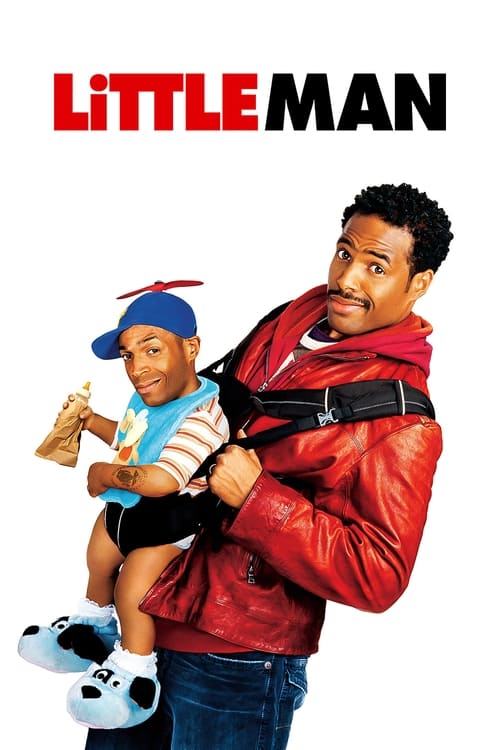
Calvin Sims bursts out of prison in Chicago with one last job on his mind: steal a priceless diamond for the mobster Mr. Walken, cash out, and disappear for good. He is tiny, sharp-eyed, and already carrying the weary confidence of a man who has spent his life getting underestimated, while his partner Percy P. is loud, foolish, and eager to push the plan forward. The pair move on the jewelry store with the sort of grim efficiency that only criminal incompetence can produce, and the job immediately starts to wobble. When the police close in, Calvin makes the split-second decision that changes everything: he slips the diamond into the purse of a woman shopping nearby, Vanessa Edwards, and vanishes into the crowd.
For a moment, it looks like an inspired escape. Instead, it becomes the beginning of a grotesque little chain reaction. Calvin and Percy trail Vanessa through Chicago until they discover where she lives: a suburban house where she shares her life with her husband, Darryl Edwards, and her father, Francis "Pops" Edwards. The house is full of warmth, argument, and the kind of domestic longing Calvin does not understand until he sees Darryl. Darryl is desperate for a child. He talks about fatherhood with aching sincerity, and the emptiness in his voice gives Percy an idea so absurd it almost feels inevitable. If Darryl and Vanessa want a baby, then Calvin can become one. The diamond can be recovered from inside the house if Calvin gets himself taken in.
So Calvin is dressed in a baby disguise and abandoned at the Edwards home like a foundling wrapped in criminal deceit. Darryl and Vanessa, who have been trying to build a family, are stunned and delighted by the apparent miracle. They take the "baby" in, name him Calvin as a temporary cover, and begin caring for him with genuine tenderness, never suspecting that the infant is actually a grown, furious jewel thief. The house becomes the center of the film's tension: every hallway is a hiding place, every glance is a risk, and every act of kindness pushes Calvin deeper into a lie he cannot easily escape.
Vanessa soon finds the diamond hidden in Calvin's diaper area, and because the situation is already so surreal, she mistakenly assumes it is a gift from Darryl. That misunderstanding becomes one of the movie's defining jokes, but it also sharpens the danger. Calvin still needs the stone, Darryl still wants to prove himself as a father, and Pops is already looking at the "baby" with suspicion. Francis "Pops" Edwards has the instinct of an old man who has spent too long watching people lie badly, and he does not trust Calvin from the beginning. He watches too closely, questions too much, and keeps pressing at the seams of the disguise. The household's emotional center and the criminal plot keep colliding, and the result is a constant low-grade panic disguised as slapstick.
Outside the house, Mr. Walken grows impatient. He wants his diamond back, and he begins leaning on Darryl, assuming Darryl may know more than he says. His pressure turns the stolen gem from a hidden object into a threat hanging over the Edwards family. Calvin's original "simple" theft is now dragging innocent people into the orbit of organized crime, and the comedy starts to sharpen into something more dangerous. Percy continues to lurk around the edges, trying to keep the scheme alive, but the plan is already collapsing under the weight of its own stupidity.
Inside the house, the emotional balance shifts in a way Calvin never expects. Darryl, for all his awkwardness, is sincere. He tries to care for the "baby," and Calvin, despite himself, begins to respond to the attention. The more time he spends in the home, the more the lie starts to feel like a strange kind of belonging. Vanessa and Darryl are flawed but loving, and their domestic life begins to pierce Calvin's hardened, self-protective shell. The movie keeps undercutting sentiment with humiliation, but the emotional current is real: Calvin is supposed to be using the family, yet the family slowly starts affecting him.
Pops keeps pushing, and eventually the pressure pays off. He discovers that Calvin is not a baby at all but a small adult criminal in disguise. The truth comes out in a burst of confrontation and panic, and the house stops being a comedy set and becomes a battlefield of embarrassment, betrayal, and disbelief. Darryl is forced to confront the fact that the child he has been caring for is actually part of a criminal conspiracy. Vanessa is horrified by the deception. Pops, vindicated at last, has proven that his suspicions were justified all along. Darryl and Vanessa decide Calvin cannot stay in the house and plan to get rid of him, even considering sending him away to an institution. Calvin's cover is blown, and the entire scheme seems ready to collapse.
Then the mob closes in.
Walken and his men arrive, and in the confusion they mistake Darryl for Calvin's accomplice. They demand the diamond, threatening the household and tightening the screw until the scene becomes a full-scale confrontation. The comedy of mistaken identity is now lethal in its implications: Darryl is in real danger because of Calvin's crime, and Calvin has to decide whether he is still the kind of man who runs when others get hurt. For a while, the answer seems obvious. This is a thief who began the story thinking only of himself. He wants the gem, wants escape, wants the clean exit that never really existed.
But Calvin changes.
At the height of the conflict, he turns back instead of fleeing. He returns to help Darryl, and that choice becomes the movie's moral pivot. He gets involved in the struggle against Walken's men and helps save Darryl from the mob's retaliation. The final showdown resolves not through a clever heist but through chaos, panic, and criminal incompetence finally turning back on itself. Walken's crew is arrested, the threat to the Edwards family is ended, and the diamond problem is finally untangled from the lie that created it.
By the end, the movie is no longer just about a stolen gem. It becomes a strange little story about found family, misdirection, and the bizarre way honesty arrives only after the disguise fails completely. Darryl and Calvin, who began as marks and manipulators in each other's lives, end up with a real bond. Calvin thanks Darryl for taking care of him even though he was never really a baby, and he tells Darryl that he would make a great father for a real child someday. Calvin then begins crying as he walks away, suddenly overcome by the feeling that he is leaving behind the first family that has ever treated him like he mattered. Darryl refuses to let him go. He calls him back and tells him to stay, and the two men become genuinely close.
The story closes in the future, after the dust has settled, with Calvin and Pops playing with Darryl and Vanessa's real baby, who looks exactly like Darryl. The last image lands as both a punch line and a resolution: the house that began in deception ends in actual family life, and the baby that was once a disguise has been replaced by a true child. Calvin is no longer a fugitive hiding in plain sight. He is part of the Edwards family's world, accepted rather than used, and the film ends on that absurdly warm, completely unearned, but unmistakably happy note.





What is the ending?
In the ending of "Little Man," Calvin, the small criminal, is finally apprehended after a series of comedic misadventures. He is caught by the police, and the couple, Vanessa and Darryl, who had been unwittingly caring for him, are relieved. The film concludes with a sense of resolution as the couple embraces their new family life, now with a deeper understanding of love and commitment.
As the climax of "Little Man" unfolds, the scene is set in the couple's home, where the tension has been building. Calvin, the diminutive criminal played by Marlon Wayans, has been living with Darryl and Vanessa, who believe him to be an abandoned child. The couple has grown fond of him, despite the chaos he has caused in their lives.
In the final act, Calvin's true identity is revealed when he is confronted by his former criminal associates. They come to collect a debt, and in a frantic attempt to escape, Calvin's small stature becomes both a hindrance and an advantage. The scene is filled with slapstick humor as he tries to evade capture, darting around furniture and using his size to hide in places that would be impossible for an adult.
Meanwhile, Darryl, played by Shawn Wayans, is torn between his loyalty to Calvin and his love for Vanessa, portrayed by Kerry Washington. As the chaos escalates, Darryl realizes that he must protect his family, even if it means confronting Calvin. The emotional stakes rise as Darryl grapples with the idea of family and what it means to truly care for someone, regardless of their size or past.
In a pivotal moment, the police arrive, responding to a call about the commotion. Calvin, realizing he is cornered, attempts to escape through a window but is ultimately caught. The police, initially confused by the situation, soon understand that Calvin is not a child but a criminal. The comedic misunderstanding reaches its peak as they struggle to process the absurdity of the situation.
As Calvin is taken away in handcuffs, he shares a moment of vulnerability with Darryl. There is a brief exchange where Calvin acknowledges the bond they formed, despite the deception. Darryl, now fully aware of the chaos Calvin brought into their lives, feels a mix of relief and sadness. He has learned valuable lessons about responsibility and love throughout this ordeal.
Vanessa, witnessing the resolution of the conflict, embraces Darryl, and they share a moment of unity. The couple stands together, reflecting on their journey and the unexpected turn their lives took. They realize that their love has grown stronger through the trials they faced, and they are ready to embrace their future together.
The film concludes with a light-hearted tone as Darryl and Vanessa look forward to starting a family of their own, hinting at their desire to adopt. The final scene captures their hopeful expressions, symbolizing a new beginning filled with love and commitment, free from the chaos that Calvin brought into their lives. The credits roll as the couple walks hand in hand, ready to face whatever comes next, embodying the film's themes of love, family, and the unexpected paths life can take.
Is there a post-credit scene?
In the movie "Little Man," produced in 2006, there is no post-credit scene. The film concludes without any additional scenes or content after the credits roll. The story wraps up with the resolution of the main plot, focusing on the characters' relationships and the comedic situations that arise throughout the film. The absence of a post-credit scene means that the audience is left with the final moments of the story as it stands, without any further developments or surprises.
What is the main conflict between Calvin and the couple, Darryl and Vanessa?
The main conflict arises when Calvin, a small-statured criminal, poses as a baby to retrieve a stolen diamond from Darryl and Vanessa. Darryl, who is desperate to start a family, is unaware of Calvin's true identity and intentions, leading to a series of comedic and chaotic situations as Calvin manipulates the couple.
How does Calvin's character evolve throughout the film?
Calvin starts as a conniving and selfish character, focused solely on retrieving the diamond. However, as he spends time with Darryl and Vanessa, he begins to experience a sense of belonging and family, which challenges his initial motivations and leads to moments of vulnerability.
What role does the diamond play in the story?
The diamond serves as the catalyst for the entire plot. It is the reason Calvin infiltrates Darryl and Vanessa's lives, and its retrieval drives much of the action. The diamond symbolizes greed and the lengths to which Calvin will go to reclaim it, ultimately leading to his character's transformation.
How do Darryl and Vanessa's relationship dynamics change due to Calvin's presence?
Calvin's presence creates tension and comedic misunderstandings in Darryl and Vanessa's relationship. Initially, Darryl is focused on impressing Vanessa and starting a family, but as Calvin's antics escalate, it forces them to confront their own relationship issues, leading to growth and deeper understanding between them.
What are some of the key comedic moments involving Calvin as he interacts with Darryl and Vanessa?
Key comedic moments include Calvin's attempts to fit into the role of a baby, such as when he throws tantrums, engages in mischievous behavior, and uses his adult intellect to manipulate situations. His interactions often lead to absurd scenarios, like when he tricks Darryl into thinking he is a real baby, creating a blend of humor and chaos.
Is this family friendly?
"Little Man," produced in 2006, is a comedy that features a mix of humor and some potentially objectionable content. While it is intended to be a family-friendly film, there are several aspects that may be concerning for children or sensitive viewers:
-
Adult Themes: The film includes themes of deception and manipulation, as the main character, a small-statured criminal, pretends to be a baby to retrieve a stolen diamond.
-
Violence and Threats: There are scenes that involve physical comedy that could be interpreted as violent, including slapstick moments where characters are hit or thrown around.
-
Innuendos and Sexual References: The film contains several sexual innuendos and jokes that may not be appropriate for younger audiences, which could lead to confusion or discomfort.
-
Criminal Behavior: The plot revolves around criminal activities, including theft and deception, which may not be suitable for impressionable viewers.
-
Emotional Manipulation: There are moments where characters experience emotional distress, particularly related to trust and betrayal, which could be upsetting for some viewers.
-
Mature Humor: The humor often relies on adult situations and misunderstandings that may not resonate with children, potentially leading to awkward conversations.
Overall, while "Little Man" aims for comedic entertainment, parents may want to consider these elements when deciding if it is appropriate for their children.








