



















Popular
What motivates the Phantom to fall in love with Christine Daaé?
What role does the opera house itself play in the story?
What is the significance of the music in the Phantom's relationship with Christine?
How does Christine Daaé's relationship with Raoul develop throughout the story?
How does the Phantom's past influence his actions in the present?
Should I watch it?
Ask Your Own Question

What is the plot?
Sorry, we aren't able to watch and write up a full detailed plot yet. Check back in a few days.








What is the ending?
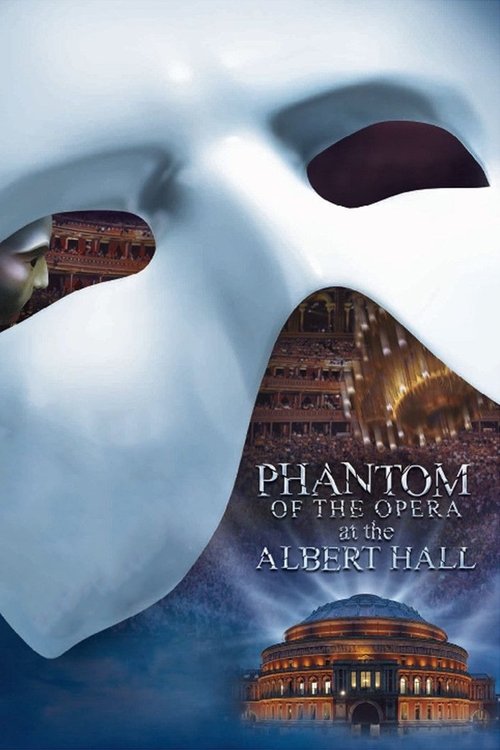
In the ending of "The Phantom of the Opera at the Royal Albert Hall," Christine Daaé makes a choice between her love for Raoul and her complicated feelings for the Phantom. After a dramatic confrontation, she ultimately chooses Raoul, leading to the Phantom's heartbreak and retreat into solitude. The story concludes with the Phantom disappearing, leaving behind a rose with a black ribbon, symbolizing his unrequited love and sorrow.
As the final act unfolds, the atmosphere in the grand theater is charged with tension. The scene opens with the lavishly decorated stage of the opera house, where the audience is buzzing with anticipation for the performance of "Don Juan Triumphant." Christine, now a leading soprano, is poised to take the stage, but the shadow of the Phantom looms large over her.
As the opera begins, the Phantom, hidden in the shadows, watches Christine perform with a mix of pride and possessiveness. His presence is felt through the haunting music that underscores the performance, creating an eerie yet beautiful ambiance. Christine, caught between her admiration for the Phantom and her love for Raoul, struggles internally as she sings.
The tension escalates when Raoul, the Vicomte de Chagny, confronts the Phantom in a desperate attempt to protect Christine. The confrontation occurs in the Phantom's lair, a dark and cavernous space filled with mirrors and candles. The Phantom, portrayed with a mix of menace and vulnerability, reveals his deep love for Christine, pleading with her to stay with him. His emotional turmoil is palpable as he oscillates between rage and despair, showcasing his complex character.
Christine, torn between the two men, ultimately chooses to embrace her love for Raoul. In a poignant moment, she reaches out to the Phantom, expressing compassion for his suffering. This act of kindness momentarily softens the Phantom's heart, revealing the depth of his loneliness and longing for acceptance. However, the choice is made, and Christine's decision to leave with Raoul shatters the Phantom's world.
In the climactic finale, the Phantom, heartbroken and defeated, retreats into the shadows of the opera house. As he watches Christine and Raoul depart, he is left alone, surrounded by the remnants of his dreams and desires. The audience witnesses his profound sorrow as he places a single rose, adorned with a black ribbon, on Christine's dressing table--a final gesture of love and loss.
The curtain falls, and the Phantom's haunting melody lingers in the air, encapsulating the tragedy of his unrequited love. The story concludes with a sense of melancholy, emphasizing the themes of love, sacrifice, and the consequences of obsession. Each character's fate is sealed: Christine and Raoul find a future together, while the Phantom is left to dwell in his solitude, a tragic figure forever marked by his unfulfilled longing.
Is there a post-credit scene?
The Phantom of the Opera at the Royal Albert Hall, produced in 2011, does not have a post-credit scene. The film concludes with the final moments of the performance, showcasing the emotional resolution of the story. After the climactic events of the opera, the audience is left with the haunting image of the Phantom, played by Ramin Karimloo, as he mourns his lost love, Christine Daaé, portrayed by Sierra Boggess. The curtain falls, and the production ends without any additional scenes or content after the credits.
What motivates the Phantom to fall in love with Christine Daaé?
The Phantom, a disfigured musical genius named Erik, becomes infatuated with Christine Daaé after hearing her sing. He sees in her a pure talent that mirrors his own unrecognized genius. His love is complicated by his deep-seated insecurities and desire for acceptance, leading him to both nurture her career and manipulate her life.
What role does the opera house itself play in the story?
The opera house serves as a character in its own right, embodying the mystery and grandeur of the story. Its labyrinthine passages and hidden lairs reflect the Phantom's secretive nature and his connection to the building. The opulence of the setting contrasts with the darkness of the Phantom's world, creating a haunting atmosphere that enhances the emotional stakes of the narrative.
What is the significance of the music in the Phantom's relationship with Christine?
Music is the primary means of communication between the Phantom and Christine, symbolizing their emotional connection. The Phantom composes music for Christine, believing it to be a gift that binds them together. As Christine grows in her own musical abilities, the music becomes a battleground for their conflicting desires, representing both love and manipulation.
How does Christine Daaé's relationship with Raoul develop throughout the story?
Christine's relationship with Raoul, her childhood friend, evolves from innocent affection to a passionate romance. Initially, Raoul is protective and supportive of Christine, encouraging her to pursue her dreams. As the Phantom's influence grows, Raoul becomes increasingly determined to rescue Christine from the Phantom's grasp, leading to a love triangle filled with tension and conflict.
How does the Phantom's past influence his actions in the present?
The Phantom's tragic past, marked by abandonment and rejection due to his physical deformities, deeply influences his actions. His experiences of isolation and longing for love drive him to obsessive behaviors, particularly towards Christine. This backstory evokes sympathy for the Phantom, as his desperate need for connection leads him to both protect and terrorize those he loves.
Is this family friendly?
The Phantom of the Opera at the Royal Albert Hall (2011) is a visually stunning adaptation of the classic musical, but it does contain some elements that may be considered objectionable or upsetting for children or sensitive viewers. Here are a few aspects to consider:
-
Themes of Obsession and Isolation: The character of the Phantom exhibits intense obsession and emotional turmoil, which may be unsettling for younger audiences.
-
Violence and Threats: There are scenes that depict violence or threats, particularly involving the Phantom's interactions with other characters, which could be frightening.
-
Death and Mourning: The story includes themes of death and loss, with characters mourning loved ones, which may evoke strong emotions.
-
Romantic Tension: The love triangle between Christine, Raoul, and the Phantom includes intense romantic and emotional conflicts that may be complex for younger viewers to understand.
-
Dramatic Visuals: The production features dark and gothic visuals, including the Phantom's lair, which may be intimidating or frightening for some children.
-
Emotional Distress: Characters experience significant emotional distress, including fear, sadness, and despair, which could be upsetting for sensitive viewers.
Overall, while the musical is a celebrated piece of theater, its darker themes and emotional intensity may not be suitable for all children or sensitive individuals.









