







































Popular
What motivates Dave Skylark to pursue the interview with Kim Jong-un?
How does Aaron Rapaport's perspective on the interview change throughout the film?
What is the significance of the scene where Kim Jong-un shows Dave and Aaron his 'favorite' things?
What role does the character Sook play in the story, and how does she influence the plot?
How does the film depict the relationship between Dave Skylark and Kim Jong-un?
Should I watch it?
Ask Your Own Question

What is the plot?
Sorry, we aren't able to watch and write up a full detailed plot yet. Check back in a few days.








What is the ending?
In the ending of "The Interview," Dave Skylark and Aaron Rapoport successfully escape North Korea after a chaotic series of events involving their assassination mission against Kim Jong-un. They manage to broadcast a live interview with Kim, which leads to his demise. The film concludes with the duo returning to the United States, where they are celebrated as heroes.
Now, let's delve into the ending in a more detailed, chronological narrative.
As the climax of the film unfolds, Dave Skylark and Aaron Rapoport find themselves in a tense situation inside Kim Jong-un's palace. After a series of comedic yet perilous encounters, they finally confront Kim, who is initially charming and disarming. The atmosphere is thick with tension as they engage in a live interview, which is broadcasted to millions. Dave, despite his initial nerves, begins to ask probing questions, and the mood shifts as Kim's demeanor changes from friendly to defensive.
During the interview, the situation escalates when Kim reveals his true nature, showcasing his volatile personality. As the interview progresses, Aaron and Dave realize that their mission is not just about entertainment but about the fate of their lives and the potential impact on North Korea. The stakes are raised when they activate a hidden plan to assassinate Kim, which involves a missile strike.
As the missile is launched, chaos erupts in the palace. Kim, realizing he is in danger, attempts to escape, but the plan unfolds rapidly. The missile strikes, and in a dramatic explosion, Kim is killed. The scene is filled with a mix of shock and relief as the characters process the gravity of their actions. The palace is engulfed in flames, and the duo narrowly escapes in a helicopter, flying away from the destruction.
In the aftermath, Dave and Aaron return to the United States, where they are greeted as heroes. The media frenzy surrounding their mission paints them as brave figures who took down a tyrant. The final scenes show them enjoying their newfound fame, with Dave reveling in the attention and Aaron reflecting on the surreal nature of their experience. They share a moment of camaraderie, acknowledging the absurdity of their journey and the bond they formed through their harrowing adventure.
As the credits roll, the audience is left with a sense of closure regarding the characters' fates. Dave Skylark, once a superficial talk show host, has transformed into a figure of significance, while Aaron Rapoport, who initially sought to create meaningful content, finds himself in a position of unexpected influence. Their journey highlights themes of friendship, the absurdity of fame, and the unpredictable nature of international relations, culminating in a chaotic yet triumphant conclusion.
Is there a post-credit scene?
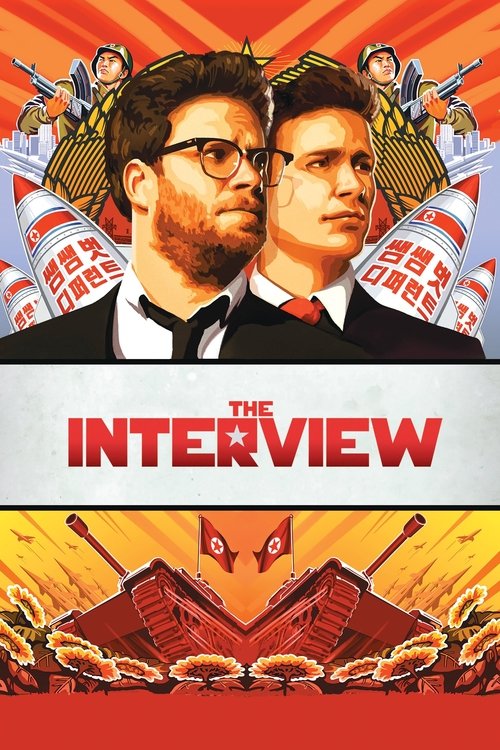
Yes, "The Interview" features a post-credit scene. After the main credits roll, there is a scene that shows a brief interaction between the characters Dave Skylark, played by James Franco, and Aaron Rapoport, played by Seth Rogen. In this scene, they are in a celebratory mood after their successful mission. They are seen discussing their next potential project, which humorously hints at the absurdity of their previous experiences. The scene serves as a light-hearted conclusion to the film, reinforcing the comedic tone and the bond between the two characters as they reflect on their wild adventure. The playful banter encapsulates their friendship and the outrageous nature of their journey, leaving the audience with a final chuckle.
What motivates Dave Skylark to pursue the interview with Kim Jong-un?
Dave Skylark, played by James Franco, is motivated by his desire for fame and recognition as a journalist. He sees the opportunity to interview Kim Jong-un, the leader of North Korea, as a chance to elevate his status and gain credibility in the media world. His excitement is palpable as he envisions the potential ratings boost and the impact such an exclusive interview could have on his career.
How does Aaron Rapaport's perspective on the interview change throughout the film?
Aaron Rapaport, portrayed by Seth Rogen, initially supports the idea of interviewing Kim Jong-un as a way to create a groundbreaking story. However, as the plot unfolds and they learn more about the implications of their actions, Aaron becomes increasingly uncomfortable with the moral and ethical ramifications of their mission. His internal conflict grows, especially when they discover that the North Korean regime is not just a subject for entertainment but a dangerous entity.
What is the significance of the scene where Kim Jong-un shows Dave and Aaron his 'favorite' things?
In this scene, Kim Jong-un, played by Randall Park, reveals his softer side by showcasing his love for pop culture, including his fondness for Katy Perry and his collection of memorabilia. This moment serves to humanize him, contrasting with the brutal image of a dictator. It also highlights the absurdity of the situation, as Dave and Aaron are caught between their roles as journalists and the bizarre reality of interacting with a world leader who is both charming and terrifying.
What role does the character Sook play in the story, and how does she influence the plot?
Sook, played by Diana Bang, is a North Korean operative who initially poses as a producer for the interview. She becomes a crucial character as she helps Dave and Aaron navigate the complexities of their mission. Her motivations are layered; she is both a supporter of the regime and someone who secretly harbors doubts about its oppressive nature. Sook's relationship with Aaron develops into a romantic subplot, adding emotional depth and tension to the narrative as they grapple with their conflicting loyalties.
How does the film depict the relationship between Dave Skylark and Kim Jong-un?
The relationship between Dave Skylark and Kim Jong-un is central to the film's comedic and dramatic tension. Initially, Dave is starstruck and eager to impress the dictator, leading to a series of humorous and awkward interactions. As they spend more time together, a bizarre friendship forms, with Kim revealing his vulnerabilities and insecurities. This dynamic shifts when Dave realizes the true nature of Kim's regime, leading to a conflict between his personal feelings and the moral implications of their actions.
Is this family friendly?
"The Interview," produced in 2014, is not considered family-friendly due to its content. Here are some potentially objectionable or upsetting aspects that may occur for children or sensitive viewers:
-
Strong Language: The film contains frequent use of profanity, which may be inappropriate for younger audiences.
-
Violence: There are scenes depicting violence, including gunfire and explosions, which may be distressing.
-
Sexual Content: The film includes sexual innuendos, suggestive situations, and a scene involving nudity that may be uncomfortable for some viewers.
-
Drug Use: There are references to drug use and scenes depicting characters under the influence, which could be concerning.
-
Political Satire: The film's portrayal of North Korea and its leader may be unsettling for some, given the sensitive nature of the subject matter.
-
Dark Humor: The film employs dark humor that may not be suitable for all audiences, particularly younger viewers.
These elements contribute to the film's rating and overall suitability for children or sensitive individuals.









