
































Popular
What motivates the main character, Han Do-kyung, throughout the film?
How does the character of the corrupt mayor, Park Sung-woo, influence the events in the story?
What role does the character of the hitman, Jang, play in the narrative?
How does the relationship between Han Do-kyung and his wife evolve throughout the film?
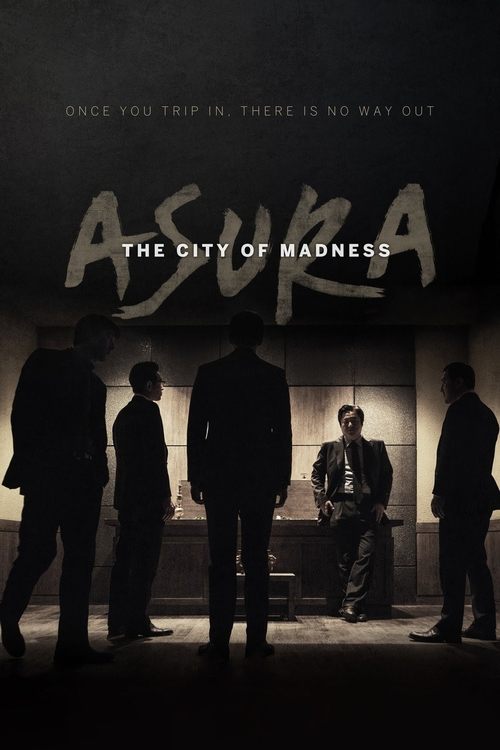
What is the significance of the city setting in 'Asura: The City of Madness'?
Should I watch it?
Ask Your Own Question

What is the plot?
Sorry, we aren't able to watch and write up a full detailed plot yet. Check back in a few days.


What is the ending?
In the ending of "Asura: The City of Madness," the protagonist, Han Do-kyung, finds himself trapped in a web of corruption and betrayal. After a series of violent confrontations, he ultimately confronts the corrupt police chief, who has been manipulating events for his own gain. The film concludes with a tragic and violent climax, leaving Han Do-kyung's fate uncertain as he faces the consequences of his choices.
As the film approaches its climax, the tension escalates dramatically. Han Do-kyung, a detective caught in a moral quagmire, is increasingly aware of the corruption surrounding him. He has been manipulated by the powerful police chief, who has orchestrated a series of events to maintain control over the city and eliminate any threats to his authority.
In a dimly lit alley, Han Do-kyung meets with his ally, the journalist, who has been investigating the police chief's corrupt dealings. They exchange information, and the journalist reveals the extent of the police chief's involvement in various criminal activities, including the murder of a key witness. Han Do-kyung's internal conflict deepens as he grapples with his loyalty to the law versus the reality of the corruption he faces.
The scene shifts to a tense confrontation between Han Do-kyung and the police chief. The chief, confident and menacing, taunts Han, revealing that he has been one step ahead all along. The atmosphere is thick with tension as Han realizes the full extent of the chief's power and the danger he is in. The chief's henchmen surround them, creating a sense of impending violence.
In a desperate bid for justice, Han Do-kyung fights back. The ensuing struggle is brutal and chaotic, with punches thrown and gunfire echoing through the alley. Han's determination is palpable; he is fighting not just for his own life but for the truth that has been buried under layers of corruption. The violence escalates, and Han manages to gain the upper hand, but not without sustaining serious injuries.
As the dust settles, Han Do-kyung stands over the defeated police chief, who lies on the ground, bloodied and broken. However, the victory is bittersweet. Han is left to confront the reality that even in his moment of triumph, the city remains a place of darkness and despair. The police chief, in his final moments, reveals that the corruption runs deeper than Han could have ever imagined, hinting at a larger conspiracy that will continue to plague the city.
In the final scenes, Han Do-kyung, battered and weary, walks away from the scene of violence. The weight of his choices hangs heavily on him, and the audience is left with a sense of uncertainty about his future. The film closes with a haunting image of the city, a place where justice is elusive, and the cycle of corruption seems destined to continue.
The fates of the main characters are sealed in this tragic conclusion. Han Do-kyung, despite his fight for justice, is left in a morally ambiguous position, suggesting that the battle against corruption is far from over. The police chief, once a figure of power, is now a victim of his own machinations, illustrating the destructive nature of unchecked ambition. The journalist, who sought to expose the truth, remains a symbol of hope amidst the chaos, but the film leaves the audience questioning whether true justice can ever be achieved in such a corrupt environment.
Is there a post-credit scene?
In "Asura: The City of Madness," there is no post-credit scene. The film concludes its narrative without any additional scenes after the credits roll. The story wraps up with the intense and chaotic events that unfold, leaving the audience to reflect on the moral complexities and the dark themes presented throughout the film. The absence of a post-credit scene emphasizes the finality of the characters' fates and the grim reality of the world they inhabit.
What motivates the main character, Han Do-kyung, throughout the film?
Han Do-kyung is a police officer who is deeply entangled in a web of corruption and moral ambiguity. His primary motivation stems from his desire to protect his family, particularly his wife, who is suffering from a terminal illness. This personal struggle drives him to make increasingly desperate choices as he navigates the treacherous landscape of power and betrayal in the city.
How does the character of the corrupt mayor, Park Sung-woo, influence the events in the story?
Park Sung-woo, the mayor, is a central figure representing the corruption that permeates the city. His ruthless ambition and willingness to eliminate anyone who threatens his power create a tense atmosphere. His actions directly impact Han Do-kyung, as the officer is forced to confront the moral dilemmas posed by the mayor's orders and the consequences of his own compliance.
What role does the character of the hitman, Jang, play in the narrative?
Jang, the hitman, serves as a catalyst for Han Do-kyung's transformation. Initially, he appears as a cold-blooded enforcer for the corrupt system, but as the story unfolds, his interactions with Han reveal deeper layers of complexity. Jang's presence forces Han to confront his own choices and the extent of his complicity in the city's corruption, ultimately leading to a violent confrontation that underscores the film's themes of loyalty and betrayal.
How does the relationship between Han Do-kyung and his wife evolve throughout the film?
The relationship between Han Do-kyung and his wife is marked by tension and desperation. As her health deteriorates, Han's emotional state becomes increasingly fraught, leading him to make morally questionable decisions in an attempt to secure their future. Their interactions are filled with a sense of urgency and sorrow, highlighting Han's internal conflict as he grapples with the consequences of his actions on both his family and his own conscience.
What is the significance of the city setting in 'Asura: The City of Madness'?
The city itself is portrayed as a character, embodying chaos and corruption. Its dark alleys and oppressive atmosphere reflect the moral decay surrounding Han Do-kyung. The urban landscape serves as a backdrop for the characters' struggles, amplifying the sense of entrapment and desperation. The city's various factions and power struggles create a palpable tension that drives the narrative forward, illustrating the pervasive influence of corruption on individual lives.
Is this family friendly?
"Asura: The City of Madness" is not considered family-friendly due to its intense themes and graphic content. Here are some potentially objectionable or upsetting aspects that may affect children or sensitive viewers:
-
Violence: The film contains numerous scenes of brutal violence, including graphic depictions of murder and physical assaults that can be quite disturbing.
-
Corruption and Crime: The narrative revolves around themes of political corruption, crime, and moral ambiguity, which may be unsettling for younger audiences.
-
Death and Suffering: Characters experience significant emotional and physical suffering, including loss and betrayal, which can evoke strong feelings of distress.
-
Drug Use: There are references to drug use and its consequences, which may not be suitable for younger viewers.
-
Adult Language: The dialogue includes strong language and adult themes that may not be appropriate for children.
-
Psychological Tension: The film explores dark psychological themes, including paranoia and despair, which can be heavy and unsettling.
Overall, the film's mature content and intense emotional experiences make it more suitable for adult audiences.








