
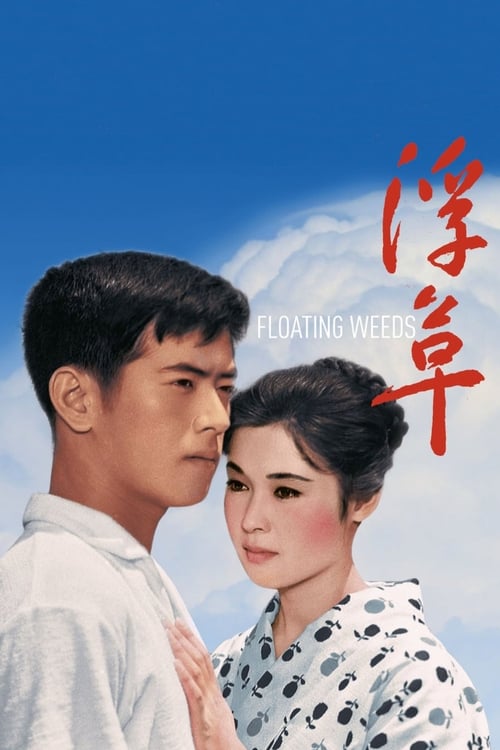


Popular
What is the relationship between the main character, Komajuro, and his son, Kiyoshi?
How does the character of Otsu influence Komajuro's decisions throughout the film?
What role does the traveling theater troupe play in the development of the story?
How does the setting of the seaside village impact the characters' interactions and emotional states?
What is the significance of the final performance by the theater troupe in relation to Komajuro's character arc?
Should I watch it?
Ask Your Own Question

What is the plot?
Sorry, we aren't able to watch and write up a full detailed plot yet. Check back in a few days.
More Movies Like This
Browse All Movies →
What is the ending?
In the ending of "Floating Weeds," the traveling theater troupe, led by the aging actor Komajuro, faces the consequences of past relationships and unresolved emotions. After a series of confrontations and revelations, Komajuro's son, Kiyoshi, learns the truth about his parentage. The film concludes with a poignant sense of loss and acceptance as the troupe prepares to leave the town, and Komajuro's relationship with his former lover, Otsu, remains unresolved.
As the final scenes unfold, the emotional weight of the characters' choices becomes palpable, leading to a bittersweet farewell.
The ending of "Floating Weeds" unfolds in a series of emotionally charged scenes that encapsulate the complex relationships among the characters.
Scene 1: The theater troupe is preparing to leave the town after their performance. The atmosphere is heavy with unspoken words and lingering glances. Komajuro, the aging actor, is seen packing up his belongings, his face etched with a mix of regret and nostalgia. He glances at Otsu, his former lover, who stands nearby, her expression a blend of sadness and longing. The tension between them is palpable, as both are aware of the unresolved feelings that linger from their past.
Scene 2: Kiyoshi, Komajuro's son, confronts his father about the truth of his parentage. The revelation hits him hard, and the emotional turmoil is evident on his face. He grapples with feelings of betrayal and confusion, struggling to reconcile the image of the father he idolized with the man who has kept secrets from him. Komajuro, in turn, is filled with remorse, realizing the pain his choices have caused his son. The dialogue is charged, filled with raw emotion as they navigate this painful revelation.
Scene 3: Otsu, witnessing the confrontation, is torn between her love for Komajuro and her desire to protect Kiyoshi. She steps in, trying to mediate the situation, but her presence only intensifies the emotional stakes. The three characters are caught in a web of love, betrayal, and the longing for connection. Otsu's eyes reflect her own heartache as she realizes that the past cannot be changed, and the future remains uncertain.
Scene 4: As the troupe prepares to leave, the townspeople gather to bid them farewell. There is a sense of finality in the air, as if the characters are not just leaving the town but also leaving behind parts of themselves. Komajuro shares a final, lingering look with Otsu, filled with unspoken words and unresolved feelings. It is a moment that encapsulates their shared history, a bittersweet acknowledgment of what could have been.
Scene 5: The final moments show the troupe departing, with Kiyoshi walking away from his father, symbolizing a break from the past. Komajuro stands alone, watching the horizon, a figure of solitude and reflection. Otsu, too, is left behind, her heart heavy with the weight of lost love and missed opportunities. The camera lingers on their faces, capturing the essence of their emotional states--regret, longing, and a sense of acceptance.
In the end, the fates of the main characters are intertwined with the themes of love, loss, and the passage of time. Komajuro is left to ponder his choices, Otsu is left with the memories of a love that could not be, and Kiyoshi must navigate his identity in the shadow of his father's past. The film closes on a note of melancholy, leaving the audience with a profound sense of the complexities of human relationships and the inevitability of change.
Is there a post-credit scene?
The movie "Floating Weeds," produced in 1959 by Yasujirō Ozu, does not have a post-credit scene. The film concludes with a poignant and reflective ending that encapsulates the themes of love, loss, and the passage of time. After the climax, where the complexities of relationships come to a head, the narrative wraps up without any additional scenes or credits that extend the story. The focus remains on the emotional resolution of the characters, particularly the traveling theater troupe and their interactions, leaving the audience with a sense of closure rather than an open-ended continuation.
What is the relationship between the main character, Komajuro, and his son, Kiyoshi?
Komajuro, the leader of a traveling theater troupe, has a complicated relationship with his son Kiyoshi. Initially, Kiyoshi is unaware that Komajuro is his father, as he has been raised by his mother, who is estranged from Komajuro. When they finally meet, Kiyoshi is drawn to Komajuro's charisma and talent, but he also feels a sense of betrayal and confusion about his father's abandonment. This relationship is central to the emotional tension in the film, as Kiyoshi grapples with his identity and his father's past.
How does the character of Otsu influence Komajuro's decisions throughout the film?
Otsu, a former lover of Komajuro, plays a pivotal role in his emotional journey. Her presence reignites old feelings and unresolved issues from their past. Otsu's longing for Komajuro and her struggles with her own life choices create a sense of nostalgia and regret for him. As Komajuro navigates his feelings for Otsu, he is torn between his responsibilities to his troupe and his desire for a personal connection, ultimately influencing his decisions regarding his family and career.
What role does the traveling theater troupe play in the development of the story?
The traveling theater troupe serves as both a literal and metaphorical backdrop for the story. It represents a transient lifestyle, reflecting the themes of impermanence and the search for belonging. The troupe's performances mirror the characters' emotional states and conflicts, with each play echoing their personal struggles. As the troupe moves from town to town, the dynamics within it shift, revealing the complexities of relationships among the characters, particularly between Komajuro, Kiyoshi, and Otsu.
How does the setting of the seaside village impact the characters' interactions and emotional states?
The seaside village is a crucial setting that enhances the film's emotional depth. Its picturesque yet isolated environment creates a sense of longing and nostalgia for the characters. The natural beauty of the landscape contrasts with the internal turmoil of the characters, particularly Komajuro and Otsu. The village's close-knit community also amplifies the tension between personal desires and societal expectations, influencing how characters interact with one another and revealing their vulnerabilities.
What is the significance of the final performance by the theater troupe in relation to Komajuro's character arc?
The final performance by the theater troupe is a culmination of Komajuro's character arc, symbolizing his acceptance of his past and the choices he has made. As he performs, the emotions of regret, love, and loss are palpable, reflecting his internal struggles. This performance serves as a moment of catharsis for Komajuro, allowing him to confront his feelings for Otsu and his responsibilities as a father. It highlights the theme of art as a means of expression and reconciliation, ultimately leading to a poignant resolution of his character's journey.
Is this family friendly?
"Floating Weeds," directed by Yasujirō Ozu in 1959, is a poignant drama that explores themes of love, family, and the complexities of human relationships. While the film is not overtly graphic or violent, there are several elements that may be considered potentially objectionable or upsetting for children or sensitive viewers:
-
Emotional Turmoil: The film delves into deep emotional conflicts, including themes of betrayal, regret, and familial tension, which may be difficult for younger audiences to fully comprehend or process.
-
Infidelity: The narrative involves a complicated romantic history, including infidelity, which may raise questions or discomfort for some viewers.
-
Parental Conflict: There are scenes depicting strained relationships between parents and children, particularly involving feelings of abandonment and disappointment, which could be upsetting.
-
Social Class and Struggle: The film portrays the struggles of a traveling theater troupe, highlighting themes of poverty and social class, which may evoke feelings of sadness or empathy.
-
Melancholic Tone: The overall atmosphere of the film is reflective and melancholic, which may not resonate well with younger viewers seeking lighter content.
These elements contribute to the film's emotional depth but may not be suitable for all audiences, particularly children or those sensitive to themes of emotional distress and familial conflict.









