
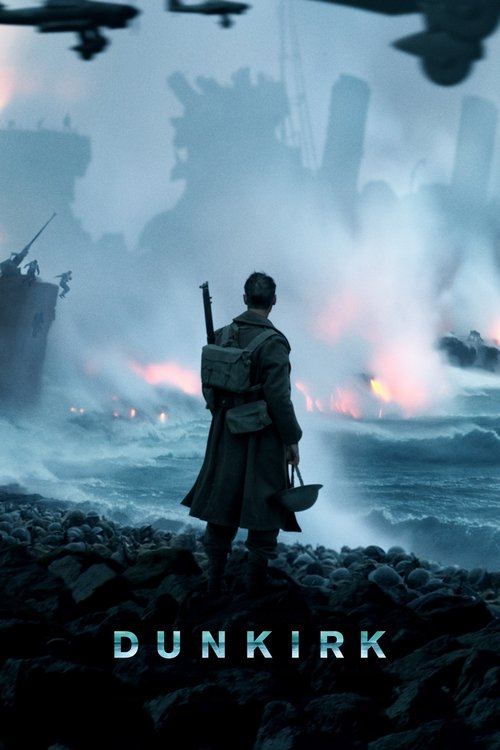

















































Popular
What are the different timelines presented in Dunkirk and how do they intersect?
What motivates Tommy to escape Dunkirk and how does his character develop throughout the film?
How does the character of Farrier contribute to the overall narrative of Dunkirk?
What role does the character of Mr. Dawson play in the rescue operation at Dunkirk?
What is the significance of the character of Gibson in Dunkirk?
Should I watch it?
Ask Your Own Question

What is the plot?
Sorry, we aren't able to watch and write up a full detailed plot yet. Check back in a few days.








What is the ending?
In the ending of Dunkirk, the British soldiers are successfully evacuated from the beaches of Dunkirk. Tommy, who has been trying to escape throughout the film, finally boards a ship and is taken to safety. Meanwhile, Mr. Dawson, who has been sailing his boat to rescue soldiers, witnesses the chaos of the evacuation and ultimately helps save many lives. The film concludes with the soldiers returning to England, where they are greeted as heroes, despite the heavy losses suffered during the evacuation.
As the film approaches its conclusion, the narrative unfolds across three distinct timelines that converge at Dunkirk.
On the beach, Tommy, played by Fionn Whitehead, is still desperate to escape. After a harrowing series of events, he finally manages to board a ship, the "Moonstone," alongside other soldiers. The ship is filled with a mix of relief and anxiety as they are finally leaving the beach, but the threat of German aircraft looms overhead. The tension is palpable as they navigate the waters, and the soldiers are visibly shaken by the experiences they have endured. Tommy's face reflects a mix of exhaustion and hope as he realizes he is one step closer to safety.
Meanwhile, Mr. Dawson, portrayed by Mark Rylance, and his son Peter, along with a young soldier named George, are navigating their small boat across the English Channel. They witness the chaos of the evacuation, with ships being bombed and soldiers struggling in the water. Mr. Dawson's determination to save as many men as possible is evident in his focused demeanor. As they approach the beach, they pick up a group of soldiers, including a traumatized soldier who has survived a near-drowning experience. The emotional weight of their mission is heavy, and Mr. Dawson's resolve to help is unwavering, even as danger surrounds them.
In the air, RAF pilot Farrier, played by Tom Hardy, continues to engage in dogfights with German planes, providing cover for the evacuation. His bravery is highlighted as he risks his life to protect the soldiers below. As he runs low on fuel, he makes the decision to stay in the air as long as possible, knowing that his sacrifice may save many lives. The tension builds as he takes down enemy planes, but ultimately, he is forced to land on the beach, where he is captured by the enemy. His fate remains uncertain, but his actions have made a significant impact on the evacuation.
As the final scenes unfold, the soldiers who have made it back to England are greeted with a mix of relief and somber recognition of the losses they have faced. Tommy, now back on British soil, is seen in a hospital, where he reflects on the harrowing experience. The film closes with a poignant moment as he reads a newspaper headline celebrating the evacuation, but the weight of the conflict and the sacrifices made hangs heavily in the air.
In summary, the ending of Dunkirk encapsulates the themes of survival, sacrifice, and the collective effort of individuals in the face of overwhelming odds. Each character's journey culminates in a moment of reflection on the cost of war and the resilience of the human spirit. Tommy, Mr. Dawson, and Farrier each play a crucial role in the evacuation, and their fates, while varied, highlight the shared experience of those who fought and survived during this pivotal moment in history.
Is there a post-credit scene?
The movie "Dunkirk," produced in 2017, does not have a post-credit scene. The film concludes with a powerful and emotional ending, focusing on the survival and resilience of the soldiers during the Dunkirk evacuation in World War II. After the climactic moments of the evacuation, the film ends with a poignant scene of Tommy, one of the main characters, reflecting on the harrowing experiences he has endured. The absence of a post-credit scene aligns with the film's serious tone and historical context, leaving the audience to contemplate the sacrifices made during the evacuation without any additional narrative or comedic relief.
What are the different timelines presented in Dunkirk and how do they intersect?
Dunkirk presents three distinct timelines that unfold simultaneously: the 'Land' timeline, which spans one week and follows the soldiers stranded on the beach; the 'Sea' timeline, which covers one day and follows Mr. Dawson and his son as they sail to Dunkirk to rescue soldiers; and the 'Air' timeline, which takes place over one hour and follows RAF pilot Farrier as he engages in aerial combat against German planes. These timelines intersect as the actions of each character influence the others, culminating in a unified narrative of survival.
What motivates Tommy to escape Dunkirk and how does his character develop throughout the film?
Tommy, portrayed by Fionn Whitehead, is driven by a desperate desire to survive and return home. Initially, he is portrayed as anxious and fearful, but as he witnesses the chaos and loss around him, his determination grows. His character develops from a passive survivor to someone who takes initiative, as seen when he helps others and ultimately boards a ship to safety, showcasing his evolution from self-preservation to a sense of camaraderie.
How does the character of Farrier contribute to the overall narrative of Dunkirk?
Farrier, played by Tom Hardy, is a skilled RAF pilot who embodies bravery and sacrifice. His primary motivation is to protect the soldiers on the ground while ensuring their evacuation. Throughout the film, he engages in dogfights with German planes, showcasing his commitment to the mission. His character serves as a symbol of hope and resilience, and his ultimate sacrifice, as he runs out of fuel and remains behind to fight, underscores the themes of heroism and duty.
What role does the character of Mr. Dawson play in the rescue operation at Dunkirk?
Mr. Dawson, portrayed by Mark Rylance, is a civilian who takes it upon himself to sail his boat to Dunkirk to assist in the evacuation of British soldiers. His motivation stems from a sense of duty and compassion, as he feels compelled to help those in peril. Throughout the journey, he demonstrates leadership and moral integrity, often prioritizing the safety of the soldiers over his own. His interactions with his son and the soldiers they rescue highlight themes of bravery and the human spirit in the face of adversity.
What is the significance of the character of Gibson in Dunkirk?
Gibson, played by Aneurin Barnard, is a soldier who becomes a key figure in the survival of his fellow men on the beach. His character is marked by a sense of loyalty and resourcefulness, as he helps to care for a wounded soldier and works to keep the group together amidst the chaos. Gibson's actions reflect the camaraderie and desperation of the soldiers, and his ultimate fate serves as a poignant reminder of the cost of war and the fragility of life during the evacuation.
Is this family friendly?
"Dunkirk," directed by Christopher Nolan, is a war film that depicts the harrowing evacuation of Allied soldiers from Dunkirk, France, during World War II. While the film is a powerful portrayal of bravery and survival, it contains several elements that may be objectionable or upsetting for children or sensitive viewers.
-
Intense War Violence: The film features scenes of combat, including gunfire, explosions, and the chaos of war, which can be quite graphic and distressing.
-
Death and Injury: There are moments where soldiers are shown being injured or killed, which can be emotionally impactful and may be upsetting for younger viewers.
-
Tense Atmosphere: The film creates a constant sense of dread and urgency, with characters facing life-and-death situations that can evoke anxiety.
-
Survival Themes: The struggle for survival is a central theme, and the desperation of the characters can be emotionally heavy, particularly in scenes where hope seems lost.
-
Loud Noises: The sound design includes loud explosions and gunfire, which may be startling or frightening for some viewers.
-
Limited Dialogue: The film relies heavily on visual storytelling, which may be intense and overwhelming without much dialogue to provide context or relief.
Overall, while "Dunkirk" is a critically acclaimed film, its intense portrayal of war may not be suitable for younger audiences or those sensitive to such themes.







