














Popular
What is the significance of Spirit's relationship with the Lakota boy, Little Creek?
How does Spirit's character evolve throughout the film?
What role does the setting play in Spirit's journey?
How does Spirit's mother influence his character and actions?
What is the significance of the song 'Here I Am' in Spirit's journey?
Should I watch it?
Ask Your Own Question

What is the plot?
Sorry, we aren't able to watch and write up a full detailed plot yet. Check back in a few days.







What is the ending?
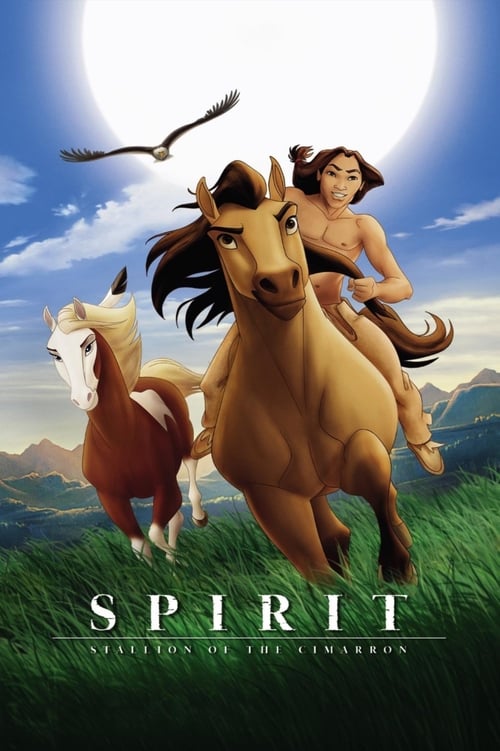
At the end of "Spirit: Stallion of the Cimarron," Spirit, the wild mustang, successfully leads his herd to freedom after a series of struggles against human captivity. He reunites with his love, a mare named Rain, and they live freely in the wild. The film concludes with Spirit's legacy continuing through his offspring, symbolizing the enduring spirit of freedom.
In a more detailed narrative:
As the climax of the story unfolds, Spirit finds himself in a desperate situation. After being captured by humans, he is taken to a military fort where he is broken in by a soldier named Lieutenant Jim Steele. Despite the harsh treatment, Spirit's indomitable spirit remains unbroken. He refuses to be tamed, showcasing his fierce independence and strength.
During his time at the fort, Spirit meets a young Lakota man named Little Creek, who sees the wildness in Spirit and understands his plight. Little Creek befriends Spirit, and through their bond, Spirit begins to trust him. The two share a moment of connection when Little Creek helps Spirit escape from the confines of the fort. This act of kindness ignites a spark of hope in Spirit, who yearns for freedom.
Once outside, Spirit and Little Creek embark on a journey to return to the wild. However, their path is fraught with danger. They encounter soldiers who are determined to recapture Spirit. In a tense chase, Spirit and Little Creek manage to evade the soldiers, but not without a struggle. Spirit's determination to return to his herd drives him forward, even as he faces the threat of capture once more.
As they reach the open plains, Spirit is reunited with his herd, including Rain, the mare he loves. The reunion is filled with joy and relief, as Spirit realizes he is finally home. However, the threat of the soldiers looms large. In a climactic moment, Spirit leads his herd in a daring escape from the soldiers who are pursuing them. The chase is intense, with the sound of galloping hooves echoing against the vast landscape. Spirit's leadership shines as he guides his herd through treacherous terrain, showcasing his bravery and resilience.
In the final moments, Spirit and Rain stand together on a cliff, overlooking the vast expanse of the wild. They are free, and the bond between them is stronger than ever. The film closes with a poignant scene of Spirit and Rain, now parents, watching over their foal as it plays in the open fields. This symbolizes the continuation of their legacy and the enduring spirit of freedom that they embody.
As the credits roll, the audience is left with a sense of hope and the understanding that Spirit's journey is not just about his own freedom, but also about the connection between nature and the wild, the importance of friendship, and the unyielding desire for liberty. Each character's fate is intertwined with this theme: Spirit and Rain thrive in their freedom, Little Creek finds a friend in Spirit, and the soldiers, though persistent, ultimately fail to capture the wild spirit of the mustang.
Is there a post-credit scene?
"Spirit: Stallion of the Cimarron" does not have a post-credit scene. The film concludes with Spirit and his herd running free across the plains, symbolizing freedom and the unbreakable spirit of wild horses. The ending emphasizes the themes of liberation and the bond between Spirit and his friends, particularly Little Creek, as they celebrate their connection to nature and each other. The credits roll without any additional scenes or content following the main story.
What is the significance of Spirit's relationship with the Lakota boy, Little Creek?
Spirit's relationship with Little Creek is pivotal as it represents a bond of mutual respect and understanding between two different cultures. After being captured by humans, Spirit meets Little Creek, who sees him not as a mere animal but as a noble spirit. This connection deepens when Little Creek helps Spirit escape from captivity, showcasing themes of friendship and freedom. Little Creek's gentle nature contrasts with the harshness of the soldiers, and through their interactions, Spirit learns to trust again.
How does Spirit's character evolve throughout the film?
Spirit begins as a wild and free stallion, embodying the spirit of the Cimarron. His journey takes a turn when he is captured by humans, leading to feelings of anger and defiance. As he endures the trials of captivity, including witnessing the destruction of his herd and the imposition of human control, Spirit's character evolves from a fierce protector of his freedom to a more nuanced figure who learns the importance of trust and companionship, especially through his bond with Little Creek and the other horses.
What role does the setting play in Spirit's journey?
The setting of the American West is integral to Spirit's journey, serving as both a backdrop and a character in its own right. The vast, open landscapes symbolize freedom and the wild spirit of nature, contrasting sharply with the confined spaces of the military camp where Spirit is held captive. The stunning visuals of the mountains, rivers, and plains reflect Spirit's internal struggle and longing for freedom, while also highlighting the beauty of the world he fights to protect.
How does Spirit's mother influence his character and actions?
Spirit's mother plays a crucial role in shaping his identity and values. In the opening scenes, she teaches him about the importance of freedom and the ways of the wild. Her strength and nurturing presence instill in Spirit a deep sense of loyalty to his herd and a fierce desire to protect them. Even after their separation, her memory drives Spirit's determination to escape captivity and return to his home, embodying the lessons of courage and resilience she imparted.
What is the significance of the song 'Here I Am' in Spirit's journey?
The song 'Here I Am' serves as a poignant reflection of Spirit's internal struggles and desires throughout the film. It encapsulates his feelings of isolation and longing for freedom while also expressing his determination to reclaim his life. The emotional weight of the song underscores key moments in Spirit's journey, particularly during his captivity and his yearning for connection with Little Creek and his herd, highlighting the themes of identity and belonging.
Is this family friendly?
"Spirit: Stallion of the Cimarron" is generally considered family-friendly, but it does contain some scenes that may be upsetting or objectionable for younger children or sensitive viewers. Here are a few aspects to consider:
-
Captivity and Struggle: The film depicts Spirit, a wild stallion, being captured by humans. This scene may evoke feelings of distress as he struggles against ropes and confinement.
-
Conflict and Violence: There are moments of conflict between the Native Americans and the U.S. cavalry, which include scenes of battle and the use of weapons. While not graphic, the tension may be intense for some viewers.
-
Emotional Turmoil: Spirit experiences a range of emotions, including fear, anger, and sadness, particularly during his captivity and when he witnesses the suffering of his fellow horses. These emotional scenes may resonate deeply with sensitive viewers.
-
Loss and Separation: The film explores themes of loss, particularly in the context of Spirit's relationships with his herd and his eventual separation from them. This may be poignant for younger audiences.
-
Animal Danger: There are scenes where animals are in peril, which could be distressing for children who are sensitive to animal welfare.
Overall, while the film conveys themes of freedom, friendship, and resilience, parents may want to consider these elements when deciding if it is suitable for their children.







