

Popular
What is the significance of the character Rebecca in the story?
How does the second Mrs. de Winter's relationship with Mrs. Danvers evolve throughout the film?
What role does Manderley play in the story?
What is the nature of Maxim de Winter's relationship with Rebecca?
How does the second Mrs. de Winter's identity evolve throughout the film?
Should I watch it?
Ask Your Own Question

What is the plot?
Sorry, we aren't able to watch and write up a full detailed plot yet. Check back in a few days.
More Movies Like This
Browse All Movies →
What is the ending?
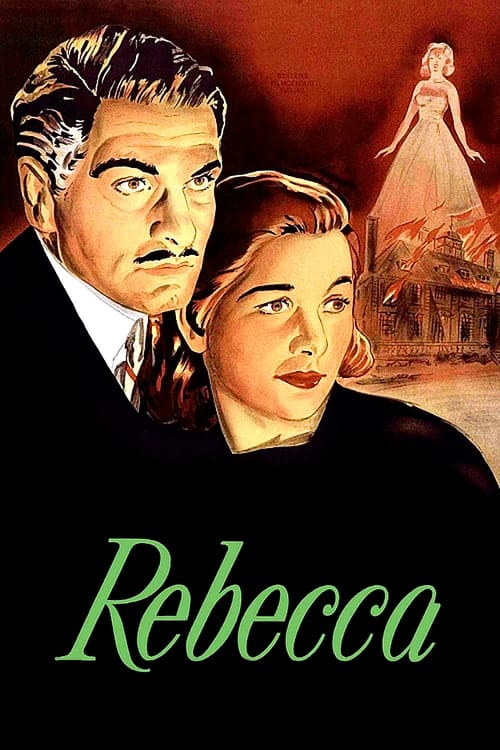
In the ending of the 1940 film "Rebecca," Maxim de Winter and his second wife, the unnamed protagonist, return to Manderley only to find it engulfed in flames. The fire is a result of a confrontation with Mrs. Danvers, who has been obsessively loyal to the deceased Rebecca. The couple escapes the burning estate, and as they stand together, they realize they can move forward, free from the haunting presence of Rebecca.
Now, let's delve into the ending in a more detailed, chronological narrative.
As the film approaches its climax, Maxim and his wife return to Manderley after a brief absence. The atmosphere is tense, filled with an unsettling sense of foreboding. The couple is greeted by the familiar yet oppressive surroundings of their estate, which has been overshadowed by the memory of Rebecca, Maxim's first wife. The protagonist feels the weight of Rebecca's legacy pressing down on her, and the specter of Rebecca looms large in her mind.
Upon their return, they find Mrs. Danvers, the housekeeper, still entrenched in her devotion to Rebecca. Danvers' demeanor is cold and unsettling, and she seems to revel in the power she holds over the household and the new Mrs. de Winter. The protagonist's insecurities are exacerbated by Danvers' manipulations, and she feels increasingly isolated in her own home.
In a pivotal scene, Mrs. Danvers confronts the protagonist, attempting to undermine her confidence and provoke her into a confrontation. The tension escalates as Danvers reveals her true allegiance to Rebecca, suggesting that the new Mrs. de Winter will never be able to fill Rebecca's shoes. In a moment of desperation, the protagonist stands up to Danvers, asserting her place in the household. However, Danvers, consumed by her obsession, becomes unhinged.
The climax reaches its peak when Mrs. Danvers, in a fit of rage and despair, sets fire to Manderley. The flames engulf the estate, symbolizing the destruction of the past and the finality of Rebecca's hold over Maxim and his wife. As the fire rages, the protagonist and Maxim escape the inferno, witnessing the destruction of the home that has been a battleground for their emotions and conflicts.
As they stand outside, watching Manderley burn, there is a profound sense of release. The protagonist, once overshadowed by Rebecca's memory, feels a newfound strength beside Maxim. The fire represents a cleansing, a way to finally break free from the chains of the past. Maxim, too, is liberated from the burden of Rebecca's ghost, allowing him to embrace his future with his wife.
In the aftermath, the fate of the main characters is clear. Maxim and his wife emerge from the chaos, united in their shared experience and ready to face whatever comes next. Mrs. Danvers, however, is left behind in the flames, consumed by her loyalty to Rebecca and her inability to adapt to the new reality. The film concludes with the couple looking forward, symbolizing hope and the possibility of a new beginning, free from the shadows of the past.
Is there a post-credit scene?
The 1940 film "Rebecca," directed by Alfred Hitchcock, does not have a post-credit scene. The film concludes with a dramatic and haunting finale that leaves a lasting impression on the audience. After the climactic events at Manderley, the story wraps up without any additional scenes or epilogues during or after the credits. The focus remains on the psychological tension and the emotional turmoil experienced by the characters throughout the film, particularly the unnamed protagonist and her relationship with Maxim de Winter. The absence of a post-credit scene aligns with the film's overall tone and themes of mystery and suspense.
What is the significance of the character Rebecca in the story?
Rebecca is the deceased first wife of Maxim de Winter, whose presence looms large over the estate of Manderley and the lives of its inhabitants. Her character is central to the plot, as she represents an idealized version of femininity and beauty that the second Mrs. de Winter feels she can never live up to. Rebecca's mysterious death and the secrets surrounding her life create tension and drive the narrative forward, influencing the actions and emotions of Maxim and the second Mrs. de Winter.
How does the second Mrs. de Winter's relationship with Mrs. Danvers evolve throughout the film?
The second Mrs. de Winter, played by Joan Fontaine, initially feels intimidated and threatened by Mrs. Danvers, the housekeeper who was fiercely loyal to Rebecca. As the story progresses, Mrs. Danvers' obsession with Rebecca becomes increasingly apparent, leading to a psychological battle between the two women. Mrs. Danvers attempts to undermine the second Mrs. de Winter, showcasing her disdain and manipulation, which culminates in a climactic confrontation that reveals the depths of her loyalty to Rebecca and her desire to see the second Mrs. de Winter fail.
What role does Manderley play in the story?
Manderley, the grand estate owned by Maxim de Winter, serves as a character in its own right within the film. It embodies the opulence and the haunting memories of Rebecca. The estate's imposing architecture and the lush gardens create a sense of beauty that contrasts sharply with the dark secrets hidden within its walls. Manderley reflects the emotional states of the characters, particularly the second Mrs. de Winter, who feels out of place and overshadowed by Rebecca's legacy. The estate's eventual destruction symbolizes the end of the past and the possibility of a new beginning.
What is the nature of Maxim de Winter's relationship with Rebecca?
Maxim de Winter's relationship with Rebecca is complex and fraught with tension. Initially, he appears to be a grieving widower, but as the story unfolds, it is revealed that their marriage was deeply troubled. Maxim's feelings towards Rebecca are a mix of love, resentment, and guilt, as he grapples with the truth about her character and the circumstances of her death. His protective nature towards the second Mrs. de Winter stems from his desire to shield her from the haunting legacy of Rebecca, while also revealing his own vulnerabilities and the impact of Rebecca's memory on his life.
How does the second Mrs. de Winter's identity evolve throughout the film?
The second Mrs. de Winter begins as a shy, insecure young woman who feels overshadowed by Rebecca's memory. Throughout the film, her identity is shaped by her experiences at Manderley and her relationship with Maxim. As she faces challenges, particularly from Mrs. Danvers and the expectations of her new role, she gradually gains confidence and assertiveness. Her journey is marked by moments of self-doubt and realization, ultimately leading her to confront the truth about Rebecca and her own worth, culminating in a transformation that allows her to step out of Rebecca's shadow.
Is this family friendly?
The 1940 film "Rebecca," directed by Alfred Hitchcock, contains several elements that may be considered objectionable or upsetting for children or sensitive viewers. Here are some aspects to consider:
-
Themes of Jealousy and Insecurity: The protagonist struggles with feelings of inadequacy and jealousy, particularly in relation to the deceased Rebecca, which may be emotionally intense for younger viewers.
-
Depictions of Death: The film revolves around the mysterious death of Rebecca, and while it is not graphically depicted, the implications and discussions surrounding her death can be unsettling.
-
Psychological Manipulation: The character of Mrs. Danvers exhibits obsessive and manipulative behavior towards the new Mrs. de Winter, creating a tense and uncomfortable atmosphere.
-
Suicidal Ideation: There are moments that suggest despair and hopelessness, particularly in the context of the protagonist's emotional struggles, which may be distressing.
-
Intense Emotional Scenes: The film features several emotionally charged scenes that explore themes of betrayal, loss, and identity, which may be heavy for younger audiences.
-
Gothic Atmosphere: The overall tone of the film is dark and suspenseful, with a haunting score and visuals that may be frightening for sensitive viewers.
These elements contribute to a complex narrative that, while rich in storytelling, may not be suitable for all children or sensitive individuals.







