
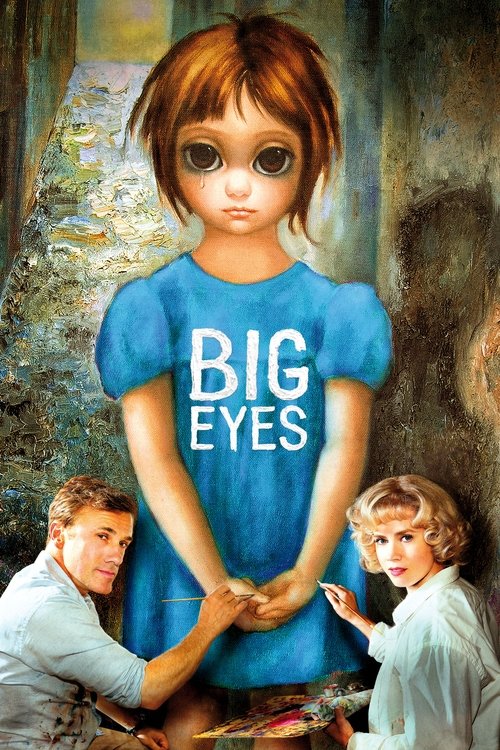

























































Popular
What motivates Margaret Keane to create her distinctive paintings of children with big eyes?
How does Walter Keane manipulate Margaret's success as an artist?
What is the significance of the legal battle between Margaret and Walter Keane?
How does Margaret's relationship with her daughter affect her decisions throughout the film?
What role does the art world play in the story of Big Eyes?
Should I watch it?
Ask Your Own Question

What is the plot?
Sorry, we aren't able to watch and write up a full detailed plot yet. Check back in a few days.








What is the ending?
At the end of the movie "Big Eyes," Margaret Keane finally takes control of her life and her art. After a public confrontation with her estranged husband, Walter Keane, she gains recognition for her work. The film concludes with her reclaiming her identity as the true artist behind the iconic paintings of children with big eyes.
In a more detailed narrative, the climax of "Big Eyes" unfolds in a courtroom where Margaret Keane, played by Amy Adams, is faced with the daunting task of proving her authorship of the beloved paintings that have made her husband, Walter Keane, portrayed by Christoph Waltz, a household name. The tension in the courtroom is palpable as Margaret, who has spent years in the shadow of Walter's deceit, finally finds her voice.
The scene opens with the courtroom filled with spectators, journalists, and a palpable sense of anticipation. Walter, confident and charismatic, sits at the plaintiff's table, while Margaret, visibly nervous yet resolute, takes her place at the defendant's table. The judge, a stern figure, presides over the proceedings, and the atmosphere is thick with the weight of Margaret's struggle for recognition.
As the trial progresses, Walter's bravado begins to falter. He attempts to maintain his facade, claiming credit for the paintings, but Margaret's determination shines through. In a pivotal moment, the judge asks both Margaret and Walter to create a painting on the spot, a test of authenticity. Walter, who has always claimed to be the artist, falters under pressure. Margaret, however, picks up a brush with a newfound confidence. The scene captures her emotional transformation; she is no longer the timid woman who allowed her husband to take credit for her work.
With each stroke of the brush, Margaret channels her pain, her passion, and her truth. The audience watches in awe as she creates a piece that reflects her unique style, the very essence of the big-eyed children that have captivated the world. The contrast between her genuine artistry and Walter's inability to replicate it is stark and revealing.
As the trial concludes, the judge rules in favor of Margaret, declaring her the rightful owner of the paintings. The courtroom erupts in applause, and Margaret's victory is not just a personal triumph but a reclamation of her identity. She stands tall, tears of relief and joy streaming down her face, surrounded by supporters who have believed in her all along.
In the aftermath, we see Margaret stepping into her own light. She begins to exhibit her work under her name, finally receiving the recognition she deserves. The film closes with a montage of her life post-trial, showcasing her newfound independence and success as an artist. Walter, on the other hand, is left to grapple with the consequences of his actions. He fades into obscurity, his reputation tarnished by the truth of his deception.
The final scenes depict Margaret in her studio, painting with a sense of freedom and joy. She is no longer defined by her past or her relationship with Walter. Instead, she embraces her identity as an artist, a woman who has fought for her voice and won. The film ends on a hopeful note, emphasizing the importance of authenticity and self-empowerment, leaving the audience with a sense of closure for Margaret's journey.
Is there a post-credit scene?
The movie "Big Eyes," directed by Tim Burton, does not have a post-credit scene. The film concludes with a final scene that wraps up the story of Margaret Keane and her struggle for recognition as the true artist behind the iconic paintings of children with large eyes. After the credits roll, there are no additional scenes or content that follow. The film ends on a note that emphasizes Margaret's reclaiming of her identity and her art, leaving the audience with a sense of closure regarding her journey.
What motivates Margaret Keane to create her distinctive paintings of children with big eyes?
Margaret Keane, played by Amy Adams, is driven by a deep emotional need to express her own feelings of loneliness and isolation through her art. Her childhood experiences, including a troubled relationship with her parents and a sense of not being understood, fuel her desire to create art that resonates with others. The big eyes in her paintings symbolize vulnerability and a longing for connection.
How does Walter Keane manipulate Margaret's success as an artist?
Walter Keane, portrayed by Christoph Waltz, initially supports Margaret's artistic endeavors but soon begins to take credit for her work. He uses charm and persuasion to convince her that her art will be more successful if he claims authorship. Walter's manipulative nature is revealed as he exploits Margaret's insecurities, leading her to doubt her own talent and ultimately allowing him to dominate the art market.
What is the significance of the legal battle between Margaret and Walter Keane?
The legal battle serves as a pivotal moment in the film, highlighting themes of identity, ownership, and the struggle for recognition. Margaret's decision to sue Walter for the rights to her work represents her fight for autonomy and validation as an artist. The courtroom scenes are charged with tension, showcasing Margaret's emotional turmoil as she confronts Walter's lies and her own suppressed voice.
How does Margaret's relationship with her daughter affect her decisions throughout the film?
Margaret's relationship with her daughter, Jane, is a central emotional thread in the narrative. As a mother, Margaret is deeply protective and wants to provide a better life for Jane than she had. This maternal instinct influences her choices, including her initial compliance with Walter's demands and her eventual decision to reclaim her identity as an artist. Jane's presence serves as a reminder of what is at stake, pushing Margaret to assert herself.
What role does the art world play in the story of Big Eyes?
The art world in 'Big Eyes' is depicted as both a glamorous and exploitative environment. It serves as a backdrop for the rise of Margaret's paintings, which gain immense popularity due to their unique style. However, it also highlights the challenges female artists face, particularly in the 1960s, where male figures like Walter dominate the scene. The art world becomes a battleground for Margaret's struggle for recognition and respect, ultimately reflecting her journey toward empowerment.
Is this family friendly?
"Big Eyes," directed by Tim Burton, is generally suitable for older children and adults, but it does contain some elements that may be objectionable or upsetting for younger viewers or sensitive individuals. Here are some aspects to consider:
-
Emotional Abuse: The film portrays the emotional manipulation and control exerted by Walter Keane over his wife, Margaret. This dynamic can be distressing to watch, as it highlights themes of power imbalance in relationships.
-
Conflict and Tension: There are several scenes of intense conflict between characters, particularly between Margaret and Walter. These moments can be uncomfortable, showcasing arguments and emotional turmoil.
-
Depictions of Struggle: Margaret faces significant personal and professional struggles, including feelings of isolation and despair. Her journey through these challenges may resonate deeply with some viewers, potentially evoking strong emotions.
-
Themes of Deception: The film explores themes of dishonesty and the consequences of living a lie, which may be unsettling for younger audiences who are still developing their understanding of trust and integrity.
-
Artistic Exploitation: The exploitation of Margaret's art and her struggle for recognition can be distressing, as it highlights the challenges faced by artists, particularly women, in a male-dominated society.
While the film is visually engaging and has a whimsical style typical of Burton's work, these themes may require parental guidance for younger viewers.








