





















































Popular
What motivates Ellen Martin to investigate the insurance scam?
How do Jürgen Mossack and Ramón Fonseca contribute to the narrative?
What is the significance of the character of the elderly couple in the film?
How does Ellen's journey lead her to uncover the truth about the Laundromat?
What role does the setting of Panama play in the story?
Should I watch it?
Ask Your Own Question

What is the plot?
Sorry, we aren't able to watch and write up a full detailed plot yet. Check back in a few days.









What is the ending?
In the ending of "The Laundromat," Ellen Martin confronts the realities of the Panama Papers scandal, leading her to a deeper understanding of the corruption in the financial system. She ultimately finds a way to expose the wrongdoing of the wealthy elite, represented by the characters Jürgen Mossack and Ramón Fonseca, who are shown to be complicit in facilitating tax evasion and money laundering. The film concludes with a powerful message about accountability and the impact of systemic corruption on ordinary lives.
As the film approaches its conclusion, we see Ellen Martin, played by Meryl Streep, grappling with the aftermath of her husband's tragic death in a boating accident. Her journey has taken her from a grieving widow to an empowered woman seeking justice. She has been investigating the financial dealings that led to her husband's death, which she believes are tied to a larger web of corruption involving offshore accounts.
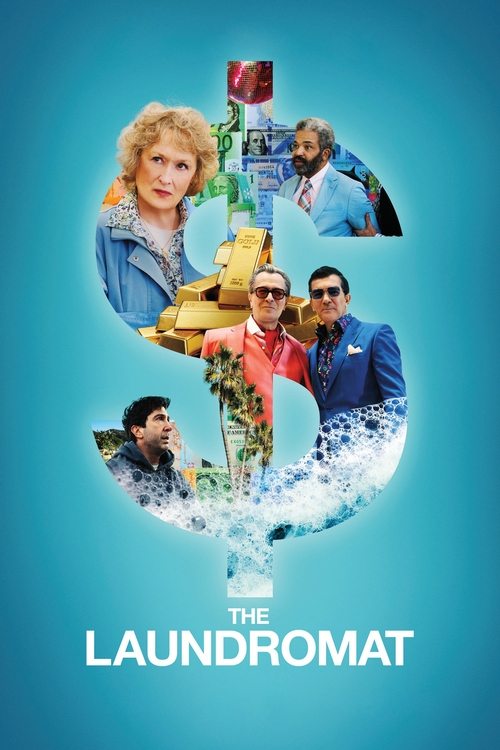
In a pivotal scene, Ellen confronts the two main characters, Jürgen Mossack and Ramón Fonseca, portrayed by Gary Oldman and Antonio Banderas, respectively. They are depicted as slick, self-assured lawyers who have built their empire on helping the wealthy evade taxes and hide their money. As Ellen learns more about their operations, she becomes increasingly determined to hold them accountable.
The narrative shifts to a montage that illustrates the vast scale of the Panama Papers leak, showcasing the global implications of the financial practices that Mossack and Fonseca have facilitated. The audience sees a series of headlines and news reports that highlight the fallout from the scandal, emphasizing the widespread impact on ordinary people who have been affected by the corruption of the elite.
In the final moments, Ellen stands in front of a large screen displaying the names of those implicated in the scandal, symbolizing her triumph in bringing the truth to light. She embodies the voice of the many who have suffered due to the greed of a few. The film closes with a stark reminder of the ongoing nature of such corruption, leaving viewers with a sense of urgency about the need for transparency and accountability in the financial world.
The fates of the main characters are intertwined with the film's message. Ellen emerges as a symbol of resilience and determination, having transformed her grief into a quest for justice. Jürgen and Ramón, on the other hand, are left to face the consequences of their actions, as the world begins to turn against them. The film ends on a note of unresolved tension, highlighting that while some may be held accountable, the system that allows such corruption to flourish remains largely intact.
Is there a post-credit scene?
In "The Laundromat," there is no post-credit scene. The film concludes its narrative without any additional scenes or content after the credits roll. The story wraps up with a focus on the themes of corruption and the impact of financial schemes on ordinary lives, leaving the audience to reflect on the implications of the events depicted throughout the film.
What motivates Ellen Martin to investigate the insurance scam?
Ellen Martin, played by Meryl Streep, is driven by a deep sense of loss and injustice after her husband dies in a boating accident. When she discovers that the insurance policy she thought would provide for her is a scam, her emotional turmoil transforms into a quest for truth. This personal tragedy propels her into the world of financial corruption, as she seeks to understand how her life was upended by the machinations of the wealthy.
How do Jürgen Mossack and Ramón Fonseca contribute to the narrative?
Jürgen Mossack and Ramón Fonseca, portrayed by Gary Oldman and Antonio Banderas, serve as the film's narrators and embody the corrupt financial system. Their characters are slick, charismatic, and unapologetic about their roles in facilitating money laundering and tax evasion. They provide a chilling insight into the mechanics of their operations, often breaking the fourth wall to address the audience directly, which adds a layer of dark humor and cynicism to the unfolding drama.
What is the significance of the character of the elderly couple in the film?
The elderly couple, played by non-professional actors, represents the human cost of the financial schemes orchestrated by Mossack and Fonseca. Their story highlights the devastating impact of offshore accounts and money laundering on ordinary people. As they lose their life savings due to a fraudulent investment scheme, their plight serves as a poignant reminder of the real-world consequences of corporate greed and corruption, contrasting sharply with the detached, self-serving attitudes of the main characters.
How does Ellen's journey lead her to uncover the truth about the Laundromat?
Ellen's journey begins with her personal loss, but it evolves into a relentless pursuit of justice. As she navigates through the labyrinth of offshore accounts and shell companies, she encounters various characters who reveal the extent of the corruption. Her determination to expose the truth is fueled by her emotional pain and the desire to prevent others from suffering the same fate. Each step she takes, from meeting with lawyers to investigating financial documents, deepens her understanding of the systemic issues at play.
What role does the setting of Panama play in the story?
Panama serves as a critical backdrop for the film, symbolizing the nexus of global finance and corruption. The lush landscapes and vibrant culture contrast sharply with the dark underbelly of money laundering that occurs within its borders. The setting highlights the allure of offshore banking and the ease with which wealthy individuals can exploit the system. It also emphasizes the disconnect between the beautiful facade of the country and the grim realities faced by those affected by the financial crimes.
Is this family friendly?
"The Laundromat," directed by Steven Soderbergh, is not considered family-friendly due to several potentially objectionable elements. Here are some aspects that might be upsetting for children or sensitive viewers:
-
Adult Themes: The film deals with complex financial crimes, including money laundering and tax evasion, which may be difficult for younger audiences to understand and could provoke anxiety about financial security.
-
Sexual Content: There are scenes that involve suggestive situations and discussions about infidelity, which may not be appropriate for children.
-
Violence and Threats: Some scenes depict the consequences of financial crimes, including threats and intimidation, which could be distressing.
-
Mature Language: The dialogue includes strong language and adult conversations that may not be suitable for younger viewers.
-
Emotional Distress: The film explores themes of loss and betrayal, which could evoke strong emotional reactions, particularly in sensitive individuals.
Overall, the film's exploration of serious and complex issues makes it more suitable for mature audiences.







