




















































Popular
What is the significance of Peter Quill's relationship with his father, Ego?
How does Gamora's relationship with Nebula evolve throughout the film?
What role does Yondu play in Peter Quill's life and how does it change?
What is the significance of the Guardians' battle against Ego's forces?
How does Rocket's character develop in this film?
Should I watch it?
Ask Your Own Question

What is the plot?
Sorry, we aren't able to watch and write up a full detailed plot yet. Check back in a few days.
More Movies Like This
Browse All Movies →
What is the ending?
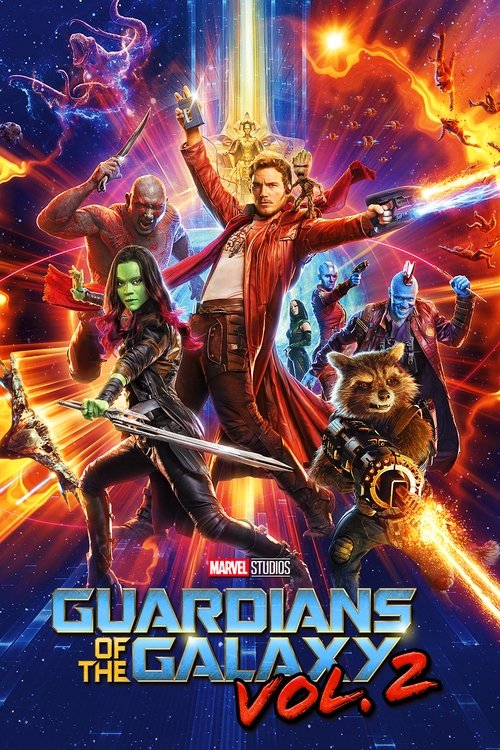
At the end of Guardians of the Galaxy Vol. 2, the Guardians defeat Ego, the Living Planet, after a fierce battle. Peter Quill, also known as Star-Lord, learns to embrace his human side and the importance of family. Yondu sacrifices himself to save Peter, leading to an emotional farewell. The Guardians honor Yondu's memory, and they continue their adventures together, now more united than ever.
As the climax of Guardians of the Galaxy Vol. 2 unfolds, the scene shifts to Ego's planet, where the Guardians confront the true nature of Ego's intentions. After a tense confrontation, Peter Quill realizes that Ego has been manipulating him, using their connection to further his own agenda of universal domination. Ego reveals that he has been responsible for the deaths of Peter's mother, Meredith, and that he views Peter merely as a means to an end.
In a moment of clarity, Peter rejects Ego's vision and embraces his human heritage. He taps into the power of the celestial energy within him, but it is not enough to defeat Ego alone. The Guardians, including Gamora, Drax, Rocket, and Baby Groot, rally together to fight against Ego's monstrous form, which has taken over the planet. They work in unison, showcasing their growth as a team and their deepening bonds of friendship.
As the battle intensifies, Yondu arrives in a ship, having made a crucial decision to save Peter. He confronts Ego, and in a heroic act, he sacrifices himself to ensure Peter's escape. Yondu's final moments are filled with emotion as he tells Peter, "He may have been your father, boy, but he wasn't your daddy." This poignant statement encapsulates the film's exploration of what it means to be a family, emphasizing that true connections are forged through love and sacrifice rather than mere blood relations.
After Yondu's sacrifice, the Guardians manage to destroy Ego, leading to the planet's collapse. They escape just in time, but the loss of Yondu weighs heavily on Peter and the rest of the team. In the aftermath, they hold a funeral for Yondu, where they honor his life and contributions. Peter, now more aware of the importance of his chosen family, reflects on his journey and the relationships he has built with the Guardians.
The film concludes with the Guardians continuing their adventures across the galaxy, united in their mission and strengthened by their experiences. They are no longer just a group of misfits; they have become a family, ready to face whatever challenges lie ahead. Each character has grown: Peter has embraced his identity, Gamora has deepened her bond with her sister Nebula, Drax has found a sense of belonging, Rocket has learned to trust, and Baby Groot has become a symbol of hope and renewal. The final scenes leave the audience with a sense of closure and anticipation for the future of the Guardians.
Is there a post-credit scene?
Yes, "Guardians of the Galaxy Vol. 2" features several post-credit scenes that add depth to the characters and hint at future developments in the Marvel Cinematic Universe.
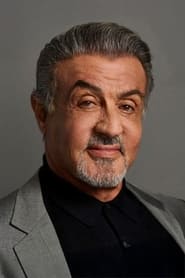
The first post-credit scene shows a group of Ravagers led by Yondu's former ally, Stakar Ogord, played by Sylvester Stallone. Stakar reunites with his old team, including characters like Martinex, Charlie-27, and Aleta Ogord. They discuss Yondu's death and express their respect for him, indicating that he was a true Ravager. This scene highlights the camaraderie and loyalty among the Ravagers, as well as the impact Yondu had on his friends.
The second post-credit scene features a teenage Groot, who is now in a rebellious phase, playing video games in the Guardians' ship. Drax, who is sitting nearby, tries to engage with him, but Groot is more interested in his game. This scene showcases Groot's growth and the humorous dynamic between him and Drax, emphasizing the lighthearted nature of the Guardians.
The third post-credit scene reveals a celestial being known as Adam Warlock, who is shown in a cocoon, hinting at his future significance in the Marvel Universe. This scene teases the potential for Adam Warlock to play a crucial role in upcoming storylines, particularly in relation to the Guardians.
These post-credit scenes not only provide comic relief and emotional resonance but also set the stage for future adventures and character developments within the Marvel Cinematic Universe.
What is the significance of Peter Quill's relationship with his father, Ego?
Peter Quill, also known as Star-Lord, discovers that his father is Ego the Living Planet, a celestial being with god-like powers. This relationship is central to the plot as Ego initially presents himself as a loving father, wanting to reconnect with Peter. However, as the story unfolds, it becomes clear that Ego's intentions are selfish and destructive, seeking to use Peter's celestial heritage to further his own agenda. This revelation leads to a deep emotional conflict for Peter, who grapples with the desire for paternal connection versus the need to confront the dark truth about his father's nature.
How does Gamora's relationship with Nebula evolve throughout the film?
Gamora and Nebula's relationship is fraught with tension and resentment, stemming from their upbringing under the abusive training of Thanos. Throughout the film, Gamora is initially dismissive of Nebula, viewing her as a rival. However, as the plot progresses, particularly during a pivotal scene where they confront their shared past, Gamora begins to understand Nebula's pain and struggles. This leads to a moment of vulnerability where they acknowledge their sisterly bond, ultimately culminating in a more supportive relationship as they fight together against Ego.
What role does Yondu play in Peter Quill's life and how does it change?
Yondu Udonta, the blue-skinned leader of the Ravagers, plays a complex role in Peter's life. Initially, he is seen as a father figure who abducted Peter from Earth but later becomes a source of guidance and protection. As the story unfolds, Yondu's character is revealed to be more nuanced; he sacrifices his own safety for Peter's well-being, showcasing a deep, albeit complicated, love. This culminates in a powerful emotional climax where Peter realizes that Yondu, despite his flaws, truly cared for him, leading to a poignant farewell that solidifies their bond.
What is the significance of the Guardians' battle against Ego's forces?
The battle against Ego's forces serves as a climactic moment that tests the Guardians' unity and individual strengths. Each member of the team plays a crucial role, showcasing their growth and the deepening of their relationships. The fight is not just against Ego's physical manifestation but also represents the struggle against Peter's internal conflict regarding his identity and legacy. The stakes are high, as the fate of the universe hangs in the balance, and the Guardians must come together, overcoming personal differences to defeat a common enemy.
How does Rocket's character develop in this film?
Rocket Raccoon experiences significant character development in 'Guardians of the Galaxy Vol. 2.' Initially portrayed as brash and self-serving, Rocket grapples with feelings of inadequacy and fear of abandonment. His interactions with Yondu reveal his vulnerabilities, as he sees parallels between their lives as outcasts. Throughout the film, Rocket learns the value of teamwork and friendship, ultimately stepping up to help save his friends. His emotional journey culminates in a moment of self-sacrifice and bravery, showcasing his growth from a lone wolf to a valued member of the Guardians.
Is this family friendly?
"Guardians of the Galaxy Vol. 2" contains several elements that may be considered objectionable or upsetting for children or sensitive viewers. Here are some aspects to be aware of:
-
Violence and Action Sequences: The film features numerous action scenes with space battles, explosions, and physical confrontations. While the violence is often portrayed in a comedic or fantastical manner, it can still be intense.
-
Mature Themes: The film explores complex themes such as family dynamics, abandonment, and the search for identity. These themes may resonate deeply and could be emotionally challenging for younger viewers.
-
Language: There are instances of mild profanity and crude humor throughout the film, which may not be suitable for all audiences.
-
Emotional Moments: Several scenes involve emotional distress, including moments of loss, betrayal, and conflict among characters. These can be poignant and may evoke strong feelings.
-
Scary Creatures and Situations: Some characters and creatures may be frightening or unsettling, particularly for younger children. The film includes scenes with menacing beings and intense situations.
-
Substance Use: There are references to substance use, including a scene involving a character who is intoxicated, which may not be appropriate for younger audiences.
Overall, while "Guardians of the Galaxy Vol. 2" is designed to be entertaining and humorous, it does contain elements that may be unsuitable for children or sensitive viewers. Parental discretion is advised.









