


















































Popular
What motivates Arthur to reclaim his birthright as king?
How does Vortigern's character influence the plot?
What role do the Knights of the Round Table play in Arthur's journey?
How does the relationship between Arthur and his mentor, Merlin, develop throughout the film?
What is the significance of Excalibur in Arthur's transformation?
Should I watch it?
Ask Your Own Question

What is the plot?
Sorry, we aren't able to watch and write up a full detailed plot yet. Check back in a few days.




What is the ending?
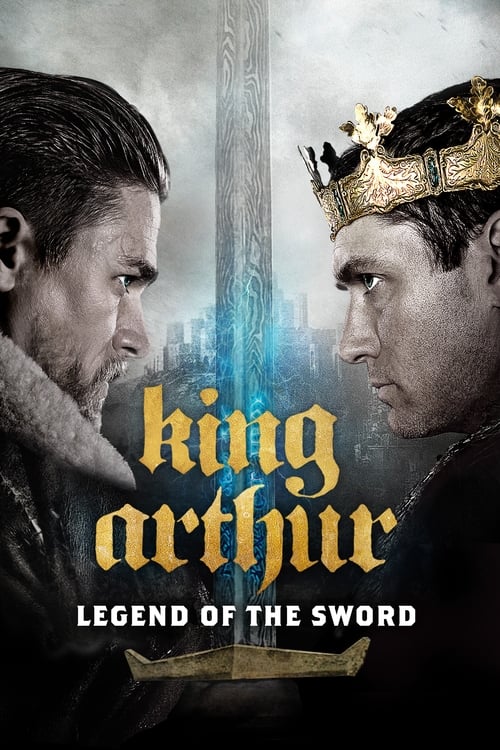
In the ending of "King Arthur: Legend of the Sword," Arthur defeats Vortigern and claims Excalibur, solidifying his role as the rightful king. He rallies his allies and confronts Vortigern in a climactic battle. After a fierce fight, Arthur kills Vortigern, and the kingdom begins to unite under his leadership. The film concludes with Arthur embracing his destiny as king, ready to lead his people.
As the final act unfolds, the tension escalates in the kingdom of Camelot, where Vortigern's tyranny has cast a long shadow. Arthur, having embraced his identity and the power of Excalibur, stands resolute. The scene opens with Arthur, now fully aware of his royal lineage, rallying his loyal followers, including the fierce warrior Bedivere and the cunning mage, Merlin. The atmosphere is charged with anticipation as they prepare for the impending confrontation with Vortigern.
The camera shifts to Vortigern, who is in his dark fortress, surrounded by his loyal soldiers. He is desperate to maintain his grip on power, and his fear of Arthur's potential is palpable. Vortigern's internal conflict is evident; he is a man driven by ambition but haunted by the prophecy of Arthur's return. As he prepares for battle, he clutches the dark magic that has sustained his rule, a symbol of his corruption and moral decay.
The scene transitions to the battlefield, where Arthur and his allies face off against Vortigern's forces. The clash is brutal and chaotic, with swords clashing and arrows flying. Arthur, wielding Excalibur, fights with a newfound confidence and skill, embodying the hero he was destined to become. Each swing of the sword is not just a physical act but a reclaiming of his birthright and a rejection of the darkness that Vortigern represents.
As the battle rages on, Arthur confronts Vortigern in a dramatic showdown. The two engage in a fierce duel, their swords clanging against each other, echoing the struggle between good and evil. Vortigern, fueled by desperation, uses dark magic to gain the upper hand, but Arthur's determination and the strength of Excalibur prove to be too powerful. In a climactic moment, Arthur disarms Vortigern and delivers a fatal blow, ending the tyrant's reign.
With Vortigern defeated, the atmosphere shifts from chaos to a sense of hope and renewal. Arthur stands over Vortigern's fallen body, breathing heavily, the weight of his actions settling in. He looks around at his allies, who are filled with a mix of relief and joy. The kingdom, once shrouded in darkness, begins to see the light of a new dawn. Arthur's victory symbolizes not just the end of Vortigern's rule but the beginning of a new era for Camelot.
In the aftermath, Arthur is crowned king, surrounded by his loyal friends and allies. Bedivere stands by his side, proud of the man Arthur has become. The camera captures the faces of the people of Camelot, who look on with hope and admiration. Arthur's journey from a streetwise orphan to a noble king is complete, and he embraces his role with humility and strength.
As the film draws to a close, Arthur gazes out over his kingdom, a sense of purpose in his eyes. He understands the challenges that lie ahead but is ready to face them head-on. The final scene hints at the legendary adventures that await him, as he prepares to unite the kingdom and lead his people into a brighter future. The screen fades to black, leaving the audience with a sense of closure and the promise of legendary tales yet to be told.
Is there a post-credit scene?
In "King Arthur: Legend of the Sword," there is no post-credit scene. The film concludes with Arthur Pendragon having reclaimed his birthright and established himself as the rightful king of England. The story wraps up with a sense of resolution, focusing on Arthur's newfound leadership and the challenges that lie ahead, but it does not include any additional scenes or teasers during or after the credits. The film ends on a note of triumph, emphasizing Arthur's journey and the bonds he has formed with his allies.
What motivates Arthur to reclaim his birthright as king?
Arthur's motivation to reclaim his birthright stems from a deep-seated desire to understand his identity and heritage. Raised in the streets of Londinium, he initially feels disconnected from the royal lineage. However, after witnessing the tyranny of Vortigern, who usurped the throne and murdered Arthur's father, Arthur's sense of justice ignites. The moment he pulls Excalibur from the stone, he is not only claiming his birthright but also embracing his destiny to lead and protect the people.
How does Vortigern's character influence the plot?
Vortigern, portrayed as a ruthless and power-hungry ruler, significantly influences the plot through his oppressive regime and the fear he instills in the kingdom. His actions, including the murder of Arthur's father and the pursuit of Excalibur, set the stage for Arthur's journey. Vortigern's desperation to maintain control leads him to dark magic and betrayal, ultimately showcasing the lengths he will go to eliminate Arthur, which propels the narrative forward and heightens the stakes.
What role do the Knights of the Round Table play in Arthur's journey?
The Knights of the Round Table, though not fully formed in this installment, represent the ideals of loyalty, camaraderie, and valor that Arthur aspires to embody. Characters like Bedivere and Goosefat Bill become crucial allies, helping Arthur navigate the challenges he faces. Their loyalty and support provide Arthur with the strength he needs to confront Vortigern and rally the people, symbolizing the unity required to reclaim the throne and restore peace to the kingdom.
How does the relationship between Arthur and his mentor, Merlin, develop throughout the film?
In 'King Arthur: Legend of the Sword', Merlin is portrayed as a mysterious figure who guides Arthur through his journey. Initially, Arthur is skeptical of Merlin's wisdom and the magical elements he introduces. However, as Arthur faces the trials of leadership and the burden of his destiny, he begins to trust Merlin's guidance. Their relationship evolves from one of doubt to mutual respect, with Merlin's teachings helping Arthur harness his potential and understand the true meaning of being a king.
What is the significance of Excalibur in Arthur's transformation?
Excalibur serves as a powerful symbol of Arthur's transformation from a streetwise orphan to the rightful king. When Arthur first pulls the sword from the stone, it is a moment of awakening, signifying his acceptance of his royal lineage and destiny. The sword not only grants him immense power but also challenges him to rise above his past and embrace his responsibilities. Throughout the film, Excalibur represents the struggle between good and evil, and Arthur's journey to wield it reflects his internal battle to become a just and noble leader.
Is this family friendly?
"King Arthur: Legend of the Sword" contains several elements that may not be suitable for children or sensitive viewers. Here are some potentially objectionable or upsetting aspects:
-
Violence and Gore: The film features numerous battle scenes with intense violence, including sword fights, bloodshed, and the depiction of death. Characters are shown being killed in various ways, which may be graphic for younger audiences.
-
Dark Themes: The narrative explores themes of betrayal, revenge, and the struggle for power, which can be heavy and complex for children to understand.
-
Magical Elements: There are scenes involving dark magic and supernatural creatures, which may be frightening for younger viewers.
-
Strong Language: The dialogue includes profanity and strong language that may not be appropriate for children.
-
Emotional Turmoil: Characters experience significant emotional distress, including loss and betrayal, which could be upsetting for sensitive viewers.
-
Implied Adult Situations: While not explicit, there are implications of adult themes and relationships that may not be suitable for younger audiences.
Overall, the film's tone and content lean towards a more mature audience, making it less family-friendly.








