


Popular
What is the significance of the Kobayashi Maru test in Star Trek?
How does Spock's Vulcan heritage influence his character in Star Trek?
What role does the Prime Directive play in the series?
What is the relationship between Captain Kirk and Dr. McCoy?
How does the character of Uhura break stereotypes in Star Trek?
Should I watch it?
Ask Your Own Question

What is the plot?
In the pilot episode of Star Trek, titled "The Cage," the story begins on the starship USS Enterprise, under the command of Captain Christopher Pike. The Enterprise is on a mission to the planet Talos IV, where they receive a distress signal from a previous expedition. Pike, along with his first officer, Number One, and the ship's doctor, Dr. Boyce, discuss the implications of the signal and the need to investigate. Pike is portrayed as a strong leader, but he is also haunted by the responsibilities of command and the weight of past decisions.
As they approach Talos IV, the crew encounters a mysterious force that causes the ship to be captured and brought down to the planet's surface. The crew is rendered unconscious, and Pike awakens to find himself in a strange environment, surrounded by alien beings known as the Talosians. The Talosians are telepathic and possess the ability to create illusions, which they use to manipulate Pike's perceptions. They reveal their intention to use Pike as part of an experiment to understand human emotions and desires.
Pike is introduced to Vina, a woman who was part of the original expedition to Talos IV. She appears to be a captive of the Talosians, and Pike is drawn to her. As they interact, Vina reveals that she has been living on the planet for years, and her physical appearance has been altered by the Talosians to match her desires. Pike learns that the Talosians are fascinated by human emotions, particularly love and longing, and they wish to study these feelings through Pike's experiences.
The Talosians begin to create elaborate illusions for Pike, showing him visions of his past and potential futures. They present scenarios that explore his deepest fears and desires, including a vision of a romantic relationship with Vina. Pike struggles with the Talosians' manipulation, trying to maintain his sense of reality while grappling with the emotional weight of the illusions. He becomes increasingly aware of the Talosians' intentions and their lack of understanding of genuine human emotion.
As Pike resists the Talosians' control, he attempts to escape their clutches. He discovers that the Talosians are not inherently malevolent but are desperate to learn about humanity due to their own declining civilization. Pike's determination to escape leads him to confront the Talosians directly, challenging their methods and expressing his desire for freedom. The Talosians, intrigued by his defiance, offer him a choice: to remain on Talos IV and live in an illusion of his choosing or to return to his ship and crew.
In a climactic moment, Pike chooses to reject the Talosians' offer, asserting his will to return to the real world and his responsibilities as a Starfleet captain. He understands that while the illusions may provide comfort, they cannot replace the authenticity of real experiences and relationships. The Talosians, recognizing Pike's strength of character, ultimately allow him to leave, albeit with a sense of sadness for their own inability to experience true emotions.
Pike is returned to the Enterprise, where he finds his crew recovering from the ordeal. The experience has left a profound impact on him, and he reflects on the nature of command, sacrifice, and the complexities of human emotion. The episode concludes with Pike's resolve to continue exploring the universe, carrying with him the lessons learned from his encounter with the Talosians and the importance of genuine connection.








What is the ending?
The ending of the original Star Trek series, which aired in 1966, culminates in the episode titled "Turnabout Intruder." In this episode, Captain James T. Kirk is switched into the body of a woman named Dr. Janice Lester, who has a vendetta against him. After a tense confrontation, Kirk, with the help of his crew, manages to regain control of his body and defeat Lester's plans. The episode concludes with Kirk reflecting on the events and the nature of identity.
In a more detailed narrative:
The episode "Turnabout Intruder" opens aboard the USS Enterprise, where Captain James T. Kirk is preparing for a routine mission. The atmosphere is tense, as Kirk is approached by Dr. Janice Lester, an old acquaintance who has a deep-seated obsession with him. She reveals her desire to take command of the Enterprise, believing that she can do a better job than Kirk. As they converse, the emotional undercurrents of their past relationship become evident, with Lester expressing her frustration over the limitations placed on women in Starfleet.
Scene shifts to the ship's bridge, where Kirk's crew--Spock, Dr. McCoy, and others--are engaged in their duties. Kirk's demeanor is confident, but there is an underlying tension as he senses something is amiss with Lester. The crew is unaware of the impending danger, and Kirk's trust in his abilities is palpable.
In a dramatic turn, Lester uses a device to switch bodies with Kirk, leaving him trapped in her body while she assumes command of the Enterprise. The transition is jarring, with Kirk's voice now coming from Lester's body, and her voice emanating from his. The crew is initially confused, as they struggle to comprehend the situation. Kirk, now in a female body, experiences a whirlwind of emotions--anger, confusion, and a desperate need to reclaim his identity.
As Lester, now in Kirk's body, begins to exert her authority, she reveals her true intentions to the crew. She plans to use the Enterprise for her own purposes, driven by a desire for power and revenge against a society that has marginalized her. The crew, particularly Spock and McCoy, are skeptical but remain loyal to Kirk, sensing that something is off.
Kirk, trapped in Lester's body, must navigate the challenges of being perceived as a woman in a male-dominated environment. He struggles with the limitations imposed on him and the emotional turmoil of losing his identity. The internal conflict is palpable as he fights to regain control, relying on his intelligence and the support of his crew.
In a climactic confrontation, Kirk manages to communicate with Spock and McCoy, who begin to piece together the truth of the body switch. They devise a plan to reverse the switch, but time is running out as Lester's control over the Enterprise grows stronger. The tension escalates as Kirk, still in Lester's body, confronts her in a final showdown. The emotional stakes are high, with Kirk fighting not just for his command but for his very identity.
The resolution comes when Kirk, with the help of his crew, successfully reverses the body switch. The device is activated, and in a flash of light, Kirk and Lester are returned to their original bodies. Kirk, now back in his own form, stands resolute, while Lester, defeated, is left to confront the consequences of her actions.
In the aftermath, Kirk reflects on the experience, grappling with the implications of identity and the societal constraints that shaped Lester's motivations. The episode concludes with Kirk and his crew continuing their mission aboard the Enterprise, united and resolute, but forever changed by the encounter. Kirk's fate is to remain the captain, while Lester's fate is left ambiguous, highlighting the complexities of ambition and identity in a world that often limits individuals based on gender.
Is there a post-credit scene?
The original Star Trek series, which aired from 1966 to 1969, did not feature post-credit scenes. Each episode concluded with the credits rolling after the story wrapped up, without any additional scenes or content following the credits. The format of the show focused on the narrative of the episode itself, often leaving viewers with a thought-provoking message or moral, but there were no scenes added after the credits.
What is the significance of the Kobayashi Maru test in Star Trek?
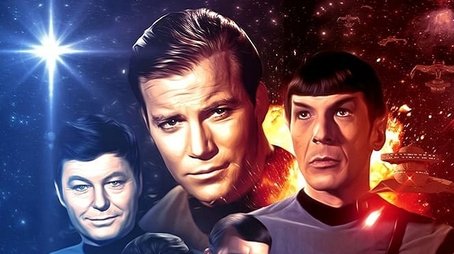
The Kobayashi Maru test is a crucial training exercise for Starfleet cadets, designed to evaluate their decision-making skills in a no-win scenario. In the episode 'The Wrath of Khan,' it is revealed that James T. Kirk famously reprogrammed the test to ensure a victory, showcasing his unorthodox thinking and determination to overcome impossible odds. This act reflects Kirk's character as a leader who refuses to accept defeat, emphasizing his resourcefulness and creativity.
How does Spock's Vulcan heritage influence his character in Star Trek?
Spock, half-human and half-Vulcan, grapples with the duality of his nature throughout the series. His Vulcan upbringing instills in him a commitment to logic and emotional restraint, often leading to internal conflict when faced with human emotions. This struggle is poignantly illustrated in episodes like 'The Devil in the Dark,' where Spock's logical approach helps him understand the Horta, a creature initially perceived as a threat, revealing his capacity for empathy beneath his stoic exterior.
What role does the Prime Directive play in the series?
The Prime Directive, or General Order One, prohibits Starfleet personnel from interfering with the internal development of alien civilizations. This principle is central to many plotlines, such as in 'The Apple,' where Captain Kirk and his crew must navigate the moral implications of intervening in a society that has achieved a form of utopia through ignorance. The tension between the desire to help and the obligation to respect alien cultures often leads to ethical dilemmas that challenge the crew's values.
What is the relationship between Captain Kirk and Dr. McCoy?
Captain James T. Kirk and Dr. Leonard McCoy share a deep friendship characterized by mutual respect and camaraderie. Their relationship is often highlighted through playful banter, with McCoy frequently expressing concern for Kirk's reckless tendencies. In episodes like 'The City on the Edge of Forever,' their bond is tested as they face moral dilemmas that challenge their loyalty to each other and their mission, showcasing the emotional depth of their friendship amidst the backdrop of space exploration.
How does the character of Uhura break stereotypes in Star Trek?
Uhura, portrayed by Nichelle Nichols, is a groundbreaking character as one of the first African American women in a significant role on television. Serving as the communications officer aboard the USS Enterprise, she exemplifies competence and authority in a male-dominated environment. Her interactions with the crew, particularly in episodes like 'Plato's Stepchildren,' where she is involved in a pivotal moment of racial equality, challenge societal norms and showcase her strength, intelligence, and independence, making her a symbol of progress in the series.
Is this family friendly?
"Star Trek," produced in 1966, is generally considered family-friendly, but it does contain some scenes and themes that may be potentially objectionable or upsetting for children or sensitive viewers. Here are a few aspects to consider:
-
Violence and Conflict: The series features space battles, phaser fire, and physical confrontations. Some episodes depict characters in perilous situations, which may be intense for younger viewers.
-
Death and Sacrifice: Themes of mortality and sacrifice are present, with characters facing life-and-death situations. Some episodes explore the emotional weight of loss and the consequences of war.
-
Moral Dilemmas: The show often presents complex moral questions that may be difficult for children to fully understand. Characters are frequently faced with tough choices that can lead to distressing outcomes.
-
Alien Creatures and Horror Elements: Certain episodes include alien creatures or scenarios that may be frightening, such as monsters or psychological horror elements that evoke fear or anxiety.
-
Social Issues: The series tackles social issues such as racism, war, and ethics, which may require a level of maturity to comprehend fully. Some discussions may be heavy or thought-provoking.
-
Romantic Themes: There are instances of romantic relationships and flirtation, which may not be suitable for very young viewers, depending on their maturity level.
While "Star Trek" aims to promote positive messages about diversity, cooperation, and exploration, parents may want to preview episodes to gauge their appropriateness for their children.