
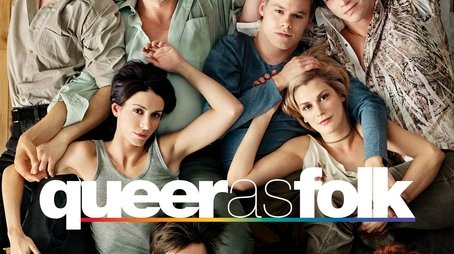


Popular
What is the significance of Brian Kinney's character in the series?
How does Justin Taylor's character develop throughout the series?
What role does the character of Michael Novotny play in the series?
How does the relationship between Brian and Justin evolve throughout the series?
What impact does the character of Lindsay Peterson have on the storyline?
Should I watch it?
Ask Your Own Question

What is the plot?
The series begins with Brian Kinney, a confident and successful advertising executive in Pittsburgh, who is unapologetically promiscuous. He attends a party at the home of his friend Michael Novotny, who is a comic book store employee and still lives with his mother. At the party, Brian meets Justin Taylor, a 17-year-old high school student. They share an immediate attraction, and Brian invites Justin to his apartment. The two have a passionate encounter, but Brian is hesitant to form any emotional attachment.
The next day, Justin is conflicted about his feelings for Brian, while Brian continues his carefree lifestyle. Justin's mother discovers that he is gay and is not supportive, leading to tension at home. Meanwhile, Michael struggles with his unrequited love for Brian, who often dismisses Michael's feelings. Michael's best friend, Emmett Honeycutt, is a flamboyant and openly gay man who encourages Michael to pursue his own happiness.
As the series progresses, Justin's relationship with Brian deepens, despite Brian's reluctance to commit. Justin's father, who is unaware of his son's sexual orientation, becomes a source of conflict when he discovers Justin's relationship with Brian. Justin's parents confront him, leading to a dramatic fallout that forces Justin to move in with Brian. This decision brings both excitement and fear for Justin, as he navigates the complexities of living with someone who is emotionally closed off.
Brian's life is further complicated by his interactions with his friends, including Ted Schmidt, a successful accountant who struggles with self-esteem and body image issues, and Lindsay Peterson, an artist who is in a committed relationship with Melanie Marcus. Lindsay and Melanie are raising a child together, and their relationship dynamics often reflect the challenges of parenting and commitment.
As Justin becomes more involved in Brian's world, he faces backlash from his peers and family. He is bullied at school, and his relationship with Brian becomes a point of contention. Brian, while initially dismissive of the situation, begins to realize the impact of their relationship on Justin's life. This realization leads to moments of vulnerability for Brian, who grapples with his own fears of intimacy.
The series also explores the lives of other characters, including Emmett, who faces discrimination and struggles with his identity, and Ted, who becomes involved with a man named Blake, leading to a tumultuous relationship marked by addiction and recovery. The friendships among the group are tested as they navigate love, heartbreak, and the challenges of being gay in a society that often marginalizes them.
As the season progresses, Brian's relationship with Justin becomes more serious, but Brian's fear of commitment leads to a series of misunderstandings and breakups. Justin's emotional growth is evident as he learns to stand up for himself and assert his needs in the relationship. The tension between Brian's desire for freedom and Justin's longing for a deeper connection creates a push-and-pull dynamic that drives much of the narrative.
In a pivotal moment, Justin is attacked by a group of homophobic men, which serves as a wake-up call for Brian. The incident forces Brian to confront his feelings for Justin and the reality of their relationship. Brian's protective instincts emerge, and he begins to take a more active role in Justin's life, leading to a deeper bond between them.
The season culminates in a dramatic confrontation between Brian and Justin's parents, where Brian defends their relationship and asserts his love for Justin. This moment marks a turning point for Brian, who begins to embrace the idea of commitment and the importance of love in his life. The series ends with a sense of hope and possibility for the characters, as they continue to navigate the complexities of love, friendship, and identity in a world that often challenges their existence.









What is the ending?
In the final episode of Queer As Folk, the series culminates with significant changes for the main characters. Brian Kinney decides to leave Pittsburgh for a new life in New York City, while Justin Taylor prepares to follow him. Michael Novotny and Ben Bruckner are set to start a family, and Emmett Honeycutt finds love with a new partner. The series ends on a hopeful note, emphasizing the characters' growth and the bonds they share.
As the final episode begins, we see Brian Kinney standing in his loft, contemplating his life and the choices he has made. The camera pans around the space, capturing the remnants of his past relationships and the vibrant life he has built in Pittsburgh. Brian's internal struggle is palpable; he has always been the free spirit, resistant to commitment, yet he feels a pull towards Justin, who has become a significant part of his life.
Meanwhile, Justin Taylor is busy preparing for his move to New York City. He is excited yet anxious about the future, reflecting on his journey from a naive teenager to a confident young man. As he packs his belongings, he reminisces about his relationship with Brian, the highs and lows, and the profound impact Brian has had on him. The emotional weight of leaving Pittsburgh is evident on Justin's face, as he grapples with the uncertainty of what lies ahead.
In a parallel storyline, Michael Novotny and Ben Bruckner are preparing for their own new chapter. They are excited about starting a family together, and the scene is filled with warmth and anticipation. Michael's mother, Debbie, is supportive and enthusiastic, showcasing the love and acceptance that has grown within their family. The couple discusses their plans, filled with hope and determination, as they envision a future filled with love and laughter.
As the episode progresses, we see Brian and Justin share a poignant moment together. They meet at the Liberty Avenue diner, a place that has been central to their relationship. The atmosphere is charged with emotion as they reflect on their time together. Brian, in his typical fashion, struggles to express his feelings but ultimately reveals his desire for Justin to join him in New York. Justin's eyes light up with excitement, but there is also a hint of fear about leaving everything behind.
In a touching scene, Brian and Justin share a passionate kiss, symbolizing their deep connection and the journey they have taken together. It is a moment of vulnerability for Brian, who has always been guarded about his emotions. The kiss signifies a turning point, as Brian begins to embrace the idea of commitment, albeit in his own way.
As the episode nears its conclusion, we see Emmett Honeycutt in a vibrant bar, where he meets a new love interest. The scene is lively, filled with laughter and joy, showcasing Emmett's resilience and ability to find happiness despite past heartbreaks. He dances with abandon, embodying the spirit of celebration and acceptance that has defined his character throughout the series.
The final moments of the episode bring all the characters together for a farewell gathering. The atmosphere is bittersweet, filled with laughter, tears, and heartfelt goodbyes. Each character reflects on their journey, the friendships they have forged, and the love they have experienced. The camera captures the essence of their relationships, highlighting the importance of community and support in their lives.
As the screen fades to black, we see Brian and Justin walking hand in hand, ready to embark on their new adventure in New York City. Michael and Ben share a loving embrace, excited about their future as parents. Emmett, surrounded by friends, radiates joy and hope. The series concludes with a sense of optimism, emphasizing the resilience of the characters and the enduring power of love and friendship.
Is there a post-credit scene?
The 2000 version of "Queer As Folk" does not have a post-credit scene. The series concludes its episodes without any additional scenes after the credits roll. Each episode typically ends with a final moment that encapsulates the themes and character arcs presented throughout the episode, but there are no extra scenes that follow the credits. The focus remains on the narrative and character development within the main episodes themselves.
What is the significance of Brian Kinney's character in the series?
Brian Kinney, portrayed by Gale Harold, is a complex character who embodies the archetype of the confident, unapologetic gay man. His journey throughout the series explores themes of love, commitment, and the fear of vulnerability. Brian's relationships, particularly with Justin Taylor, reveal his internal struggles with intimacy and emotional connection, showcasing his evolution from a self-centered individual to someone capable of deep love.
How does Justin Taylor's character develop throughout the series?
Justin Taylor, played by Randy Harrison, begins as a naive teenager who is discovering his sexuality. His relationship with Brian Kinney serves as a catalyst for his growth. Over the seasons, Justin transforms from a wide-eyed youth into a confident artist, grappling with the challenges of love, betrayal, and his own identity. His experiences, including dealing with the aftermath of a hate crime, shape his resilience and determination to assert his place in the world.
What role does the character of Michael Novotny play in the series?
Michael Novotny, portrayed by Hal Sparks, is Brian's best friend and serves as a grounding force in the series. His character often contrasts with Brian's hedonistic lifestyle, as he seeks a more traditional relationship and family life. Michael's journey includes navigating his own insecurities, his romantic relationships, particularly with Ben, and his struggles with acceptance within the gay community. His loyalty to Brian and his quest for love highlight the complexities of friendship and personal growth.
How does the relationship between Brian and Justin evolve throughout the series?
The relationship between Brian and Justin is central to the narrative of Queer As Folk. Initially, Brian is dismissive of emotional attachments, viewing Justin as a fleeting fling. However, as their relationship deepens, Brian grapples with his feelings and fears of commitment. Key moments, such as Justin's assault and Brian's subsequent support, force Brian to confront his vulnerabilities. Their relationship experiences significant ups and downs, including breakups and reconciliations, ultimately culminating in a profound bond that challenges both characters to grow.
What impact does the character of Lindsay Peterson have on the storyline?
Lindsay Peterson, played by Thea Gill, is a pivotal character who represents the complexities of motherhood and relationships within the LGBTQ+ community. As a lesbian raising a child with her partner, Melanie, Lindsay's character navigates the challenges of balancing her personal desires with her responsibilities as a mother. Her interactions with the other characters, particularly her friendship with Brian and her romantic entanglements, add depth to the narrative, exploring themes of love, sacrifice, and the pursuit of happiness.
Is this family friendly?
"Queer As Folk," produced in 2000, is not considered family-friendly due to its explicit content and mature themes. The show explores the lives of a group of gay men and women in Pittsburgh, delving into their relationships, struggles, and experiences within the LGBTQ+ community.
Potentially objectionable or upsetting aspects include:
-
Graphic Sexual Content: The series features numerous explicit sexual scenes, including depictions of same-sex relationships and sexual encounters that are integral to the storyline.
-
Substance Abuse: Characters frequently engage in drug and alcohol use, which is portrayed in a realistic and sometimes troubling manner.
-
Homophobia and Discrimination: The show addresses themes of homophobia, including instances of verbal and physical violence against LGBTQ+ individuals, which may be distressing for some viewers.
-
Emotional Turmoil: Characters experience significant emotional struggles, including issues related to identity, acceptance, and the impact of societal pressures, which can be heavy and intense.
-
Death and Grief: The series touches on themes of loss and the impact of HIV/AIDS, which can be particularly sensitive topics for some viewers.
Overall, the show is intended for a mature audience and contains themes and content that may not be suitable for children or sensitive viewers.