









Popular
What challenges does the mosque face in the community?
How does the character of Amaar change throughout the series?
What is the relationship between Sarah and Amaar like?
How do the characters deal with cultural misunderstandings?
What role does the character of Baber play in the mosque's dynamics?
Should I watch it?
Ask Your Own Question

What is the plot?
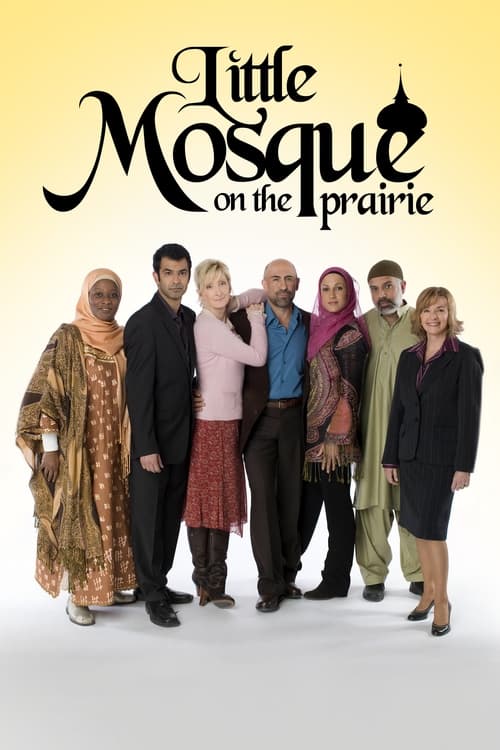
"Little Mosque on the Prairie" begins in the small, fictional town of Mercy, Saskatchewan, where the local Muslim community faces challenges in their efforts to establish a mosque. The series opens with the arrival of the new Imam, Amaar Rashid, who is eager to connect with the townspeople and help the Muslim community thrive. He is met with mixed reactions from both the Muslim community and the non-Muslim residents.
Amaar's first major task is to find a suitable location for the mosque. He faces opposition from some townsfolk, particularly from the town's mayor, who is concerned about the implications of having a mosque in their community. Despite this, Amaar remains determined and seeks support from his congregation, which includes characters like Sarah, a strong-willed and independent woman, and Rayyan, a modern Muslim woman who is also interested in Amaar.
As the series progresses, the dynamics within the Muslim community are explored. Sarah and Rayyan often clash over their differing views on tradition and modernity. Sarah is more traditional, while Rayyan embraces a more liberal interpretation of Islam. Their debates highlight the generational and ideological divides within the community.
The town's residents, including the mayor and other key figures, begin to interact more with the Muslim community. There are moments of tension, such as when a local newspaper publishes an article that stirs up fear and misunderstanding about the mosque. Amaar works hard to counter these misconceptions, organizing community events to foster dialogue and understanding.
A significant plot point occurs when a local incident, such as a hate crime or vandalism, targets the mosque. This event brings the community together, as both Muslims and non-Muslims rally to support the mosque. The incident serves as a catalyst for deeper relationships to form between the characters, as they confront their biases and learn to appreciate each other's perspectives.
Throughout the series, romantic subplots develop, particularly between Amaar and Rayyan. Their relationship is complicated by cultural expectations and personal ambitions. Rayyan is torn between her feelings for Amaar and her desire to pursue her career, while Amaar grapples with his responsibilities as an Imam and his attraction to Rayyan.
As the series continues, various characters face personal challenges that reflect broader societal issues. For instance, the character of Baber, a more conservative member of the community, often clashes with Amaar's progressive approach. Baber's traditional views create tension, but they also lead to moments of growth and understanding as he learns to adapt to the changing dynamics of the community.
The series also explores themes of identity and belonging. Characters like Yasir and Sarah navigate their roles as immigrants in a predominantly non-Muslim society, dealing with issues of acceptance and integration. Their experiences resonate with viewers as they reflect the complexities of multiculturalism in contemporary society.
In the final episodes, the community faces a major crisis that threatens the existence of the mosque. This could be a legal challenge or a significant public backlash. Amaar, along with his congregation, must rally together to defend their right to practice their faith openly. The climax involves a town hall meeting where emotions run high, and characters confront their fears and prejudices.
Ultimately, the series concludes with a sense of hope and progress. The characters have grown, and the community has begun to forge stronger bonds. The mosque stands as a symbol of resilience and unity, representing the possibility of coexistence and understanding in a diverse society. The final scenes depict a community celebration, showcasing the friendships and alliances that have formed throughout the series, leaving viewers with a sense of optimism for the future.








What is the ending?
The ending of "Little Mosque on the Prairie" sees the community coming together to face challenges, with characters finding resolution in their personal lives and relationships. The mosque remains a central place of unity, and the characters reflect on their growth and the importance of understanding and acceptance.
In the final episode, the story unfolds in a series of poignant scenes that encapsulate the journey of the characters and the community.
Scene 1: The episode opens with the mosque bustling with activity as preparations are underway for a community event. The air is filled with a sense of anticipation and excitement. The characters are busy setting up, showcasing their commitment to the mosque and each other. This scene establishes the mosque as a hub of connection and support.
Scene 2: We see Amaar, the young imam, grappling with his feelings for Rayyan. He is torn between his duties as a spiritual leader and his personal desires. As he interacts with Rayyan, there is a palpable tension; their chemistry is evident, but so are the obstacles they face. Amaar's internal conflict is highlighted as he reflects on his responsibilities and the potential consequences of pursuing a romantic relationship.
Scene 3: Meanwhile, Rayyan is also dealing with her own emotions. She is proud of her heritage and her role in the community, but she feels the weight of expectations. In a heartfelt conversation with her mother, she expresses her fears about love and commitment. This moment reveals her vulnerability and desire for acceptance, both from her family and from Amaar.
Scene 4: The community event begins, and various characters come together, showcasing their unique personalities and relationships. We see Baber, the traditionalist, trying to maintain order amidst the chaos, while Sarah, his wife, encourages a more open-minded approach. Their dynamic illustrates the generational and ideological differences within the community, but also their love and commitment to each other.
Scene 5: As the event progresses, tensions arise when a misunderstanding occurs between some community members and the local townspeople. This conflict serves as a catalyst for the characters to confront their biases and assumptions. Amaar steps in to mediate, demonstrating his growth as a leader. His ability to navigate the situation reflects his development throughout the series.
Scene 6: In a pivotal moment, Amaar and Rayyan finally confront their feelings for each other. In a quiet corner of the mosque, they share a heartfelt conversation, acknowledging their mutual attraction and the challenges they face. This scene is charged with emotion, as both characters express their hopes and fears. Their connection deepens, and they decide to take a chance on their relationship, symbolizing a new beginning.
Scene 7: The episode concludes with a sense of unity and hope. The community comes together to celebrate their diversity and shared values. Characters who were once at odds find common ground, and the mosque stands as a testament to their resilience. The final shot captures the characters laughing and enjoying each other's company, reinforcing the theme of acceptance and understanding.
In the end, Amaar and Rayyan embark on a new chapter in their lives, embracing their relationship while remaining committed to their roles in the community. Baber and Sarah continue to navigate their differences, but their bond is stronger than ever. The community, once divided, emerges more united, showcasing the power of love, understanding, and acceptance in overcoming challenges.
Is there a post-credit scene?
"Little Mosque on the Prairie" does not feature post-credit scenes. The show, which aired from 2007 to 2012, typically concluded its episodes without additional content after the credits. Each episode wrapped up its storylines within the main narrative, focusing on the lives of the characters in the fictional town of Mercy, Saskatchewan, and their interactions with each other and the broader community. The humor and heart of the series were encapsulated within the episodes themselves, leaving no need for post-credit scenes.
What challenges does the mosque face in the community?
Throughout the series, the mosque faces various challenges from the local community, including prejudice and misunderstanding about Islam. One significant plot point occurs when a local politician, who is initially supportive, begins to face pressure from constituents who oppose the mosque's presence. This leads to a series of town hall meetings where tensions rise, showcasing the characters' struggles to bridge cultural gaps.
How does the character of Amaar change throughout the series?
Amaar, the young imam, experiences significant growth over the series. Initially, he is eager to fit into the small-town life and often feels the weight of his responsibilities. As the series progresses, he becomes more confident in his role, advocating for the mosque and its members while also navigating his own personal relationships, particularly with Sarah, which adds layers to his character development.
What is the relationship between Sarah and Amaar like?
Sarah and Amaar's relationship is central to the series, marked by a mix of friendship, tension, and romantic undertones. Initially, Sarah is skeptical of Amaar's leadership and often challenges him, but as they work together to address community issues, their bond deepens. Their dynamic is filled with moments of humor, conflict, and eventual mutual respect, culminating in a romantic subplot that evolves over the seasons.
How do the characters deal with cultural misunderstandings?
Cultural misunderstandings are a recurring theme in 'Little Mosque on the Prairie.' Characters like Yasir and Sarah often find themselves in humorous yet poignant situations where their cultural backgrounds clash with the local community's expectations. For instance, Yasir's attempts to explain Islamic practices to his non-Muslim neighbors often lead to comedic misunderstandings, but they also serve to educate and foster dialogue between the cultures.
What role does the character of Baber play in the mosque's dynamics?
Baber, the mosque's board president, is a traditionalist who often clashes with the more progressive views of Amaar and other younger members. His character embodies the tension between old and new perspectives within the Muslim community. Baber's strict adherence to tradition often leads to comedic situations, but it also highlights the generational divide and the challenges of adapting to a changing world while maintaining cultural identity.
Is this family friendly?
"Little Mosque on the Prairie," produced in 2007, is generally considered family-friendly, focusing on themes of community, acceptance, and cultural understanding. However, there are a few aspects that might be considered potentially objectionable or upsetting for children or sensitive viewers:
-
Cultural Misunderstandings: The show often depicts misunderstandings between the Muslim community and the predominantly Christian townsfolk, which can lead to moments of tension or conflict. These scenes may evoke feelings of discomfort regarding prejudice or discrimination.
-
Religious Discussions: There are discussions about faith, religious practices, and the challenges faced by Muslims in a small town. Some of these conversations may touch on sensitive topics related to identity and belonging.
-
Character Conflicts: The characters sometimes experience personal conflicts, including family disagreements and romantic tensions, which may be emotionally charged and could be difficult for younger viewers to fully grasp.
-
Social Issues: The show addresses social issues such as racism, xenophobia, and the struggle for acceptance, which may be heavy themes for some children.
-
Humor: While the humor is generally light-hearted, some jokes may rely on stereotypes or cultural references that might not be fully understood by younger audiences.
Overall, while the show aims to promote understanding and tolerance, parents may want to preview episodes to gauge their appropriateness for their children.