


Popular
What is the significance of Kenshin's reverse blade sword?
How does the relationship between Kenshin and Kaoru develop throughout the series?
What role does Saito Hajime play in Kenshin's journey?
What is the backstory of the character Shishio Makoto?
How does the character of Megumi Takani contribute to the story?
Should I watch it?
Ask Your Own Question

What is the plot?
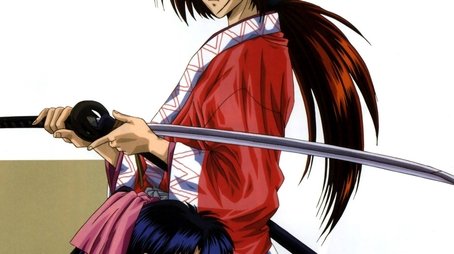
In the late 19th century, during the Meiji era in Japan, a wandering swordsman named Himura Kenshin arrives in Tokyo. He is a former assassin known as "Battousai," who has vowed never to kill again. Kenshin carries a reverse-blade sword, which cannot kill, symbolizing his commitment to peace. He seeks to atone for his past by helping those in need. His journey begins when he encounters a young woman named Kaoru Kamiya, who runs a kendo dojo. She is struggling to protect her dojo from a man named Kurogasa, who claims to be the new Battousai and is terrorizing the area.
Kenshin intervenes when Kurogasa attacks Kaoru and her students. In a swift and graceful display of skill, Kenshin defeats Kurogasa without killing him, showcasing his mastery of the sword while adhering to his vow. Impressed by Kenshin's abilities and his ideals, Kaoru invites him to stay at the dojo. Kenshin accepts, and they begin to form a bond, with Kaoru seeing him as a protector and Kenshin finding solace in her company.
As Kenshin settles into his new life, he meets other key characters, including the street-smart thief Sanosuke Sagara, who initially sees Kenshin as a rival but eventually becomes his ally. Sanosuke is drawn to Kenshin's strength and ideals, and he joins the dojo, providing comic relief and camaraderie. Meanwhile, the enigmatic and skilled assassin Makoto Shishio emerges as a significant threat. Shishio, who was once a government assassin like Kenshin, seeks to overthrow the Meiji government and establish his own rule, believing that only the strong should survive.
Kenshin learns of Shishio's plans and the danger he poses to the peace he desires. He is confronted by his past when he faces off against former comrades and enemies, including the ruthless assassin Saito Hajime, who is now a police officer. Saito challenges Kenshin's ideals and tests his resolve, but Kenshin remains steadfast in his commitment to protect the innocent without taking lives.
As the story progresses, Kenshin and his friends face various adversaries sent by Shishio, including the deadly Jinchuu, a group of skilled fighters who serve him. Each confrontation reveals more about Kenshin's past and the weight of his decisions as he struggles with the consequences of his former life. The battles are intense, with Kenshin using his unique fighting style to outmaneuver and outsmart his opponents, often relying on his speed and agility rather than brute force.
Kenshin's internal conflict deepens as he grapples with the fear of returning to his old ways. He is haunted by memories of the lives he took as Battousai, and he worries that he may not be able to protect those he cares about. Kaoru, sensing his turmoil, becomes a source of emotional support, encouraging him to embrace his new path and the people who believe in him.
The climax of the series builds as Kenshin and his allies prepare to confront Shishio directly. They gather their strength and resolve, knowing that the battle will not only determine their fates but also the future of Japan. The final confrontation takes place in a dramatic showdown where Kenshin faces Shishio in a fierce duel. The fight is intense, with both fighters showcasing their skills and philosophies. Shishio's ruthless tactics and desire for power clash with Kenshin's ideals of protection and peace.
During the battle, Kenshin is pushed to his limits, but he ultimately finds the strength to overcome Shishio. In a moment of clarity, Kenshin realizes that he must not only fight for himself but for those who cannot fight for themselves. He uses his reverse-blade sword to deliver a decisive blow, defeating Shishio without killing him, thus reaffirming his vow.
In the aftermath, Kenshin's victory brings a sense of peace, but it also leaves him with lingering questions about his past and future. He continues to protect those he loves, including Kaoru, who has grown to love him deeply. The series concludes with Kenshin reaffirming his commitment to a life of peace, surrounded by friends who support him in his journey of redemption. The bonds he has formed and the battles he has fought shape his path forward, as he embraces a new life free from the shadows of his past.









What is the ending?
In the ending of Rurouni Kenshin, Kenshin Himura confronts his past and the consequences of his actions as a former assassin. He faces off against his old rival, Makoto Shishio, who seeks to overthrow the Meiji government. After a fierce battle, Kenshin defeats Shishio but is gravely injured. The series concludes with Kenshin finding peace in his new life, surrounded by friends and loved ones, while reflecting on his journey toward redemption.
As the final arc of Rurouni Kenshin unfolds, the tension escalates with the looming threat of Makoto Shishio, a man driven by vengeance against the Meiji government. The story begins with Kenshin, now a wanderer who has sworn never to kill again, preparing for the inevitable confrontation. He is joined by his loyal friends: Kaoru Kamiya, his love interest and the strong-willed dojo owner; Saito Hajime, a former captain of the Shinsengumi; and the young and spirited Yahiko Myojin, who looks up to Kenshin as a mentor.
The first scene of the climax takes place in a dark, stormy night, where Kenshin and his allies gather to strategize against Shishio's forces. The atmosphere is thick with tension, as each character grapples with their fears and motivations. Kenshin, burdened by the weight of his past, is determined to protect those he loves, while Kaoru expresses her unwavering support, her eyes filled with both concern and admiration.
As the battle begins, the scene shifts to Shishio's hideout, where he reveals his ruthless ambition to create a new world order. The animation captures the intensity of his character, with flames flickering around him, symbolizing his destructive nature. Kenshin, clad in his iconic red kimono, steps forward to confront Shishio, their rivalry igniting the air with palpable energy.
The fight is brutal and showcases Kenshin's mastery of the Hiten Mitsurugi style, but Shishio's strength and cunning push him to his limits. Each clash of their swords resonates with the audience, echoing the internal struggles both men face. Kenshin fights not only for his own redemption but also to protect the future of Japan, while Shishio embodies the chaos of the past he seeks to escape.
As the battle rages on, Kenshin's injuries accumulate, and he begins to falter. In a pivotal moment, he recalls the faces of those he loves, including Kaoru and his late mentor, Hiko Seijuro. This flashback serves as a reminder of his vow to never kill again, fueling his resolve. With a final surge of strength, Kenshin unleashes a powerful technique, the Amakakeru Ryu no Hirameki, and ultimately defeats Shishio, who falls into the flames that symbolize his own destruction.
In the aftermath of the battle, Kenshin lies gravely injured, his body battered but his spirit unbroken. Kaoru rushes to his side, her face a mixture of relief and fear. The emotional weight of the moment is palpable as she cradles him, tears streaming down her cheeks. Kenshin, despite his injuries, reassures her, expressing his gratitude for her unwavering support and love.
The final scenes depict the aftermath of the conflict. Kenshin, now at peace with his past, returns to the dojo where he and Kaoru begin to rebuild their lives together. Yahiko, inspired by Kenshin's bravery, takes on a more active role in the dojo, embodying the hope for a brighter future. Saito, having fulfilled his duty, departs with a sense of respect for Kenshin, acknowledging the change in him.
As the series concludes, the camera pans out to show the peaceful landscape of Japan, symbolizing the new era that Kenshin and his friends have fought to protect. The final shot captures Kenshin and Kaoru standing together, their hands intertwined, a testament to their enduring bond and the promise of a new beginning. Each character has found their place in this new world, and the story closes on a note of hope, emphasizing the themes of redemption, love, and the possibility of change.
Is there a post-credit scene?
In the 1996 anime series Rurouni Kenshin, there is no post-credit scene following the final episode. The series concludes with a poignant ending that wraps up the main character's journey and the overarching themes of redemption and peace. The last episode, which is Episode 95, features a reflective moment where Kenshin Himura, having found a sense of closure and purpose, walks away from his past as a hitokiri (assassin) and embraces a future filled with hope alongside his friends and loved ones. The absence of a post-credit scene allows the emotional weight of this conclusion to resonate with the audience, leaving them with a sense of finality regarding Kenshin's journey.
What is the significance of Kenshin's reverse blade sword?
Kenshin Himura wields a reverse blade sword, known as a 'battōsai,' which symbolizes his vow never to kill again after his violent past as an assassin during the Bakumatsu period. The blade's design prevents him from inflicting lethal damage, reflecting his deep remorse and desire for atonement. This weapon becomes a physical representation of his internal struggle between his past and his commitment to protect the innocent.
How does the relationship between Kenshin and Kaoru develop throughout the series?
Kenshin and Kaoru's relationship evolves from initial tension to deep mutual respect and affection. Kaoru, a strong-willed dojo master, initially sees Kenshin as a potential threat but gradually recognizes his gentle nature and commitment to justice. Their bond strengthens as they face various adversaries together, with Kaoru providing emotional support and a sense of belonging for Kenshin, who has long been haunted by his past.
What role does Saito Hajime play in Kenshin's journey?
Saito Hajime, a former captain of the Shinsengumi, serves as both an antagonist and ally to Kenshin. His character embodies the complexities of justice and morality, often challenging Kenshin's ideals. Saito's relentless pursuit of his own version of justice forces Kenshin to confront his past and the consequences of his actions, ultimately leading to a begrudging respect between the two as they navigate their conflicting beliefs.
What is the backstory of the character Shishio Makoto?
Shishio Makoto, the primary antagonist of the Kyoto arc, is a former assassin who was betrayed and left for dead by the government he once served. His traumatic past fuels his desire for revenge against the Meiji government, which he believes is corrupt. Shishio's ruthless ambition and his belief in survival of the fittest contrast sharply with Kenshin's ideals, making him a formidable opponent who challenges Kenshin's resolve and moral compass.
How does the character of Megumi Takani contribute to the story?
Megumi Takani, a skilled doctor and former opium addict, plays a crucial role in the narrative by providing medical support to Kenshin and his friends. Her character arc involves overcoming her troubled past and finding redemption through her work. Megumi's interactions with Kenshin and Kaoru highlight themes of healing and forgiveness, as she learns to trust others and embrace her new life, ultimately becoming an integral part of the group.
Is this family friendly?
Rurouni Kenshin, produced in 1996, is generally considered suitable for older children and teenagers, but it does contain some potentially objectionable or upsetting scenes that may affect younger viewers or those sensitive to certain themes. Here are some aspects to consider:
-
Violence and Combat: The series features numerous sword fights and battles, with characters engaging in intense combat. While the violence is often stylized and not overly graphic, there are moments of injury and bloodshed that may be unsettling.
-
Death and Loss: Several characters face death or significant loss throughout the series. These moments are often emotional and can evoke feelings of sadness or grief.
-
Themes of Redemption and Guilt: The protagonist, Kenshin Himura, grapples with his past as an assassin, which includes themes of guilt and the consequences of violence. This introspection can be heavy and may require a level of maturity to fully understand.
-
Mature Relationships: There are elements of romantic tension and complex relationships that may not be suitable for younger viewers. Some interactions may touch on themes of love and sacrifice.
-
Historical Context: The series is set during the Meiji Restoration in Japan, and while it provides a rich historical backdrop, it also includes references to war and societal upheaval that may be difficult for younger audiences to grasp.
-
Emotional Struggles: Characters often deal with deep emotional struggles, including trauma and the burden of their past actions. These themes can be intense and may resonate differently with sensitive viewers.
Overall, while Rurouni Kenshin has a compelling story and character development, parents may want to consider these elements when determining its suitability for younger audiences.