




















Popular
What is the significance of the Philosopher's Stone in Fullmetal Alchemist?
What are the circumstances surrounding the Elric brothers' attempt to resurrect their mother?
How does Scar's character evolve throughout the series?
What is the relationship between Roy Mustang and Riza Hawkeye?
What is the truth behind the Homunculi and their connection to Father?
Should I watch it?
Ask Your Own Question

What is the plot?
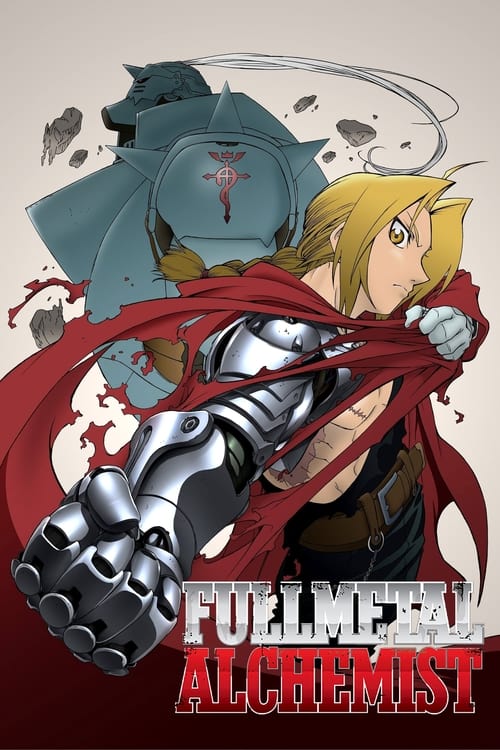
In the small town of Resembool, two brothers, Edward and Alphonse Elric, attempt to use alchemy to bring their deceased mother back to life. They perform a forbidden human transmutation ritual, but it goes horribly wrong. Edward loses his left leg in the process, while Alphonse loses his entire body. In a desperate attempt to save his brother, Edward sacrifices his right arm to bind Alphonse's soul to a suit of armor. The brothers are left devastated and determined to find a way to restore their bodies.
To regain what they lost, Edward seeks the Philosopher's Stone, a powerful object that can amplify alchemical abilities. He becomes a State Alchemist, earning the title of the "Fullmetal Alchemist" after demonstrating his skills by defeating a homunculus named Greed. Edward and Alphonse begin their journey, facing various challenges and uncovering the dark secrets surrounding the Philosopher's Stone.
Their first major encounter is with the homunculus Lust, who tries to manipulate them. Edward and Alphonse learn that the homunculi are created from human transmutation and are connected to a larger conspiracy involving the military. They also meet Roy Mustang, the Flame Alchemist, who becomes an ally and mentor to Edward. Mustang is investigating the corruption within the military and the homunculi's involvement.
As they continue their search, the brothers encounter Scar, a vengeful Ishvalan who seeks to kill State Alchemists as revenge for the destruction of his people during the Ishval Civil War. Scar attacks Edward, but the brothers manage to escape. They also meet Winry Rockbell, their childhood friend and a skilled automail mechanic, who helps Edward with his automail arm and leg.
The brothers learn about the existence of the Philosopher's Stone and its connection to human lives. They discover that the stone is created by sacrificing human lives, which deeply disturbs them. Their quest leads them to the city of Liore, where they confront Father Cornello, a false prophet using alchemy to deceive the townspeople. Edward exposes Cornello's lies, and in the process, they encounter the homunculus Gluttony.
Afterward, they meet the mysterious Father, who is revealed to be the creator of the homunculi. He manipulates events from the shadows, and the brothers realize they are part of a larger scheme. They also learn about the existence of the "Truth," a being that represents the ultimate knowledge of alchemy.
The brothers' journey takes them to the city of Central, where they uncover more about the military's involvement with the homunculi. They discover that the homunculi are manifestations of the seven deadly sins and that they are working under the orders of Father. The brothers confront Lust and Gluttony again, leading to a fierce battle. Edward manages to defeat Lust, but not without consequences.
As they delve deeper into the military's secrets, they encounter the homunculus Envy, who reveals the truth about the Philosopher's Stone and the sacrifices it requires. The brothers are horrified to learn that the stone is made from the souls of the dead, including those of their own mother. This revelation strengthens their resolve to find another way to restore their bodies without sacrificing others.
The brothers' quest leads them to the ruins of Xerxes, where they uncover the history of the Philosopher's Stone and the truth about the homunculi. They learn that the stones are linked to the cycle of human transmutation and the creation of the homunculi. They also discover that the Father is seeking to create a new world by using the souls of the people in Amestris.
In a climactic confrontation, the brothers face off against Father and the remaining homunculi. Edward and Alphonse, along with their allies, engage in a fierce battle against Envy, Gluttony, and Father. During the fight, Alphonse sacrifices himself to save Edward, allowing Edward to confront Father directly.
In the final battle, Edward uses his knowledge of alchemy and the Truth to defeat Father. He sacrifices his ability to use alchemy in exchange for Alphonse's return. Alphonse is restored to his original body, but Edward loses his alchemical powers. The brothers are finally reunited, but they must now navigate a world without the abilities they once relied on.
The series concludes with Edward and Alphonse embarking on a new journey, determined to find their place in the world and to live their lives fully, free from the burdens of their past mistakes. They understand that true strength comes from within and that their bond as brothers is unbreakable.








What is the ending?
In the ending of the 2003 version of Fullmetal Alchemist, Edward Elric sacrifices his alchemical abilities to bring his brother Alphonse back to life. In doing so, he is transported to a different world, where he meets a version of his father, Hohenheim. Alphonse is restored to his original body, and the brothers are finally reunited. Edward, however, is left in a world without alchemy, where he must find a new path for himself. The series concludes with the brothers parting ways, each embarking on their own journey.
As the final episodes unfold, the tension escalates in the city of Central, where the Elric brothers, Edward and Alphonse, confront the truth behind the Philosopher's Stone and the homunculi. The brothers have been through countless trials, and their resolve is tested as they face the ultimate confrontation with Father, the being who has manipulated events from the shadows.
In the climactic battle, the brothers, along with their allies, engage in a fierce struggle against Father and his homunculi. The atmosphere is thick with desperation and determination. Edward, fueled by the desire to protect his brother and the people of Amestris, fights valiantly. Alphonse, having regained his body, stands by his brother's side, embodying the bond they share. The stakes are high, and the emotional weight of their journey hangs heavily in the air.
As the battle rages on, Father reveals his true form, a grotesque amalgamation of the souls he has consumed. The brothers, along with their friends, devise a plan to defeat him. In a moment of clarity, Edward realizes that the key to victory lies in the very essence of alchemy: the understanding of equivalent exchange. He understands that to bring Alphonse back, he must sacrifice something of equal value.
In a heart-wrenching moment, Edward makes the ultimate sacrifice. He offers his own alchemical abilities, a power he has cherished and relied upon throughout their journey. As he performs the transmutation, a brilliant light envelops him, and he is transported to a different world. In this new realm, he encounters Hohenheim, his father, who provides him with guidance and insight into the nature of sacrifice and the importance of human connections.
Meanwhile, Alphonse, now restored to his original body, feels a rush of emotions as he experiences the sensations of being human once more. The brothers are finally reunited, their bond stronger than ever. Alphonse expresses his gratitude and joy, while Edward, despite his loss, feels a sense of fulfillment in having saved his brother.
As the story draws to a close, Edward finds himself in a world devoid of alchemy. He grapples with the reality of his new life, reflecting on the lessons learned throughout their journey. He understands that while he has lost his powers, he has gained something far more valuable: the ability to forge his own path and the strength of his relationships.
In the final scenes, Edward and Alphonse part ways, each embarking on their own journey. Alphonse, filled with hope and determination, sets out to explore the world and find his place in it. Edward, now without the burden of alchemy, begins a new chapter in his life, seeking to understand the world around him and the meaning of true strength.
The series concludes with a poignant sense of closure, emphasizing the themes of sacrifice, the importance of family, and the journey of self-discovery. Each character has faced their own trials and emerged transformed, ready to embrace the future with newfound resolve.
Is there a post-credit scene?
In the 2003 adaptation of Fullmetal Alchemist, there is no post-credit scene following the final episode. The series concludes with a poignant ending that wraps up the main story arcs and character developments.
In the final episode, titled "The Other Side of the Gateway," Edward Elric sacrifices his alchemical abilities to bring back his brother, Alphonse, who had been trapped in the realm of the Gate. The emotional weight of this decision is palpable as Edward reflects on the sacrifices made throughout their journey. The brothers share a heartfelt reunion, emphasizing their bond and the lessons learned about the value of life and the consequences of their past actions.
The series ends with a montage of scenes showing the characters moving forward with their lives, hinting at their future paths and the hope that lies ahead. The absence of a post-credit scene allows the audience to fully absorb the emotional resolution of the story, leaving a lasting impact without additional content.
What is the significance of the Philosopher's Stone in Fullmetal Alchemist?
The Philosopher's Stone is a central plot element in Fullmetal Alchemist, representing the ultimate goal for many characters, particularly Edward and Alphonse Elric. It is believed to grant the ability to bypass the fundamental law of equivalent exchange, allowing alchemists to perform feats that would otherwise be impossible. The brothers initially seek the stone to restore their bodies after a failed alchemical experiment to bring their mother back to life, which resulted in Edward losing an arm and a leg, and Alphonse losing his entire body. As the story unfolds, the true nature of the Philosopher's Stone is revealed to be tied to the lives of many innocent people, leading Edward to question the morality of using it. This internal conflict drives much of Edward's character development and highlights the themes of sacrifice and the consequences of seeking power.
What are the circumstances surrounding the Elric brothers' attempt to resurrect their mother?
The Elric brothers, Edward and Alphonse, are deeply affected by the death of their mother, Trisha, who passed away from an illness. In their grief and desperation, they turn to alchemy, believing they can use it to bring her back to life. They conduct a forbidden ritual in their home, using a large array and various materials, including a life-sized doll to represent their mother. However, the attempt goes horribly wrong; instead of resurrecting Trisha, they unleash a horrific entity that takes a monstrous form, resulting in Edward losing his left leg and Alphonse losing his entire body. In a desperate act to save his brother, Edward sacrifices his right arm to bind Alphonse's soul to a suit of armor. This traumatic event sets the stage for their journey to find the Philosopher's Stone and serves as a catalyst for their character motivations throughout the series.
How does Scar's character evolve throughout the series?
Scar is introduced as a vengeful antagonist, driven by a desire to kill State Alchemists in retaliation for the destruction of his homeland and the death of his people during the Ishval Civil War. Initially, he is portrayed as a ruthless killer, targeting Edward and other alchemists without hesitation. However, as the series progresses, Scar's character becomes more complex. He grapples with his hatred and the consequences of his actions, especially after encountering characters like the Elric brothers, who challenge his worldview. Scar's internal conflict is further deepened when he learns about the true nature of the Philosopher's Stone and the role it played in the suffering of his people. By the end of the series, Scar's motivations shift from pure vengeance to a desire for redemption and understanding, culminating in his decision to protect the remaining Ishvalans and seek a path toward peace.
What is the relationship between Roy Mustang and Riza Hawkeye?
Roy Mustang and Riza Hawkeye share a deep and complex relationship that evolves throughout the series. Riza, as Mustang's trusted lieutenant and personal bodyguard, exhibits unwavering loyalty and dedication to him. Their bond is built on mutual respect and understanding, with Riza often acting as the voice of reason to counter Mustang's more impulsive tendencies. The series hints at a romantic undertone in their relationship, particularly through moments of vulnerability and shared history, such as Riza's past as a sniper in the Ishval Civil War and her commitment to Mustang's dream of becoming the Führer to create a better future. Their relationship is tested by the harsh realities of war and the moral dilemmas they face, but ultimately, they support each other in their goals, showcasing a partnership that transcends mere professional ties.
What is the truth behind the Homunculi and their connection to Father?
The Homunculi are central antagonists in Fullmetal Alchemist, each representing one of the seven deadly sins. They are artificially created beings, born from the remnants of human transmutation, specifically from the failed attempt to create a Philosopher's Stone. Father, the main antagonist, is revealed to be the original Homunculus, created from the collective sins of humanity. He seeks to achieve god-like power by absorbing the souls of others and ultimately aims to become a perfect being. Each Homunculus serves Father, carrying out his plans while grappling with their own identities and desires. As the series progresses, the Elric brothers and their allies uncover the truth about the Homunculi's origins and their connection to Father, leading to a climactic confrontation that explores themes of humanity, sacrifice, and the consequences of playing god.
Is this family friendly?
Fullmetal Alchemist (2003) contains several themes and scenes that may be considered objectionable or upsetting for children or sensitive viewers. Here are some aspects to be aware of:
-
Death and Loss: The series deals heavily with themes of death, including the loss of loved ones. Characters experience profound grief, which is depicted in emotionally charged scenes.
-
Violence: There are numerous instances of violence throughout the series, including battles, injuries, and deaths. Some scenes are graphic, showing blood and injury.
-
Moral Ambiguity: The show explores complex moral dilemmas, including the consequences of human experimentation and the ethical implications of alchemy. This may be difficult for younger viewers to fully grasp.
-
Disturbing Imagery: Certain scenes involve unsettling imagery, such as the transformation of characters and the consequences of failed alchemical attempts, which can be visually disturbing.
-
Themes of War and Conflict: The backdrop of the series includes war, oppression, and the struggles of soldiers, which may be heavy for younger audiences.
-
Psychological Trauma: Characters face significant psychological challenges, including trauma from their pasts, which can be intense and may resonate with sensitive viewers.
-
Existential Themes: The series raises questions about the nature of humanity, sacrifice, and the quest for power, which may be complex for younger audiences to understand.
These elements contribute to a narrative that, while rich and engaging, may not be suitable for all children or sensitive viewers. Parental discretion is advised.