

























Popular
What are the main character dynamics between Eren, Mikasa, and Armin in Attack on Titan: Junior High?
How does the character of Levi differ in Attack on Titan: Junior High compared to the original series?
What role does the character of Sasha play in the comedic elements of Attack on Titan: Junior High?
What are some of the key school events depicted in Attack on Titan: Junior High?
How does the character of Historia develop throughout Attack on Titan: Junior High?
Should I watch it?
Ask Your Own Question

What is the plot?
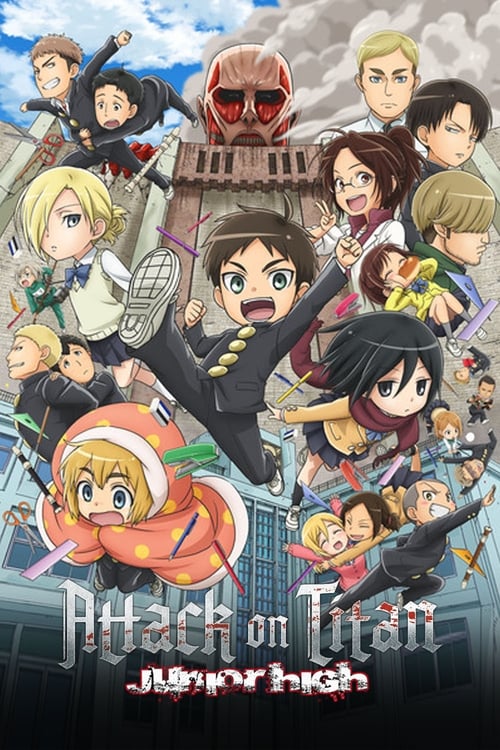
In the first episode of "Attack on Titan: Junior High," we are introduced to the characters in a comedic school setting. Eren Yeager, Mikasa Ackerman, and Armin Arlert are first-year students at the Titan Junior High School. Eren is determined to join the "Survey Club," which is a group that aims to fight against the Titans, while Mikasa is protective of him, and Armin is more hesitant. The trio navigates their daily school life, which is filled with humorous interactions and light-hearted moments, contrasting the serious tone of the original series.
As the story progresses, Eren's determination leads him to challenge the upperclassmen, particularly the members of the "Titan Club," who are portrayed as bullies. Eren's confrontational nature gets him into trouble, and he ends up in a series of comedic misadventures. Mikasa often steps in to save him, showcasing her fierce loyalty and strength. Meanwhile, Armin tries to mediate and keep the peace, highlighting his more cautious personality.
In the second episode, the school holds a sports festival, where various competitions take place. Eren is eager to prove himself, but his competitive spirit leads to chaos. The events include a three-legged race and a tug-of-war, where Eren's impulsiveness causes him to clash with his classmates. Mikasa and Armin support him, but their efforts often lead to humorous mishaps. The episode emphasizes teamwork and friendship, even amidst the comedic chaos.
The third episode introduces the concept of "Titan transformations" in a humorous context. Eren accidentally transforms into a Titan during a class presentation, causing panic among the students. This transformation is played for laughs, with Eren struggling to control his Titan form while trying to maintain his school responsibilities. Mikasa and Armin work together to help him, showcasing their strong bond and teamwork.
In the fourth episode, the characters face a new challenge when they are tasked with a school project. Eren, Mikasa, and Armin decide to work together, but their differing personalities lead to conflicts. Eren's impulsiveness clashes with Armin's careful planning, while Mikasa tries to keep the peace. The project becomes a comedic disaster, filled with misunderstandings and mishaps, but ultimately reinforces their friendship as they learn to appreciate each other's strengths.
The fifth episode features a school trip to the "Titan Land" amusement park. The students are excited, but Eren's fear of Titans resurfaces, leading to humorous situations. The trip includes various attractions, and the characters experience both fun and fear as they navigate the park. Eren's antics, combined with Mikasa's protective nature and Armin's cautiousness, create a blend of comedy and adventure.
In the sixth episode, the focus shifts to the "Cultural Festival." The students prepare for various performances, and Eren's enthusiasm leads him to take on a leading role. However, his lack of experience causes chaos during rehearsals. Mikasa and Armin step in to help him, showcasing their supportive friendship. The festival culminates in a comedic performance that highlights the characters' growth and teamwork.
The seventh episode introduces a new character, Annie Leonhart, who joins the school. Her aloof demeanor contrasts with the other students, and Eren becomes intrigued by her. The episode explores the dynamics of their interactions, with Eren trying to understand Annie while Mikasa remains protective. The comedic tension builds as Eren's attempts to impress Annie lead to misunderstandings.
In the eighth episode, the students face a mock Titan attack as part of a training exercise. Eren is eager to prove himself, but his impulsiveness leads to chaos during the drill. Mikasa and Armin try to keep him focused, but their efforts often result in comedic failures. The exercise serves as a backdrop for character development, showcasing their determination and teamwork.
The ninth episode features a "Talent Show" where each student showcases their unique abilities. Eren, Mikasa, and Armin prepare a performance, but Eren's overconfidence leads to a series of comedic blunders. The episode highlights the characters' individual talents while reinforcing their friendship as they support each other through the challenges.
In the tenth episode, the school faces a "Titan Invasion" scenario during a field trip. The students must work together to navigate the challenges posed by the mock Titans. Eren's leadership skills are put to the test, and he learns the importance of teamwork. The episode is filled with action and humor as the characters face various obstacles, ultimately reinforcing their bonds.
The eleventh episode focuses on the characters' personal growth as they reflect on their experiences throughout the school year. Eren, Mikasa, and Armin discuss their dreams and aspirations, showcasing their evolving relationships. The episode balances comedic moments with heartfelt conversations, emphasizing the importance of friendship and support.
In the final episode, the students prepare for graduation. Eren is determined to make a memorable speech, but his nerves lead to comedic mishaps. Mikasa and Armin support him, reminding him of their shared experiences. The graduation ceremony is filled with laughter and nostalgia as the characters reflect on their journey together. The episode concludes with a sense of camaraderie and hope for the future, encapsulating the spirit of their school life.
More TV Shows Like This
Browse All TV Shows →


What is the ending?
In the ending of "Attack on Titan: Junior High," the characters face off against the Titans in a final showdown. The students band together to protect their school and each other, showcasing their growth and camaraderie. Ultimately, they manage to defeat the Titans, leading to a celebratory atmosphere where they reflect on their experiences and friendships. The series concludes with a light-hearted tone, emphasizing the bonds formed during their time together.
As the final episode unfolds, the scene opens in the familiar setting of the Junior High school, where the students are preparing for a significant event. The atmosphere is charged with excitement and a hint of anxiety as they gather to confront the Titans that have been a constant threat throughout their school life. Eren Yeager, with his usual determination, rallies his friends, including Mikasa and Armin, emphasizing the importance of teamwork and their shared experiences.
The first scene transitions to the schoolyard, where the Titans are seen approaching. The students, armed with their makeshift weapons, stand united, showcasing their resolve. Eren's internal motivation is palpable; he feels a deep sense of responsibility to protect his friends and their school. Mikasa, ever the fierce protector, stands by his side, her eyes filled with determination and a hint of concern for Eren's safety.
As the Titans draw closer, the students spring into action. The animation captures the chaos of the moment, with Titans towering over the school, their grotesque features contrasting sharply with the youthful energy of the students. Armin, often seen as the strategist, devises a plan that highlights his growth from a timid boy to a confident leader. His voice trembles slightly, but his resolve shines through as he directs his classmates.
The battle ensues, and each character showcases their unique abilities. Sasha, with her love for food, uses her agility to distract the Titans, while Connie and Jean work together, demonstrating their developing friendship. The scene is filled with comedic moments, such as Sasha's obsession with snacks even in the heat of battle, which lightens the tension and reminds viewers of the series' comedic roots.
As the fight progresses, the students face setbacks, and moments of doubt creep in. Eren's frustration boils over when he feels they are losing ground. However, Mikasa's unwavering support helps him regain focus. She reminds him of their shared goal and the importance of their bonds, reinforcing the theme of friendship that runs throughout the series.
In a climactic moment, the students manage to outsmart the Titans, using their knowledge of the school and their teamwork to create a trap. The animation captures the thrill of victory as they successfully defeat the Titans, leading to a moment of collective relief and joy. The characters embrace, their laughter echoing through the schoolyard, symbolizing their triumph not just over the Titans but over their fears and insecurities.
The final scenes shift to a celebratory atmosphere, where the students reflect on their journey. They share stories of their experiences, laughter filling the air as they reminisce about the challenges they faced together. Eren, Mikasa, Armin, and their friends stand together, their bonds stronger than ever. Each character's fate is revealed in this moment of camaraderie: Eren continues to lead with passion, Mikasa remains fiercely protective, Armin embraces his role as a strategist, and the others find their places within the group, united by their shared experiences.
As the episode draws to a close, the camera pans out, showing the school in the background, now a symbol of their resilience and growth. The final shot captures the students walking together, their laughter fading into the distance, leaving viewers with a sense of hope and the enduring power of friendship. The series concludes on a light-hearted note, celebrating the characters' growth and the bonds they have formed, encapsulating the essence of "Attack on Titan: Junior High."
Is there a post-credit scene?
Yes, "Attack on Titan: Junior High" features a post-credit scene. After the main credits roll, viewers are treated to a humorous and light-hearted moment that encapsulates the show's comedic tone.
In this scene, the characters are seen in a school setting, engaging in a playful interaction. Eren Yeager, Mikasa Ackerman, and Armin Arlert are present, and the atmosphere is filled with a sense of camaraderie and mischief. Eren, in his typical enthusiastic manner, is trying to rally his friends for a fun activity, while Mikasa, ever the protective and serious figure, is keeping a watchful eye on him. Armin, caught between the two, displays his usual nervousness but is also eager to join in on the fun.
The scene captures the essence of their relationships, showcasing Eren's impulsiveness, Mikasa's fierce loyalty, and Armin's thoughtful nature. As they bicker and tease each other, the viewer is reminded of their strong bonds despite the chaotic world they inhabit. The light-hearted banter serves as a perfect contrast to the more serious themes of the main series, leaving the audience with a smile and a sense of warmth as the episode concludes.
This post-credit moment reinforces the show's blend of humor and character dynamics, making it a delightful end to the episode.
What are the main character dynamics between Eren, Mikasa, and Armin in Attack on Titan: Junior High?
In Attack on Titan: Junior High, the dynamics between Eren, Mikasa, and Armin are portrayed with a comedic twist, reflecting their personalities from the original series. Eren is often depicted as hot-headed and determined, frequently getting into trouble due to his impulsive nature. Mikasa, on the other hand, is fiercely protective of Eren, showcasing her strong feelings for him while also displaying her own competitive spirit, especially in sports. Armin serves as the voice of reason, often trying to mediate between Eren and Mikasa, but he also struggles with his own insecurities. Their interactions are filled with humor, as they navigate the challenges of junior high life, including school events and rivalries.
How does the character of Levi differ in Attack on Titan: Junior High compared to the original series?
In Attack on Titan: Junior High, Levi is portrayed in a more humorous and laid-back manner compared to his serious and stoic demeanor in the original series. He is depicted as a student council member who is often annoyed by the antics of his classmates, particularly Eren and his friends. His interactions are filled with dry humor, and he often finds himself in absurd situations, such as dealing with the chaos of school life. Despite this comedic portrayal, Levi still maintains an air of authority and skill, often showcasing his exceptional abilities in sports and competitions, which adds to the humor of his character.
What role does the character of Sasha play in the comedic elements of Attack on Titan: Junior High?
Sasha Blouse serves as a significant source of comic relief in Attack on Titan: Junior High. Her love for food is exaggerated, leading to humorous situations where she is often caught sneaking snacks or daydreaming about meals during class. This obsession with food creates funny scenarios, such as her competing in eating contests or getting into trouble for her gluttony. Sasha's carefree and enthusiastic personality contrasts with the more serious characters, providing a light-hearted balance to the show's overall tone. Her interactions with other characters often lead to comedic misunderstandings and playful rivalries, particularly with characters like Connie.
What are some of the key school events depicted in Attack on Titan: Junior High?
Attack on Titan: Junior High features several key school events that serve as the backdrop for character interactions and comedic situations. Notable events include the sports festival, where students compete in various athletic challenges, showcasing their unique abilities and rivalries. The culture festival is another significant event, where students engage in activities like setting up booths and performances, leading to humorous mishaps and teamwork moments. Additionally, the show includes a field trip episode, where the characters face unexpected challenges, further highlighting their personalities and relationships in a school setting.
How does the character of Historia develop throughout Attack on Titan: Junior High?
In Attack on Titan: Junior High, Historia is portrayed as a shy and reserved character who gradually comes out of her shell. Initially, she struggles with her identity and self-worth, often feeling overshadowed by her classmates. However, as the series progresses, she begins to embrace her role and assert herself more, particularly during school events where she showcases her talents. Her interactions with other characters, especially with Ymir, help her gain confidence and develop a stronger sense of self. The comedic setting allows for her character growth to be depicted in a light-hearted manner, emphasizing her journey from insecurity to self-acceptance.
Is this family friendly?
"Attack on Titan: Junior High" is a comedic spin-off of the original "Attack on Titan" series, featuring the characters in a school setting. While it retains some elements from the original series, it is generally more lighthearted and family-friendly. However, there are still a few aspects that might be considered objectionable or upsetting for children or sensitive viewers:
-
Titan Imagery: The show features characters that resemble Titans, which may be unsettling for some viewers, especially younger children who might find the giant figures frightening.
-
Violent Themes: Although the violence is toned down compared to the original series, there are still references to battles and conflicts, which may not be suitable for very young audiences.
-
Dark Humor: The series employs dark humor that may not resonate well with all viewers, particularly those who are sensitive to jokes about death or danger.
-
Character Struggles: Some characters experience anxiety or fear related to their Titan counterparts, which could evoke feelings of discomfort in sensitive viewers.
-
Mild Language: There are instances of mild language and teasing among characters that may not be appropriate for all children.
Overall, while "Attack on Titan: Junior High" is designed to be more accessible and humorous, parents may want to consider these elements when deciding if it is suitable for their children.