






Popular
What are Mob's powers and how do they develop throughout the series?
How does Mob's relationship with Reigen evolve over the course of the series?
What role do the other espers, like Teruki and the Claw organization, play in Mob's development?
What is the significance of Mob's emotional state and how does it affect his psychic abilities?
How does the series portray the theme of personal growth through Mob's interactions with his friends?
Should I watch it?
Ask Your Own Question

What is the plot?
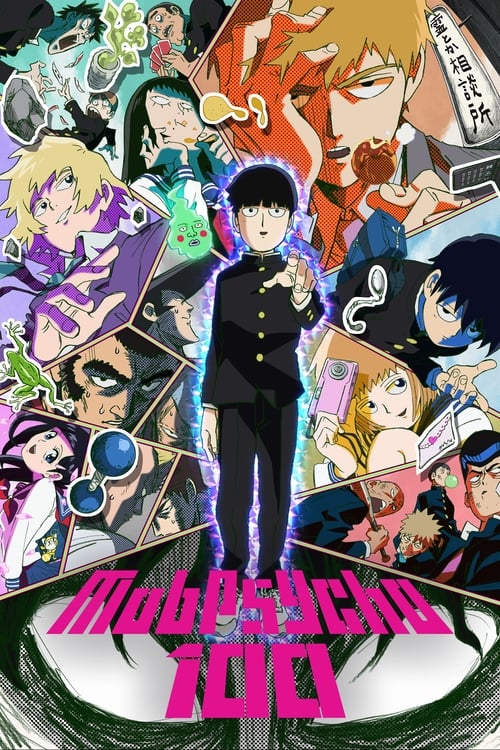
Shigeo "Mob" Kageyama is a seemingly ordinary middle school student who possesses immense psychic powers. He struggles to control his emotions, which are tied to the intensity of his abilities. The story begins with Mob's daily life, where he tries to navigate school and friendships while keeping his powers a secret. He is often overshadowed by his more outgoing and confident peers, particularly his classmate, Tsubomi Takane, who he has a crush on.
Mob is recruited by Arataka Reigen, a self-proclaimed psychic and con artist, who runs a spirit consultation business. Reigen initially takes advantage of Mob's powers for his own gain, but he also becomes a mentor figure to Mob. Mob assists Reigen in various exorcisms, where they encounter spirits and other psychics. During these missions, Mob's powers are showcased, revealing his ability to manipulate objects and sense the emotions of others.
As Mob continues to work with Reigen, he begins to develop a sense of self-worth and confidence. However, he struggles with the idea of using his powers for personal gain or to impress others. This internal conflict is highlighted when Mob is invited to a school event where he hopes to impress Tsubomi. He ultimately decides to attend, but his nerves get the better of him, and he ends up not making a significant impact.
The plot thickens when Mob encounters a group of powerful psychics known as the "Claw," led by the enigmatic Toichiro Suzuki. Claw seeks to dominate the world using their psychic abilities, and they target Mob for his immense potential. Mob's first confrontation with Claw occurs when they attack his school, leading to a chaotic battle. Mob is initially overwhelmed by their strength but manages to hold his ground, showcasing his growing abilities.
As the story progresses, Mob's emotional state becomes increasingly unstable, especially as he grapples with his feelings for Tsubomi and the pressure of his psychic powers. He experiences a series of emotional outbursts, which culminate in a moment where he loses control and unleashes his full psychic potential. This transformation is visually striking, as Mob's appearance changes, and he becomes a force of destruction.
In a pivotal moment, Mob confronts Toichiro Suzuki and the Claw organization. The battle is intense, with Mob using his psychic abilities to counter Suzuki's powerful attacks. The fight is marked by dramatic visuals, with psychic energy clashing and causing destruction around them. Mob's determination to protect his friends and the world drives him to push beyond his limits.
During the confrontation, Mob's internal struggle is highlighted as he reflects on his emotions and the importance of human connections. He realizes that his powers do not define him and that he must learn to control them rather than let them control him. This realization allows him to regain control during the battle, ultimately leading to his victory over Suzuki and the Claw.
After the battle, Mob returns to his normal life, but he is forever changed by the experiences he has had. He begins to form deeper connections with his friends and family, understanding the value of emotions and relationships. The series concludes with Mob embracing his identity, both as a powerful psychic and as a young man navigating the complexities of life, friendship, and love.
More TV Shows Like This
Browse All TV Shows →





What is the ending?
In the ending of Mob Psycho 100, Shigeo "Mob" Kageyama confronts his emotions and the powerful esper known as Toichiro Suzuki. After a climactic battle, Mob learns to accept his feelings and chooses to protect his friends rather than succumb to his powers. The series concludes with Mob finding a sense of peace and a new understanding of himself, while his relationships with others, especially with Reigen Arataka and his classmates, evolve positively.
As the final episodes unfold, we find ourselves in a tense atmosphere as Mob faces off against Toichiro Suzuki, the leader of the Claw organization. The battle begins with a fierce exchange of psychic powers, showcasing the immense strength of both characters. Mob, initially overwhelmed by Suzuki's abilities, struggles to maintain control over his emotions. The stakes are high, as Suzuki's goal is to create a world where only the strong survive, a philosophy that directly opposes Mob's desire for connection and understanding.
Scene by scene, the confrontation escalates. Mob's internal conflict is palpable; he grapples with the fear of losing control and hurting those he cares about. As the fight intensifies, Mob's friends, including Ritsu and his classmates, rally to support him, demonstrating the bonds he has formed throughout the series. Their unwavering belief in Mob serves as a catalyst for his growth.
In a pivotal moment, Mob reaches a breaking point, his emotions surging to a critical level. He enters a state of heightened psychic power, but instead of unleashing chaos, he focuses on protecting his friends. This decision marks a significant turning point for Mob, as he chooses empathy over destruction. The visual spectacle of their battle is filled with vibrant energy, contrasting the dark intentions of Suzuki with Mob's newfound resolve.
As the fight reaches its climax, Mob confronts Suzuki not just with his powers but with his understanding of what it means to be human. He expresses his desire for connection and the importance of emotions, which resonates deeply with the audience. In a moment of clarity, Mob manages to subdue Suzuki, not through sheer force, but by appealing to his humanity. This act of compassion ultimately leads to Suzuki's defeat.
Following the battle, the aftermath reveals the impact of Mob's choices. The Claw organization is dismantled, and the threat they posed is neutralized. Mob's friends and family gather around him, celebrating their victory and the bonds they have strengthened through adversity. Mob, now more self-aware, reflects on his journey and the importance of embracing his emotions rather than suppressing them.
In the final scenes, we see Mob returning to his everyday life, where he continues to navigate the complexities of adolescence. His relationship with Reigen, who has been a guiding figure throughout his journey, deepens as they share a moment of mutual respect and understanding. Reigen acknowledges Mob's growth, and their dynamic shifts from mentor-student to a more equal partnership.
Ritsu, Mob's brother, also experiences growth, having witnessed Mob's strength and determination. Their relationship improves, and Ritsu finds his own path, stepping out of Mob's shadow. The series closes with a sense of hope and renewal, as Mob embraces his identity, surrounded by friends who support him.
In summary, the ending of Mob Psycho 100 encapsulates themes of emotional growth, the importance of relationships, and the acceptance of one's true self. Each character, from Mob to Reigen and Ritsu, finds resolution and a clearer understanding of their place in the world, leaving the audience with a sense of closure and optimism for the future.
Is there a post-credit scene?
In the 2016 anime series "Mob Psycho 100," there is indeed a post-credit scene following the final episode. After the conclusion of the main story arc, the scene shifts to a serene setting where Mob, also known as Shigeo Kageyama, is seen walking through a park. The atmosphere is calm, with soft sunlight filtering through the trees, creating a peaceful ambiance.
As Mob strolls, he reflects on his experiences and the growth he has undergone throughout the series. His expression is contemplative, revealing a mix of relief and newfound understanding of himself and his emotions. The scene captures his journey from a reserved and emotionally repressed boy to someone who is beginning to embrace his feelings and the connections he has made with others.
In this moment, Mob encounters a group of children playing, and he watches them with a gentle smile. This interaction signifies his acceptance of his own emotions and the importance of relationships in his life. The scene encapsulates the theme of personal growth and the significance of human connections, leaving viewers with a sense of hope and the idea that Mob's journey is far from over. The post-credit scene serves as a poignant reminder of the series' core messages about self-acceptance and the value of friendship.
What are Mob's powers and how do they develop throughout the series?
Mob, whose real name is Shigeo Kageyama, possesses powerful psychic abilities that he struggles to control. Initially, he can unleash immense psychic energy when his emotions reach a certain threshold, specifically at 100% emotional capacity. As the series progresses, Mob learns to manage his powers better, especially through his experiences with friends and mentors like Reigen Arataka. His emotional growth is tied to his psychic abilities, culminating in a deeper understanding of himself and his powers.
How does Mob's relationship with Reigen evolve over the course of the series?
Mob's relationship with Reigen Arataka, his mentor and boss, is central to the narrative. Initially, Mob sees Reigen as a figure of authority and guidance, despite Reigen's often dubious methods and lack of genuine psychic abilities. As the series unfolds, Mob begins to recognize Reigen's flaws and the importance of their bond. Reigen, in turn, learns to appreciate Mob's growth and the significance of their friendship, leading to a more profound mutual respect by the end.
What role do the other espers, like Teruki and the Claw organization, play in Mob's development?
Teruki 'Teru' Tamaki, initially an antagonist, represents a rival esper who challenges Mob's understanding of power and self-worth. Their confrontation forces Mob to confront his own insecurities and the nature of strength. The Claw organization, led by powerful espers, serves as a significant threat that pushes Mob to grow stronger and more confident in his abilities. These encounters with other espers highlight Mob's journey from isolation to connection, as he learns the value of friendship and teamwork.
What is the significance of Mob's emotional state and how does it affect his psychic abilities?
Mob's emotional state is intricately linked to his psychic powers. His abilities are triggered by his emotions, particularly when he reaches 100% on his emotional scale. Throughout the series, Mob grapples with feelings of loneliness, frustration, and the desire for acceptance. Each time he approaches 100%, it leads to explosive psychic manifestations, often causing chaos. The series emphasizes Mob's journey to understand and express his emotions healthily, ultimately allowing him to harness his powers without succumbing to them.
How does the series portray the theme of personal growth through Mob's interactions with his friends?
Mob's interactions with his friends, particularly with characters like Ritsu, Dimple, and his classmates, are pivotal for his personal growth. These relationships help Mob navigate his identity beyond being just a powerful esper. Through shared experiences, conflicts, and moments of vulnerability, Mob learns the importance of connection, empathy, and self-acceptance. The series illustrates how these friendships empower Mob to embrace his true self, balancing his psychic abilities with his emotional well-being.
Is this family friendly?
"Mob Psycho 100" is generally considered suitable for older children and teens, but it does contain some elements that may be objectionable or upsetting for younger viewers or sensitive individuals. Here are some aspects to consider:
-
Violence: The series features various fight scenes, including psychic battles that can be intense. Characters may be injured or shown in distress during these confrontations.
-
Supernatural Themes: The presence of ghosts, spirits, and other supernatural entities may be frightening for some viewers, especially younger children.
-
Emotional Struggles: Characters experience significant emotional turmoil, including themes of loneliness, bullying, and existential crises, which may resonate deeply and could be upsetting.
-
Mature Humor: Some jokes and situations may involve mature themes or innuendos that might not be appropriate for younger audiences.
-
Mild Language: There are instances of mild swearing and crude humor that may not be suitable for all viewers.
-
Psychological Elements: The show explores mental health issues and the pressure of societal expectations, which could be heavy topics for sensitive viewers.
Overall, while "Mob Psycho 100" has a unique blend of humor and action, its deeper themes and certain scenes may require parental guidance for younger audiences.






