















Popular
How does the theme of sacrifice manifest in the characters' actions?
What is the significance of the Kabaneri transformation in the story?
How does Ikoma's relationship with Mumei evolve throughout the series?
What role does the Iron Fortress play in the survival of humanity?
What motivates the character of Biba throughout the series?
Should I watch it?
Ask Your Own Question

What is the plot?
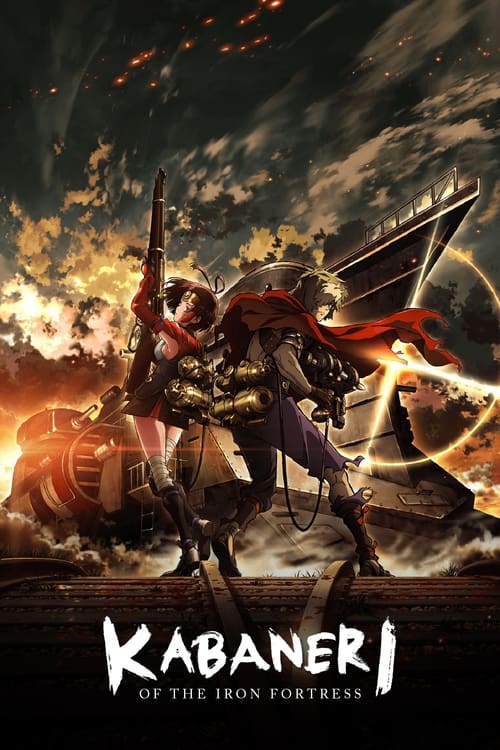
In a post-apocalyptic world, humanity is on the brink of extinction due to the emergence of monstrous creatures known as Kabane, which are undead beings that can only be killed by destroying their hearts. The story begins in the small fortress town of Aragane, where the citizens live in fear of the Kabane. The protagonist, Ikoma, is a young man who works as a mechanic and is determined to find a way to fight back against the Kabane. He has been secretly working on a weapon that can pierce the Kabane's tough skin.
One day, while working on his weapon, Ikoma witnesses a Kabane attack on the town. The townspeople are caught off guard, and chaos ensues as the Kabane breach the walls. Ikoma, in a desperate attempt to protect his friends and family, uses his weapon to fight back. However, during the battle, he is bitten by a Kabane. Instead of succumbing to the infection, Ikoma manages to transform into a Kabaneri, a hybrid of human and Kabane, retaining his consciousness and humanity while gaining enhanced strength and speed.
As the town falls to the Kabane, Ikoma escapes with a group of survivors, including his childhood friend Mumei, who is also a Kabaneri. They board a train called the Hayajiro, which is designed to travel between fortified stations. The group is led by the stoic and determined captain, Kurusu, who is skeptical of Ikoma and Mumei's abilities but recognizes their potential. The train departs just as the Kabane overrun Aragane, leaving destruction in their wake.
While on the train, Ikoma and Mumei begin to bond over their shared experiences as Kabaneri. Mumei reveals her own tragic backstory, having lost her family to the Kabane. The group faces various challenges as they travel, including attacks from Kabane and internal conflicts among the survivors. Ikoma's determination to find a way to defeat the Kabane drives him to experiment with his abilities, pushing himself to the limits.
During one of their stops at a fortified station, the group encounters a rival faction led by a man named Biba, who is charismatic but ruthless. Biba seeks to harness the power of the Kabaneri for his own purposes and attempts to recruit Ikoma and Mumei. However, they refuse, leading to a confrontation. Biba's forces attack the station, and a fierce battle ensues. Ikoma and Mumei fight valiantly, showcasing their Kabaneri abilities, but the situation becomes dire as Biba's forces overwhelm the defenders.
In the midst of the chaos, Ikoma makes a critical decision to use a powerful weapon he has been developing, which he believes can turn the tide of the battle. He risks his own safety to activate the weapon, which unleashes a devastating blast that destroys a significant number of Kabane. However, the weapon also causes collateral damage, leading to the loss of innocent lives. This weighs heavily on Ikoma, who struggles with the consequences of his actions.
After the battle, the group continues their journey, but tensions rise as they grapple with the moral implications of their fight against the Kabane. Mumei becomes increasingly conflicted about her identity as a Kabaneri, while Ikoma remains focused on finding a way to eradicate the Kabane once and for all. They arrive at another station, where they learn of a potential solution to the Kabane threat: a mysterious substance known as "Kabaneri blood" that could hold the key to defeating the creatures.
As they investigate further, they discover that Biba has been manipulating events from the shadows, seeking to create an army of Kabaneri to dominate humanity. The group confronts Biba and his forces in a climactic battle, where Ikoma and Mumei must face their own fears and insecurities. In a moment of desperation, Ikoma unleashes the full extent of his Kabaneri powers, leading to an intense showdown with Biba.
The battle culminates in a fierce confrontation between Ikoma and Biba, where Ikoma's resolve is tested. He ultimately defeats Biba, but not without significant cost. The fight leaves both sides battered, and the survivors must come to terms with the losses they have endured. In the aftermath, Ikoma and Mumei reflect on their journey and the sacrifices made along the way.
As the story concludes, the remaining survivors of the group look toward the future, determined to continue fighting against the Kabane and protect humanity. Ikoma, now fully embracing his identity as a Kabaneri, vows to find a way to coexist with both humans and Kabaneri, seeking a path toward a brighter future. The series ends on a note of hope, with the characters ready to face whatever challenges lie ahead.
More TV Shows Like This
Browse All TV Shows →






What is the ending?
In the ending of "Kabaneri of the Iron Fortress," Ikoma and his friends confront the final threat posed by the Kabane. After a fierce battle, Ikoma sacrifices himself to save the others, ensuring their escape. Mumei, who has been struggling with her own identity and the nature of her existence as a Kabaneri, ultimately finds peace. The remaining survivors, including Mumei and the others, continue their journey, determined to find a new place to live free from the terror of the Kabane.
As the final confrontation unfolds, the scene is set in the heart of the fortress, where the last remnants of humanity are gathered. The air is thick with tension, the metallic scent of blood mingling with the acrid smoke from the fires that rage around them. Ikoma stands resolute, his heart pounding in his chest, a mix of fear and determination coursing through him. He knows that the fate of his friends and the last bastion of humanity rests on his shoulders.
The Kabane, relentless and ravenous, surge forward, their grotesque forms illuminated by the flickering flames. Ikoma, armed with his custom-made weapon, channels all his strength and resolve. He fights fiercely, his movements a blur as he dispatches the undead with precision. Each swing of his weapon is fueled by the memories of his fallen comrades and the hope of a future free from the Kabane plague.
Mumei, fighting alongside Ikoma, is a whirlwind of agility and ferocity. Yet, beneath her fierce exterior, she grapples with her own demons. The struggle between her Kabaneri nature and her humanity weighs heavily on her. As she fights, flashes of her past flicker in her mind--her childhood, the loss of her family, and the burden of her existence. She fights not just for survival but to find her place in a world that has been turned upside down.
As the battle rages on, the tide begins to turn against them. The Kabane are overwhelming, and it becomes clear that they cannot hold out much longer. In a moment of clarity, Ikoma realizes that the only way to ensure the survival of his friends is to make the ultimate sacrifice. With a heavy heart, he devises a plan to lure the Kabane away, knowing that it will cost him his life.
In a final, desperate act, Ikoma charges into the horde of Kabane, drawing their attention. His heart aches as he glances back at Mumei and the others, their faces a mix of horror and understanding. He shouts words of encouragement, urging them to escape while they still can. The scene is heart-wrenching, filled with the sounds of battle and the cries of his friends as they realize what he is doing.
As Ikoma is engulfed by the Kabane, the screen fades to black, leaving the audience with a profound sense of loss. Mumei, now free from the burden of her past, stands tall among the survivors. She has found a new purpose, a new family in the friends she fought alongside. The remaining group, battered but alive, sets out on a new journey, determined to find a safe haven where they can rebuild their lives.
The final scenes depict the survivors traveling through the desolate landscape, the sun rising on the horizon, symbolizing hope and new beginnings. Mumei, with a newfound sense of identity, leads the way, her heart filled with the memories of Ikoma and the promise of a brighter future. The series concludes with a poignant reminder of sacrifice, resilience, and the enduring spirit of humanity in the face of overwhelming darkness.
Is there a post-credit scene?
Yes, "Kabaneri of the Iron Fortress" features a post-credit scene that adds depth to the story.
As the credits roll, the scene opens with a panoramic view of a desolate landscape, remnants of the world ravaged by the Kabane. The camera slowly zooms in on a dilapidated train station, overgrown with weeds and rusted metal, hinting at the passage of time since the events of the main story.
In this quiet moment, we see a figure in the distance, shrouded in a tattered cloak. As the figure approaches, the camera reveals it to be Ikoma, now visibly older and more weathered, yet still carrying the same determined expression. His eyes reflect a mix of sorrow and resolve, suggesting the weight of his experiences and the loss he has endured.
Ikoma stands before a large, iron gate, reminiscent of the ones that once protected the cities from the Kabane. He reaches out, placing his hand on the cold metal, as memories flood back--visions of his friends, the battles fought, and the sacrifices made. The emotional weight of his past is palpable, and we can sense his longing for a world free from the terror of the Kabane.
Suddenly, a faint sound breaks the silence--a low growl, followed by the unmistakable sound of shuffling feet. Ikoma's expression shifts from nostalgia to alertness. He draws a weapon, ready to confront whatever threat lies beyond the gate. The scene ends on a cliffhanger, leaving viewers with a sense of anticipation and the lingering question of whether the fight against the Kabane truly ends or if new challenges await.
This post-credit scene encapsulates the themes of resilience and the ongoing struggle against despair, reinforcing Ikoma's role as a protector and the enduring fight for humanity's survival.
How does the theme of sacrifice manifest in the characters' actions?
Sacrifice is a recurring theme in 'Kabaneri of the Iron Fortress,' manifesting through various characters' actions as they confront the Kabane threat. Ikoma frequently puts himself in danger to protect others, showcasing his selflessness and determination to save humanity. Mumei, too, grapples with her own sacrifices, often risking her life to fight alongside Ikoma and protect the people she cares about. The series highlights moments where characters must choose between their own safety and the well-being of others, emphasizing the emotional weight of their decisions and the bonds formed through shared struggles.
What is the significance of the Kabaneri transformation in the story?
The Kabaneri transformation is a pivotal plot element in 'Kabaneri of the Iron Fortress.' It occurs when a human is bitten by a Kabane but manages to retain their consciousness and humanity. This transformation grants them enhanced strength and abilities, making them crucial in the fight against the Kabane. The protagonist, Ikoma, undergoes this transformation, which symbolizes his struggle against despair and his desire to protect humanity. His internal conflict revolves around the fear of losing his humanity while embracing the power that comes with being a Kabaneri.
How does Ikoma's relationship with Mumei evolve throughout the series?
Ikoma and Mumei's relationship begins with mutual respect and a shared goal of fighting the Kabane. Initially, Mumei is portrayed as a fierce and independent warrior, while Ikoma is more introspective and driven by his desire to find a cure for the Kabane plague. As they face numerous challenges together, their bond deepens, revealing layers of vulnerability and trust. Mumei's initial aloofness softens as she begins to rely on Ikoma, while Ikoma learns to appreciate Mumei's strength and determination. Their relationship becomes a source of emotional support, culminating in moments of sacrifice and understanding.
What role does the Iron Fortress play in the survival of humanity?
The Iron Fortress, or 'Kabaneri of the Iron Fortress,' serves as a critical stronghold for the remnants of humanity in a world overrun by Kabane. It is a fortified train that transports survivors to safety while providing a semblance of normalcy amidst chaos. The fortress symbolizes hope and resilience, as it is equipped with powerful weaponry and serves as a refuge for those fleeing the Kabane threat. The characters' interactions within the fortress highlight their struggles for survival, the politics of leadership, and the moral dilemmas faced when prioritizing safety over compassion.
What motivates the character of Biba throughout the series?
Biba, the antagonist of the series, is driven by a complex mix of ambition, power, and a twisted ideology regarding the Kabane. He believes that the Kabaneri are the next step in human evolution and seeks to harness their power for his own ends. His motivations stem from a desire to create a new world order where the strong survive, reflecting his disdain for the weak. Biba's interactions with Ikoma and Mumei reveal his manipulative nature and his willingness to sacrifice others for his vision, making him a formidable foe who challenges the protagonists' beliefs and resolve.
Is this family friendly?
"Kabaneri of the Iron Fortress" contains several elements that may not be suitable for children or sensitive viewers. Here are some potentially objectionable or upsetting aspects:
-
Graphic Violence: The series features intense action scenes with significant bloodshed, including characters being attacked and killed by monstrous creatures known as Kabane. The depiction of these violent encounters can be quite graphic.
-
Death and Loss: Characters experience traumatic events, including the loss of loved ones. The emotional weight of these moments can be heavy and may be distressing for younger viewers.
-
Horror Elements: The Kabane themselves are zombie-like creatures that can be frightening. Their appearance and the atmosphere of dread surrounding them contribute to a horror aesthetic that may be unsettling.
-
Themes of Survival: The struggle for survival in a post-apocalyptic world can lead to morally ambiguous decisions and moments of despair, which may be difficult for younger audiences to process.
-
Emotional Turmoil: Characters often grapple with fear, hopelessness, and trauma, which can evoke strong emotional responses. The portrayal of these feelings may resonate deeply with sensitive viewers.
Overall, while the series has compelling storytelling and character development, its mature themes and graphic content make it less suitable for a family-friendly audience.