

Popular
What is the significance of the time travel cave in Dark?
How does the character of Jonas Kahnwald evolve throughout the series?
What role does the character of Claudia Tiedemann play in the story?
What is the relationship between Ulrich and Katharina Nielsen?
What is the connection between the characters of H.G. Tannhaus and the time travel narrative?
Should I watch it?
Ask Your Own Question

What is the plot?
In the small German town of Winden, the story begins in 2019 with the disappearance of a young boy named Erik. His friend, Mikkel Nielsen, is also missing. The town is shaken, and the local police, including Ulrich Nielsen, Mikkel's father, begin searching for the boys. Ulrich is deeply affected by the loss, and his frustration grows as the investigation stalls. Meanwhile, we see a glimpse of the past, specifically in 1986, where a young boy named Mikkel is seen wandering through the woods.
In 1986, Mikkel is found by Ulrich's brother, Mads, who is also missing. Mikkel is taken in by the Tiedemann family, where he is raised as their son. The narrative shifts to 2053, where a post-apocalyptic Winden is shown, and a group of survivors, including a character named Jonas Kahnwald, is introduced. Jonas is haunted by the loss of his father, Michael, who is revealed to be Mikkel, now an adult. The timeline begins to intertwine as Jonas discovers a time portal in the Winden cave system.
Back in 2019, Jonas finds a mysterious letter from his father, which leads him to the cave. He discovers the time portal and is transported to 1986, where he meets his father as a child. Jonas struggles with the knowledge of his father's fate and the implications of time travel. He learns about the existence of a secret society called Sic Mundus, which is dedicated to manipulating time.
In 1986, Ulrich, who is a teenager, is also dealing with the disappearance of his brother, Mads. He becomes obsessed with finding Mads and begins to investigate the caves. During this time, he meets a young woman named Hannah, who becomes his girlfriend. Their relationship is complicated by Ulrich's feelings for another girl, and the tension between them grows.
As the story progresses, we see the character of Claudia Tiedemann, who is a key figure in the time travel narrative. In 1986, she is a scientist working on a project related to time travel. Claudia becomes aware of the time loop and the consequences of their actions. She tries to manipulate events to ensure that her daughter, Regina, is safe.
In 2053, Jonas learns more about the future and the catastrophic events that have unfolded. He meets a woman named Elizabeth Doppler, who is a leader among the survivors. Elizabeth reveals the existence of a time machine and the potential to change the past. Jonas grapples with the moral implications of altering time and the impact it could have on his loved ones.
The narrative shifts back to 2019, where the search for Erik continues. Ulrich's frustration leads him to take drastic measures, including breaking into the nuclear power plant to find answers. He encounters a mysterious figure named Helge Doppler, who has a connection to the time travel events. Ulrich's actions lead to a confrontation with the police, and he is arrested.
In 1986, Ulrich's investigation leads him to the cave, where he discovers the time portal. He is transported to 1921, where he meets a group of individuals who are part of the Sic Mundus society. They reveal the existence of a time loop and the cyclical nature of events in Winden. Ulrich is determined to find a way to break the cycle and save his family.
As the story unfolds, we see the character of Jonas struggling with his identity and the burden of knowledge. He learns that he is destined to become a key player in the events that unfold. The narrative explores the relationships between the characters, including the complex dynamics between parents and children.
In 2053, Jonas and Elizabeth work together to uncover the truth about the time travel experiments. They discover that the events in Winden are interconnected and that their actions have far-reaching consequences. Jonas is faced with the choice of whether to change the past or accept the future as it is.
The climax of the story occurs when Jonas confronts the leader of Sic Mundus, who is revealed to be a future version of himself. This revelation shakes Jonas to his core, as he realizes that he is both the hero and the villain in this narrative. The battle for control over time culminates in a series of confrontations that span multiple timelines.
In the final act, the characters are forced to confront their pasts and the choices they have made. The time loop is revealed to be a result of their actions, and they must work together to break free from the cycle. The emotional weight of their decisions leads to a tragic conclusion, where sacrifices are made, and the future remains uncertain.
The story concludes with a sense of ambiguity, as the characters grapple with the consequences of their actions. The timelines intertwine, and the cycle of time continues, leaving the fate of Winden and its inhabitants hanging in the balance.




What is the ending?
In the ending of "Dark," the timelines converge, revealing the origin of the time loop. Jonas Kahnwald discovers that he is part of a larger plan orchestrated by a being named "The Origin," which is a product of the intertwined fates of multiple characters. The series concludes with the destruction of the time loop, leading to the erasure of the alternate worlds and the characters within them. In this new reality, the main characters, including Jonas and Martha, find peace, having never existed in the original timeline.
As the final episodes of "Dark" unfold, the narrative intricately weaves together the fates of its characters, culminating in a profound revelation.
Scene 1: The episode opens with Jonas Kahnwald, now in the alternate world, grappling with the weight of his knowledge. He stands in a desolate landscape, the remnants of Winden around him, as he reflects on the cyclical nature of time and the pain it has caused. His internal struggle is palpable; he feels the burden of his past decisions and the loss of those he loves.
Scene 2: Meanwhile, Martha Nielsen, who has also traversed the timelines, confronts her own identity. She meets Jonas in this alternate world, and their reunion is bittersweet. They share a moment of understanding, both aware that their love has been marred by the complexities of time travel. Their connection is deepened by the shared trauma of their experiences, yet they are also aware of the impending doom that looms over them.
Scene 3: The narrative shifts to the character of Claudia Tiedemann, who has been a pivotal figure throughout the series. In her final moments, she reveals the truth about "The Origin" to Jonas and Martha. She explains that the time loop is a result of the intertwined fates of their families, and that to break the cycle, they must confront the very source of their existence. Claudia's determination is evident; she is willing to sacrifice everything to ensure a future free from the pain of the past.
Scene 4: As the characters delve deeper into the mystery, they discover that "The Origin" is a manifestation of their collective suffering, a being that exists because of the choices made by their ancestors. This revelation is a turning point; Jonas and Martha realize that they must confront their own identities and the legacy of their families. The emotional weight of this moment is heavy, as they grapple with the implications of their existence.
Scene 5: In a climactic confrontation, Jonas and Martha face "The Origin." The scene is charged with tension as they come to terms with their roles in the time loop. The visuals are striking, with dark, swirling energies representing the chaos of time. As they engage with "The Origin," they understand that to end the cycle, they must willingly let go of their own existence.
Scene 6: The moment of sacrifice arrives. Jonas and Martha, hand in hand, embrace their fate. They dissolve into the fabric of time, their essences merging with the very source of the loop. The emotional intensity of this scene is overwhelming; they are not just erasing themselves but also the pain and suffering that has plagued their families for generations.
Scene 7: The aftermath is a serene, quiet world where the characters who were once entangled in the time loop no longer exist. The camera pans over a peaceful Winden, untouched by the chaos of the past. The absence of Jonas and Martha is felt deeply, yet there is a sense of closure. The remaining characters, such as Ulrich and Katharina, live in a reality free from the burdens of time travel.
Scene 8: In the final moments, a young version of a character, who is not aware of the past, plays innocently in the fields of Winden. This scene symbolizes hope and the possibility of a future untainted by the cycles of pain. The series concludes with a poignant reminder of the choices made and the lives lived, leaving viewers with a sense of bittersweet resolution.
In summary, the ending of "Dark" encapsulates the intricate web of relationships and the consequences of time travel, ultimately leading to the dissolution of the time loop and the characters' fates intertwined with the very fabric of existence. Jonas and Martha's sacrifice brings about a new reality, free from the cycles of suffering, while the remaining characters are left to navigate a world that has been irrevocably changed.
Is there a post-credit scene?
The TV show "Dark," produced in 2017, does not have a post-credit scene. The series concludes with its final episode, wrapping up the intricate and complex narrative without any additional scenes after the credits. The ending provides a resolution to the time travel paradoxes and character arcs that have been developed throughout the three seasons, leaving viewers with a sense of closure regarding the intertwined fates of the characters and the cyclical nature of time.
What is the significance of the time travel cave in Dark?
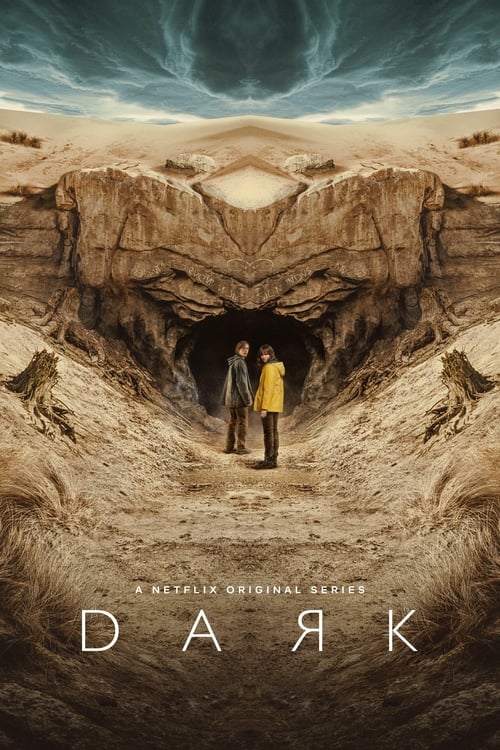
The time travel cave, located in the Winden cave system, serves as a portal that connects different timelines and allows characters to travel between the past, present, and future. It is a central element in the series, symbolizing the cyclical nature of time and the interconnectedness of the characters' fates. The cave is discovered by Jonas Kahnwald, who learns that it is linked to the mysterious disappearances in Winden and the events that unfold across multiple generations.
How does the character of Jonas Kahnwald evolve throughout the series?
Jonas Kahnwald begins as a troubled teenager grappling with the suicide of his father, Michael. As he discovers the truth about time travel and the existence of a secret society, he transforms from a passive character into a determined figure seeking to break the cycle of suffering. His journey is marked by deep emotional turmoil, as he grapples with the loss of loved ones and the burden of knowledge about the future. By the end of the series, Jonas becomes a complex character, embodying both hope and despair as he confronts the consequences of his actions.
What role does the character of Claudia Tiedemann play in the story?
Claudia Tiedemann is a pivotal character who manipulates the timeline to achieve her goals. Initially introduced as the director of the Winden nuclear power plant, she later becomes a key figure in the time travel narrative. Claudia's motivations are driven by her desire to protect her daughter, Regina, and to ultimately end the cycle of time travel that has caused so much pain. Her character is marked by intelligence and cunning, as she navigates the complexities of the time loop and seeks to outsmart the other characters, including her younger self.
What is the relationship between Ulrich and Katharina Nielsen?
Ulrich and Katharina Nielsen are married and have three children together. Their relationship is strained due to Ulrich's infidelity with Hannah Kahnwald and the emotional fallout from their son Mikkel's disappearance. Throughout the series, their love is tested by the challenges of time travel and the impact of their past decisions. Katharina is portrayed as a strong-willed character who fights for her family, while Ulrich is depicted as a man torn between his responsibilities and his desires. Their dynamic reflects the complexities of love, loyalty, and the consequences of choices made across different timelines.
What is the connection between the characters of H.G. Tannhaus and the time travel narrative?
H.G. Tannhaus is a clockmaker and a crucial figure in the time travel narrative. He is the author of a book that outlines the principles of time travel and the concept of the 'time loop.' Tannhaus's personal tragedy, the loss of his family in a car accident, drives him to seek a way to alter time and prevent their deaths. His character embodies the theme of the consequences of trying to change fate, as his attempts to manipulate time ultimately contribute to the very cycle of events he wishes to escape. Tannhaus's story intertwines with the main characters, highlighting the interconnectedness of their fates.
Is this family friendly?
"Dark," produced in 2017, is not considered family-friendly and contains several potentially objectionable or upsetting scenes that may be distressing for children or sensitive viewers. Here are some aspects to be aware of:
-
Death and Grief: The series deals heavily with themes of death, loss, and the impact of grief on families. Characters frequently confront the death of loved ones, which can be emotionally intense.
-
Suicide: There are scenes depicting suicide, which are portrayed in a serious and impactful manner, potentially triggering for some viewers.
-
Violence: The show includes instances of violence, including physical confrontations and scenes of characters being harmed or killed.
-
Child Abduction: The narrative involves the abduction of children, which is a central plot point and can be particularly unsettling.
-
Psychological Distress: Characters experience significant psychological turmoil, including anxiety, depression, and existential dread, which may be difficult for some viewers to process.
-
Complex Themes: The exploration of time travel, fate, and the cyclical nature of events can be confusing and may provoke anxiety or discomfort in viewers who struggle with such concepts.
-
Dark Atmosphere: The overall tone of the series is bleak and foreboding, with a heavy use of shadows and a somber color palette that contributes to a sense of unease.
Given these elements, "Dark" is best suited for mature audiences who can handle its complex and often dark themes.