










Popular
What are the main characteristics of the Matsuno brothers?
How do the Matsuno brothers cope with adulthood and their lack of direction?
What role does the character Chibita play in the series?
How does the series portray the relationship between the Matsuno brothers?
What are some notable comedic scenarios the Matsuno brothers find themselves in?
Should I watch it?
Ask Your Own Question

What is the plot?
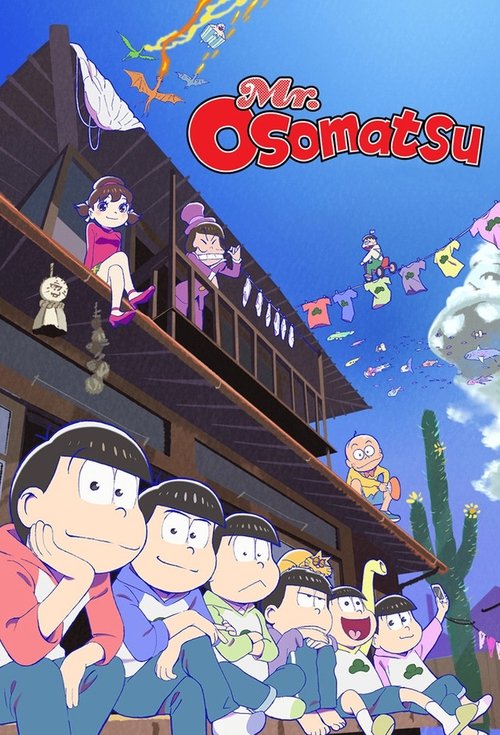
Mr. Osomatsu begins with the introduction of the Matsuno family, consisting of six identical sextuplets: Osomatsu, Karamatsu, Choromatsu, Ichimatsu, Jyushimatsu, and Todomatsu. The series opens with the sextuplets in their adult lives, living in a cramped apartment in the city. They are portrayed as lazy and unmotivated, struggling to find jobs and purpose in their lives. The first episode sets the tone with a comedic yet poignant exploration of their daily lives, showcasing their distinct personalities and quirks.
In the first segment, the sextuplets are seen lounging around the house, engaging in various antics. Osomatsu, the eldest, tries to take charge but often fails to inspire his brothers. Karamatsu, the self-proclaimed cool brother, attempts to impress others with his over-the-top persona but is often met with ridicule. Choromatsu, the responsible one, tries to keep the group in check but is frequently ignored. Ichimatsu, the brooding brother, expresses his disdain for social interactions, while Jyushimatsu, the energetic one, is often lost in his own world. Todomatsu, the youngest, is more socially savvy and tries to navigate the group dynamics.
As the episodes progress, the sextuplets engage in various misadventures, including attempts to find jobs. They go through a series of interviews, each showcasing their unique flaws and comedic failures. For instance, during one interview, Osomatsu's laziness leads to a disastrous outcome, while Karamatsu's attempts to be cool backfire spectacularly. The humor is often derived from their exaggerated reactions and the absurdity of their situations.
In another episode, the sextuplets decide to go on a trip to the beach. The excitement quickly turns into chaos as they bicker and compete for attention. Each brother's personality shines through as they engage in silly competitions, such as who can build the best sandcastle or who can attract the most attention from beachgoers. The beach episode highlights their sibling rivalry and the underlying bond they share, despite their constant squabbling.
The series also delves into their romantic lives, or lack thereof. The sextuplets often fantasize about love and relationships, leading to humorous and awkward situations. For example, they each have their own unique crushes, and their attempts to woo their love interests often result in comedic failures. The show explores themes of loneliness and the desire for connection, juxtaposed with the brothers' inability to mature and take responsibility for their lives.
As the episodes continue, the sextuplets encounter various side characters, including their childhood friends and potential love interests. These interactions often lead to humorous misunderstandings and further highlight the brothers' shortcomings. The show frequently breaks the fourth wall, with characters acknowledging their status as anime characters, adding a layer of meta-humor to the narrative.
In a particularly memorable episode, the sextuplets find themselves in a fantasy scenario where they become heroes in a video game world. Each brother takes on a different role, showcasing their personalities in exaggerated ways. The episode is filled with action-packed sequences, comedic battles, and a humorous take on classic video game tropes. Their journey through this fantasy world serves as a reflection of their real-life struggles and desires.
Throughout the series, the sextuplets grapple with their identities and the expectations placed upon them. They often reflect on their childhood and the pressure to succeed, leading to moments of introspection amidst the comedy. The show balances humor with deeper emotional moments, allowing viewers to connect with the characters on a more personal level.
As the season progresses, the sextuplets face various challenges that test their bonds as brothers. They experience moments of jealousy, rivalry, and reconciliation, ultimately reinforcing their connection. The series culminates in a series of episodes that explore the theme of growing up and the inevitability of change, as the brothers confront their futures and the reality of adulthood.
In the final episodes, the sextuplets come to terms with their lives and the choices they have made. They reflect on their relationships with each other and the importance of family. The series ends on a humorous yet poignant note, leaving viewers with a sense of nostalgia for the carefree days of youth while acknowledging the challenges of growing up. The final scenes encapsulate the essence of the show, blending comedy with heartfelt moments, and solidifying the Matsuno brothers' place in the hearts of fans.
More TV Shows Like This
Browse All TV Shows →




What is the ending?
In the final episode of Mr. Osomatsu, the Matsuno brothers face the reality of their lives as they confront their future. The episode culminates in a series of comedic yet poignant moments that reflect their struggles with adulthood and the passage of time. Each brother grapples with their identity and aspirations, leading to a bittersweet conclusion that emphasizes their bond as siblings despite their individual shortcomings.
As the episode unfolds, the Matsuno brothers find themselves in a series of humorous yet reflective scenarios. They engage in various activities that highlight their distinct personalities and the challenges they face in their lives. The comedic elements are interspersed with moments of introspection, where each brother contemplates their future and the choices they have made.
The episode reaches its climax when the brothers come together to celebrate their bond, acknowledging their flaws and the absurdity of their lives. They share laughter and heartfelt moments, reinforcing the theme of family and the importance of sticking together through thick and thin. The final scenes depict them in a light-hearted manner, embracing their quirks and the chaos of their lives, ultimately leaving viewers with a sense of warmth and nostalgia.
In the closing moments, the brothers are seen in a playful yet reflective state, suggesting that while they may not have everything figured out, they have each other to rely on. The episode ends on a note of hope, with the Matsuno brothers looking forward to whatever the future may hold, united in their brotherhood.
As the final episode of Mr. Osomatsu begins, the screen fades in on the familiar setting of the Matsuno household. The six brothers--Osomatsu, Karamatsu, Choromatsu, Ichimatsu, Jyushimatsu, and Todomatsu--are gathered in their living room, a space filled with the remnants of their chaotic lives. The atmosphere is a mix of nostalgia and uncertainty, as they each reflect on their current situations.
Scene 1: The brothers sit in a circle, engaged in a lively debate about their futures. Osomatsu, the eldest, tries to take charge, suggesting they should all pursue their dreams. Karamatsu, ever the self-proclaimed "cool" brother, boasts about his aspirations of becoming a famous actor, while Choromatsu, the more responsible one, expresses his desire to find a stable job. Ichimatsu, with his usual aloofness, mutters about wanting to be left alone, while Jyushimatsu, the energetic one, dreams of becoming a professional baseball player. Todomatsu, the youngest, is caught between wanting to be like his brothers and carving out his own identity.
Scene 2: The conversation shifts to their past misadventures, and the brothers reminisce about their childhood. Flashbacks of their antics--playing pranks, getting into trouble, and supporting each other through tough times--fill the screen. Laughter erupts as they recall the absurdity of their younger days, but there's an underlying current of sadness as they realize how much time has passed and how little they have changed.
Scene 3: As the day progresses, the brothers decide to go out for a walk, hoping to clear their minds. They stroll through their neighborhood, encountering various characters from their past, including old friends and acquaintances. Each interaction serves as a reminder of their stagnation and the expectations placed upon them by society. The brothers' reactions range from embarrassment to defiance, showcasing their internal struggles with adulthood.
Scene 4: The brothers find themselves at a local park, where they sit on a bench, watching families and children play. This moment of quiet reflection prompts them to confront their fears and insecurities. Osomatsu, feeling the weight of responsibility, admits that he often feels lost. Karamatsu, despite his bravado, reveals his fear of failure. Choromatsu expresses his anxiety about not living up to his potential, while Ichimatsu shares his loneliness. Jyushimatsu and Todomatsu, though more lighthearted, also acknowledge their uncertainties about the future.
Scene 5: In a moment of solidarity, the brothers decide to make a pact to support each other in pursuing their dreams, no matter how unrealistic they may seem. They share a heartfelt moment, vowing to always be there for one another. The scene is filled with laughter and camaraderie, emphasizing the strength of their bond.
Scene 6: As the sun sets, the brothers return home, feeling a renewed sense of purpose. They gather in their living room once more, this time with a sense of hope. The episode concludes with them engaging in a playful argument, their laughter echoing through the house. The camera pans out, capturing the essence of their chaotic yet loving family dynamic.
In the final moments, the screen fades to black, leaving viewers with a lingering sense of warmth and the understanding that while the Matsuno brothers may not have all the answers, they have each other to navigate the uncertainties of life. Each brother's fate remains intertwined, suggesting that their journey together is far from over, and the bonds of brotherhood will continue to guide them through whatever challenges lie ahead.
Is there a post-credit scene?
In the 2015 anime "Mr. Osomatsu," there are indeed post-credit scenes that add an extra layer of humor and character development to the episodes. These scenes typically feature the Matsuno brothers engaging in various comedic antics that often break the fourth wall or reference pop culture.
For instance, in one episode, after the main story concludes, the screen fades to black, and the familiar jingle plays, signaling the end. However, the scene quickly cuts to the brothers in a different setting, where they are seen discussing their day or making light-hearted jokes about the episode's events. The humor is often absurd and self-referential, with the characters acknowledging their own quirks and the ridiculousness of their situations.
In another post-credit scene, the brothers might be shown in a completely unrelated scenario, such as a parody of a popular movie or a game show, showcasing their distinct personalities. For example, Karamatsu might try to act cool and suave, while Choromatsu is anxious and overthinking the situation, leading to a humorous contrast.
These post-credit moments serve to reinforce the show's comedic tone and provide fans with additional laughs, often leaving them with a sense of joy and anticipation for the next episode. The scenes are brief but memorable, encapsulating the essence of the Matsuno brothers' chaotic and entertaining lives.
What are the main characteristics of the Matsuno brothers?
The Matsuno brothers, consisting of Osomatsu, Karamatsu, Choromatsu, Ichimatsu, Jyushimatsu, and Todomatsu, each have distinct personalities that define their interactions and roles within the series. Osomatsu is the confident and somewhat lazy leader, Karamatsu is the self-proclaimed cool brother with a flair for the dramatic, Choromatsu is the responsible and serious one, Ichimatsu is the introverted and cat-loving brother, Jyushimatsu is the cheerful and energetic one, and Todomatsu is the youngest, often seen as the most cunning and manipulative.
How do the Matsuno brothers cope with adulthood and their lack of direction?
Throughout the series, the Matsuno brothers often find themselves in absurd and comedic situations that highlight their struggles with adulthood. They frequently engage in various odd jobs, but their laziness and lack of ambition lead to humorous failures. Their interactions reveal a deep-seated desire for connection and purpose, often resulting in moments of introspection amidst the chaos.
What role does the character Chibita play in the series?
Chibita is a recurring character who serves as a foil to the Matsuno brothers. He is a hardworking and earnest individual who runs a takoyaki stand. His interactions with the brothers often highlight their laziness and lack of responsibility, and he frequently finds himself exasperated by their antics. Chibita's character adds depth to the narrative, showcasing the contrast between ambition and apathy.
How does the series portray the relationship between the Matsuno brothers?
The relationship between the Matsuno brothers is complex, filled with both camaraderie and rivalry. They often bicker and tease each other, reflecting their close yet competitive bond. Despite their differences, they share a deep love for one another, which is evident in moments of support and understanding, especially during times of crisis or when one of them is feeling down.
What are some notable comedic scenarios the Matsuno brothers find themselves in?
The Matsuno brothers encounter a variety of comedic scenarios throughout the series, such as participating in bizarre competitions, attempting to impress women with outlandish schemes, or getting involved in surreal situations that defy logic. One memorable scenario involves them trying to become popular idols, leading to a series of hilarious misadventures that showcase their unique personalities and the absurdity of their attempts.
Is this family friendly?
"Mr. Osomatsu," produced in 2015, is a comedy anime that features a variety of humor styles, some of which may not be suitable for children or sensitive viewers. Here are some potentially objectionable or upsetting aspects:
-
Adult Themes: The show often includes references to adult situations, relationships, and sexuality, which may not be appropriate for younger audiences.
-
Crude Humor: There are instances of toilet humor and crude jokes that may be off-putting to some viewers.
-
Dark Humor: The series sometimes employs dark humor, addressing themes of failure, loneliness, and existential crises in a comedic context, which could be unsettling for sensitive viewers.
-
Parody and Satire: The show parodies various aspects of society, including work culture and family dynamics, which may include cynical or harsh portrayals that could be interpreted negatively.
-
Visual Gags: Some visual gags may be exaggerated or grotesque, which could be disturbing to certain viewers.
-
Language: The dialogue includes slang and potentially offensive language that may not be suitable for children.
Overall, while "Mr. Osomatsu" is comedic and entertaining, its humor often leans towards the adult side, making it less family-friendly.