










Popular
What happens to Jason Hayes after he suffers a traumatic brain injury in Season 2?
How does Clay Spenser's relationship with his father impact his character development?
What are the consequences of Ray Perry's decision to go against orders in Season 3?
How does the team cope with the loss of a member in Season 1?
What motivates Mandy Ellis to join the team and how does her character evolve?
Should I watch it?
Ask Your Own Question

What is the plot?
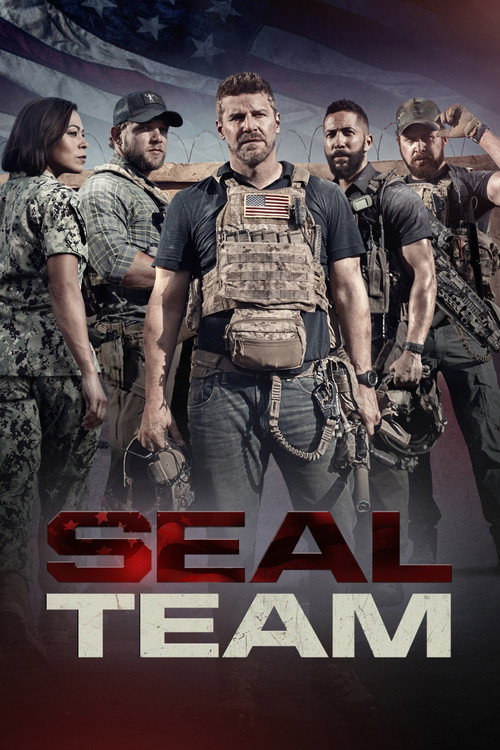
In the pilot episode of SEAL Team, we are introduced to the elite Navy SEAL Team Bravo, led by Master Chief Jason Hayes. The episode opens with a high-stakes mission in Afghanistan where the team is tasked with rescuing a CIA operative who has been captured by the Taliban. The tension is palpable as the team prepares for the operation, showcasing their rigorous training and camaraderie. Jason is shown to be a dedicated leader, but he struggles with the emotional toll of his job, particularly regarding his family life.
As the mission unfolds, the team, including members Ray Perry, Clay Spenser, and David Boreanaz, faces unexpected complications. They encounter heavy enemy fire, and the situation escalates quickly. Jason makes the critical decision to change the extraction point, demonstrating his ability to adapt under pressure. The team successfully rescues the operative, but not without sustaining injuries and facing moral dilemmas about the cost of their actions.
Following the mission, the team returns home, and we see the personal lives of the characters. Jason grapples with the strain on his marriage, as his wife, Alana, expresses her frustration with his absences and the dangers of his job. Meanwhile, Clay, a new member of the team, struggles to prove himself and earn the respect of his more experienced teammates. His eagerness sometimes leads to reckless decisions, which creates tension within the group.
In the second episode, the team is deployed to Nigeria to capture a high-value target involved in human trafficking. The mission is fraught with challenges, including navigating local politics and the threat of civilian casualties. Jason's leadership is tested as he must balance the mission's objectives with the ethical implications of their actions. The team successfully captures the target, but not without a fierce firefight that results in casualties on both sides, further weighing on Jason's conscience.
As the season progresses, the team faces various missions that test their skills and resolve. They deal with the aftermath of their actions, including the psychological impact of combat and the strain on their relationships. Ray, who is dealing with his own personal issues, begins to question his commitment to the team and the toll it takes on his family life. Clay continues to seek validation, often putting himself in dangerous situations to prove his worth.
In a pivotal episode, the team is sent to a hostage rescue mission in a remote location. The operation goes awry when they encounter an ambush, leading to a chaotic firefight. Jason's tactical decisions are put to the test as he must navigate the chaos to ensure the safety of his team and the hostages. The emotional weight of the mission is palpable, as the team grapples with the reality of their choices and the lives at stake.
As the season nears its conclusion, the team faces a personal crisis when one of their own is seriously injured during a mission. The emotional fallout from this event reverberates through the team, leading to moments of reflection and vulnerability. Jason, in particular, is forced to confront his leadership style and the impact it has on his team members. The bonds between the characters deepen as they support each other through the trauma of their experiences.
In the final episodes of the season, the team is tasked with a mission that hits close to home, involving a threat to Jason's family. The stakes are higher than ever, and the team must work together to protect those they love while also completing their mission. The tension builds as they navigate the complexities of their personal and professional lives, culminating in a dramatic showdown that tests their loyalty and resolve.
The season concludes with a cliffhanger, leaving the fate of the team uncertain as they face the consequences of their actions and the challenges of their chosen profession. The emotional and physical toll of their missions is evident, setting the stage for further character development and exploration in the subsequent seasons.








What is the ending?
In the final episode of SEAL Team, the team faces a critical mission that tests their limits and relationships. Jason Hayes grapples with the consequences of his leadership decisions, while the team confronts personal challenges. The episode culminates in a high-stakes operation, leading to significant character developments and resolutions for the main cast.
As the episode begins, the tension is palpable. Jason Hayes, the team leader, is dealing with the aftermath of a previous mission that went awry. He is haunted by the weight of his responsibilities and the lives of his team members. The emotional toll is evident as he reflects on his choices, showcasing his internal struggle between duty and the safety of his men.
Scene transitions to the team preparing for their next operation. Each member is shown in their element, highlighting their skills and camaraderie. Ray Perry, the team's intelligence officer, is seen analyzing data, while Clay Spenser, the young and ambitious operator, is eager to prove himself. The dynamics within the team are explored, revealing the bonds they share and the underlying tensions that come with their high-stakes work.
As the mission unfolds, the team is deployed to a hostile environment. The atmosphere is tense, with the sound of helicopters and the sight of rugged terrain setting the stage for the operation. The team executes their plan with precision, showcasing their training and teamwork. However, complications arise, leading to unexpected challenges that test their resolve.
During the operation, Jason faces a critical moment where he must make a split-second decision that could impact the lives of his team. The weight of leadership is heavy on his shoulders, and the emotional stakes are high. The scene is filled with suspense as the team navigates through enemy territory, encountering danger at every turn.
As the mission reaches its climax, the team faces a fierce firefight. The visuals are intense, with gunfire and explosions creating a chaotic backdrop. Each character's bravery and determination shine through as they fight to protect one another. The emotional toll of the battle is evident, with moments of fear, courage, and sacrifice.
In the aftermath of the operation, the team reflects on their experiences. Jason's leadership is put to the test as he confronts the consequences of their actions. The emotional weight of loss and survival hangs in the air, leading to poignant moments of introspection among the team members.
The episode concludes with each character's fate being revealed. Jason, despite the challenges he faced, emerges as a more resolute leader, having learned valuable lessons about trust and vulnerability. Ray finds a renewed sense of purpose, while Clay grapples with the realities of his choices and the impact on his future. The bonds between the team members are strengthened, showcasing their resilience and commitment to one another.
As the screen fades to black, the audience is left with a sense of closure for the characters, while also recognizing the ongoing challenges they will face in their line of work. The final moments encapsulate the essence of SEAL Team, highlighting the complexities of duty, sacrifice, and the unbreakable bonds forged in the heat of battle.
Is there a post-credit scene?
In the TV show SEAL Team, produced in 2017, there are no post-credit scenes in the traditional sense that you might find in some other series or films. The episodes typically conclude with a final scene that wraps up the storyline of that particular episode, often leaving viewers with a sense of closure or a teaser for the next episode, but they do not include additional scenes after the credits roll. The focus remains on the intense and emotional narratives of the characters and their missions, rather than on post-credit content.
What happens to Jason Hayes after he suffers a traumatic brain injury in Season 2?
In Season 2, Jason Hayes, portrayed by David Boreanaz, suffers a traumatic brain injury during a mission. This injury leads to significant challenges for him, both physically and mentally. He experiences symptoms such as memory loss and difficulty concentrating, which affect his performance and decision-making as a leader. Throughout the season, Jason grapples with the implications of his injury, questioning his ability to continue in his role as a team leader. His internal struggle is compounded by the pressure to maintain his position and the fear of letting his team down. Ultimately, he seeks help and support from his teammates and family, showcasing his vulnerability and determination to overcome his challenges.
How does Clay Spenser's relationship with his father impact his character development?
Clay Spenser, played by Max Thieriot, has a complicated relationship with his father, who is a retired Navy SEAL. This relationship significantly impacts Clay's character development throughout the series. Initially, Clay seeks to prove himself and gain his father's approval, which drives him to excel in his training and missions. However, as the series progresses, Clay begins to confront the expectations placed upon him by his father and the legacy of being a SEAL. This internal conflict leads to moments of tension and reflection, as Clay struggles to carve out his own identity separate from his father's shadow. His journey is marked by a desire for validation, but also a growing understanding of the sacrifices and realities of being a SEAL.
What are the consequences of Ray Perry's decision to go against orders in Season 3?
In Season 3, Ray Perry, portrayed by Neil Brown Jr., faces serious consequences after he goes against direct orders during a mission. His decision stems from a strong moral conviction to protect innocent lives, showcasing his internal conflict between duty and ethics. However, this act of defiance leads to disciplinary action against him, putting his career and reputation at risk. Ray's choice creates tension within the team, as some members support his decision while others believe he jeopardized their mission. The fallout from this incident forces Ray to confront the implications of his actions, leading to a deeper exploration of loyalty, leadership, and the personal cost of being a SEAL.
How does the team cope with the loss of a member in Season 1?
In Season 1, the team experiences the devastating loss of a member during a mission gone wrong. This event profoundly impacts each character, showcasing their grief and the emotional toll of their profession. The team grapples with feelings of guilt, anger, and sorrow, leading to moments of reflection and vulnerability. Jason Hayes, as the team leader, feels the weight of responsibility for the loss, questioning his decisions and leadership. The camaraderie among the team members is tested as they navigate their grief, with some seeking solace in each other while others withdraw. This loss serves as a catalyst for character development, highlighting the psychological challenges faced by SEALs and the importance of support within the team.
What motivates Mandy Ellis to join the team and how does her character evolve?
Mandy Ellis, played by Jessica Paré, is motivated to join the team due to her strong sense of duty and desire to make a difference in the world. As a CIA officer, she is driven by a commitment to her country and a belief in the importance of collaboration between intelligence and military operations. Throughout the series, Mandy's character evolves as she navigates the complexities of her role within the team. Initially, she faces skepticism from some team members due to her gender and background, but she gradually earns their respect through her competence and dedication. Her relationships with the SEALs deepen, particularly with Jason Hayes, as they work together on high-stakes missions. Mandy's journey reflects her growth as a leader and her struggle to balance her professional responsibilities with personal connections.
Is this family friendly?
"SEAL Team," produced in 2017, is primarily an action-drama series that follows an elite unit of Navy SEALs as they undertake dangerous missions around the world. While the show is gripping and well-crafted, it contains several elements that may not be suitable for children or sensitive viewers.
-
Violence and Combat Scenes: The series features intense military action, including gunfights, explosions, and hand-to-hand combat. These scenes are often graphic and realistic, showcasing the brutality of warfare.
-
Injury and Death: Characters frequently face life-threatening situations, leading to injuries and fatalities. The emotional impact of loss is a recurring theme, which may be distressing for younger viewers.
-
Strong Language: The dialogue includes strong language and profanity, reflecting the high-stress environment of military operations.
-
Mature Themes: The show explores complex themes such as PTSD, the psychological toll of war, and the impact of military life on families. These topics may be heavy and difficult for children to understand.
-
Emotional Turmoil: Characters often grapple with personal struggles, including grief, guilt, and moral dilemmas, which can evoke strong emotional responses.
-
Substance Use: There are instances of characters dealing with stress through alcohol consumption, which may not be appropriate for younger audiences.
Overall, while "SEAL Team" offers a compelling narrative and character development, its mature content makes it more suitable for adult viewers.









