














Popular
What motivates Ah Sahm to come to America and join the Tong?
How does the relationship between Ah Sahm and Young Jun evolve throughout the series?
What role does the character of Penny play in the story, and how does her relationship with Ah Sahm develop?
What are the main conflicts between the Hop Wei and the Long Zii Tongs, and how do they impact the characters?
How does the character of Father Jun influence the events in the series?
Should I watch it?
Ask Your Own Question

What is the plot?
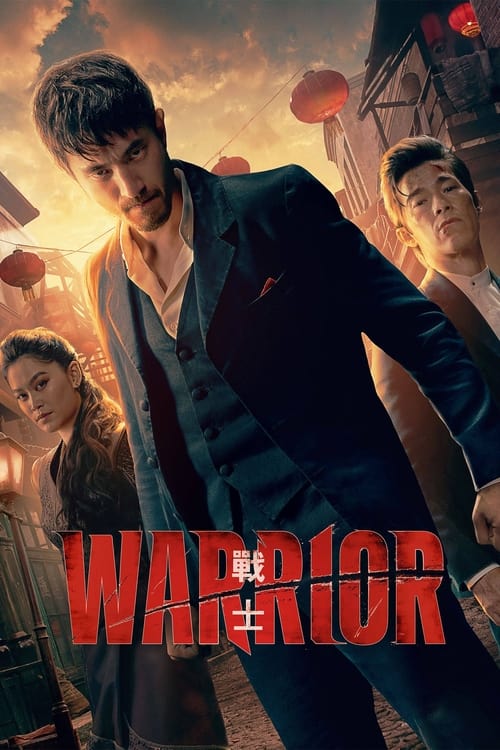
In the late 19th century, Ah Sahm, a skilled martial artist from China, arrives in San Francisco in search of his sister, Mei Ling. He is immediately confronted by a group of Irish immigrants who attempt to rob him. Ah Sahm showcases his fighting prowess, easily dispatching them, which draws the attention of a local crime lord, Wang Chao, who recognizes his talent and offers him a place in his organization.
Ah Sahm is soon introduced to the Tong, a Chinese organized crime group led by the formidable Father Jun. He learns about the tensions between the Chinese and Irish communities, as well as the corrupt police force that exploits these divisions. Ah Sahm's loyalty to his sister drives him to navigate this dangerous world, and he begins to work for the Tong, taking on various jobs that often involve violence and intimidation.
Meanwhile, we meet Officer Young Jun, who is part of the police force but is also connected to the Tong. He struggles with his dual identity and the corruption within the police department. His relationship with Ah Sahm grows as they bond over their shared experiences as immigrants facing discrimination and violence.
As Ah Sahm delves deeper into the Tong's operations, he discovers that his sister Mei Ling is in San Francisco, but she is being held captive by a rival gang. Determined to rescue her, he confronts the gang members, leading to a brutal fight where he showcases his martial arts skills. The confrontation escalates, resulting in significant injuries on both sides, but Ah Sahm ultimately manages to rescue Mei Ling.
After reuniting with Mei Ling, Ah Sahm learns that she has been living a difficult life, forced into a situation that compromises her dignity. Their reunion is bittersweet, as they both grapple with the harsh realities of their new lives in America. Mei Ling expresses her desire to escape the violence, but Ah Sahm feels a sense of responsibility to protect her and continue fighting against the injustices they face.
The conflict between the Chinese and Irish communities intensifies, leading to a series of violent confrontations. Ah Sahm finds himself at the center of these clashes, often acting as a mediator while also engaging in brutal fights to defend his community. His reputation as a fighter grows, and he becomes a key figure in the ongoing struggle for power and respect among the immigrant populations.
As tensions rise, Father Jun is faced with challenges from rival factions within the Tong, leading to internal strife. Ah Sahm's loyalty is tested as he navigates the shifting allegiances and power dynamics. He must make difficult choices about where his loyalties lie, especially as he becomes more entangled in the criminal underworld.
In a pivotal moment, Ah Sahm confronts a powerful rival gang leader, leading to a climactic showdown. The fight is intense and showcases Ah Sahm's martial arts skills against overwhelming odds. He fights not only for his own survival but also for the future of his community. The battle culminates in a dramatic conclusion, with Ah Sahm emerging victorious but at a great personal cost.
As the season progresses, Ah Sahm's relationships with other characters deepen, including his bond with Young Jun and his growing rivalry with other gang leaders. The emotional stakes rise as personal vendettas and the quest for power intertwine, leading to betrayals and unexpected alliances.
The season concludes with a significant turning point, as Ah Sahm faces the consequences of his actions. The violence and chaos of the streets of San Francisco continue to escalate, setting the stage for further conflict and character development in the subsequent seasons. Ah Sahm's journey is marked by his relentless pursuit of justice for his community, his struggle to protect his sister, and his quest for identity in a world that constantly challenges him.


What is the ending?
In the ending of "Warrior," the season culminates in a violent confrontation between rival factions in San Francisco's Chinatown. Ah Sahm faces off against his enemies, and the tensions between the Chinese immigrants and the Irish community reach a boiling point. The season concludes with significant losses and unresolved conflicts, setting the stage for future struggles.
As the final episode unfolds, the atmosphere in Chinatown is thick with tension. The streets are alive with the sounds of the city, but an undercurrent of violence looms. Ah Sahm, having navigated the complexities of his identity and the brutal world around him, prepares for a confrontation that has been building throughout the season. His internal struggle is palpable; he is torn between his loyalty to his family and his desire for justice in a world that often seems unjust.
Scene by scene, the narrative unfolds. The episode opens with Ah Sahm and his allies gathering in a dimly lit room, strategizing their next move against the rival Irish gang led by the ruthless Bill O'Hara. The stakes are high, and the tension is evident as Ah Sahm's determination to protect his community clashes with the violent reality of their situation. His face is set, a mixture of resolve and the weight of impending conflict etched into his features.
As night falls, the streets of Chinatown become a battleground. The camera captures the chaos as the two factions collide, fists flying and weapons drawn. Ah Sahm is at the center of the fray, his martial arts skills on full display as he fights with a fierce intensity. Each blow he lands is not just a physical act but a manifestation of his struggle against oppression and his fight for his people.
Meanwhile, the character of Young Jun, Ah Sahm's friend and ally, finds himself grappling with his own loyalties. He is torn between his friendship with Ah Sahm and the expectations placed upon him by his father, who leads the Tong. Young Jun's internal conflict is highlighted as he witnesses the brutality of the fight, his face reflecting a mix of fear and determination.
As the battle rages on, the emotional stakes rise. The camera shifts to the women of Chinatown, who watch from the sidelines, their expressions a mix of fear and hope. They are the silent witnesses to the violence that has become a part of their lives, and their presence underscores the impact of the conflict on the community as a whole.
In a pivotal moment, Ah Sahm confronts Bill O'Hara. The tension between them is electric, a culmination of their rivalry that has simmered throughout the season. The fight is brutal, showcasing Ah Sahm's skill and O'Hara's ruthlessness. As they exchange blows, the stakes become personal, each man fighting not just for dominance but for the future of their respective communities.
The climax of the episode sees significant losses on both sides. Characters who have been central to the narrative face dire consequences, and the aftermath of the battle leaves the streets of Chinatown stained with blood. Ah Sahm, though victorious in his fight against O'Hara, is left to grapple with the cost of that victory. The weight of loss hangs heavy in the air, and the camera lingers on his face, capturing the mix of triumph and sorrow.
As the dust settles, the fate of the main characters becomes clear. Ah Sahm stands amidst the chaos, a warrior in every sense, but the victory feels hollow. Young Jun, having witnessed the brutality of the conflict, is left to ponder his place in this world. The bonds of friendship and loyalty are tested, and the future remains uncertain.
The season concludes with a sense of unresolved tension. The struggles of the Chinese immigrants are far from over, and the conflict with the Irish community is poised to continue. The final scenes leave viewers with a haunting reminder of the cyclical nature of violence and the personal costs of the fight for identity and justice. The camera pulls back, revealing the scarred streets of Chinatown, a testament to the battles fought and the battles yet to come.
Is there a post-credit scene?
Warrior, produced in 2019, does not feature a post-credit scene. The episodes conclude without any additional scenes after the credits roll. Each episode wraps up its narrative arcs, leaving viewers to anticipate the next installment without any extra content following the main story. The focus remains on the unfolding drama and character development throughout the episodes, rather than teasing future events in a post-credit format.
What motivates Ah Sahm to come to America and join the Tong?
Ah Sahm, a skilled martial artist from China, is driven by a desire to find his sister, who has been living in America. His journey is fueled by a mix of familial loyalty and the hope of reuniting with her, as well as a longing to escape the oppressive conditions in his homeland. His determination to navigate the dangerous world of the Tong reflects his internal struggle between his cultural identity and the harsh realities of immigrant life.
How does the relationship between Ah Sahm and Young Jun evolve throughout the series?
Initially, Young Jun sees Ah Sahm as a rival and a potential threat to his position within the Hop Wei Tong. However, as they face various challenges together, including conflicts with rival gangs and the police, their relationship deepens into a strong bond of brotherhood. Young Jun's initial jealousy transforms into respect and camaraderie, showcasing the complexities of loyalty and friendship in a violent world.
What role does the character of Penny play in the story, and how does her relationship with Ah Sahm develop?
Penny, a strong-willed woman with her own ambitions, becomes a significant figure in Ah Sahm's life. Their relationship begins with a mutual attraction, but it is complicated by the societal expectations and the dangers surrounding them. As they navigate the tumultuous landscape of San Francisco's Chinatown, Penny's independence and Ah Sahm's struggles create a dynamic that highlights the challenges of love amidst chaos, ultimately leading to moments of both connection and conflict.
What are the main conflicts between the Hop Wei and the Long Zii Tongs, and how do they impact the characters?
The rivalry between the Hop Wei and Long Zii Tongs is rooted in power struggles over territory, resources, and influence in San Francisco's Chinatown. This conflict escalates into violent confrontations, affecting the lives of many characters, including Ah Sahm, Young Jun, and their families. The tension forces characters to make difficult choices, revealing their true loyalties and moral dilemmas, as they navigate the treacherous landscape of gang warfare.
How does the character of Father Jun influence the events in the series?
Father Jun serves as a mentor and father figure to Young Jun and the other members of the Hop Wei Tong. His wisdom and experience guide the younger characters through the complexities of their lives, often providing a moral compass amidst the chaos. However, his decisions also have significant consequences, as he struggles to maintain control over the Tong while facing external pressures from rival gangs and law enforcement, ultimately shaping the fate of those around him.
Is this family friendly?
"Warrior," produced in 2019, is not considered family-friendly due to its mature themes and content. The show features several potentially objectionable or upsetting aspects, including:
-
Graphic Violence: The series includes intense martial arts combat scenes, with bloodshed and injuries that may be disturbing to younger viewers.
-
Strong Language: Characters frequently use profanity, which may not be suitable for children or sensitive audiences.
-
Sexual Content: There are scenes that depict sexual situations and nudity, which could be inappropriate for younger viewers.
-
Racial Tensions: The show explores themes of racism and discrimination, which may be upsetting for some viewers, particularly in the context of historical injustices.
-
Substance Abuse: There are instances of drug and alcohol use, which may not be suitable for children.
-
Emotional Turmoil: Characters experience significant emotional struggles, including loss, betrayal, and trauma, which could be distressing for sensitive viewers.
Overall, "Warrior" delves into complex and often dark themes that may not be appropriate for a younger audience.









