





Popular
How does Joe's relationship with Beck evolve throughout the series?
What motivates Joe Goldberg to pursue his romantic interests?
What role does Love Quinn play in Joe's life, and how does their relationship differ from his relationship with Beck?
What are the key events that lead to Beck's demise?
How does Joe's character change from season one to season two?
Should I watch it?
Ask Your Own Question

What is the plot?
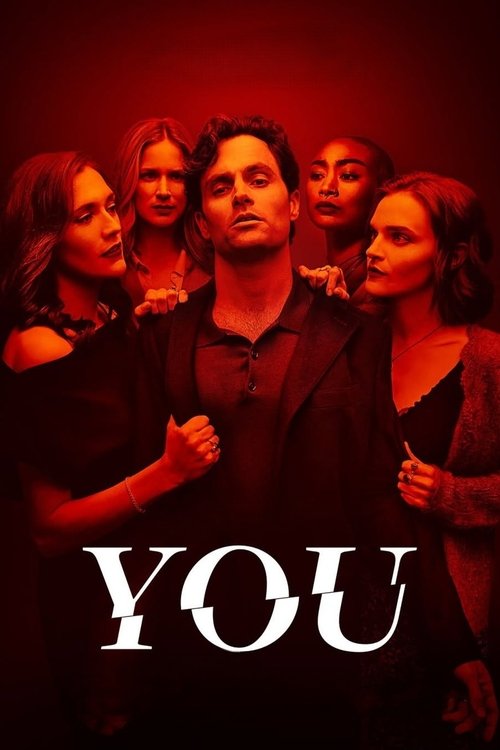
In the opening scene of "You," we are introduced to Joe Goldberg, a charming yet deeply troubled bookstore manager in New York City. He becomes infatuated with a young woman named Guinevere Beck, who is an aspiring writer. Joe's obsession begins when he sees her in the bookstore, and he quickly learns about her life through social media. He becomes fixated on her, believing he is meant to be with her.
Joe's obsession intensifies as he stalks Beck, gathering information about her through her social media accounts and by following her in real life. He discovers that she is dating a pretentious and wealthy man named Benji, which fuels his jealousy. Joe's internal monologue reveals his deep-seated insecurities and his desire for a perfect relationship, which he believes he can have with Beck.
After a chance encounter at a bar, Joe and Beck begin to develop a relationship. Joe is charming and attentive, but he also exhibits controlling behavior. He manipulates situations to isolate Beck from her friends, particularly from her best friend, Peach Salinger, who is protective of her. Joe's possessiveness grows as he becomes more involved in Beck's life, and he begins to eliminate anyone he perceives as a threat to their relationship.
As their relationship progresses, Beck becomes increasingly aware of Joe's darker tendencies. She finds it unsettling when Joe shows up unexpectedly or knows things about her that she hasn't shared. Despite her reservations, she is drawn to Joe's intensity and passion. Joe, on the other hand, struggles with his violent impulses and the lengths he is willing to go to keep Beck in his life.
The tension escalates when Benji, Beck's ex-boyfriend, re-enters the picture. Joe's jealousy leads him to kidnap Benji, locking him in a glass box in the basement of his apartment. Joe tortures Benji psychologically, trying to extract information about Beck and ultimately decides to kill him to eliminate the competition. He disposes of Benji's body, believing that this act will solidify his relationship with Beck.
As Joe and Beck's relationship deepens, Beck becomes more entangled in Joe's web of lies. She is unaware of the extent of Joe's manipulations and the dark secrets he harbors. Joe continues to monitor her every move, even going so far as to hack into her email and social media accounts. He uses this information to manipulate situations to his advantage, further isolating Beck from her friends and family.
Peach, suspicious of Joe, begins to investigate him. She confronts Beck about her relationship with Joe, warning her that he is not who he seems. Beck, torn between her feelings for Joe and her loyalty to Peach, brushes off her friend's concerns. However, the tension between Joe and Peach escalates, leading to a confrontation where Joe feels threatened by Peach's influence over Beck.
In a pivotal moment, Joe decides to eliminate Peach as a threat. He follows her to a secluded location and confronts her. In a struggle, he ends up killing Peach, making it look like a suicide to cover his tracks. This act deepens Joe's descent into darkness, as he becomes more entrenched in his obsession with Beck.
As the story progresses, Beck begins to uncover Joe's true nature. She discovers the glass box where Benji was held and realizes the extent of Joe's manipulations. In a moment of clarity, she confronts Joe, demanding the truth about his past and his actions. Joe, in a desperate attempt to maintain control, tries to convince her that he loves her and that everything he did was for her own good.
The climax of the season occurs when Beck decides to leave Joe, realizing that she cannot be with someone who is capable of such violence. Joe, feeling betrayed and desperate, takes drastic measures to keep her from leaving. He kidnaps her and locks her in the glass box, revealing his true nature as a dangerous and obsessive individual.
In the final moments of the season, Beck manages to escape from the box and confronts Joe. She is terrified but also determined to break free from his grasp. However, in a shocking twist, Joe manages to manipulate the situation, making it seem as though Beck is the one who is unstable. He ultimately kills her, believing that this act will free him from the consequences of his actions and allow him to start anew.
The season ends with Joe walking away from the scene, seemingly unscathed and ready to begin his next obsession, leaving a trail of destruction in his wake.








What is the ending?
In the ending of the TV show "You," Joe Goldberg, the protagonist, finds himself in a precarious situation after a series of manipulative and violent actions. He ultimately kills his love interest, Candace, and frames his ex-girlfriend, Beck, for the murder of her therapist. The season concludes with Joe moving to Los Angeles, where he meets a new woman, Love Quinn, hinting at a cycle of obsession continuing.
Now, let's delve into the ending in a more detailed narrative fashion:
As the final episode unfolds, the tension escalates in Joe's life. He is grappling with the consequences of his actions, particularly the murder of Beck, who he had initially pursued with an obsessive love. The scene is set in the dimly lit confines of the bookstore where Joe works, the air thick with the weight of his secrets. Joe's internal conflict is palpable; he oscillates between his desire for love and the darkness that compels him to eliminate anyone who threatens that love.
In a pivotal moment, Candace, Joe's former flame, confronts him. She has returned, alive and determined to expose Joe for the monster he is. The confrontation is charged with emotion, as Candace reveals the truth about Joe's past and the lengths he will go to maintain control over those he loves. Joe, feeling cornered, resorts to his old habits. In a desperate act of self-preservation, he kills Candace, a decision that further entangles him in a web of deceit and violence.
The scene shifts to the aftermath of Candace's death. Joe meticulously cleans the crime scene, showcasing his obsessive nature and his need to maintain a façade of normalcy. He frames Beck for the murder of her therapist, Dr. Nicky, manipulating the narrative to ensure that he remains unscathed. This act of framing is a chilling reflection of Joe's character; he is willing to sacrifice anyone, even those he claims to love, to protect himself.
As the police close in, Joe's world begins to unravel. He watches as Beck is taken into custody, her life shattered by his machinations. The emotional weight of this moment is heavy; Joe's face is a mask of conflicted emotions--regret, anger, and a twisted sense of victory. He has successfully eliminated his threats, but at what cost?
The final scenes take a dramatic turn as Joe relocates to Los Angeles, seeking a fresh start. The sun-drenched streets of L.A. contrast sharply with the dark events of his past. Here, he encounters Love Quinn, a woman who seems to embody the ideal partner he has always sought. Their meeting is charged with potential, but it is underscored by the ominous knowledge of Joe's history. As he gazes at Love, a flicker of hope ignites within him, but it is quickly overshadowed by the realization that his patterns of obsession and violence may not be so easily escaped.
The series concludes with Joe's chilling smile as he watches Love, suggesting that the cycle of obsession is far from over. The fate of each main character is sealed in this moment: Beck is imprisoned, Candace is dead, and Joe, despite his attempts at reinvention, remains trapped in his destructive patterns. The ending leaves viewers with a haunting sense of inevitability, as Joe's journey continues, hinting at the darkness that lies ahead.
Is there a post-credit scene?
The TV show "You," which premiered in 2018, does not feature a post-credit scene. The series concludes its first season with a tense and dramatic finale that wraps up the main storyline without any additional scenes after the credits.
In the final moments of the season, Joe Goldberg, played by Penn Badgley, finds himself in a precarious situation after the events that unfold with his love interest, Beck, portrayed by Elizabeth Lail. The emotional weight of the season culminates in a chilling revelation about Joe's character and his obsessive tendencies. As the credits roll, viewers are left with a sense of unease and anticipation for what might come next, but there are no additional scenes to provide further context or resolution. The absence of a post-credit scene emphasizes the finality of the season's events while leaving the door open for future developments in subsequent seasons.
How does Joe's relationship with Beck evolve throughout the series?
Joe's relationship with Guinevere Beck begins as an infatuation, where he idealizes her and believes she is the perfect partner. As he becomes more involved in her life, his obsession grows, leading him to stalk her and eliminate perceived threats. Beck, initially unaware of Joe's darker tendencies, becomes increasingly entangled in his web of manipulation, ultimately leading to a tragic and fatal climax.
What motivates Joe Goldberg to pursue his romantic interests?
Joe Goldberg, the protagonist, is driven by a deep-seated need for connection and love, stemming from a troubled childhood marked by neglect and trauma. His obsessive nature is fueled by a desire to protect those he loves, but this often leads him to manipulate and control them, believing that he is acting in their best interest.
What role does Love Quinn play in Joe's life, and how does their relationship differ from his relationship with Beck?
Love Quinn enters Joe's life as a seemingly perfect match, sharing his dark tendencies and complex past. Unlike Beck, who represents an unattainable ideal, Love is more grounded and aware of her own flaws. Their relationship is marked by a twisted sense of compatibility, as both characters grapple with their pasts and the consequences of their actions, ultimately leading to a cycle of obsession and violence.
What are the key events that lead to Beck's demise?
Beck's demise is the result of a series of escalating events driven by Joe's jealousy and paranoia. After discovering her infidelity and feeling threatened by her friendships, Joe's obsession culminates in a violent confrontation. He ultimately kills Beck in a fit of rage, believing he is protecting their love, which highlights his distorted view of relationships and love.
How does Joe's character change from season one to season two?
In season one, Joe is primarily portrayed as a charming yet deeply flawed individual whose obsession leads to tragic outcomes. By season two, Joe attempts to reinvent himself as 'Will Bettelheim' in Los Angeles, seeking redemption and a fresh start. However, his past continues to haunt him, and he struggles with his violent tendencies and the consequences of his actions, revealing that he is unable to escape his true nature.
Is this family friendly?
The TV show "You," produced in 2018, is not considered family-friendly due to its mature themes and content. Here are some potentially objectionable or upsetting aspects that may affect children or sensitive viewers:
-
Violence: The show contains scenes of physical violence, including murder and assault, which are depicted in a graphic manner.
-
Sexual Content: There are multiple instances of sexual situations, nudity, and discussions surrounding sexual relationships that may be inappropriate for younger audiences.
-
Psychological Manipulation: The protagonist engages in stalking and obsessive behavior, which can be unsettling and may raise concerns about mental health and personal safety.
-
Substance Abuse: Characters are shown using drugs and alcohol, which may not be suitable for younger viewers.
-
Emotional Abuse: The show explores themes of manipulation and emotional abuse in relationships, which can be distressing for some viewers.
-
Dark Themes: The narrative delves into themes of obsession, betrayal, and moral ambiguity, which may be challenging for sensitive individuals to process.
Overall, "You" presents a complex and often disturbing exploration of love and obsession, making it more appropriate for mature audiences.