








Popular
What is the significance of the Book of Names in Lovecraft Country?
How does Atticus's relationship with his father influence the story?
What role does Leti play in the fight against racism and supernatural threats?
What is the significance of the character Christina Braithwhite?
How does the theme of ancestral legacy manifest in the character of Hippolyta?
Should I watch it?
Ask Your Own Question

What is the plot?
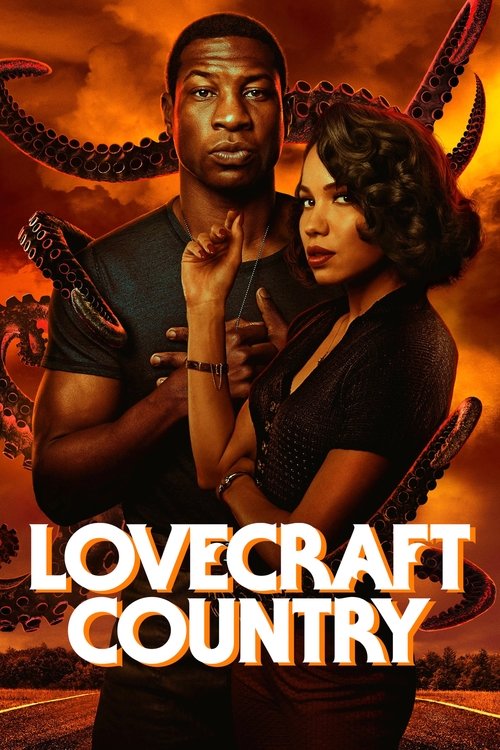
In the year 1954, Atticus Turner, a young Black man, receives a letter from his father, Montrose, who has gone missing. Atticus, known as Tic, is living in Chicago and is eager to find his father. He enlists the help of his friend, Letitia Lewis, and his uncle, George Berry, who is a writer and a publisher. They set off on a road trip to the Jim Crow South, specifically to Ardham, Massachusetts, where Montrose was last seen.
As they travel, they encounter various forms of racism and hostility, including a violent confrontation with a group of white men at a diner. The tension escalates when they are forced to flee, and they narrowly escape after George uses his wits to distract their pursuers. This experience deepens the bond between the trio, highlighting their shared struggles against systemic racism.
Upon arriving in Ardham, they discover that Montrose is being held at a mysterious estate owned by the Braithwhite family. The estate is shrouded in secrecy and has a dark history tied to the occult. They meet Christina Braithwhite, who reveals that she is involved in a ritual that requires the blood of a member of the Turner family. The group learns that Montrose is being used as a pawn in a larger scheme involving magic and power.
Tic, Leti, and George infiltrate the estate during a ritual ceremony. They witness a horrific scene where Montrose is being sacrificed. In a desperate attempt to save him, Tic confronts the cult members, leading to a chaotic fight. Leti uses her resourcefulness to create a distraction, allowing them to rescue Montrose. However, during the escape, George is mortally wounded, which devastates Tic and Leti.
After the traumatic events at the estate, the group returns to Chicago, but the emotional toll weighs heavily on them. Tic struggles with the loss of George and the revelations about his family's history. He learns that he is a descendant of a powerful lineage tied to the magic that the Braithwhites sought to exploit. This knowledge complicates his identity and sense of self.
Leti, meanwhile, begins to assert her independence and strength, purchasing a house in a predominantly white neighborhood, which becomes a symbol of resistance against racism. She faces hostility from her neighbors but remains determined to make a stand. Her relationship with Tic deepens, but the trauma they both experienced creates tension between them.
As the story progresses, Tic discovers more about the magical world and the dangers it poses. He encounters various supernatural beings and learns about the existence of a book called the "Book of Names," which holds immense power. The quest for this book becomes a central focus, as it is believed to contain the secrets to controlling magic and protecting their lineage.
The group faces numerous challenges, including confrontations with the Braithwhite family, who are determined to reclaim their power. Tic's internal struggle with his identity and the legacy of his ancestors intensifies, leading him to make difficult choices that affect his relationships with Leti and Montrose.
In a climactic confrontation, Tic and Leti confront Christina, who reveals her true intentions and the extent of her power. The battle is fierce, with magic and violence intertwining. Tic ultimately sacrifices himself to save Leti and Montrose, using the knowledge he gained from the Book of Names to defeat Christina and her followers.
In the aftermath, Leti and Montrose are left to grapple with the loss of Tic. They honor his memory and the sacrifices made throughout their journey. The story concludes with a sense of unresolved tension, as the characters continue to navigate a world filled with both magical and real dangers, leaving the door open for future challenges and adventures.







What is the ending?
In the ending of "Lovecraft Country," Atticus, Leti, and their allies confront the dark forces of the Braithwhite family. Atticus sacrifices himself to save his loved ones and prevent the resurrection of the ancient deity, while Leti and the others manage to escape. The series concludes with a poignant reflection on the cost of their fight against racism and the supernatural.
As the final episode unfolds, the tension is palpable. The scene opens in the Braithwhite mansion, where Atticus, Leti, and their allies are preparing for a confrontation with the sinister magic of the family. The atmosphere is thick with dread, as they know the stakes are higher than ever. Atticus, driven by a sense of duty and love for his family, steels himself for what is to come. He understands that the ancient magic they are up against is not just a threat to them but to the very fabric of their existence.
In a dimly lit chamber, the group gathers around a ritual site, where the Braithwhite family intends to harness the power of the Book of Names to resurrect the powerful deity, Yahima. Leti, filled with determination, stands beside Atticus, her heart racing as she realizes the enormity of their task. They share a moment of vulnerability, acknowledging the love that has grown between them amidst the chaos.
As the ritual begins, the air crackles with energy. The Braithwhite family members, led by the malevolent Christina, chant incantations that echo through the halls. Atticus feels the weight of his ancestors' struggles pressing down on him, and he knows that he must make a choice. In a moment of clarity, he decides to confront Christina directly, understanding that his sacrifice may be the only way to stop her.
The scene shifts dramatically as Atticus steps forward, confronting Christina with a mix of fear and resolve. He realizes that the only way to disrupt the ritual is to offer himself as a sacrifice. The emotional turmoil is evident on his face as he bids farewell to Leti, who is horrified and desperate to save him. Their eyes lock, and in that moment, a silent understanding passes between them--Atticus is willing to do whatever it takes to protect her and their future.
As Atticus is bound in the ritual circle, Leti and the others scramble to find a way to intervene. The tension escalates as Christina's power grows, and the room fills with a blinding light. Atticus, in his final moments, channels the strength of his ancestors, embracing his fate with a mixture of bravery and sorrow. He calls out to Leti, urging her to remember him and to continue the fight against the darkness.
In a climactic burst of energy, Atticus's sacrifice disrupts the ritual, causing chaos to erupt in the mansion. The walls tremble, and the supernatural forces unleashed by the Braithwhite family begin to spiral out of control. Leti, along with Montrose and Ji-Ah, manages to escape the collapsing mansion, but the cost of their victory weighs heavily on them.
The final scenes depict Leti standing alone, grappling with the loss of Atticus. She is surrounded by the remnants of their battle, the echoes of their love and sacrifice lingering in the air. The emotional weight of their journey is palpable as she reflects on the sacrifices made and the ongoing struggle against the forces of racism and oppression.
As the series concludes, the fate of each main character is laid bare. Atticus, having sacrificed himself, becomes a symbol of courage and resilience. Leti, now carrying the burden of his loss, is determined to honor his memory and continue the fight. Montrose, having faced his own demons, finds a renewed sense of purpose. Ji-Ah, too, is left to navigate her own path, forever changed by the events that transpired.
The screen fades to black, leaving viewers with a haunting reminder of the intertwining of personal and societal battles, and the enduring legacy of those who fight against darkness, both supernatural and real.
Is there a post-credit scene?
In the final episode of "Lovecraft Country," there is no post-credit scene. The series concludes with a powerful and emotional finale that wraps up the main storylines and character arcs. The focus is on the resolution of Atticus Turner's journey, the sacrifices made by the characters, and the implications of their choices in the face of systemic racism and supernatural horrors. The absence of a post-credit scene allows the weight of the narrative to settle, leaving viewers to reflect on the themes of legacy, identity, and the struggle against oppression that permeate the series.
What is the significance of the Book of Names in Lovecraft Country?
The Book of Names is a crucial artifact in Lovecraft Country, serving as a key to unlocking the secrets of the universe and the power of magic. It is tied to the lineage of the main characters, particularly Atticus, and represents the connection between their ancestry and the mystical forces they encounter. The book is sought after by various characters, including Christina Braithwhite, who believes it can grant her immense power.
How does Atticus's relationship with his father influence the story?
Atticus's relationship with his father, Montrose, is fraught with tension and unresolved issues. Montrose's abusive behavior and his struggles with his own identity deeply affect Atticus's sense of self and his motivations throughout the series. Their strained relationship is a driving force in Atticus's quest for understanding and acceptance, particularly as he grapples with the legacy of his family's past and the horrors they face.
What role does Leti play in the fight against racism and supernatural threats?
Leti, as a strong and independent character, embodies resilience and courage in the face of both societal racism and supernatural threats. Her decision to purchase the house in Chicago serves as a symbol of empowerment and defiance against the oppressive forces of the time. Leti's character evolves as she confronts her own fears and insecurities, ultimately becoming a key player in the group's efforts to combat the dark forces they encounter.
What is the significance of the character Christina Braithwhite?
Christina Braithwhite is a complex antagonist whose motivations are rooted in her desire for power and control over her family's legacy. As a white woman in a position of privilege, she seeks to manipulate the magical elements of the story to achieve immortality and dominance. Her character challenges the traditional roles of women and race in the narrative, as she uses her knowledge of magic to navigate and subvert the patriarchal structures around her.
How does the theme of ancestral legacy manifest in the character of Hippolyta?
Hippolyta's journey in Lovecraft Country is deeply tied to the theme of ancestral legacy. As the mother of George and a woman of color in a racially charged society, she grapples with her identity and the history of her family. Her quest for knowledge about her ancestors leads her to discover her own power and potential, culminating in her transformation into a cosmic being. This journey highlights the importance of understanding one's heritage and the impact it has on personal growth and empowerment.
Is this family friendly?
"Lovecraft Country" is not considered family-friendly due to its mature themes and graphic content. Here are some potentially objectionable or upsetting aspects that may affect children or sensitive viewers:
-
Violence and Gore: The series contains intense scenes of violence, including graphic depictions of injuries, bloodshed, and death. Some scenes are particularly brutal and may be distressing.
-
Racism and Discrimination: The show addresses systemic racism and includes scenes that depict racial violence, hate crimes, and the historical context of racism in America, which can be upsetting.
-
Supernatural Horror: The presence of supernatural elements, including monsters and otherworldly beings, can be frightening and unsettling for younger viewers.
-
Sexual Content: There are scenes that include sexual situations and nudity, which may not be appropriate for children.
-
Emotional Trauma: Characters experience significant emotional distress, trauma, and loss, which can be heavy and difficult to process.
-
Psychological Horror: The show explores themes of fear, paranoia, and psychological horror that may be disturbing to sensitive viewers.
Overall, "Lovecraft Country" deals with complex and often dark themes that may not be suitable for younger audiences or those who are sensitive to such content.









