








Loading additional questions...
Popular
What is the significance of the Book of Names in Lovecraft Country?
How does Atticus's relationship with his father influence his journey?
What role does Leti play in the group's dynamic and how does her character evolve?
What is the significance of the character Christina Braithwhite and her motivations?
How does the theme of ancestral legacy manifest in the characters' journeys?
Should I watch it?
Ask Your Own Question

What is the plot?
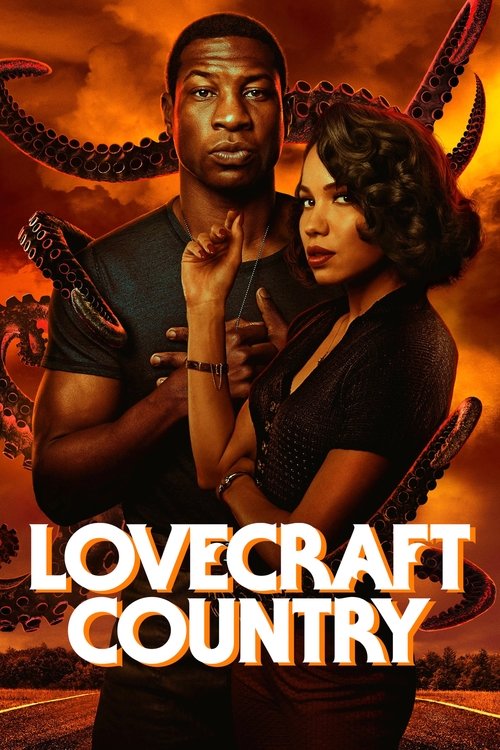
In the opening scene, Atticus Turner, a young Black man, is in the midst of a vivid dream where he is a soldier in the Korean War. He is suddenly attacked by monstrous creatures, which he fights off before waking up in a car with his uncle George and friend Leti. They are on a road trip to find Atticus's missing father, Montrose, who has disappeared in the Jim Crow South. As they drive through the racially charged landscape of 1950s America, they discuss the book "The Safe Negro Travel Guide," which George has written to help Black travelers navigate the dangers of the segregated South.
The trio arrives in Chicago, where they meet Leti's estranged mother. Leti is determined to make a name for herself as a performer and is eager to leave her past behind. They learn that Montrose has been last seen in a town called Ardham, Massachusetts, which is tied to a mysterious family known as the Braithwaites. Atticus is motivated by a desire to find his father and understand his family's history, while Leti seeks independence and a fresh start.
Upon reaching Ardham, they are greeted with hostility from the local white residents. They check into a dilapidated inn run by the Braithwaites, where they experience strange occurrences, including unsettling visions and supernatural phenomena. Atticus is haunted by the feeling that something is deeply wrong in the town. They soon discover that the Braithwaites are involved in dark rituals and that Montrose is being held captive.
As they investigate, they uncover a secret society that practices magic and seeks to harness the power of the supernatural. Atticus learns that he is a descendant of a powerful lineage that connects him to the Braithwaites' dark ambitions. The group faces numerous dangers, including a confrontation with the Braithwaites, who attempt to use Atticus in their rituals.
In a tense sequence, Atticus, Leti, and George confront the Braithwaites in their mansion. They discover that Montrose is being held in a hidden chamber, and they must navigate through traps and magical barriers to rescue him. During the rescue, they encounter a monstrous creature that attacks them, forcing them to fight for their lives. Leti uses her quick thinking to create a distraction, allowing Atticus to reach Montrose and free him.
After a harrowing escape, the group is pursued by the Braithwaites and their minions. They manage to flee the mansion, but not without suffering losses. George is mortally wounded during the escape, and his death deeply affects Atticus and Leti, leaving them grappling with grief and anger.
In the aftermath, Atticus confronts his father about their family's history and the legacy of trauma that has been passed down through generations. Montrose reveals painful truths about his own past and the sacrifices he made to protect Atticus. This moment of vulnerability strengthens their bond, but it also highlights the complexities of their relationship.
As they return to Chicago, Leti and Atticus begin to process their experiences. Leti decides to take a stand against the injustices they faced, using her platform to advocate for change. Atticus, now more aware of the dangers that lurk in the world, resolves to confront the legacy of racism and violence head-on.
The season culminates in a climactic confrontation with the Braithwaites, where Atticus must embrace his heritage and the powers that come with it. He faces off against the head of the Braithwaite family, who seeks to use Atticus's bloodline for his own gain. In a battle that blends magic and physical combat, Atticus ultimately defeats the antagonist, but not without significant cost.
The final scenes reveal the lasting impact of their journey. Atticus and Leti are forever changed by their experiences, and they must navigate a world that is still fraught with danger and prejudice. The season ends on a note of uncertainty, as they look toward the future, aware that their fight against the darkness is far from over.








What is the ending?
In the ending of "Lovecraft Country," Atticus, Leti, and Montrose confront the dark forces at play in their lives. They face the ultimate threat from the Order of the Ancient Dawn, leading to a climactic battle that tests their resolve and sacrifices. Atticus ultimately sacrifices himself to save his loved ones and prevent the resurrection of the dark entity, while Leti and Montrose are left to grapple with the aftermath of their choices and the legacy of their family.
As the final episode unfolds, we find ourselves in a tense atmosphere filled with dread and anticipation. The scene opens with Atticus, Leti, and Montrose preparing to confront the Order of the Ancient Dawn. They are aware that the stakes are higher than ever, as the group seeks to harness the power of the Book of Names to resurrect a powerful being. The air is thick with tension, and each character is acutely aware of the potential consequences of their actions.
In a dimly lit room, the trio gathers to strategize. Atticus, filled with a mix of determination and fear, expresses his resolve to protect his family at all costs. Leti, embodying both strength and vulnerability, supports him, but her eyes betray her anxiety about the impending confrontation. Montrose, grappling with his own demons and the weight of family secrets, stands as a protective figure, yet his internal conflict is palpable.
As they infiltrate the Order's stronghold, the atmosphere shifts dramatically. The setting is dark and foreboding, with flickering candles casting eerie shadows on the walls. The trio navigates through a labyrinth of ancient symbols and ominous artifacts, each step echoing their fears and hopes. They encounter members of the Order, leading to a series of intense confrontations. The tension escalates as they fight not only for their lives but for the very essence of their identities.
In a pivotal moment, Atticus confronts the leader of the Order, who embodies the oppressive forces of racism and power. The dialogue is charged, revealing the deep-seated hatred and fear that fuels the conflict. Atticus's resolve is tested as he realizes the true nature of the battle they are fighting is not just against the Order, but against the systemic forces that have plagued their lives.
As the climax approaches, the ritual to resurrect the dark entity begins. The atmosphere is thick with dread as the characters witness the horrific transformation of the ritual space. Atticus, in a moment of clarity, understands that the only way to stop the resurrection is to sacrifice himself. This decision is fraught with emotion; he is torn between his desire to protect Leti and Montrose and the knowledge that his sacrifice may be the only way to ensure their survival.
In a heart-wrenching scene, Atticus bids farewell to Leti, their love palpable yet overshadowed by the impending doom. Leti's face reflects a mixture of pride and despair as she realizes the weight of his choice. Montrose, witnessing his son's bravery, is filled with a sense of loss and regret, understanding the sacrifices made for the sake of family and legacy.
As Atticus completes the ritual, a blinding light engulfs him, and the dark entity is vanquished. The scene is both tragic and triumphant, as Leti and Montrose are left to grapple with the aftermath of Atticus's sacrifice. The emotional weight of the moment hangs heavy in the air, as they realize the cost of their victory.
In the final moments, Leti and Montrose stand together, united in their grief and determination to honor Atticus's legacy. The camera lingers on their faces, capturing the complexity of their emotions--loss, resilience, and a newfound understanding of their place in a world filled with darkness. The episode closes with a sense of hope intertwined with sorrow, leaving the audience to reflect on the sacrifices made and the battles yet to come.
Is there a post-credit scene?
In "Lovecraft Country," Season 1, there is no post-credit scene following the final episode. The series concludes with a powerful and emotional finale, wrapping up the arcs of the main characters without any additional scenes after the credits. The focus remains on the resolution of the storylines and the themes explored throughout the season, such as racism, family, and the supernatural. The absence of a post-credit scene allows the audience to reflect on the events that transpired and the implications for the characters moving forward.
What is the significance of the Book of Names in Lovecraft Country?
The Book of Names is a crucial element in Lovecraft Country, serving as a key to unlocking the secrets of the Order of the Ancient Dawn. It contains the names of powerful beings and spells that can manipulate reality. Atticus, Leti, and George's quest to find the book reveals their connection to the magical and the historical, as it intertwines their personal journeys with the larger narrative of racial oppression and the fight for identity.
How does Atticus's relationship with his father influence his journey?
Atticus's relationship with his father, Montrose, is fraught with tension and unresolved issues. Montrose's abusive behavior and his struggles with his own identity deeply affect Atticus's sense of self. Throughout the season, Atticus grapples with feelings of abandonment and anger, which drive him to seek answers about his family's past. This complicated father-son dynamic ultimately shapes Atticus's motivations and decisions as he confronts both external threats and his own internal conflicts.
What role does Leti play in the group's dynamic and how does her character evolve?
Leti plays a pivotal role in the group dynamic, initially appearing as a bold and independent woman who challenges societal norms. As the season progresses, her character evolves from a rebellious figure to a more complex individual grappling with her own fears and insecurities. Her decision to purchase the house in Chicago symbolizes her desire for autonomy and belonging. Leti's journey reflects her struggle for identity and acceptance, both within the group and in a racially charged society.
What is the significance of the character Christina Braithwhite and her motivations?
Christina Braithwhite is a central antagonist whose motivations are deeply tied to her family's legacy and her desire for power. As a member of the white elite, she seeks to harness the magic of the Book of Names to gain immortality and control over others. Christina's character challenges traditional gender roles, as she navigates a patriarchal society while asserting her own agency. Her complex relationship with Atticus and her ultimate betrayal highlight themes of trust, ambition, and the consequences of seeking power at any cost.
How does the theme of ancestral legacy manifest in the characters' journeys?
The theme of ancestral legacy is woven throughout the characters' journeys, particularly for Atticus, Leti, and Montrose. Each character grapples with the weight of their family's history, which influences their actions and decisions. Atticus's quest to uncover the truth about his lineage drives him to confront the horrors of the past, while Leti's connection to her ancestors empowers her to challenge societal norms. Montrose's struggles with his own legacy reveal the complexities of identity and the impact of generational trauma, ultimately shaping the narrative's exploration of heritage and self-discovery.









