












Popular
What are the motivations behind Seiya's quest to find his sister?
How does the relationship between Seiya and Shiryu evolve throughout the series?
What is the significance of the Gold Saints in the story?
How does the character of Sienna/Athena develop throughout the series?
What role does the antagonist, Saga, play in the conflict of the series?
Should I watch it?
Ask Your Own Question

What is the plot?
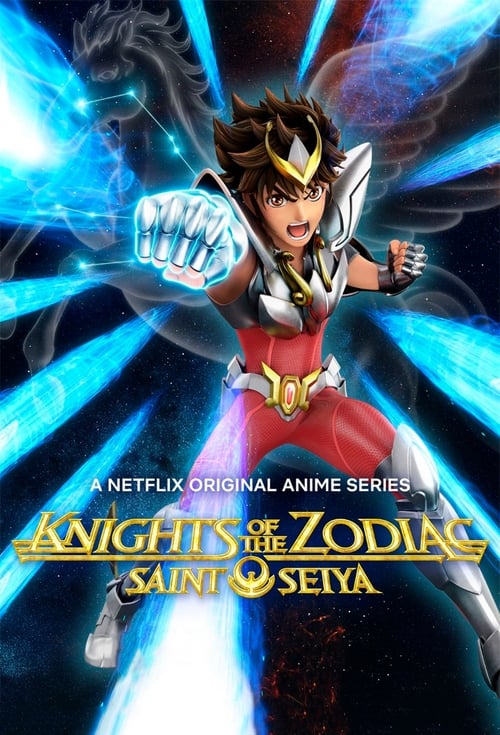
The story begins with a prologue that introduces the ancient conflict between the gods and the warriors known as the Saints, who protect the goddess Athena. The narrative shifts to the present day, where a young boy named Seiya is introduced. He is living in a world where he is unaware of his destiny. Seiya is searching for his sister, who was taken from him when they were children. His journey leads him to a mysterious organization that trains young fighters to become Saints.
Seiya is eventually recruited by the organization, where he learns about the existence of the Saints and their role in protecting humanity. He is given the Pegasus Cloth, a powerful armor that grants him incredible abilities. Seiya struggles to master his new powers while grappling with the memories of his sister and the trauma of their separation. His determination to find her drives him to train harder and push his limits.
As Seiya begins to understand the responsibilities of being a Saint, he meets other key characters, including Shiryu, Hyoga, and Shun, who also bear their own burdens and motivations. Each character has a unique backstory that reveals their reasons for fighting. Shiryu, the Dragon Saint, is motivated by a sense of justice; Hyoga, the Swan Saint, seeks to avenge his mother; and Shun, the Andromeda Saint, fights to protect his friends and loved ones.
The first major conflict arises when the Saints are summoned to protect Athena from the threat of the powerful god, Hades. Hades seeks to plunge the world into darkness and chaos. The Saints must confront Hades' minions, known as Specters, who are formidable foes with their own tragic backstories. The battles are intense, showcasing the unique abilities of each Saint as they fight to defend Athena and humanity.
During a climactic battle, Seiya faces off against one of Hades' strongest Specters, who reveals a connection to Seiya's past. This confrontation forces Seiya to confront his fears and insecurities, ultimately leading him to unlock a new level of power within himself. The emotional stakes are high as Seiya fights not only for his life but also for the chance to reunite with his sister.
As the story progresses, the Saints uncover a deeper conspiracy involving Hades and his plans for domination. They learn that Hades is not acting alone; he has allies among the gods who wish to see Athena defeated. This revelation complicates their mission and raises the stakes for the Saints, who must now contend with both divine and mortal threats.
The narrative builds towards a final confrontation between the Saints and Hades. The battle takes place in the Underworld, where the Saints must navigate treacherous terrain and face their greatest fears. Each character has a moment of personal growth, overcoming their past traumas and insecurities as they fight together against Hades' forces.
In the climax of the battle, Seiya confronts Hades directly. The fight is fierce, with both sides unleashing their full powers. Seiya's determination to protect his friends and find his sister fuels his strength. In a moment of desperation, he taps into the true potential of the Pegasus Cloth, allowing him to match Hades blow for blow.
As the battle reaches its peak, Seiya and his friends combine their powers in a final, desperate attack against Hades. The emotional weight of their journey culminates in this moment, as they fight not just for victory but for the bonds they have formed along the way. The attack succeeds, and Hades is defeated, but not without significant sacrifices.
In the aftermath of the battle, the Saints reflect on their journey and the losses they have endured. Seiya finally learns the truth about his sister's fate, which brings both closure and new challenges. The story ends with the Saints standing together, united in their purpose to protect Athena and the world from future threats, setting the stage for potential new adventures.







What is the ending?
In the ending of "SAINT SEIYA: Knights of the Zodiac," the battle against the forces of evil culminates in a climactic showdown. Seiya, the protagonist, faces off against the main antagonist, while the other Saints rally to support him. Ultimately, Seiya's determination and the bonds he has formed with his friends lead to a victory that restores peace. The series concludes with the Saints reflecting on their journey and the importance of friendship and sacrifice.
As the final battle approaches, the atmosphere is thick with tension. The sky is darkened by ominous clouds, and the air crackles with energy. Seiya, clad in his shining Pegasus armor, stands resolute at the forefront, his heart pounding with a mix of fear and determination. He knows that the fate of the world rests on his shoulders, and the memories of his friends and the sacrifices they have made fuel his resolve.
Scene breaks to the battlefield, where the other Saints--Shiryu, Hyoga, and Ikki--are engaged in fierce combat against the minions of the antagonist, who looms in the background, a figure of malevolence and power. Each Saint fights valiantly, showcasing their unique abilities and the strength of their bonds. Shiryu, with his Dragon armor, deflects attacks with precision, while Hyoga unleashes his ice powers to freeze enemies in their tracks. Ikki, the Phoenix, rises from the ashes of despair, embodying resilience as he takes on multiple foes.
As the battle rages on, Seiya confronts the main antagonist, who taunts him, revealing the depths of his darkness and the pain he has caused. Seiya's internal struggle is palpable; he grapples with feelings of inadequacy and the weight of his responsibility. Yet, he recalls the faces of his friends, their unwavering support, and the love they share. This memory ignites a fire within him, and he channels all his strength into a final attack.
In a breathtaking moment, Seiya unleashes the full power of the Pegasus constellation, a brilliant light illuminating the battlefield. The energy surges forth, clashing with the antagonist's dark forces in a spectacular explosion of light and shadow. The impact sends shockwaves through the area, and for a moment, time seems to stand still.
As the dust settles, the antagonist is defeated, his dark energy dissipating into the ether. Seiya, exhausted but triumphant, collapses to his knees, the weight of victory heavy upon him. His friends rush to his side, their expressions a mix of relief and joy. They embrace, tears of happiness streaming down their faces, celebrating their hard-fought victory.
In the aftermath, the world begins to heal. The skies clear, and a warm light bathes the landscape, symbolizing hope and renewal. The Saints gather together, reflecting on their journey. Each character shares a moment of introspection, acknowledging the sacrifices made and the bonds forged through their trials. Seiya, now more confident and self-assured, understands the true meaning of being a Saint--not just in strength, but in the connections they share.
As the series draws to a close, the camera pans out, showing the Saints standing together, united as guardians of peace. The final scene captures them looking towards the horizon, ready to face whatever challenges may come next, embodying the spirit of friendship, courage, and the eternal fight for justice. Each character's fate is intertwined with the others, their destinies forever linked by the battles they fought and the love they shared.
Is there a post-credit scene?
In the 2019 adaptation of SAINT SEIYA: Knights of the Zodiac, there is indeed a post-credit scene that adds an intriguing layer to the narrative.
As the credits roll, the screen fades to black before transitioning to a dimly lit chamber adorned with ancient symbols and artifacts. The atmosphere is thick with tension, and a sense of foreboding hangs in the air. The camera pans slowly, revealing a figure cloaked in shadows, their face obscured. This figure is revealed to be a mysterious character, hinting at a deeper connection to the overarching conflict faced by the Saints.
The cloaked figure speaks in a low, gravelly voice, expressing a desire to reclaim what was lost and to challenge the very fabric of the cosmos. Their words are laced with a sense of urgency and determination, suggesting that they possess knowledge of the Saints' struggles and the impending threats that loom over them.
As the figure raises their hand, a glowing emblem appears, pulsating with energy. This emblem is reminiscent of the Zodiac signs, but it has a darker, more sinister aura. The scene cuts to a close-up of the emblem, which seems to resonate with a power that could rival that of the Saints themselves.
The post-credit scene concludes with the figure stepping into the shadows, leaving viewers with a chilling sense of anticipation for what is to come. This moment not only teases future conflicts but also deepens the lore of the series, hinting at new adversaries and challenges that the protagonists will have to face in their quest to protect the Earth and the goddess Athena. The emotional weight of this scene lies in the uncertainty it creates, leaving fans eager for the next chapter in the saga of the Saints.
What are the motivations behind Seiya's quest to find his sister?
Seiya's quest to find his sister, Sienna, is driven by a deep sense of familial loyalty and love. He feels a profound responsibility to protect her, especially after learning that she is the reincarnation of the goddess Athena. This personal stake fuels his determination to become a Saint and fight against the forces that threaten her safety.
How does the relationship between Seiya and Shiryu evolve throughout the series?
Initially, Seiya and Shiryu have a competitive relationship, as both are strong warriors vying for their place among the Saints. However, as they face numerous battles together, their bond deepens into a strong friendship based on mutual respect and trust. They learn to rely on each other's strengths, and their camaraderie becomes a crucial element in their fight against evil.
What is the significance of the Gold Saints in the story?
The Gold Saints are pivotal characters in 'Knights of the Zodiac,' representing the highest echelon of warriors dedicated to Athena. Each Gold Saint embodies unique powers and virtues, and their involvement in the plot highlights the stakes of the battle against the forces of evil. Their motivations often intertwine with the main characters, as they grapple with their duties, personal sacrifices, and the overarching conflict between good and evil.
How does the character of Sienna/Athena develop throughout the series?
Sienna, as the reincarnation of Athena, undergoes significant character development throughout the series. Initially portrayed as a vulnerable figure needing protection, she gradually embraces her divine identity and responsibilities. Her journey reflects her struggle with the weight of her powers and the expectations placed upon her, ultimately leading her to become a more assertive and courageous leader in the fight against the antagonists.
What role does the antagonist, Saga, play in the conflict of the series?
Saga serves as a complex antagonist whose motivations are rooted in his desire for power and control. As a Gold Saint, he embodies both the light and dark aspects of his character, creating internal conflict that drives much of the plot. His actions set off a chain of events that challenge the protagonists, forcing them to confront not only external threats but also the moral dilemmas of loyalty and betrayal.
Is this family friendly?
"SAINT SEIYA: Knights of the Zodiac," produced in 2019, is generally considered family-friendly, but it does contain some elements that may be objectionable or upsetting for children or sensitive viewers. Here are a few aspects to consider:
-
Violence and Battles: The series features intense battles between the Saints and various enemies. While the violence is not graphic, there are scenes of combat that may be intense for younger viewers.
-
Death and Sacrifice: Themes of death and sacrifice are prevalent, as characters often face life-threatening situations. The emotional weight of losing friends or allies can be heavy.
-
Dark Themes: The narrative explores darker themes such as betrayal, revenge, and the struggle between good and evil, which may be complex for younger audiences to fully grasp.
-
Emotional Turmoil: Characters experience significant emotional struggles, including loss, anger, and despair, which may resonate deeply and could be upsetting for sensitive viewers.
-
Supernatural Elements: The presence of gods, mythical creatures, and supernatural powers may be frightening for some children, depending on their sensitivity to such themes.
Overall, while the series is designed for a broad audience, parents may want to preview episodes to determine their suitability for younger viewers.









