












Popular
Why does Seiya have to climb Sanctuary and defeat the Gold Knights in this season?
Which Gold Knights does Seiya face in the Twelve Houses, and what makes each battle different?
What is the deal with the arrow in Athena’s chest, and why can’t it just be pulled out?
Who is the Grand Master, and why is he so important in Battle for Sanctuary Part II?
Does everyone who enters Sanctuary make it to the summit?
Should I watch it?
Ask Your Own Question

What is the plot?
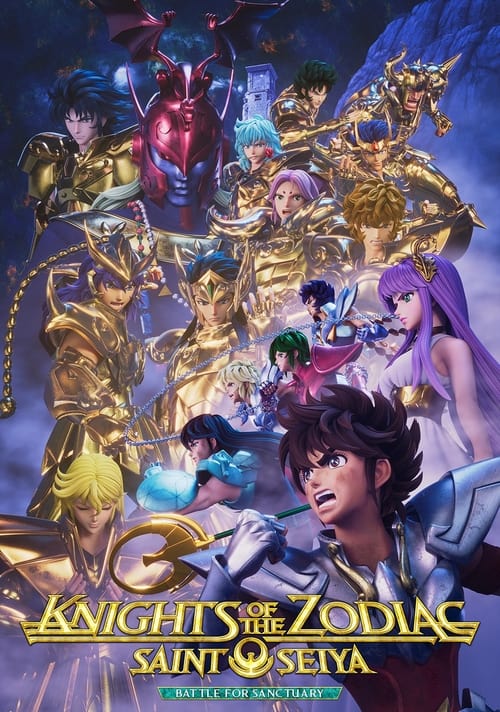
Seiya and the other Bronze Knights continue their assault on Sanctuary with only hours left before the god-killer arrow in Athena's chest becomes fatal, and every step they take is driven by the need to reach the Pope's chambers at the summit before time runs out. The remaining Sanctuary defenses are not merely physical obstacles but a sequence of final trials, and the story keeps returning to the same pressure point: each knight must decide whether to advance, delay an enemy, or sacrifice himself so the others can keep climbing.
As the fight through the Twelve Houses continues, the Bronze Knights are forced into separate battles against the Gold Knights guarding each temple, and the structure of the journey becomes increasingly brutal as each confrontation drains time, strength, and certainty. The central urgency is unchanged throughout these episodes: Athena is alive only because the arrow has not yet fully taken effect, and the only person who can save her is the Pope at the top of Sanctuary.
In the course of the ascent, the Bronze Knights repeatedly face enemies who are vastly stronger, and several battles hinge on split-second decisions to endure damage long enough for others to pass through the next gate. Rather than moving as a single unit, the heroes are broken apart by Sanctuary's design, so each encounter becomes a standalone clash in which a knight must choose between finishing an opponent or preserving his own energy for the next impossible stage.
The later stages of the climb intensify the emotional stakes because the prophecy hanging over Athena is still unresolved: if Seiya reaches the Pope and succeeds, he may save her life, but the implications of that success remain ominous because Athena is said to be born under a dark fate. That tension stays active as the Bronze Knights push forward, since victory could mean both salvation and the beginning of an even larger disaster.
By the time the survivors finally reach the upper reaches of Sanctuary, the story shifts from a series of temple battles into the final confrontation around the Pope's authority, where the hidden truth at the summit becomes the last major revelation of the arc. The shock at Sanctuary's peak is framed as the culmination of the entire climb, exposing that the leadership and power structure the heroes have been fighting toward is not what it seemed, and forcing the final decisions that determine whether Athena lives and what the future of the war will become.
The season ends with the Sanctuary crisis still defined by the Arrow of the God Killer, the Pope's role at the summit, and the consequences of the Bronze Knights' advance through the Twelve Houses, leaving the central question of Athena's fate tied directly to what was uncovered at the top.







What is the ending?
Seiya and the Bronze Knights fight their way to the top of Sanctuary to save Athena before the god-killer arrow takes her life. After the long climb and the battles with the Gold Knights, they finally reach the Pope's chamber, where the truth behind the Sanctuary conflict is revealed and the final struggle is decided.
The ending moves in a straight, urgent line. Athena is already dying from the arrow lodged in her chest, and Seiya keeps pushing upward with the other Bronze Knights because every hour matters. One by one, the fighters who stand in their way are forced to fight at the Twelve Houses, where the Gold Knights' power has already broken many of the team's momentum. By the time the surviving Bronze Knights reach the summit, the story narrows to the final confrontation at the top of Sanctuary, where the Pope is the only one positioned to stop Athena's death.
At the summit, the hidden truth of Sanctuary comes into view. The final chamber is not just a place of power, but the point where the conflict over Athena's fate, the Pope's authority, and the prophecy hanging over her life all come together. The season ends with the crisis resolved at the top of Sanctuary, after the Bronze Knights have fought through the Twelve Houses and reached the point where Athena's survival and the larger war are decided.
Seiya's fate is to survive the ascent and continue standing with Athena at the end of the Sanctuary ordeal. Athena's fate is the center of the ending: she is the one whose life is in immediate danger from the god-killer arrow, and the entire final stretch of the story is driven by the effort to save her. The Bronze Knights who make it through the houses reach the end of their climb and remain part of the final confrontation at the summit. The Gold Knights function as the final line of resistance along the way, each house acting as a barrier that must be overcome before the truth at the top can be reached.
Is there a post-credit scene?
I couldn't verify a post-credit scene for SAINT SEIYA: Knights of the Zodiac, season 3 ("Battle for Sanctuary Part II") from the available results. The sources confirm the season's 2024 release and episode count, but they do not mention any end-credit or post-credit material.
What the results do show is that the season runs for 12 episodes and continues the Sanctuary battle plot through June 11, 2024. The episode descriptions also emphasize the final confrontation with the Grand Master and the race against time to save Athena, but none of the retrieved sources describe an extra scene after the credits.
So, based on the information available here, there is no confirmed post-credit scene to describe.
Why does Seiya have to climb Sanctuary and defeat the Gold Knights in this season?
Seiya's urgent mission is to reach the top of Sanctuary and get to the Grand Master, because only he can save Athena from the god-killer arrow lodged in her chest. The story frames the climb as a race against time: Seiya and the Bronze Knights must pass through all Twelve Houses and defeat the Gold Knights guarding them before Athena dies.
Which Gold Knights does Seiya face in the Twelve Houses, and what makes each battle different?
The season centers on Seiya and the Bronze Knights fighting through Sanctuary's Twelve Houses, each one defended by a different Gold Knight. The battles are not presented as simple one-on-one clashes; each House is a separate obstacle with its own threat, forcing the Bronze Knights to adapt as they move upward toward the Grand Master's chambers.
What is the deal with the arrow in Athena’s chest, and why can’t it just be pulled out?
Athena is struck by a god-killer arrow that is killing her as time runs out. The story states that this is no ordinary arrow, and any attempt to remove it by force would destroy her immediately; only the Pope at the top of Sanctuary is said to be able to save her life.
Who is the Grand Master, and why is he so important in Battle for Sanctuary Part II?
The Grand Master sits at the summit of Sanctuary and is the only person who can save Athena from the arrow. That makes him the central target of Seiya's ascent: the entire journey through the Twelve Houses exists because the Bronze Knights must reach him before the arrow kills Athena.
Does everyone who enters Sanctuary make it to the summit?
No. The season makes clear that not everyone will complete the journey through the Twelve Houses and reach the top of Sanctuary. The ascent is designed as a brutal filter, and the story explicitly warns that only some of Seiya's allies will survive long enough to continue.
Is this family friendly?
Not fully family-friendly. It is often described as family-friendly in concept, but it still contains action-anime violence and some tense, potentially upsetting scenes, so it is better suited to older children or teens than very young kids.
Potentially objectionable or upsetting elements may include: - Frequent combat and fantasy violence involving armored warriors, magical attacks, and characters being thrown, struck, or seriously threatened. - Intense scenes that can feel threatening or suspenseful for sensitive viewers, even when explicit gore is limited. - Child endangerment / kidnapping-type peril is associated with the series' overall premise and has been noted by viewers as part of the tone. - Battle damage and emotional stakes that may be stressful for children who are sensitive to conflict or danger.
If you want, I can also give a kid-by-kid suitability guide like "safe for ages 7–9," "better for 10–12," or "teens only," based on the tone of the series.









