
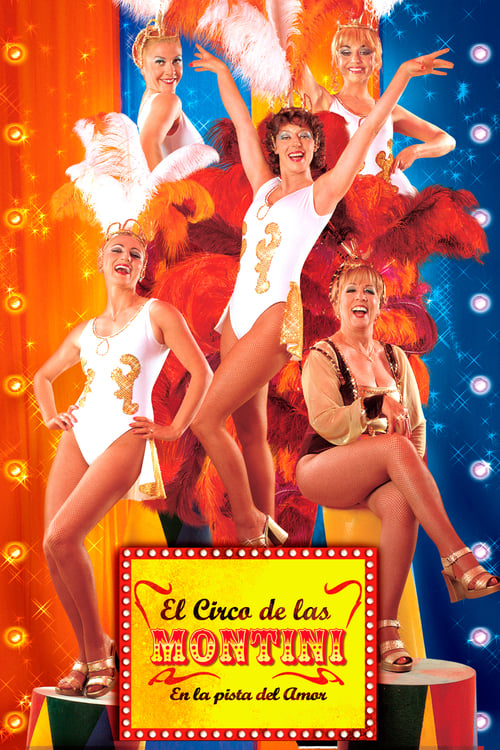



























Popular
What are the main conflicts faced by the Montini family throughout the series?
How does the character of Valentina evolve throughout the series?
What role does the rival circus play in the Montini family's story?
What are the key relationships that drive the plot in El circo de las Montini?
How does the circus itself serve as a character in the story?
Should I watch it?
Ask Your Own Question

What is the plot?
"El circo de las Montini" begins with the Montini family, a traveling circus troupe, setting up their colorful tents in a small town. The vibrant atmosphere is filled with excitement as the performers prepare for their show. The patriarch, Don Montini, is a charismatic leader who is deeply passionate about the circus and its legacy. His daughter, Valentina, is a talented acrobat, while his son, Marco, is a skilled clown who often feels overshadowed by his sister's talents.
As the circus opens its first show, the audience is captivated by the dazzling performances. Valentina performs a breathtaking aerial act, showcasing her grace and skill, while Marco entertains the crowd with his comedic antics. However, tensions arise when Don Montini reveals his plans to expand the circus, which requires significant financial investment. This decision creates friction within the family, particularly with Marco, who feels that his father's ambitions overshadow the true essence of their art.
In the following scenes, the Montini family faces various challenges. A rival circus, led by the ruthless and cunning Victor, arrives in town, threatening their livelihood. Victor attempts to sabotage the Montini circus by spreading rumors and trying to lure away their performers. The Montinis must band together to protect their circus and their family legacy. Valentina, feeling the pressure of her father's expectations, begins to doubt her abilities and contemplates leaving the circus to pursue a more stable life.
As the rivalry escalates, Marco discovers Victor's plan to undermine their performances. He decides to confront Victor, leading to a tense showdown between the two. During this confrontation, Marco's comedic persona is stripped away, revealing his determination to defend his family's honor. The fight is intense, with both men exchanging blows, but ultimately, Marco's quick thinking allows him to outsmart Victor, leading to a humiliating defeat for the rival circus leader.
Meanwhile, Valentina's internal struggle continues as she grapples with her identity and the pressure to succeed. She confides in her mother, who encourages her to embrace her passion for the circus. This heartfelt conversation reignites Valentina's spirit, and she resolves to reclaim her place in the spotlight. She begins to train harder, pushing herself to new limits in her acrobatic routines.
As the climax approaches, the Montini circus prepares for a grand performance that will determine their future. The stakes are high, as Victor has promised to sabotage their show. On the night of the performance, the atmosphere is electric with anticipation. The Montinis put on a spectacular show, showcasing their unique talents and the bond that holds them together as a family.
During the performance, Victor's plan unfolds as he attempts to disrupt the show by tampering with the equipment. However, Marco and Valentina work together to thwart his efforts. In a dramatic sequence, Valentina performs a daring stunt that not only impresses the audience but also serves as a distraction, allowing Marco to confront Victor once more. The confrontation is intense, with Marco using his wit and agility to outmaneuver Victor, ultimately leading to his capture by the authorities.
In the aftermath of the performance, the Montini family celebrates their victory. They realize that their strength lies not just in their individual talents but in their unity as a family. Valentina embraces her role as a leading performer, while Marco finds his niche as a vital part of the circus, no longer feeling overshadowed. The Montinis reaffirm their commitment to the circus and each other, ready to face whatever challenges may come their way in the future.
The series concludes with the Montini circus moving on to their next destination, filled with hope and determination. The final scene captures the vibrant colors of the circus as they pack up, the sounds of laughter and music echoing in the background, symbolizing the enduring spirit of the Montini family and their love for the circus.









What is the ending?
In the ending of "El circo de las Montini," the Montini family faces a series of challenges that culminate in a dramatic resolution. The circus, once a symbol of joy and unity, is threatened by external pressures and internal conflicts. Ultimately, the family comes together to confront their struggles, leading to a bittersweet conclusion where they reaffirm their bond and commitment to the circus, despite the uncertain future ahead.
As the final act unfolds, the Montini family is gathered in their makeshift circus tent, the atmosphere thick with tension and anticipation. The audience, a mix of loyal fans and curious newcomers, fills the seats, their murmurs creating a backdrop of excitement. The ringmaster, Alberto Montini, stands at the center, his face a mask of determination, yet his eyes betray a flicker of doubt. He knows that this performance could be their last, as financial troubles loom over the circus.
Scene breaks reveal the emotional turmoil within the family. Alberto's wife, Isabella, is backstage, her hands trembling as she adjusts her costume. She feels the weight of the circus's legacy on her shoulders, worried about what will happen if they fail. Their daughter, Valentina, is also backstage, her youthful spirit dimmed by the reality of their situation. She clutches her juggling balls, her mind racing with thoughts of the future and the possibility of leaving the only life she has ever known.
As the show begins, the performers take to the ring, each act filled with a mix of joy and desperation. The acrobats soar through the air, their movements graceful yet tinged with urgency. The clowns bring laughter, but their smiles hide the pain of uncertainty. The audience is captivated, but the Montini family knows that the applause may not be enough to save them.
In a pivotal moment, Alberto steps forward to address the audience, his voice steady but filled with emotion. He shares the history of the Montini circus, recounting the struggles and triumphs that have defined their journey. The audience listens intently, and for a moment, the bond between the performers and the spectators feels palpable. This moment of vulnerability brings a renewed sense of hope to the Montini family.
As the final act approaches, Isabella takes center stage, performing a breathtaking aerial routine that showcases her strength and grace. The audience is mesmerized, and for a brief moment, the circus feels alive again. However, as she descends, a miscalculation leads to a near-fall, causing gasps from the crowd. The tension is palpable, but Isabella regains her composure, finishing the act with a flourish. The audience erupts in applause, but the Montini family knows that this moment of triumph is fleeting.
In the closing scenes, the family gathers backstage, their faces reflecting a mix of relief and uncertainty. They embrace, reaffirming their commitment to one another and to the circus. Alberto, though aware of the challenges ahead, expresses his belief that as long as they have each other, they can face anything. Isabella nods, her eyes glistening with tears, while Valentina, inspired by her parents' resilience, vows to continue the legacy of the Montini circus.
As the final credits roll, the circus tent stands illuminated against the night sky, a symbol of hope and perseverance. The Montini family may not know what the future holds, but they are united in their love for each other and their passion for the circus, ready to face whatever comes next together.
Is there a post-credit scene?
"El circo de las Montini," produced in 2002, does not feature a post-credit scene. The show concludes its episodes without any additional content after the credits roll. The focus remains on the narrative and character development throughout the episodes, leaving no room for post-credit sequences. The series wraps up its storylines within the main episodes, emphasizing the emotional arcs and relationships of the characters involved in the circus life.
What are the main conflicts faced by the Montini family throughout the series?
The Montini family faces numerous conflicts throughout the series, primarily revolving around their struggle to keep the circus operational amidst financial difficulties and competition from rival circuses. The patriarch, Don Montini, is often torn between his dedication to the circus and the well-being of his family, leading to tensions with his wife and children. Additionally, personal conflicts arise as the younger generation seeks to carve out their own identities, often clashing with traditional family values.
How does the character of Valentina evolve throughout the series?
Valentina, the daughter of Don Montini, begins as a naive and sheltered young woman, deeply devoted to the circus and her family. As the series progresses, she experiences significant growth, facing challenges that force her to confront her own desires and ambitions. Her journey includes moments of rebellion against her father's expectations, romantic entanglements that complicate her loyalty to the circus, and ultimately, a realization of her own strength and independence.
What role does the rival circus play in the Montini family's story?
The rival circus, led by the cunning and charismatic rival, serves as a constant threat to the Montini family's livelihood. This competition not only heightens the stakes for the Montini circus but also brings out the best and worst in the characters. The rivalry leads to various confrontations, schemes, and even alliances, forcing the Montinis to unite and innovate in order to survive. The presence of the rival circus also acts as a catalyst for character development, particularly for Don Montini, who must confront his fears and insecurities.
What are the key relationships that drive the plot in El circo de las Montini?
Key relationships that drive the plot include the dynamic between Don Montini and his wife, who often disagrees on how to manage the circus and their family. Their differing views create tension and emotional turmoil. Additionally, the sibling rivalry between Valentina and her brother, who feels overshadowed by her, adds layers to their character arcs. Romantic relationships, particularly Valentina's love interests, also play a crucial role in shaping the narrative, influencing her decisions and her relationship with her family.
How does the circus itself serve as a character in the story?
The circus in El circo de las Montini is portrayed almost as a living entity, embodying the hopes, dreams, and struggles of the Montini family. It serves as a backdrop for their triumphs and failures, reflecting their emotional states and the challenges they face. The vibrant performances, the colorful costumes, and the chaotic yet magical atmosphere of the circus highlight the family's passion and dedication, while also symbolizing the fragility of their existence. The circus becomes a source of both joy and conflict, representing the family's legacy and the weight of their responsibilities.
Is this family friendly?
"El circo de las Montini," produced in 2002, is a family-oriented show that revolves around the adventures and challenges faced by a circus family. While it is generally suitable for children, there are a few aspects that might be considered objectionable or upsetting for sensitive viewers:
-
Family Conflicts: The show features moments of tension and conflict within the Montini family, which may evoke feelings of sadness or discomfort, especially for younger viewers who are sensitive to familial strife.
-
Circus Performances: Some circus acts may include elements of danger or risk, such as acrobatics or animal performances, which could be alarming for children who are particularly sensitive to themes of peril.
-
Emotional Struggles: Characters experience emotional challenges, including feelings of inadequacy, fear of failure, and the pressure to succeed, which may resonate deeply with some viewers and could be upsetting.
-
Loss and Sacrifice: Themes of loss, whether it be the loss of a loved one or the sacrifice of personal dreams for the sake of family, are explored, which might be heavy for younger audiences.
-
Social Issues: The show touches on social themes such as acceptance and the struggle for identity, which may prompt discussions that could be complex for younger viewers to fully grasp.
Overall, while "El circo de las Montini" is designed to entertain and inspire, these elements may require parental guidance for younger or more sensitive viewers.