























Popular
What is the significance of the character K in the story?
How does Soo-yeol's relationship with his partner evolve throughout the series?
What role does the antagonist play in Soo-yeol's journey?
How does the theme of duality manifest in Soo-yeol's character?
What are the key turning points in Soo-yeol's character arc?
Should I watch it?
Ask Your Own Question

What is the plot?
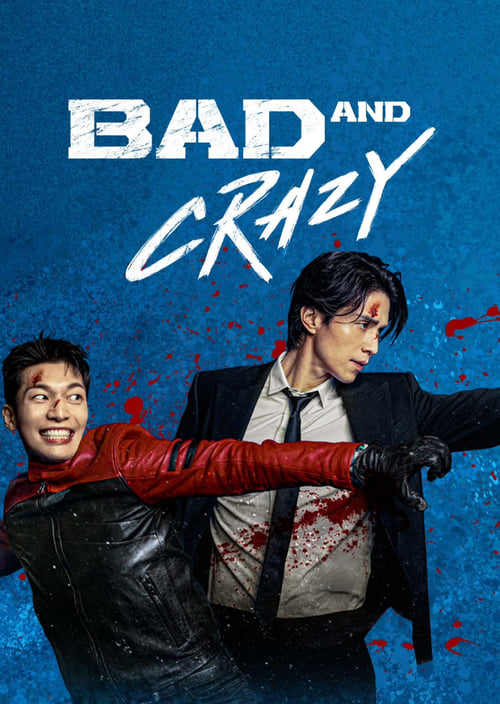
The story begins with a chaotic scene where police officer Soo-yeol, played by Lee Dong-wook, is seen struggling with his life. He is a detective who is more interested in personal gain than justice. He is often seen drinking and indulging in a hedonistic lifestyle, which leads to a series of poor decisions. One night, after a drunken escapade, he wakes up to find himself in a strange situation, realizing he has lost his badge and is in a compromising position.
As the narrative unfolds, Soo-yeol encounters a mysterious and eccentric character named K, portrayed by Wi Ha-joon. K is a manifestation of Soo-yeol's subconscious, representing his moral compass and the part of him that desires to do good. K appears at the most unexpected moments, often interrupting Soo-yeol's plans and pushing him to confront his own shortcomings. Their interactions are filled with humor and tension, as K challenges Soo-yeol to take responsibility for his actions.
The plot thickens when Soo-yeol is assigned to investigate a series of bizarre and violent crimes linked to a powerful corporation. As he delves deeper into the case, he discovers a web of corruption that involves high-ranking officials and criminal organizations. The stakes rise when Soo-yeol realizes that K is not just a figment of his imagination but is somehow connected to the case, leading him to question his own sanity.
In a pivotal scene, Soo-yeol and K confront a group of thugs working for the corporation. The confrontation escalates into a physical fight, showcasing Soo-yeol's struggle to balance his instincts with K's guidance. K's unpredictable nature leads to a series of comedic yet intense moments, as he encourages Soo-yeol to fight back and stand up for what is right. The fight ends with Soo-yeol gaining a newfound sense of confidence, but he is still haunted by his past decisions.
As the investigation progresses, Soo-yeol uncovers evidence that implicates his own superiors in the corruption. This revelation puts him in a precarious position, as he must decide whether to expose the truth or protect his career. K's influence grows stronger, pushing Soo-yeol to confront his fears and take a stand against the corruption that has plagued the police force.
In a dramatic twist, Soo-yeol's personal life begins to unravel as his relationships suffer due to his obsession with the case. His girlfriend, who has been supportive, starts to feel neglected and questions his priorities. This emotional turmoil adds depth to Soo-yeol's character, as he grapples with the consequences of his choices.
The climax of the story occurs when Soo-yeol and K infiltrate a high-stakes meeting between the corrupt officials and the criminal organization. Tension fills the air as they gather crucial evidence to expose the conspiracy. However, their plan goes awry when they are discovered, leading to a thrilling chase sequence. Soo-yeol and K must work together to escape, showcasing their evolving partnership and the growth of Soo-yeol's character.
In the final confrontation, Soo-yeol faces off against the main antagonist, a powerful figure within the corporation. The battle is intense, filled with emotional stakes as Soo-yeol fights not only for justice but also for his own redemption. K's presence is pivotal, providing encouragement and guidance during the fight. Ultimately, Soo-yeol manages to defeat the antagonist, but not without significant personal sacrifice.
The story concludes with Soo-yeol coming to terms with his past and the choices he has made. He decides to leave the police force, realizing that he needs to find a new path in life. K, having fulfilled his purpose, begins to fade away, leaving Soo-yeol with a sense of hope and determination to become a better person. The final scenes depict Soo-yeol embarking on a new journey, symbolizing his growth and the lessons learned throughout the tumultuous events.








What is the ending?
In the ending of "Bad and Crazy," the protagonist, Soo-yeol, confronts his inner demons and the antagonist, K, leading to a climactic showdown. The series concludes with Soo-yeol embracing his true self, while K's fate is sealed, and the story wraps up with a sense of resolution for the characters.
As the final episodes unfold, we find Soo-yeol, a detective plagued by his own moral dilemmas and the chaotic presence of K, who represents his alter ego. The tension escalates as Soo-yeol grapples with the consequences of his actions and the corruption surrounding him.
In a pivotal scene, Soo-yeol faces off against K in a deserted warehouse, the atmosphere thick with tension. The dim lighting casts long shadows, emphasizing the internal struggle within Soo-yeol. K, with his wild demeanor and reckless abandon, taunts Soo-yeol, pushing him to confront the darker aspects of his personality. The dialogue is charged, revealing Soo-yeol's fear of losing control and his desire to be a better person.
As the confrontation intensifies, Soo-yeol's emotional state shifts from fear to determination. He realizes that he must accept K as a part of himself rather than fight against it. This acceptance is visually represented as Soo-yeol stands tall, the shadows of doubt receding as he embraces his complexities. The fight that ensues is not just physical but symbolic, showcasing Soo-yeol's battle against his own insecurities and the corruption that has plagued his life.
In the climax, Soo-yeol manages to subdue K, but not without a struggle. The scene is visceral, with the sounds of their struggle echoing in the empty space, punctuated by the heavy breathing of both characters. As K is finally restrained, he delivers a final, haunting laugh, hinting at the chaos that will always linger within Soo-yeol.
Following this confrontation, the narrative shifts to the aftermath. Soo-yeol, now more self-aware, takes steps to rectify the wrongs in his life. He reaches out to his colleagues, seeking to rebuild trust and integrity within the police force. The emotional weight of his journey is palpable as he reflects on his past mistakes, the camera lingering on his face, capturing the mix of regret and hope.
In the final scenes, we see Soo-yeol visiting the graves of those affected by his actions, a poignant moment that underscores his commitment to change. The camera pans out, showing him standing alone, yet resolute, symbolizing his acceptance of both the good and bad within himself.
As for the fate of the other main characters, we see Soo-yeol's partner, who has been a source of support throughout the series, finally acknowledging his growth. They share a moment of understanding, hinting at a renewed partnership built on trust. The series closes with a sense of hope, as Soo-yeol walks away from the graveyard, ready to face the future with a clearer sense of purpose, leaving behind the chaos that once defined him.
Is there a post-credit scene?
In the 2021 series "Bad and Crazy," there is indeed a post-credit scene that adds an intriguing layer to the story.
As the credits roll, the scene opens with a dimly lit room where a figure is seen sitting at a desk, shrouded in shadows. The atmosphere is tense, and the sound of a clock ticking fills the silence, amplifying the suspense. The camera slowly zooms in, revealing the character of K, played by Lee Dong-wook, who appears contemplative and somewhat troubled.
K is flipping through a file filled with photographs and documents related to the various cases he has encountered throughout the series. His expression shifts from one of focus to a deep-seated frustration as he recalls the chaotic events and the challenges he faced, particularly with his alter ego, the unpredictable and boisterous character of Ryu, portrayed by Wi Ha-joon.
Suddenly, the door creaks open, and Ryu bursts into the room, full of energy and mischief. He exclaims something humorous, attempting to lighten the mood, but K's serious demeanor contrasts sharply with Ryu's antics. This moment highlights the duality of their relationship--K's struggle with his responsibilities and Ryu's carefree, reckless nature.
As they engage in a brief, playful banter, the scene shifts to a more serious tone when K receives a mysterious phone call. The caller's identity is obscured, but the conversation hints at unresolved issues and potential new threats that could arise in the future. K's expression hardens as he listens, indicating that the battle is far from over.
The scene concludes with K hanging up the phone, looking at Ryu with a mix of determination and concern. Ryu, oblivious to the gravity of the situation, continues to joke around, leaving viewers with a sense of anticipation for what lies ahead. The post-credit scene effectively sets the stage for potential future developments, teasing the ongoing conflict and the complex dynamics between the characters.
What is the significance of the character K in the story?
K is a pivotal character in 'Bad and Crazy,' representing the inner conflict of the protagonist, Soo-yeol. He embodies Soo-yeol's suppressed emotions and moral dilemmas, often appearing at critical moments to challenge Soo-yeol's decisions. K's presence forces Soo-yeol to confront his own shortcomings and the consequences of his actions, making him a crucial element in Soo-yeol's character development.
How does Soo-yeol's relationship with his partner evolve throughout the series?
Soo-yeol's relationship with his partner, Detective Oh, begins with tension and distrust due to Soo-yeol's reckless behavior and K's influence. As the series progresses, they face various challenges together, leading to a deeper understanding and camaraderie. Oh's unwavering support helps Soo-yeol confront his inner demons, ultimately strengthening their bond and teamwork.
What role does the antagonist play in Soo-yeol's journey?
The antagonist in 'Bad and Crazy' serves as a catalyst for Soo-yeol's transformation. Their confrontations reveal the darker aspects of Soo-yeol's character and the corruption within the police force. The antagonist's actions force Soo-yeol to make difficult choices, pushing him to embrace his moral compass and fight against the injustices he once ignored.
How does the theme of duality manifest in Soo-yeol's character?
Soo-yeol's character embodies duality through his interactions with K, who represents his repressed desires and moral conflicts. This internal struggle is visually depicted through their contrasting behaviors--Soo-yeol's often cynical and self-serving nature versus K's idealistic and impulsive tendencies. This duality drives the narrative, as Soo-yeol grapples with his identity and the choices he must make.
What are the key turning points in Soo-yeol's character arc?
Key turning points in Soo-yeol's character arc include his initial encounters with K, which force him to confront his flaws, and the moment he decides to stand up against corruption within the police force. Another significant moment is when he chooses to protect his partner and the innocent, marking a shift from self-interest to a commitment to justice. These moments are crucial in illustrating his growth and the internal battle he faces.
Is this family friendly?
"Bad and Crazy," produced in 2021, contains several elements that may not be suitable for children or sensitive viewers. Here are some potentially objectionable aspects:
-
Violence: The show features various scenes of physical confrontations, including fights and action sequences that may be intense or graphic.
-
Mental Health Themes: The portrayal of mental health issues, particularly the character of K, who represents a split personality, may be distressing for some viewers. The depiction of psychological struggles can be intense and may evoke strong emotions.
-
Crime and Corruption: The narrative revolves around crime, police corruption, and moral ambiguity, which may be unsettling for younger audiences.
-
Language: There are instances of strong language and adult themes that may not be appropriate for children.
-
Dark Humor: The show employs dark humor that may not resonate well with all viewers, particularly younger ones.
-
Emotional Turmoil: Characters experience significant emotional distress, betrayal, and moral dilemmas, which could be upsetting for sensitive viewers.
These elements contribute to a tone that may be more suitable for mature audiences rather than a family-friendly viewing experience.