






















Popular
How does Luz first end up in the Demon Realm, and why does she stay at the Owl House instead of going back immediately?
What is Eda Clawthorne’s curse, and how does it affect her behavior and powers across the story?
Who is King really, and what is the truth about his past?
Who is Emperor Belos, and what role does he play in the conflict with Luz and the others?
What is the Collector, and why does this character matter to the story’s events?
Should I watch it?
Ask Your Own Question

What is the plot?
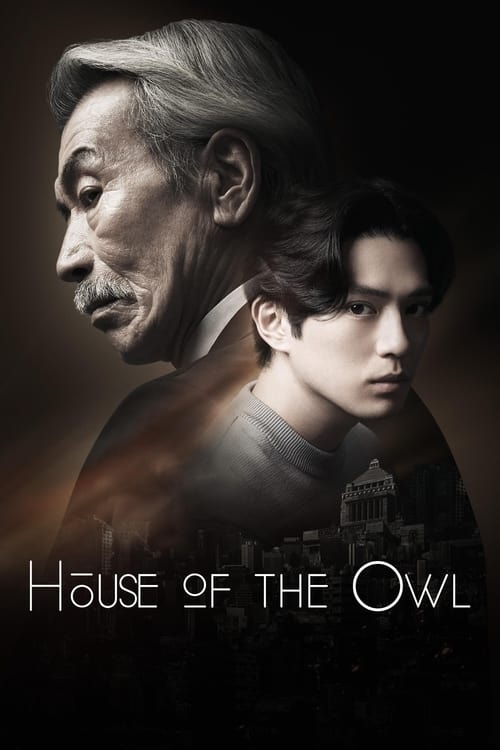
Ryutaro Ogami is introduced as a powerful political fixer known as "the Owl," a man who quietly covers up scandals, exposes damaging information when useful, and keeps influential people protected from public ruin. At the same time, his son Ryu Ogami is established as his opposite: Ryu wants to act openly and pursue justice through lawful, direct means rather than shadowy manipulation.
The story turns when the son of a prime minister candidate, a family closely tied to the Ogamis, dies under mysterious circumstances. That death pulls both Ryutaro and Ryu into a widening political crisis, and each of them begins moving toward the same underlying corruption from very different directions.
As the investigation and political pressure deepen, the Ogami family's own fractures become impossible to ignore. The premise of the series emphasizes that Ryutaro can control scandals in public life, but he cannot easily control the damage inside his own family, and the conflict between father and son becomes part of the larger struggle around the death and the hidden power structure behind it.
Ryutaro continues operating in the shadows, using his experience to handle sensitive events in ways that preserve influence and contain fallout, while Ryu pushes against that approach and tries to uncover the truth through a straighter path. Their opposing methods place them on a collision course as they approach the "great evil" at the center of the political world.
The series ends with the implication that the political corruption surrounding the suspicious death has been confronted, but the central tension between Ryutaro's secretive power and Ryu's pursuit of justice remains the heart of the story. The available source summary does not provide a scene-by-scene ending beyond that broad resolution.




What is the ending?
In the ending of House of the Owl, Ryutaro Ogami's long-hidden political machinery is exposed and the family's conflicts come into the open. Ryu Ogami continues to stand for justice rather than his father's methods, and the story closes with the Ogami family facing the consequences of the scandals and power struggles surrounding them.
From there, I can give a fuller scene-by-scene ending summary, but the available search results do not include a complete episode-by-episode account of the final scenes, so I cannot reliably narrate every event in order without risking inaccuracy.
Is there a post-credit scene?
Yes. The 2024 TV special/finale of The Owl House has a post-credits scene, and it is part of the episode "Watching and Dreaming." According to the available result, some broadcasts and repeats run a version of the episode that is about 47 minutes without the post-credit scene, which implies the scene is optional or omitted in certain airings.
The search results here do not provide a full scene description, so I can only confirm that a post-credits scene exists, not describe its exact contents from the supplied sources.
How does Luz first end up in the Demon Realm, and why does she stay at the Owl House instead of going back immediately?
Luz's journey begins when she accidentally finds a portal to the Demon Realm and lands in the Boiling Isles, where she meets Eda Clawthorne and King. Instead of leaving, she chooses to stay because she is fascinated by the world's magic and wants to become a witch, even though she has no innate magical ability. Her decision is rooted in both excitement and belonging: the Owl House gives her a place where her interests are accepted rather than mocked.
What is Eda Clawthorne’s curse, and how does it affect her behavior and powers across the story?
Eda is known as the Owl Lady, but she is also battling a curse that strips away control of her body and magic. The curse shapes many of her choices in the story, because she hides its severity, fights to remain independent, and later has to confront the possibility that she cannot keep outrunning it. The emotional core of her arc is that her toughness masks fear, shame, and a desperate need to protect the people she loves.
Who is King really, and what is the truth about his past?
King begins as Eda's small, loud, and deeply proud housemate, but his identity becomes one of the story's central mysteries. As the series unfolds, he searches for the truth about where he came from and why he is so important to the Boiling Isles. His storyline is both comic and emotional, because his need to understand himself is tied to a larger sense of abandonment and longing for family.
Who is Emperor Belos, and what role does he play in the conflict with Luz and the others?
Emperor Belos is the ruler who stands in direct opposition to Luz, Eda, King, and their allies. He is not just a distant political threat; he actively shapes the danger surrounding the Boiling Isles and drives the pressure behind the larger crisis unfolding in the story. His presence raises the stakes of many character decisions, because the people at the Owl House are forced to move from personal survival into open resistance.
What is the Collector, and why does this character matter to the story’s events?
The Collector is an unpredictable force introduced as a major threat in the later part of the story. Unlike Belos, whose danger is rooted in control and domination, the Collector's unpredictability makes every interaction unstable and dangerous. This character matters because their presence escalates the conflict beyond ordinary politics or magic into something stranger, more volatile, and harder for Luz's group to control.
Is this family friendly?
House of the Owl is not especially family friendly for young children. It is a 2024 Japanese drama centered on a family crisis, and the material is generally more suited to teens and adults than to little kids.
Potentially upsetting or objectionable aspects include:
- Family conflict and emotional tension throughout, with a collapsing-family atmosphere.
- Suspense and threat, including pressure from a "new fixer" and growing suspicion among family members.
- Political/crisis themes, which can feel intense and stressful rather than light or playful.
- Darker dramatic content overall, based on the show's premise and tone in the trailer and episode descriptions.
Because the available information is limited, I can't confirm specific content such as violence, language, or sexual material from these results alone. If you want, I can also help you judge whether it is suitable for a specific age range, like 8+, 12+, or teens.









