



































































Popular
What motivates Zohan to leave his life as an Israeli soldier?
How does Zohan's relationship with his boss, Michael, develop throughout the film?
What role does the character Dalia play in Zohan's life and how does their relationship progress?
What are some of the comedic situations Zohan finds himself in while trying to adapt to life in America?
How does Zohan's past as a soldier come back to affect his new life in America?
Should I watch it?
Ask Your Own Question

What is the plot?
Sorry, we aren't able to watch and write up a full detailed plot yet. Check back in a few days.


What is the ending?
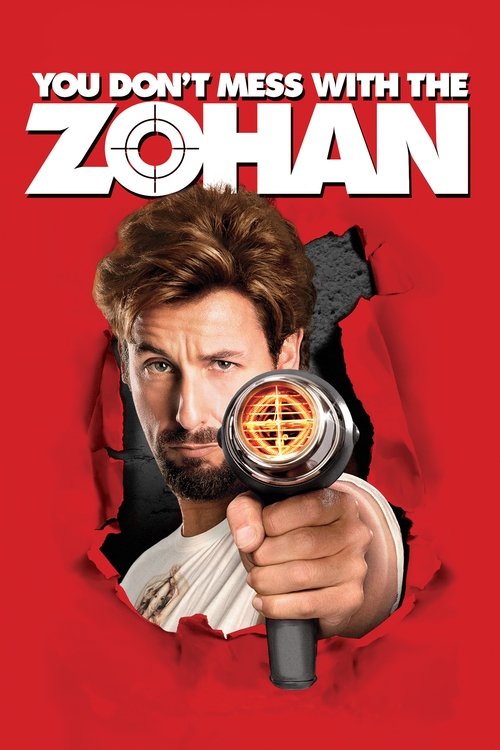
In the ending of "You Don't Mess with the Zohan," Zohan, having successfully thwarted the plans of the villainous Phantom, finds peace in his new life as a hairdresser in New York City. He reconciles with his past and embraces his new identity, while the conflict between Israelis and Palestinians is humorously resolved. The film concludes with Zohan and his friends celebrating their differences and newfound friendships.
Now, let's delve into the ending in a more detailed, chronological narrative.
As the climax of the film unfolds, Zohan, played by Adam Sandler, faces off against the Phantom, portrayed by John Turturro. The scene is set in a chaotic environment, filled with tension as Zohan's past as an Israeli super-soldier collides with his desire for a peaceful life. The Phantom, who has been a persistent threat throughout the film, is determined to eliminate Zohan, believing him to be a significant obstacle to his plans.
In a dramatic confrontation, Zohan and the Phantom engage in a fierce battle. The setting is a dilapidated building, filled with debris and remnants of their respective cultures. The fight is both physical and symbolic, representing the larger conflict between their peoples. Zohan, fueled by his desire to protect his new life and friends, showcases his incredible agility and strength, but also his newfound understanding of peace and cooperation.
As the fight escalates, Zohan manages to outsmart the Phantom, using his wit and charm to turn the tables. In a moment of clarity, Zohan realizes that violence is not the answer. Instead of delivering a final blow, he offers the Phantom a chance to change, suggesting that they can work together for a better future. This pivotal moment highlights Zohan's transformation from a soldier to a peacemaker.
The Phantom, taken aback by Zohan's unexpected offer, hesitates. This moment of vulnerability allows Zohan to extend a hand of friendship, symbolizing the possibility of reconciliation between their cultures. The tension dissipates, and the two men find common ground, leading to a humorous yet heartfelt resolution.
Following this confrontation, the film shifts to a celebratory atmosphere. Zohan returns to his new life as a hairdresser in New York City, where he has built a community of friends from diverse backgrounds. The salon, once a place of tension, now thrives as a hub of unity and acceptance. Zohan's character embodies the idea that personal transformation can lead to broader societal change.
In the final scenes, Zohan is seen happily working in the salon, surrounded by his friends, including his love interest, a fellow hairdresser named Dalia, played by Emmanuelle Chriqui. Their relationship has blossomed, symbolizing the merging of cultures and the breaking down of barriers. Zohan's journey from a soldier to a hairdresser is complete, and he embraces his new identity with joy and fulfillment.
The film concludes with a montage of Zohan and his friends celebrating their differences, dancing, and enjoying life together. The final message is clear: despite their past conflicts, people can come together, find common ground, and celebrate their shared humanity. Each character, including Zohan, Dalia, and even the Phantom, has undergone significant growth, illustrating the film's overarching theme of peace and acceptance.
Is there a post-credit scene?
Yes, "You Don't Mess with the Zohan" features a post-credit scene.
As the credits roll, the scene opens with Zohan, played by Adam Sandler, who is now living a new life in New York City as a hairdresser. He is seen working in a salon, showcasing his unique and flamboyant style. The camera pans to reveal that he is still using his extraordinary skills, not just in hairstyling but also in entertaining his clients with his charm and charisma.
In this light-hearted moment, Zohan is approached by a group of men who are interested in getting their hair done. They are initially skeptical of his unconventional methods, but Zohan's confidence and flair quickly win them over. He engages them in playful banter, demonstrating his ability to connect with people from all walks of life, regardless of their background.
The scene captures Zohan's transformation from a soldier to a peaceful hairdresser, emphasizing his desire to leave behind the violence of his past. It highlights his internal motivation to embrace a new identity and find happiness in a more peaceful profession. The humor remains intact, as Zohan's over-the-top personality shines through, leaving the audience with a sense of joy and laughter as the film concludes.
This post-credit scene reinforces the film's themes of acceptance, transformation, and the pursuit of one's true passion, all while maintaining the comedic tone that characterizes the movie.
What motivates Zohan to leave his life as an Israeli soldier?
Zohan Dvir, played by Adam Sandler, is motivated to leave his life as an Israeli soldier due to his desire to pursue a career as a hairstylist in America. He is tired of the constant fighting and violence, and dreams of a more peaceful and fulfilling life where he can express his creativity and passion for hairdressing.
How does Zohan's relationship with his boss, Michael, develop throughout the film?
Zohan's relationship with Michael, played by Nick Swardson, evolves from one of initial admiration to a more complex dynamic. Michael is initially in awe of Zohan's skills and charisma, but as Zohan's unconventional methods and over-the-top personality begin to overshadow the salon's operations, Michael feels threatened and struggles with his own insecurities as a hairstylist.
What role does the character Dalia play in Zohan's life and how does their relationship progress?
Dalia, portrayed by Emmanuelle Chriqui, plays a significant role in Zohan's life as both a love interest and a source of emotional conflict. Initially, Zohan is infatuated with her beauty and charm, but as their relationship develops, he finds himself genuinely caring for her. Dalia, who is unaware of Zohan's true identity as a former soldier, becomes a catalyst for Zohan's transformation and desire to leave his violent past behind.
What are some of the comedic situations Zohan finds himself in while trying to adapt to life in America?
Zohan encounters numerous comedic situations as he tries to adapt to life in America, such as his over-the-top attempts to impress clients at the hair salon, his misunderstanding of American culture, and his outrageous methods of hairstyling that often lead to chaos. For instance, he uses his combat skills to fend off aggressive customers and employs absurd techniques that baffle his coworkers, showcasing his larger-than-life personality.
How does Zohan's past as a soldier come back to affect his new life in America?
Zohan's past as a soldier resurfaces when he is pursued by his former nemesis, the Palestinian terrorist Phantom, played by John Turturro. Phantom's obsession with Zohan leads to a series of confrontations that threaten Zohan's new life and relationships. This conflict forces Zohan to confront his past and ultimately choose between his old identity and the new life he has built in America.
Is this family friendly?
"You Don't Mess with the Zohan" is a comedy that contains several elements that may not be suitable for children or sensitive viewers. Here are some potentially objectionable aspects:
-
Sexual Content: The film features numerous sexual innuendos, suggestive situations, and explicit discussions about sex. There are scenes that depict sexual encounters and nudity, which may be inappropriate for younger audiences.
-
Violence: While the film is a comedy, it includes exaggerated violence typical of action films, such as fight scenes and physical confrontations. The violence is often played for laughs but may still be unsettling for some viewers.
-
Language: The dialogue includes strong language and profanity, which may not be suitable for children.
-
Cultural Stereotypes: The film portrays various cultural stereotypes, particularly regarding Middle Eastern characters and Jewish culture, which could be considered offensive or insensitive.
-
Drug Use: There are references to drug use, including scenes that depict characters using substances in a comedic context.
-
Adult Themes: The film explores themes of identity, desire, and personal freedom, which may be complex for younger viewers to understand.
Overall, while the film is intended as a comedy, its content may not be appropriate for all audiences, particularly children or those who are sensitive to explicit material.








