


Popular
What is the significance of Michael's character in 'The Prodigal'?
How does the episode explore the relationship between John Sheppard and Michael?
What role does the city of Atlantis play in Michael's plan?
How does the episode depict the theme of redemption through Michael's actions?
What emotional impact does the confrontation between Michael and the Atlantis team have?
Should I watch it?
Ask Your Own Question

What is the plot?
The episode "The Prodigal" begins with a flashback to a young Michael, a Wraith-human hybrid, being raised in a lab by the Wraith. He is shown struggling with his identity and the experiments being conducted on him. The scene shifts to the present, where the Atlantis team is alerted to a distress signal coming from Michael's old lab on a distant planet. They decide to investigate, suspecting that Michael may be involved.
Sheppard, McKay, and Teyla lead the mission to the planet, where they find the lab abandoned but still operational. They discover evidence that Michael has been experimenting on humans, trying to create a new hybrid race. As they explore the lab, they find a group of humans who have been captured and are being held in stasis. The team realizes they must act quickly to rescue them.
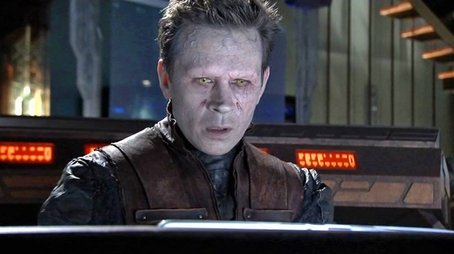
Meanwhile, Michael is shown in his own lair, where he is plotting his next move. He is determined to prove that he can create a new race of hybrids that will be superior to both Wraith and humans. He is emotionally conflicted, feeling both a sense of betrayal from the Wraith and a desire to belong. His motivations are driven by a need for acceptance and power.
Back at the lab, the Atlantis team encounters a group of Michael's Wraith allies. A confrontation ensues, and a firefight breaks out. Sheppard and his team engage in a tactical battle, using their training and technology to fight off the Wraith. McKay works to disable the stasis pods while Teyla provides cover. The tension escalates as they realize they are outnumbered.
As the battle rages on, Michael arrives on the scene, revealing himself to the team. He confronts Sheppard, expressing his disdain for the way he has been treated by both Wraith and humans. Michael's emotional turmoil is evident as he tries to justify his actions and his desire for revenge. He believes that by creating hybrids, he can forge a new path for himself and others like him.
The team manages to free the captured humans, but Michael uses his powers to manipulate the situation. He attempts to convince the freed humans to join him, promising them a place in his new world. The humans are torn, caught between their fear of Michael and their desire for survival. This moment highlights Michael's internal struggle as he tries to assert his identity and purpose.
In a climactic moment, Sheppard and Michael face off. Sheppard tries to reason with Michael, appealing to his humanity and the possibility of redemption. However, Michael is resolute in his belief that he must embrace his Wraith side to gain power. The confrontation escalates into a physical fight, showcasing both characters' strengths and vulnerabilities.
As the battle reaches its peak, Michael reveals a hidden weapon, a device that can unleash a devastating attack. The Atlantis team realizes they must stop him at all costs. In a desperate move, Sheppard and his team work together to disable the device, leading to a tense standoff. Michael's frustration boils over, and he lashes out, but ultimately, he is overpowered.
In the aftermath, Michael is captured, but he manages to escape, leaving the team with a sense of unease about his future plans. The episode concludes with the team reflecting on the events that transpired, grappling with the complexities of Michael's character and the implications of his actions. The emotional weight of the confrontation lingers, highlighting the ongoing struggle between humanity and the Wraith within Michael.









What is the ending?
In the ending of "The Prodigal," Michael, the genetically modified Wraith, is confronted by John Sheppard and his team. After a tense standoff, Michael is ultimately defeated when Sheppard uses a device to destroy his ship, leading to Michael's apparent demise. The episode concludes with the team reflecting on the consequences of their actions and the ongoing threat that Michael represents.
As the episode nears its conclusion, the tension escalates aboard Michael's ship. John Sheppard, Teyla Emmagan, and Ronon Dex have infiltrated the vessel, determined to confront Michael and put an end to his plans. The atmosphere is thick with anticipation and dread as they navigate the dark corridors, aware of the danger that lurks around every corner.
In a dimly lit chamber, they finally come face to face with Michael. He is a formidable presence, embodying both the power of the Wraith and the twisted remnants of his humanity. Michael's motivations are clear; he seeks to prove his superiority and exact revenge on those who have wronged him. The confrontation is charged with emotion, as Sheppard and his team grapple with the reality of what Michael has become.
As the standoff unfolds, Michael reveals his intentions to use a new weapon that could devastate entire planets. The stakes are high, and the team understands that they must act quickly to prevent a catastrophe. Sheppard, driven by a mix of duty and personal conflict, takes the lead in the confrontation. The tension reaches a boiling point as they engage in a fierce battle, showcasing their skills and determination.
In a pivotal moment, Sheppard manages to outmaneuver Michael, using a device that he had previously acquired. With a decisive action, he activates the device, which triggers a catastrophic explosion aboard Michael's ship. The force of the blast is immense, and the ship begins to break apart. Michael's fate hangs in the balance as the team makes a narrow escape, racing against time to reach safety.
As they emerge from the wreckage, the team reflects on the gravity of their actions. They are aware that while they have defeated Michael for now, the threat he posed is a reminder of the ongoing conflict between humanity and the Wraith. Each character processes the events differently; Sheppard feels a mix of relief and sorrow, knowing that they have eliminated a dangerous foe but also recognizing the cost of their victory.
In the aftermath, Teyla expresses her concern about the future, acknowledging that the Wraith will continue to be a threat. Ronon, ever the warrior, is resolute in his commitment to fight against their enemies. The episode closes with a sense of uncertainty, as the team understands that while they have won this battle, the war is far from over. The emotional weight of their experiences lingers, setting the stage for the challenges that lie ahead.
Is there a post-credit scene?
In "The Prodigal," there is no post-credit scene. The episode concludes without any additional scenes after the credits roll. The focus remains on the main narrative and character arcs throughout the episode, particularly highlighting the emotional and psychological struggles of the character Michael, as well as the dynamics between him and the Atlantis team. The story wraps up with the resolution of the conflict, leaving no further scenes to explore after the credits.
What is the significance of Michael's character in 'The Prodigal'?
Michael, a former human who has been transformed into a Wraith, plays a crucial role in 'The Prodigal'. His character embodies the conflict between his human past and his Wraith nature. Throughout the episode, he grapples with his identity, showcasing a blend of human emotions and Wraith instincts. His motivations are driven by a desire for acceptance and revenge against those who wronged him, particularly the Atlantis team.
How does the episode explore the relationship between John Sheppard and Michael?
The relationship between John Sheppard and Michael is central to 'The Prodigal'. Sheppard, who once saw Michael as a potential ally, is now faced with the reality of Michael's transformation into a Wraith. Their interactions are charged with tension, as Sheppard struggles with the moral implications of Michael's actions and the threat he poses. This dynamic highlights Sheppard's internal conflict between his duty to protect his team and his lingering sense of empathy for Michael's lost humanity.
What role does the city of Atlantis play in Michael's plan?
In 'The Prodigal', the city of Atlantis is pivotal to Michael's plan to create a new breed of Wraith. He aims to use the advanced technology of Atlantis to enhance his own abilities and those of his new Wraith army. The city represents both a source of power and a target for Michael's revenge against the Atlantis team, as he believes that by taking control of Atlantis, he can assert dominance over his former enemies.
How does the episode depict the theme of redemption through Michael's actions?
Michael's actions in 'The Prodigal' reflect his quest for redemption, albeit through a twisted lens. He believes that by creating a new race of Wraith that can coexist with humans, he is offering a solution to the ongoing conflict. However, his methods are violent and ruthless, showcasing the struggle between his desire for redemption and the darker impulses of his Wraith nature. This internal battle adds depth to his character and raises questions about the possibility of true redemption.
What emotional impact does the confrontation between Michael and the Atlantis team have?
The confrontation between Michael and the Atlantis team is emotionally charged, as it forces the characters to confront their past decisions and the consequences of their actions. For characters like Sheppard and Teyla, facing Michael brings back memories of their previous encounters and the humanity they once saw in him. The emotional weight of this confrontation highlights the themes of loss, betrayal, and the struggle for identity, leaving the team grappling with the reality of what Michael has become.
Is this family friendly?
In "The Prodigal," there are several elements that may be considered objectionable or upsetting for children or sensitive viewers:
-
Violence: The episode contains scenes of combat and confrontation, including the use of weapons and physical altercations that may be intense for younger audiences.
-
Emotional Conflict: Characters experience significant emotional turmoil, including themes of betrayal, loss, and familial strife, which may be distressing for some viewers.
-
Dark Themes: The storyline delves into darker aspects of character backstories, including manipulation and the consequences of past actions, which could be heavy for sensitive viewers.
-
Mature Themes: There are underlying themes of redemption and the struggle for identity that may resonate on a deeper emotional level, potentially leading to discomfort for some.
These elements contribute to a more mature narrative that may not be suitable for all children or sensitive individuals.